"NLA" Is Not the End of the Road
Anyone restoring or maintaining an older engine eventually hits the wall every parts desk dreads: NLA — no longer available. The casting was superseded, the supplier folded, or the production run for your variant was tiny and nobody reproduced it. The engine is sound; one obsolete part is holding it hostage.
For external, machinable engine parts — the brackets, pulleys, covers and housings that bolt on rather than seal combustion — reproduction is a direct and proven route. You have the geometry in your hand; we turn it back into a finished part.
Engine Parts We Commonly Reproduce
| Part | Typical failure | Common material |
|---|---|---|
| Alternator / accessory brackets | Cracking, elongated holes | 6061 aluminium, steel |
| Pulleys & tensioner bodies | Groove & bearing-bore wear | 6061 / A356, 4140 |
| Timing & cam covers | Warping, broken bosses | Aluminium, plate |
| Housings & adapter plates | Stripped threads, cracks | Aluminium, cast-equivalent steel |
| Caps, spacers, fittings | Lost, corroded, NLA | Aluminium, brass, stainless |
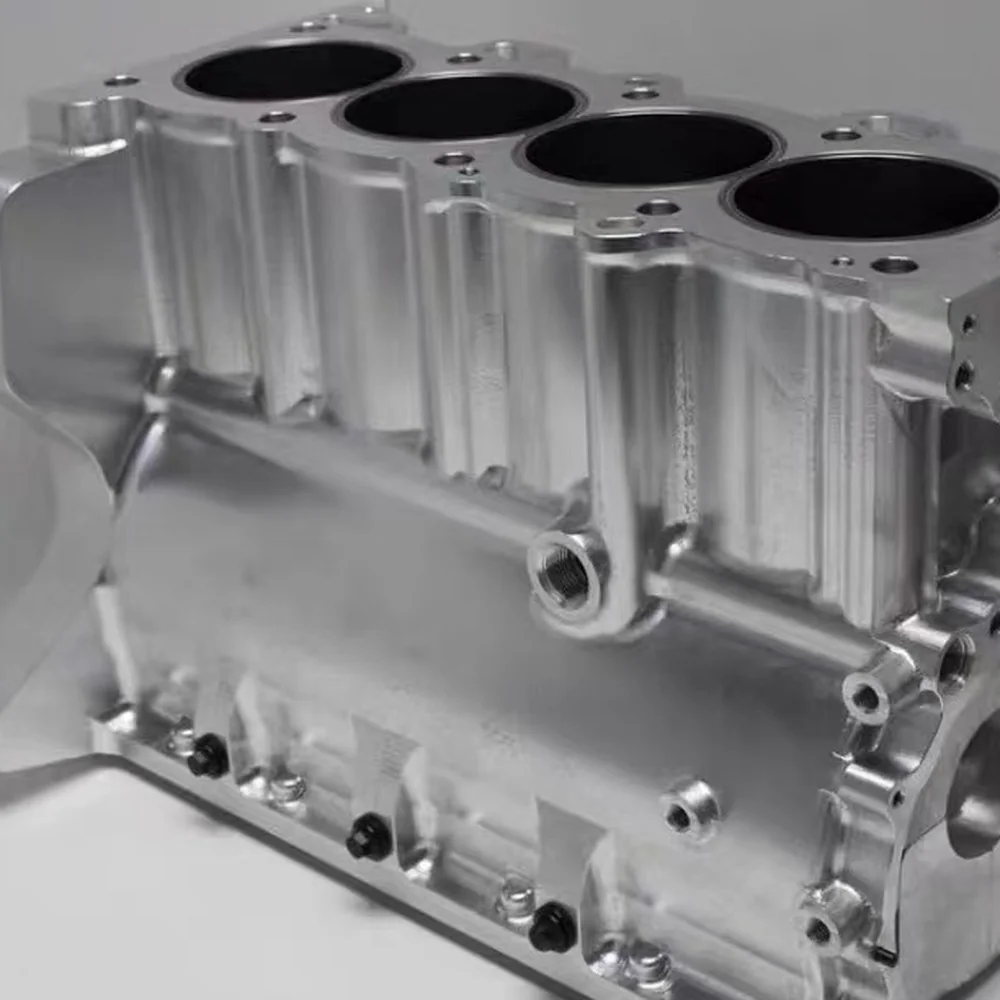
We focus on parts that are safe and sensible to machine. We don't remanufacture safety- or combustion-critical castings such as cylinder heads or blocks.
Restore to Nominal, Then Upgrade
A worn part is not copied wear-and-all — we reconstruct the nominal dimensions it left the factory with, using the mating components and bolt patterns as references. And because we're remaking it anyway, a discontinued part is the perfect moment to fix the original's weakness: a bracket that always cracked can come back in a thicker section or a tougher alloy; a pulley that ate bearings can get a corrected bore.
This is the same method we use across automotive and restoration work — see our automotive CNC parts and classic-car restoration pages.
Send the part, even broken. A cracked bracket or a snapped pulley still carries its bolt pattern and key dimensions. No drawing? Start through no-CAD ordering or read how reverse engineering works. If the maker is gone entirely, see what to do when the manufacturer is out of business.
Frequently Asked Questions
Yes. Send the worn or broken part or clear photos with dimensions. We measure it, reconstruct nominal geometry, confirm critical fits, and machine a compatible replacement. No drawing or OEM support needed.
Brackets, mounts, pulleys, tensioner bodies, timing and cam covers, housings, adapter plates, caps, spacers and fittings. We don't remanufacture safety-critical castings like heads or blocks.
Usually matched to the original — 6061/A356 aluminium for brackets, pulleys and covers, 4140 or stainless for loaded parts. We can upgrade a weak original to a stronger alloy.
Reproducing a part you own for repair or restoration is generally fine. We don't copy patented/trademarked parts for resale and describe replacements as compatible, not original.
Quote an Engine Part
Send the worn part or photos + the engine it's from. Engineers reply within 24 hours.
No drawing needed · Files kept confidential