Why Pump Parts Get Discontinued First
Pumps outlive their spare-parts catalogues. A well-built pump can run for 20–40 years, but the manufacturer revises the model, gets acquired, or stops stocking wear items for the old line long before the pump itself fails. The casing is usually fine — it's the rotating and wear parts that erode and become impossible to buy.
The good news: those are exactly the parts that can be machined. You don't need the original drawing, the part number, or even a manufacturer that still exists. You need the worn part (or good photos of it) and a shop that can reverse engineer it.
Pump Parts Commonly Remade
| Part | Why it wears / fails | Typical replacement material |
|---|---|---|
| Impeller | Erosion, cavitation, vane wear | 316 SS, bronze, duplex |
| Shaft & sleeve | Fretting, scoring under the seal | 316 / 17-4 PH stainless |
| Wear ring / casing ring | Clearance opens up, efficiency drops | Bronze, leaded bronze, 316 |
| Bushing / bearing housing | Wear, seizure | Bronze, PEEK, PTFE-filled |
| Mechanical seal housing / gland | Corrosion, leak path | 316 SS, duplex |
| Lantern ring, spacer, coupling hub | General wear | SS, bronze, engineering plastic |
If your part is on this list — or any other machined metal or plastic pump component — it's a candidate. Rubber diaphragms, motors and electronics are not machined parts and fall outside this service.
Three Ways to Get a Replacement
Hunt Down Old Stock (try first, briefly)
Search obsolete-parts dealers and pump rebuilders. Worth a quick look — but for a truly discontinued line you'll often come up empty, or pay a premium for an item that's also aged.
3D Print a Stop-Gap
For a non-critical, low-pressure part, a printed part can keep you running short-term. It rarely survives real pump duty — use it to buy time, not as the fix.
Reverse Engineer & Machine a Compatible Part
The durable answer: send us the worn part, we reconstruct the correct geometry and machine a compatible replacement in a proper material. No drawing needed. See our reverse engineering service.
How to Capture the Geometry (Even When It's Worn)
The challenge with a worn pump part is that its current shape isn't its correct shape — an eroded impeller vane or a scored shaft has lost material. Copying the worn surface just reproduces the failure. Here's how we get the right dimensions instead:
- Mail us the part where possible — we measure it on a CMM and with micrometers and thread gauges.
- Reconstruct from symmetry — impeller vanes are repeated; one good vane defines them all.
- Use the mating parts — the casing bore, shaft, and bearing fix the running clearances and seats.
- Apply standards — keyways, threads, and fits follow standard tables, so a worn keyway can be restored to nominal.
For complex impellers and freeform vanes, we capture the form with 3D scanning and verify the functional features by hand. No drawing? Start with our no-CAD ordering route.
Match — or Upgrade — the Material
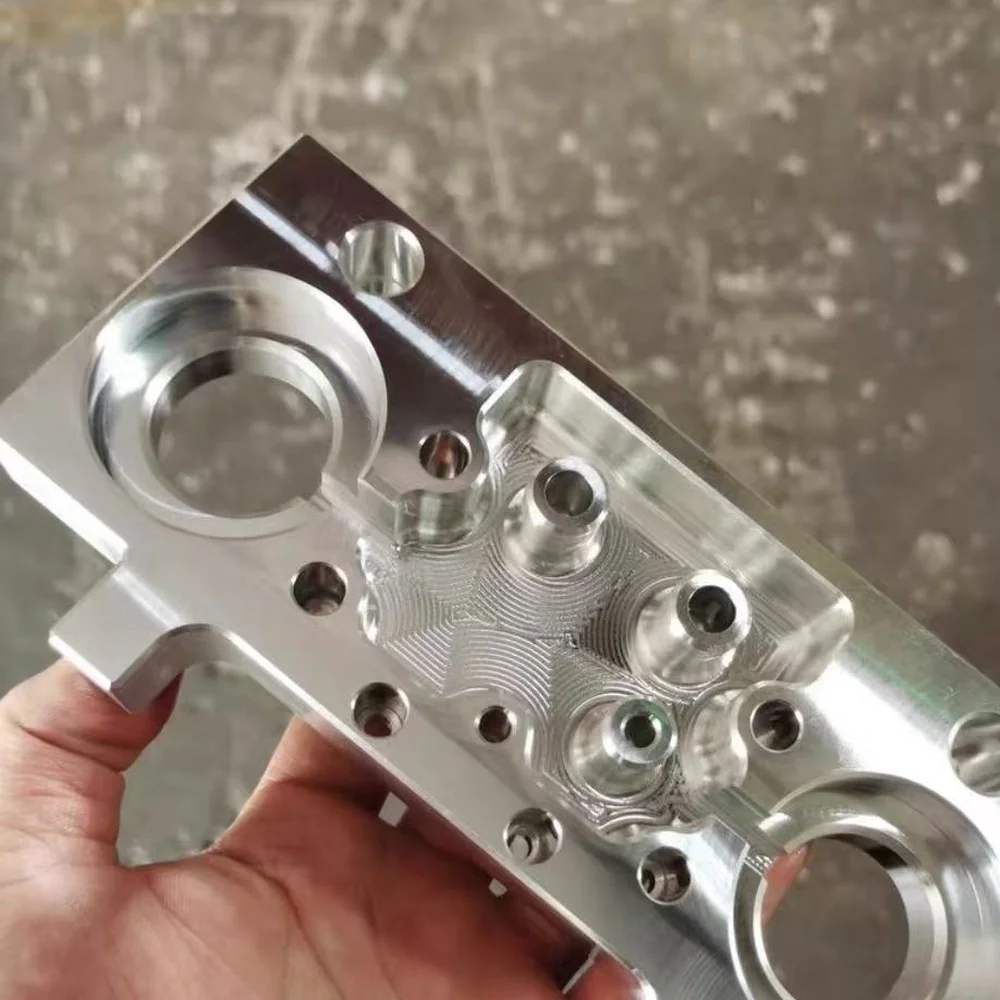
A discontinued part is a chance to do better than the original. Tell us the fluid, temperature and pressure and we'll match the original material or improve it: 316 stainless for general corrosion, bronze for wear surfaces and bushings, duplex / super-duplex for aggressive or chloride media, and PEEK or PTFE for chemical service. An impeller that kept cavitating in the original alloy can come back in something tougher.
Don't have the part in hand? Even clear photos from several angles, plus one known dimension (a caliper reading or a ruler in the shot) and the fluid it pumps, are enough for us to start a quote. We confirm every critical dimension before cutting — see how we replace any discontinued machine part without a drawing.
Frequently Asked Questions
Yes. We don't need the manufacturer or a part number — just the worn part or clear photos with a reference dimension. We reverse engineer the geometry and machine a compatible replacement.
Impellers, shafts and sleeves, wear rings, bushings and bearing housings, seal housings, lantern rings, glands and coupling parts — essentially any machined metal or plastic component. Rubber diaphragms and electronics are not machined parts.
We reconstruct nominal geometry from vane symmetry, the mating casing and shaft, and standard fits — not by copying the worn surface. Critical dimensions are confirmed with you before machining.
It depends on the fluid. Common choices are 316 stainless, bronze, duplex for aggressive media, and PEEK/PTFE for chemical service. Tell us the fluid, temperature and pressure and we'll match or improve the original.
Get Your Pump Part Quoted
Send the worn part or photos + the fluid it pumps. Engineers reply within 24 hours.
No drawing needed · Files kept confidential