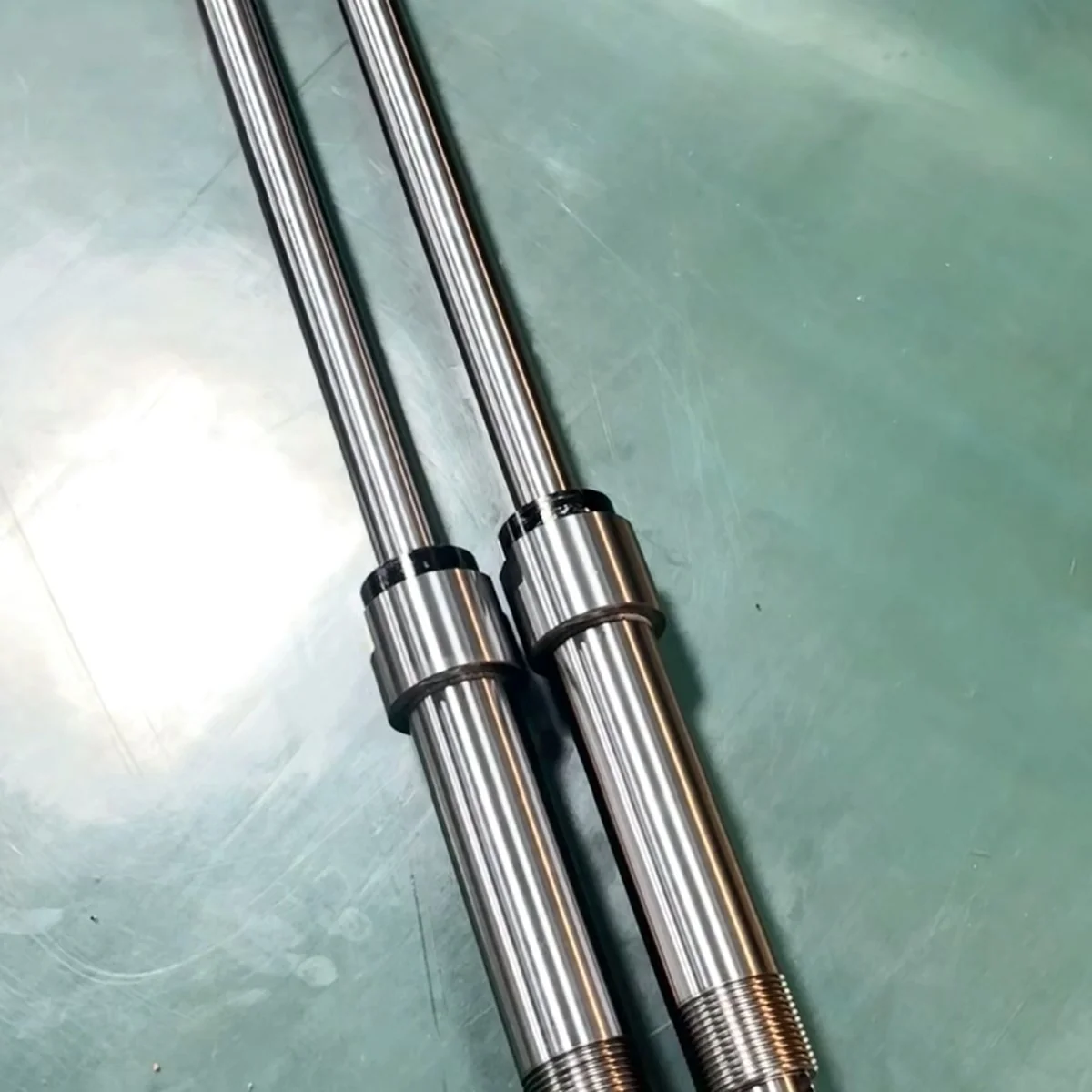
STAINLESS 316L PRECISION SHAFTS · GROUND OD · h6 TOLERANCE
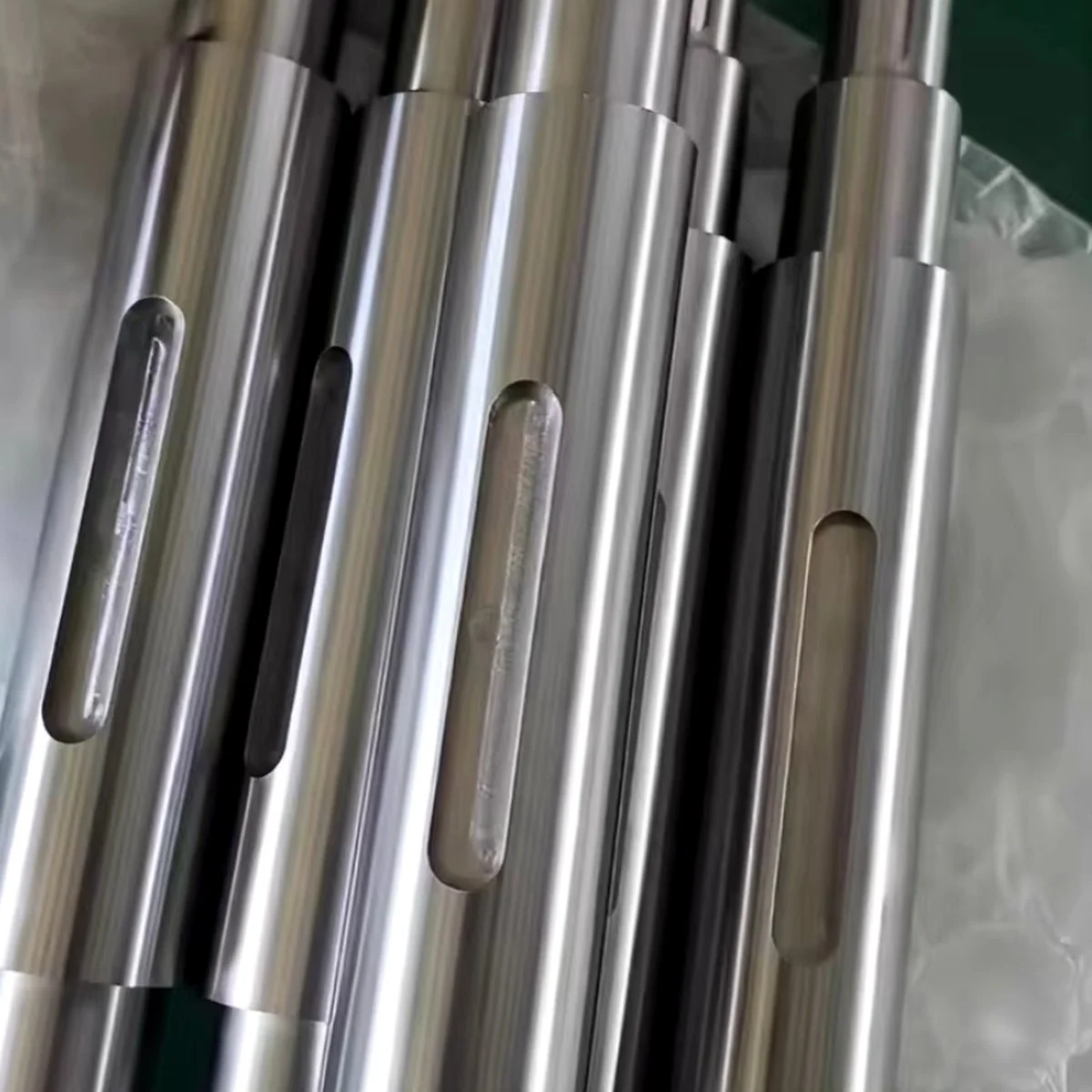
KEYWAY SLOT MILLED AFTER TURNING · WIDTH TOLERANCE js9 · KEYWAY SIZE CHART
The Brief
A German manufacturer of food-processing equipment contacted us needing 40 replacement drive shafts. Their original shaft supplier had closed, and the equipment manufacturer who built the machines no longer offered spare parts. The shafts were still in production units running at food-processing facilities across Europe.
The customer sent us one worn shaft from a decommissioned machine — still functional but showing wear on the bearing journal. They needed shafts that would drop in to existing bearing housings and keyway hubs without any modification to the equipment.
Why this matters for food industry: 316L stainless steel — not 304, not 316 — is required in food-contact applications. The L designation (low carbon) means no carbide precipitation during welding and better corrosion resistance in chloride environments common in food-processing cleaning procedures.
Reverse Engineering the Worn Shaft
The sample shaft showed wear on the bearing journal but was otherwise dimensionally intact. Our approach:
- CMM measurement of the unworn sections — main OD, shoulder diameters, overall length, keyway dimensions
- Thread pitch gauge on the threaded end — M20×1.5 fine thread confirmed
- Keyway measurement — width, depth, and position from shaft end measured with a digital height gauge
- Surface finish assessment — bearing journal area Ra measured with profilometer to establish original spec (0.8μm)
- Tolerance inference — the shaft fitted in an existing H7 bearing bore, so OD tolerance must be h6 for a standard sliding fit
From one worn sample, we produced a complete 2D drawing with full GD&T callouts. We sent this to the customer for approval before cutting any material. The customer had their maintenance engineer confirm each dimension against the equipment drawings — everything matched.
Why 316L and Not 304
| Property | 304 Stainless | 316L Stainless | Food Industry |
|---|---|---|---|
| Molybdenum content | None | 2–3% | Key for chloride resistance |
| Carbon content | Max 0.08% | Max 0.03% | Prevents sensitization |
| Chloride resistance | Moderate | High | CIP cleaning chemicals |
| Pitting resistance (PREN) | ~19 | ~24 | Higher = better |
| Cost premium over 304 | — | ~25–35% | Required for food contact |
| EU food contact compliance | Conditional | Yes (Reg 1935/2004) | Full compliance |
The Machining Challenge: Long Shaft Deflection
This shaft was 480mm long with a 28mm OD — a length-to-diameter ratio of 17:1. Machining long slender shafts is one of the most demanding turning operations. At this ratio, the shaft deflects under cutting forces, producing a slightly bowed result — thicker in the middle than at the ends.
Our approach to managing deflection:
- Steady rest support at the midpoint during roughing to reduce effective unsupported length to 8:1 each side
- Light finishing cuts — 0.1mm depth of cut on final pass to minimize radial cutting force
- Sharp positive-rake insert geometry to reduce cutting force further
- Cylindricity check after rough turning — CMM scan along full length to identify any bow before finish pass
- Grinding after turning — final OD ground to achieve h6 tolerance and Ra 0.8μm. Grinding removed 0.15mm from the turned diameter.
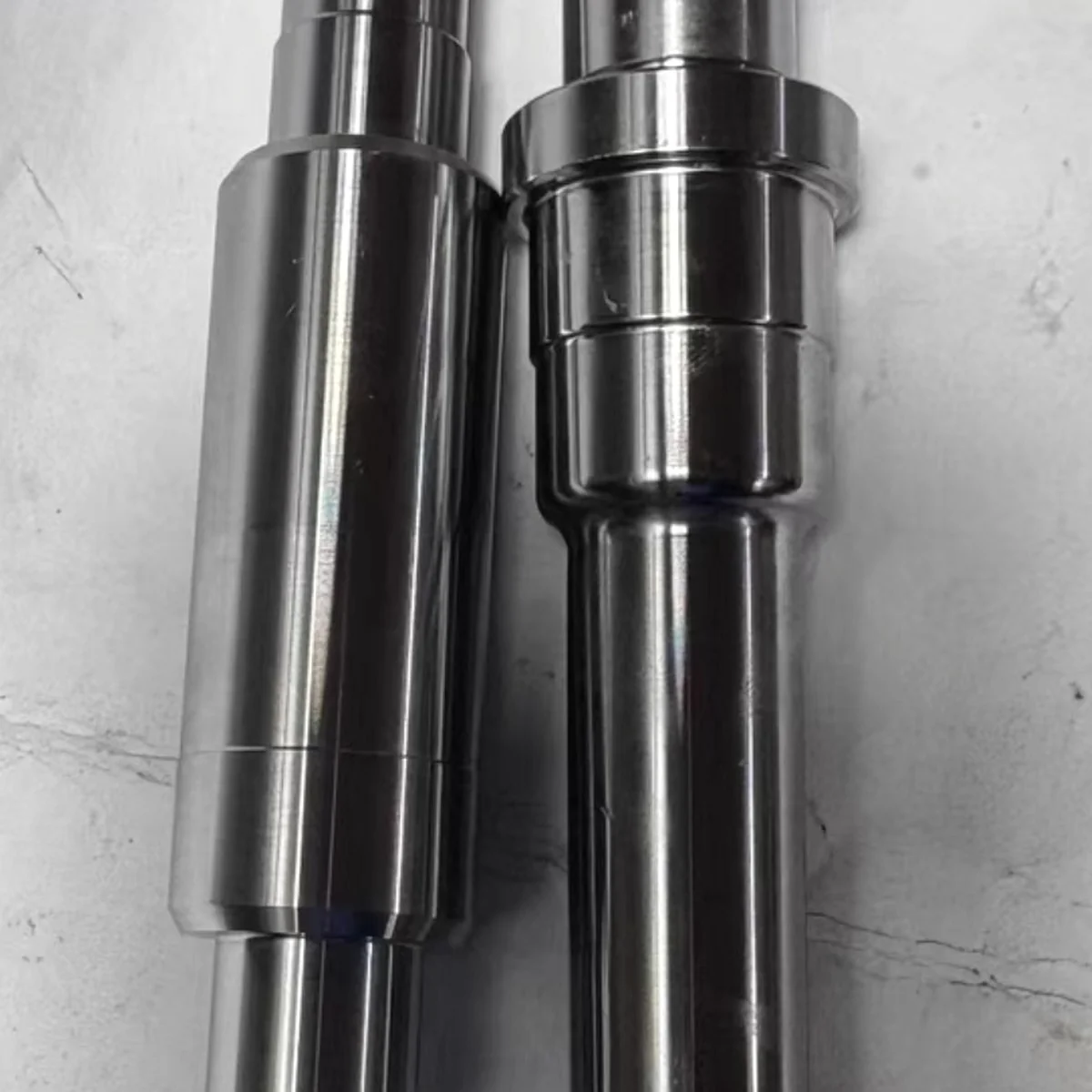
BORE DETAIL · CONCENTRICITY TO OD ≤0.02mm
Full Inspection Report
Every shaft was measured on CMM before shipment. The customer received a full dimensional report:
| Feature | Nominal | Tolerance | Measured range | Result |
|---|---|---|---|---|
| Bearing journal OD | Ø28mm | h6 (−0/−0.013mm) | −0.004 to −0.011mm | ✓ Pass |
| Surface finish (journal) | — | Ra ≤ 0.8μm | Ra 0.4–0.6μm | ✓ Pass |
| Cylindricity (journal) | — | ≤ 0.008mm | 0.003–0.006mm | ✓ Pass |
| Overall length | 480mm | ±0.1mm | 479.94–480.06mm | ✓ Pass |
| Keyway width | 8mm | js9 (±0.018mm) | −0.010 to +0.014mm | ✓ Pass |
| Keyway depth | 4mm | +0.1/0mm | +0.03 to +0.07mm | ✓ Pass |
| Thread M20×1.5 | — | 6g (GO/NOGO) | All passed | ✓ Pass |
| Concentricity: OD to bore | — | ≤ 0.02mm | 0.008–0.016mm | ✓ Pass |
All 40 shafts passed. Zero rejects. The customer's maintenance engineer fitted the first shaft the day after delivery — confirmed drop-in fit with the original bearing housing and keyway hub.
Project Timeline
Sample received — CMM measurement
Worn shaft received. Full CMM scan plus thread and surface finish measurement. h6 tolerance inferred from H7 bearing bore. Drawing produced same day.
Drawing approved — material confirmed
Customer's engineer reviewed and approved 2D drawing with GD&T. 316L specified and confirmed. NDA signed (customer's food equipment design is proprietary). 50% deposit paid.
Turning — 40 shafts roughed and semi-finished
316L bar stock faced and roughed with steady rest support. Intermediate CMM check on first 3 shafts — cylindricity within spec. Full batch turned to +0.2mm grinding stock.
Grinding — OD to h6, Ra 0.8μm
Cylindrical grinding to final bearing journal diameter. h6 tolerance achieved. Ra measured on random sample — all below 0.6μm, well within Ra 0.8μm spec.
Keyway milling
8mm keyway milled on all 40 shafts. Position from shoulder end held to ±0.1mm. Width held to js9. All keyways checked with precision slot gauge.
100% CMM inspection — full dimensional report
Every shaft measured on CMM. Full report produced — 8 dimensions × 40 shafts = 320 data points. All passed. Report sent to customer before shipment.
VCI packed — DHL to Germany
Each shaft individually VCI wrapped, packed in foam-lined tube. DHL dispatched. Delivered to Germany in 3 days. Customer confirmed drop-in fit on day of receipt.
Outcome
40 drop-in replacement shafts delivered 22 days from receiving the worn sample. The customer had been searching for a supplier for six weeks before finding us. Three other job shops had declined the order — citing the length-to-diameter ratio and the h6 tolerance as too demanding for their equipment.
The shafts are now in service at three food-processing facilities. The customer has placed a standing order for 10 shafts per quarter as their maintenance stock.
Have a discontinued part you need reproduced? Send us the worn sample — or even just dimensions and a description of what it fits. We reverse-engineer precision shafts, bushings, pins, and other turned parts from physical samples or hand measurements. Email [email protected].