The Default Stainless Steel
304 (and its low-carbon variant 304L) is the most widely used stainless steel in the world. The "18/8" composition — about 18% chromium, 8% nickel — gives excellent general corrosion resistance, good strength, full weldability and a clean, hygienic surface, which is why it dominates food, beverage, architectural, medical and general industrial parts. It costs less than 316 and covers the large majority of "I need it in stainless" jobs.
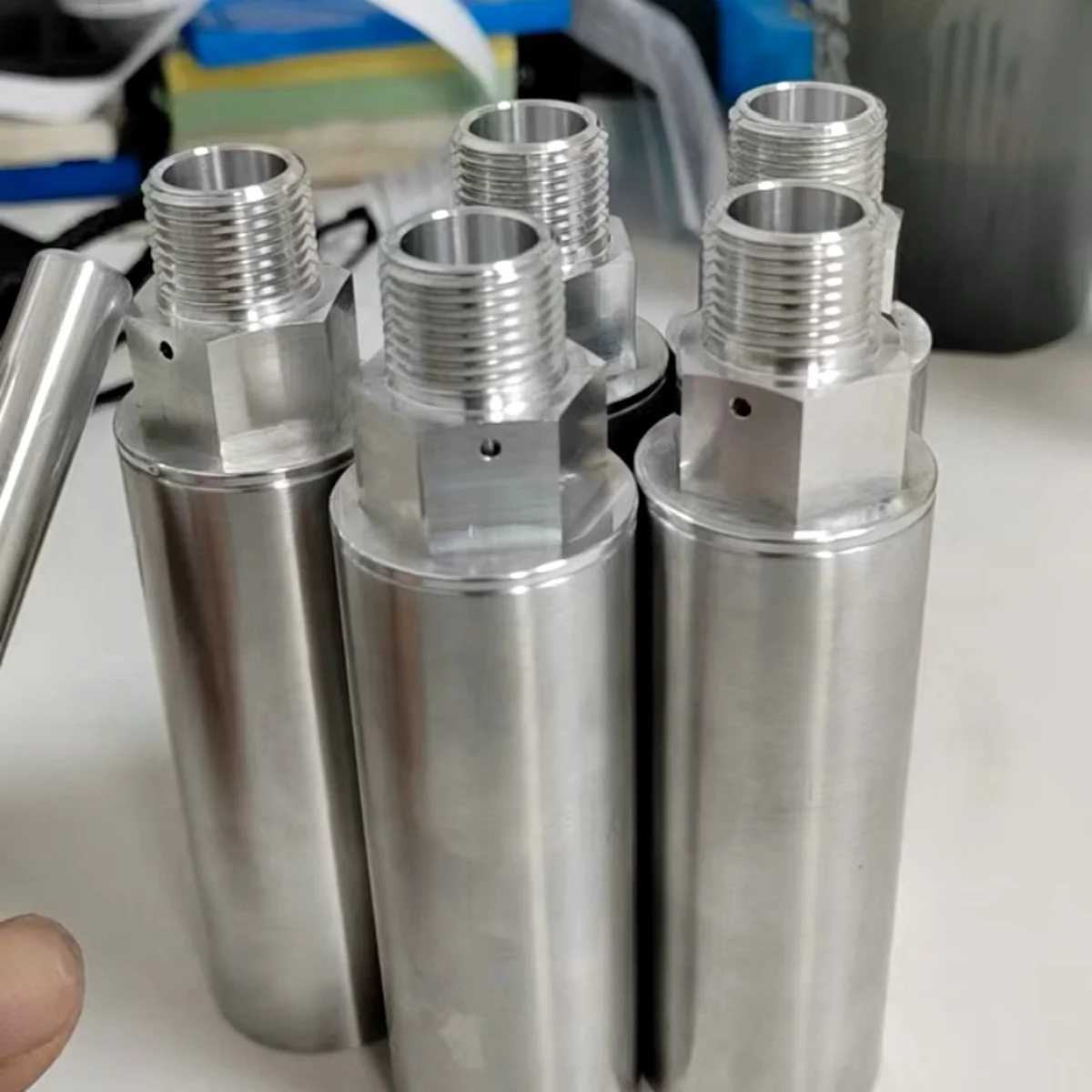
304 Mechanical & Physical Properties
| Property | Typical value (304, annealed) |
|---|---|
| Ultimate tensile strength | ≥515 MPa (often ~580) |
| Yield strength (0.2%) | ~215 MPa (min 205) |
| Elongation at break | ~40–55% |
| Hardness | ~70 HRB (~150 HB) |
| Density | 8.0 g/cm³ |
| Elastic modulus | 193 GPa |
| Composition | ~18% Cr, ~8% Ni |
| Magnetism | Essentially non-magnetic (annealed) |
| Machinability | ~45% — work-hardens |
304L lowers carbon for better weldability and intergranular-corrosion resistance with slightly lower strength. We machine to the certified mill spec and provide certs on request.
How We Machine 304
304 is tougher to cut than carbon steel or aluminium because it's gummy and work-hardens — if a tool rubs instead of cuts, the surface hardens and tool life collapses. Our approach:
- Sharp, rigid tooling and positive feeds that stay under the work-hardened skin
- Generous coolant to manage the heat 304 holds onto
- Tolerances: ±0.025 mm (±0.001 in) on critical features; turned diameters tighter — see tolerance & inspection
- For free-machining needs we may suggest 303 (adds sulphur) where its slightly lower corrosion resistance is acceptable
Finishing 304
- Passivation — restores the chromium-oxide layer; recommended after machining
- Electropolishing — bright, ultra-clean surface for medical/food
- Bead blast — uniform matte
- Brushed / polished — architectural finishes
304 vs 316 — Quick Comparison
| 304 | 316 | |
|---|---|---|
| Key addition | — | 2–3% molybdenum |
| Chloride / pitting resistance | Good | Excellent |
| Marine / chemical use | Limited | Preferred |
| Cost | Lower | Higher |
| Best for | General, food, architectural | Marine, medical, chemical |
If the part sees salt water or aggressive chemicals, choose 316; otherwise 304 is the cost-effective default.
Typical 304 Parts
- Fittings, couplings and fasteners — e.g. our stainless sensor fittings
- Shafts and spindles — e.g. keyed stainless shaft
- Food and beverage equipment parts
- Architectural hardware and trim
- General industrial brackets and enclosures
Frequently Asked Questions
Moderately — machinability ~45% and it work-hardens. We use sharp rigid tooling, positive feeds under the work-hardened layer, and good coolant for clean, accurate parts; it just runs slower than aluminium.
316 adds 2–3% molybdenum for much better chloride/pitting resistance, so it's preferred for marine and chemical use. 304 is the cost-effective choice for general, food and architectural parts.
Essentially non-magnetic when annealed; machining can induce slight surface magnetism. Tell us if non-magnetic behaviour is critical.
Yes — passivation restores the protective oxide layer and is recommended after machining, especially for food, medical or wet-environment parts. Electropolishing is also available.
Get a 304 Quote
Any drawing format accepted — sketch, photo or CAD. Reply in 24h.