Why 6061-T6 Is the Default Aluminum
If a part says "aluminium" without specifying a grade, it's almost always 6061. The T6 temper gives it a genuinely useful balance: enough strength for structural and mechanical parts, excellent machinability, good weldability, strong corrosion resistance, and a surface that anodizes cleanly. It's also widely stocked and affordable, so it's rarely the wrong default. At EKINSUN it's our most-machined alloy by volume — our speeds, feeds and finishing are dialled in for it, which means faster lead times and cleaner surfaces.
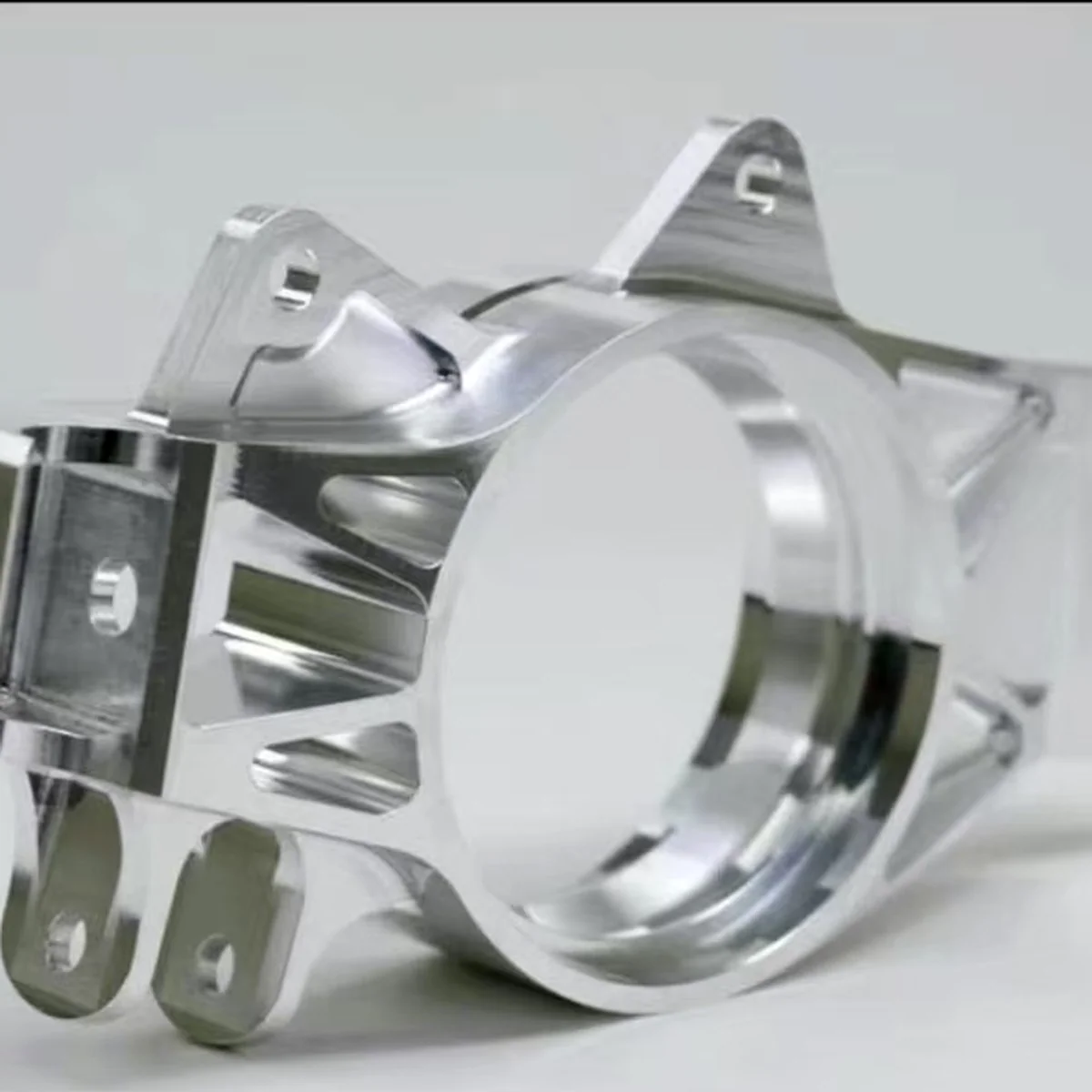
6061-T6 Mechanical & Physical Properties
| Property | Typical value (6061-T6) |
|---|---|
| Ultimate tensile strength | 310 MPa (45,000 psi) |
| Yield strength (0.2%) | 276 MPa (40,000 psi) |
| Elongation at break | ~12% |
| Hardness | ~95 HB |
| Density | 2.70 g/cm³ |
| Elastic modulus | 68.9 GPa |
| Thermal conductivity | ~167 W/m·K |
| Melting range | ~582–652 °C |
| Machinability | Good — cuts clean and fast |
These are representative published values for the T6 temper; we work to the certified mill spec of the stock used and can provide material certs on request. T6 means the alloy has been solution heat-treated and then artificially aged for peak strength.
6061 Chemical Composition
6061 is a magnesium-silicon (6xxx series) alloy — magnesium and silicon form Mg₂Si, which gives the alloy its heat-treatable strength. Nominal composition (balance aluminium):
| Element | Content | Element | Content |
|---|---|---|---|
| Silicon (Si) | 0.40–0.80% | Chromium (Cr) | 0.04–0.35% |
| Magnesium (Mg) | 0.80–1.20% | Zinc (Zn) | ≤0.25% |
| Iron (Fe) | ≤0.70% | Titanium (Ti) | ≤0.15% |
| Copper (Cu) | 0.15–0.40% | Manganese (Mn) | ≤0.15% |
How We Machine 6061
6061 mills and turns readily, producing clean chips and good surface finishes without exotic tooling. Practical points from the floor:
- Tolerances: ±0.025 mm (±0.001 in) on critical features is routine; general dimensions to ISO 2768-m or -f.
- Surface finish: down to Ra 0.8 µm as-machined; finer with secondary finishing.
- Thin walls & flatness: for thin or precision parts we use stress-relieved stock and balanced toolpaths to avoid distortion.
- Threads & tapping: tapped holes are reliable; for high-wear threads in soft aluminium we can add inserts.
See our CNC turning and tolerance & inspection capabilities for how we verify critical dimensions.
Tooling, Speeds & Feeds — Starting Points
6061's enemy in the cut is the built-up edge (BUE): soft, gummy aluminium welds to the tool and tears the finish. The whole strategy is to cut fast and clean so chips evacuate before they stick. Practical starting points (we tune per part and machine):
| Parameter | Typical for 6061-T6 |
|---|---|
| Tooling | Sharp, polished/uncoated (or ZrN/TiB₂) carbide; 2–3 flutes for chip clearance |
| Cutting speed | High — roughly 300–900 m/min (1,000–3,000 SFM) with carbide |
| Feed / chip load | Moderate, kept positive so the tool cuts (never rubs) |
| Milling style | Climb milling for finish and tool life |
| Coolant | Flood or mist with lubricity to stop BUE; air-blast for chip clear |
| Rake | High positive rake, polished flutes |
Most competing "6061 machining" pages stop at properties — getting these parameters right is what actually delivers the Ra 0.8 µm finish and tight tolerance on the part.
Finishing 6061
- Clear anodize (Type II) — corrosion resistance, natural look
- Hard anodize (Type III) — thick, wear-resistant oxide
- Color anodize — black, red, blue, gold and more
- Bead blast — uniform matte, hides tool marks
- Powder coat — durable colored finish
6061-T6 vs 7075-T6 — Quick Comparison
| 6061-T6 | 7075-T6 | |
|---|---|---|
| Yield strength | 276 MPa | 503 MPa |
| Weldability | Good | Poor |
| Corrosion resistance | Very good | Lower |
| Cost | Lower | Higher |
| Best for | General structural | High-stress / aerospace |
In short: default to 6061; step up to 7075-T6 only when you need the extra strength. For the full alloy range see our aluminium machining overview.
Typical 6061 Parts
- Brackets, mounts and structural components
- Electronic enclosures and heat sinks
- Automotive and motorsport parts — e.g. our billet triple clamp
- Robotics and automation parts
- Jigs, fixtures and tooling plates
- Replacement parts for legacy equipment
Frequently Asked Questions
Yes — it's the most widely machined aluminium alloy. It cuts cleanly and fast, takes a fine finish, anodizes well, and balances strength, weldability and cost for most parts.
±0.025 mm (±0.001 in) on critical features is routine, general dimensions to ISO 2768-m or -f. 6061 is stable and holds tolerance well, especially from stress-relieved stock.
6061 for general parts (cheaper, weldable, corrosion resistant). 7075 when you need maximum strength-to-weight (yield ~503 MPa) for highly loaded or aerospace parts.
Yes, excellently. Clear (Type II), hard (Type III) and color anodizing are all available, plus bead blasting and powder coating.
Get a 6061 Quote
Any drawing format accepted — sketch, photo or CAD. Reply in 24h.