Short answer: A photo plus a few key measurements is usually enough to get a part made. The photo shows the shape and features; the measurements set the scale. A reverse-engineering shop turns this into a CAD model and drawing, confirms it with you, and machines or molds the part. Add a ruler to the photo and send caliper measurements of the critical features for the best result.
Yes — a photo can be enough
You don't need engineering software or a technical drawing to get a part manufactured. A clear photo communicates the shape, the features, and how the part is built. Combined with a handful of measurements to lock the scale, it gives a manufacturer enough to reconstruct the part accurately. This is everyday work for shops that offer reverse engineering — and it's exactly what the big instant-quote platforms can't accept, because they require a finished CAD file.
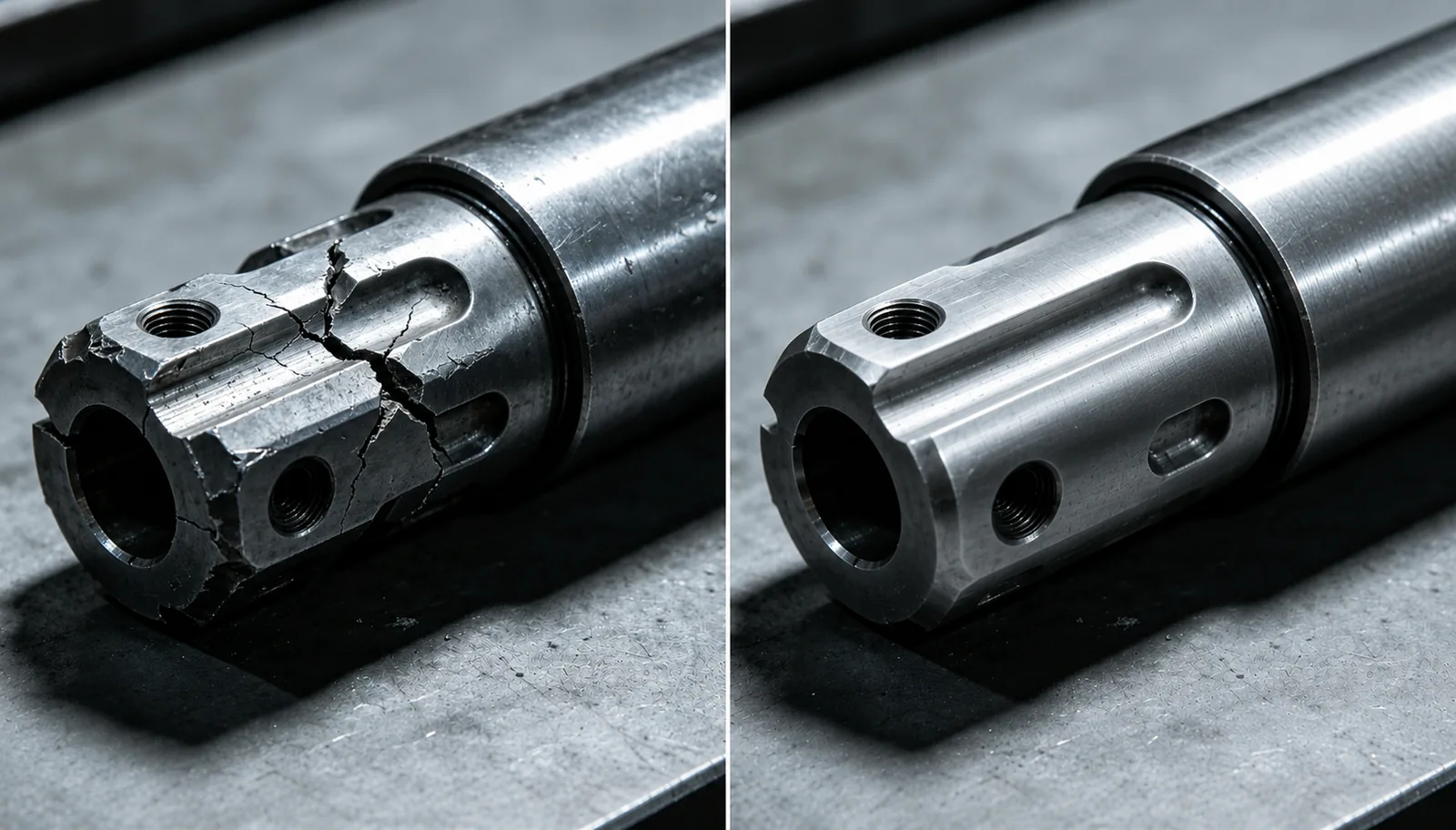 From a broken part and photos to an exact replacement. See the case →
How to take photos that actually work
- Plain background, even light. Lay the part on a single-colour surface; avoid shadows and glare.
- Shoot straight-on, from several sides. Front, both ends, and side — square to the part, not at an angle (angles distort proportions).
- Put a ruler or caliper in the frame. This single step turns a picture into a measurable reference.
- Close-ups of the important bits. Threads, holes, grooves, keyways, and any feature that has to fit something.
- More is better. Several clear photos beat one "perfect" shot.
The measurements to send with the photo
A photo sets the shape; measurements set the size. Use calipers where you can and send:
- Overall length and the main outer diameter or width
- Bore / hole diameters and their positions
- Step lengths along the part
- Thread size and pitch if there's a thread (or a photo of it next to a ruler)
- A note on what the part fits — the shaft, bore, or mating part
Don't have calipers? Send what you can measure with a ruler plus the reference photo, and say so. A good shop will ask targeted follow-up questions and can estimate many dimensions from a well-scaled photo. The goal of the first message is to start the conversation, not to deliver a perfect spec.
What happens after you send the photo
- The shop reviews your photos and measurements and asks any clarifying questions
- They build a 3D CAD model and a dimensioned drawing from your input
- You receive the drawing to confirm the critical dimensions before anything is made
- The part is machined or molded, inspected, and shipped
For tight-tolerance or safety-critical parts, shipping the physical part is better (it can be measured on a CMM). But for a great many parts, a good photo set plus careful measurements is a perfectly workable route.
Have a photo of the part you need? Send it with a few measurements to [email protected] or on WhatsApp. We'll turn it into a drawing, confirm it with you, and make the part — no CAD required.
Frequently Asked Questions
Often yes — a photo plus a few key measurements is enough to start. The photo shows the shape and features; the measurements set the scale. A reverse-engineering shop builds a CAD model and drawing from this, confirms it with you, and makes the part. A photo with a ruler in frame is far more useful than a photo alone.
Overall length, the main outer diameter or width, bore/hole diameters, any step lengths, and the thread size and pitch if there's a thread. Use calipers if you can, and note what the part fits.
Use even lighting and a plain background, shoot straight-on from several sides, put a ruler or caliper in frame for scale, and take close-ups of threads, holes, and critical features. Multiple clear photos beat one perfect one.
For many parts a photo plus measurements is enough. For tight-tolerance or safety-critical parts, the physical sample is better because it can be measured on a CMM. If you can ship the part, do; if not, a good photo set with careful measurements works.