The standards that govern EKINSUN medical components, the biocompatibility and sterilization evidence available for each, and the exact document package that ships with your order.
| Standard | Scope | What it covers for your part |
|---|---|---|
| ISO 13485 | Quality management, medical devices | Documented process control, material traceability by lot, inspection records, change control and retained batch documentation. |
| ISO 9001 | Quality management, general | The underlying management system for tooling, machining and non-device production. |
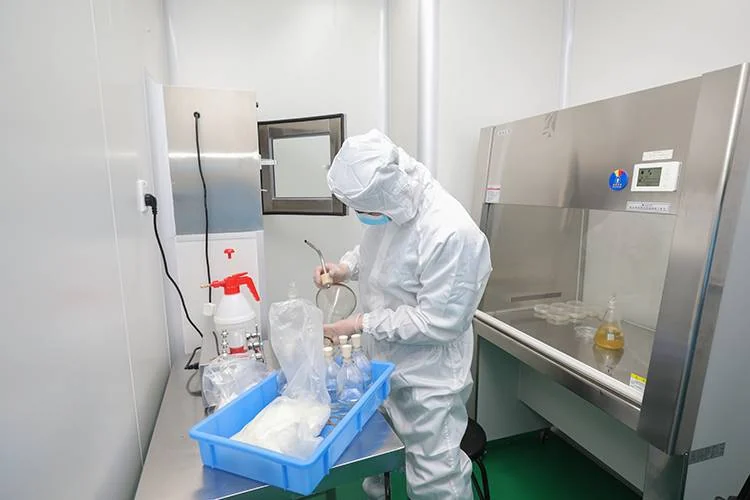
| ISO 14644-1 | Cleanroom classification | Class 100,000, equivalent to ISO Class 8 — the environment where components are assembled, inspected and blister-packed. |
| ISO 10993 | Biological evaluation | Cytotoxicity, irritation and sensitisation data for the resin grade; the basis of your device-level biological evaluation. |
| USP Class VI | Plastics, biological reactivity | Carried by many medical-grade PC, PP and silicone grades; documentation supplied where the grade holds it. |
| ISO 11135 | Ethylene oxide sterilization | Cycle development and validation for your specific product, packaging and load configuration. |
| ISO 10993-7 | EO residuals | Residual ethylene oxide and ethylene chlorohydrin verified against the limit for your contact category. |
| ISO 594 / ISO 80369 | Luer and small-bore connectors | Taper geometry, gauging and misconnection prevention for stopcocks, manifolds and Luer fittings. |
| ISO 2768 / ISO 286 | Dimensional tolerance | The tolerance basis stated on the approved manufacturing drawing. |
This distinction decides what a supplier can legitimately hand you, and it is where most supplier qualification files go wrong.
Medical-grade polymers arrive with the compounder's biological evaluation data — typically ISO 10993-5 cytotoxicity, ISO 10993-10 irritation and sensitisation, and USP Class VI where the grade carries it. Supplied with the material certificate for the specific lot used on your order.
Evaluation of the finished device accounts for geometry, processing history, sterilization residuals and patient contact duration. It is a submission-level activity owned by the legal manufacturer of the device. A resin dossier does not substitute for it, and any supplier implying otherwise is creating a gap in your file.
Where your evaluation requires E&L work on the moulded component, we supply parts from a controlled lot with full process records so the study is traceable to defined molding parameters and a single resin batch.
EO is the usual route for disposable polymer components — stopcocks, manifolds, extension tubes and Luer connectors — because it sterilizes assembled fluid paths at low temperature without distorting the taper geometry that makes those parts seal.
Sterilization is performed by a licensed provider to ISO 11135. The cycle is validated for your specific product, packaging and load configuration rather than applied from a generic recipe, because sterilant penetration depends on how your part is packed. Residual ethylene oxide and ethylene chlorohydrin are verified against ISO 10993-7 limits for the contact category, and the sterilization certificate and residual test report are issued with the batch.
Gamma irradiation is available where the resin grade tolerates the dose. Polycarbonate yellows under gamma, so the material choice and the sterilization route need to be decided together, before tooling.
Bioburden and sterility work is sampled from the production lot, so the result maps to the batch you receive.
ISO 594 is the older Luer taper standard covering 6% conical fittings. The ISO 80369 series replaces it with application-specific geometries designed so that an enteral line cannot be connected to an intravascular one, with ISO 80369-7 covering intravascular and hypodermic connectors. Many markets are still in transition between the two.
Specify which standard your device must meet before tooling. We tool and gauge to whichever applies, and the dimensional inspection report references that standard by name so your qualification file shows conformity against the right document rather than a generic “Luer compatible” claim.
Confirms the tool and molding machine are installed and configured as specified, with calibration records for the instrumentation that will control the process.
Establishes the process window by running parameter ranges deliberately wide, so the limits at which the part still meets specification are known rather than assumed.
Demonstrates sustained output at production settings across consecutive lots, which is the evidence your auditor looks for that the process is stable, not just capable once.
The validation protocol is agreed before tooling is cut, so the acceptance criteria are yours rather than a generic template applied afterwards. Executed protocols are supplied for your device master record.
| Document | When | What it establishes |
|---|---|---|
| Material certificate / COA | Every shipment | Resin grade and lot number for the material actually used on your order. |
| Dimensional inspection report | Every shipment | Measured results against the drawing you approved, with the tolerance standard named. |
| Lot & batch traceability | Every shipment | Links finished goods back to resin lot, molding run and assembly date. |
| Packing list | Every shipment | Quantities, lot numbers and carton breakdown for goods-in reconciliation. |
| Biocompatibility documentation | On specification | ISO 10993 and USP Class VI data for the resin grade. |
| EO sterilization certificate | On specification | Cycle record with ISO 10993-7 residual test results. |
| Bioburden / sterility report | On specification | Lot-sampled microbiological result from the on-site laboratory. |
| First article inspection (FAI) | On specification | Full dimensional and functional verification of the first production parts. |
| Executed IQ/OQ/PQ protocols | On specification | Validation evidence for your device master record. |
| ISO 13485 certificate | On request | Certificate with scope and validity dates for your supplier qualification file. |
Tell us what your supplier qualification file needs and we confirm what can be issued before you order, so nothing is discovered missing at goods-in.
Manufacturing runs under ISO 13485 and ISO 9001 quality management systems. Assembly and packaging take place in a Class 100,000 cleanroom, which corresponds to ISO Class 8 under ISO 14644-1. Biological safety follows the ISO 10993 series, with USP Class VI documentation available for the resin grade. Ethylene oxide sterilization follows ISO 11135, with residual limits per ISO 10993-7. Luer and small-bore connectors are made to ISO 594 and the ISO 80369 series.
Yes, for the resin grade. Medical-grade polymers are supplied with the compounder's biological evaluation data, typically covering ISO 10993-5 cytotoxicity, ISO 10993-10 irritation and sensitisation, and USP Class VI where the grade carries it. That documentation covers the material. Biological evaluation of your finished device, which accounts for geometry, processing, sterilization and patient contact duration, is a submission-level activity carried out by the legal manufacturer of the device.
EO is the usual route for disposable polymer components such as stopcocks, manifolds, extension tubes and Luer connectors. Sterilization is performed by a licensed provider to ISO 11135, with the cycle validated for your specific product, packaging and load configuration. Residual ethylene oxide and ethylene chlorohydrin are verified against ISO 10993-7 limits for the contact category. The sterilization certificate and residual test report are issued with the batch. Gamma irradiation is available where the resin grade tolerates it.
ISO 594 is the older Luer taper standard covering 6% conical fittings for syringes and needles. The ISO 80369 series replaces it with application-specific connector geometries designed to prevent misconnection between different clinical routes, with ISO 80369-7 covering intravascular and hypodermic connectors. Many markets are still in transition, so specify which standard your device must meet. We tool and gauge to whichever applies, and the dimensional inspection report references that standard by name.
Yes, for tooling and molding processes on medical programmes. Installation qualification confirms the tool and machine are correctly installed, operational qualification establishes the process window across parameter ranges, and performance qualification demonstrates sustained output at production settings. The validation protocol is agreed before tooling is cut, so the acceptance criteria are yours rather than a generic template. Executed protocols are supplied for your device master record.
Standard with every medical shipment: material certificate or COA for the resin lot, dimensional inspection report against the approved drawing, lot and batch traceability records, and the packing list. Supplied when your specification calls for them: biocompatibility documentation for the resin grade, EO sterilization certificate with residual test results, bioburden or sterility test report, first article inspection report, and executed IQ/OQ/PQ protocols. Tell us what your supplier qualification file needs and we confirm what can be issued before you order.
Send your spec, drawing or sample with the standards and documents your device requires. Reply within 24h.