The Enquiry
A customer in the UK contacted us about a Peugeot anti-roll bar bearing clamp — the bracket that holds the anti-roll bar rubber bush to the body. He had done his homework and even had the Peugeot part number: 5172.41 (also written 517241). He only needed one; the bracket on the other side of the car was equally rusted and could not be used as a reference.
The problem was not finding a number — it was that the part is no longer produced and that the number, on its own, tells a manufacturer almost nothing.
In the customer's words: "I've just confirmed with the garage — they can't give me dimensions, because the bracket on the other side of the car is also badly corroded."
Why the Part Number Alone Is Not Enough
We checked the Peugeot OEM catalogue, parts catalogues and aftermarket databases. The conclusion is the one most owners eventually reach:
- 5172.41 = anti-roll bar bearing clamp (the anti-roll bar bush bracket / D-clamp) — confirmed against the Peugeot 406 listing.
- It is shown as NFP — no longer produced, so it cannot be ordered new.
- The catalogue gives only the part name and its assembly position. It does not publish a single engineering dimension — no plate thickness, no hole diameter, no bend radius.
This is the gap every "I have the part number" enquiry runs into. A number identifies which part; it never defines how to make it. To manufacture a replacement you need the geometry, and the only reliable place that geometry exists is the physical part. That is why our reverse engineering service always starts with the old component, not the number.
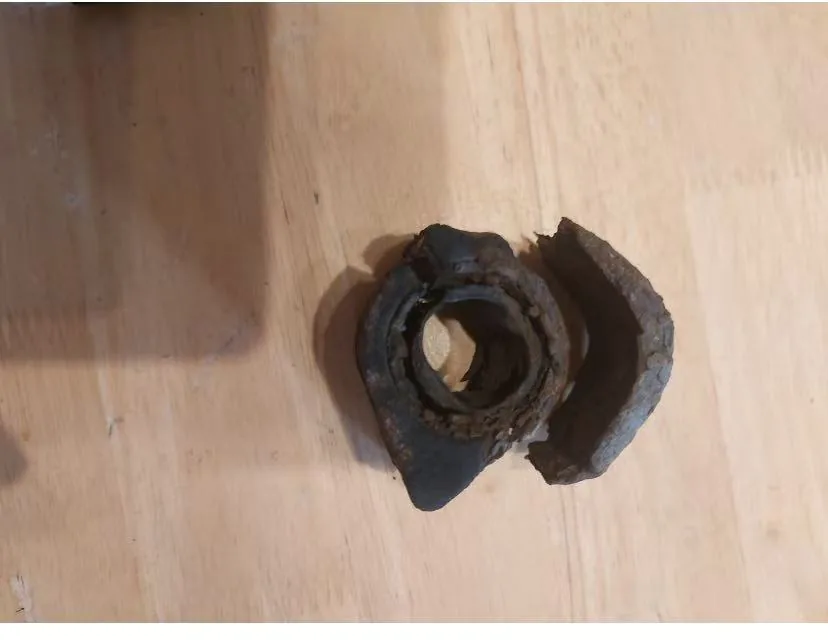
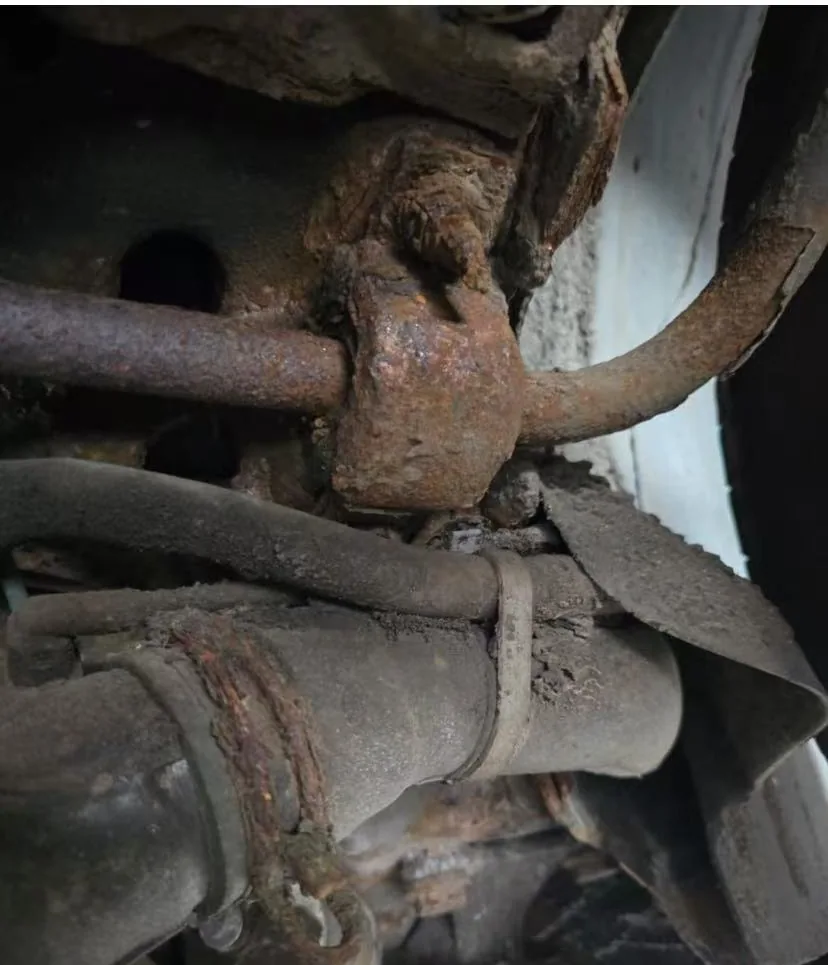
Reading the Part: This Is Not a CNC-Milled Block
From the photos, the clamp is not a part you would mill from solid billet. Its form tells you how it was originally made — and copying the original process keeps it correct and keeps the cost sensible:
| Step | Original process | What it controls |
|---|---|---|
| 1 | Laser / blank cut from steel sheet | Outline and plate thickness |
| 2 | Press / bend forming | The arc the anti-roll bar bush sits in |
| 3 | Drill / punch mounting holes | Bolt hole diameter and spacing |
| 4 | Zinc plating / galvanising | Corrosion protection (the part that had failed here) |
Reproducing it as laser-cut → formed → drilled → zinc-plated sheet metal is both far cheaper than milling a solid block and closer to the factory part. Picking the right process is part of the job — see how we quote without CAD.
How We Would Reproduce It
If the customer sends the old bracket — even broken in two and rusted, exactly as it is — we can recover what we need:
- Plate thickness — measured directly with a micrometer on a sound section
- Hole diameter and bolt spacing — gauged from the mounting feet
- The arc / bend radius — the curve the anti-roll bar bush seats against, taken from the formed band
- Overall outline and foot positions — reconstructed and, where corrosion has eaten an edge, restored to a clean symmetric profile rather than copying the rust
From those measurements we rebuild the geometry, produce a drawing for approval, and manufacture the replacement. You never have to supply a drawing or CAD — a hand sketch with the key dimensions, or simply the part in our hands, is enough. The same route reproduces other discontinued car parts and obsolete components.
The Honest Part: When We Will and Won't Promise a Fit
We would rather keep a customer than win one job and disappoint them, so we are direct about the limits:
- If you can send the old part — even corroded or snapped — the success rate is high. Thickness, holes, arc and outline are all measurable, and we confirm the critical dimensions with you before cutting metal.
- If no usable original exists and we only have photos, we are cautious and will not guarantee a perfect fit. A few photos cannot confirm assembly dimensions, and a suspension bracket is not a part to guess at.
The Workflow
Send the old bracket + photos
Part number helps identify it; the physical part gives the dimensions. Broken and rusty is fine.
Measure & rebuild geometry
Thickness, hole pattern and bend radius measured; outline restored to a clean profile.
Drawing for your approval
We send back the drawing we rebuilt and confirm the fit-critical dimensions before production.
Laser-cut, form, drill, plate
Reproduced with the correct sheet-metal process and zinc-plated against corrosion.
Have a discontinued car bracket with no dimensions? Send us the old part — corroded or broken is fine — or clear photos with a few key measurements. We reverse-engineer the geometry, confirm it with you, and reproduce it with the right process. No drawing, no CAD needed. Email [email protected] or message us on WhatsApp.
Frequently Asked Questions
What is Peugeot part 5172.41?
5172.41 (also written 517241) is the rear anti-roll bar bearing clamp — the bracket that clamps the anti-roll bar rubber bush to the body — on the Peugeot 406. It is now listed as no longer produced (NFP), so it cannot be bought new from Peugeot.
Can you make a discontinued Peugeot anti-roll bar bracket?
Yes. When a part is discontinued we reproduce it by reverse-engineering the old part: we measure thickness, hole diameter, bend radius and mounting positions from your bracket, rebuild the geometry, and manufacture a replacement using the correct process. No original drawing or CAD file is required.
The part number gives no dimensions — can you still make it?
Yes. A Peugeot part number only identifies the component and its assembly position; the OEM catalogue does not publish engineering dimensions. We get every dimension from the physical part, which is why having the old bracket — even rusted or broken — matters far more than the number.
Both of my brackets are corroded — is that a problem?
A corroded or broken bracket still carries its key dimensions: plate thickness, hole diameter, the arc the bush sits in and the bolt spacing are all recoverable. We are honest about the limit, though — if no usable original exists and we only have photos, we will not promise a guaranteed fit, because assembly dimensions cannot be confirmed from images alone.
Is an anti-roll bar bearing clamp the same as a sway bar bracket?
Yes. Anti-roll bar (UK) and sway bar or stabilizer bar (US) are the same component, and bush equals bushing. The bearing clamp, bush bracket or D-clamp all describe the part that holds the anti-roll bar bush to the chassis.