Machine down, bearing worn out, manufacturer gone? Post us the worn part — or a photo with a caliper on it. We identify what can be bought, machine what cannot, and you approve a drawing before anything is cut. From one piece, quote in 12 hours.
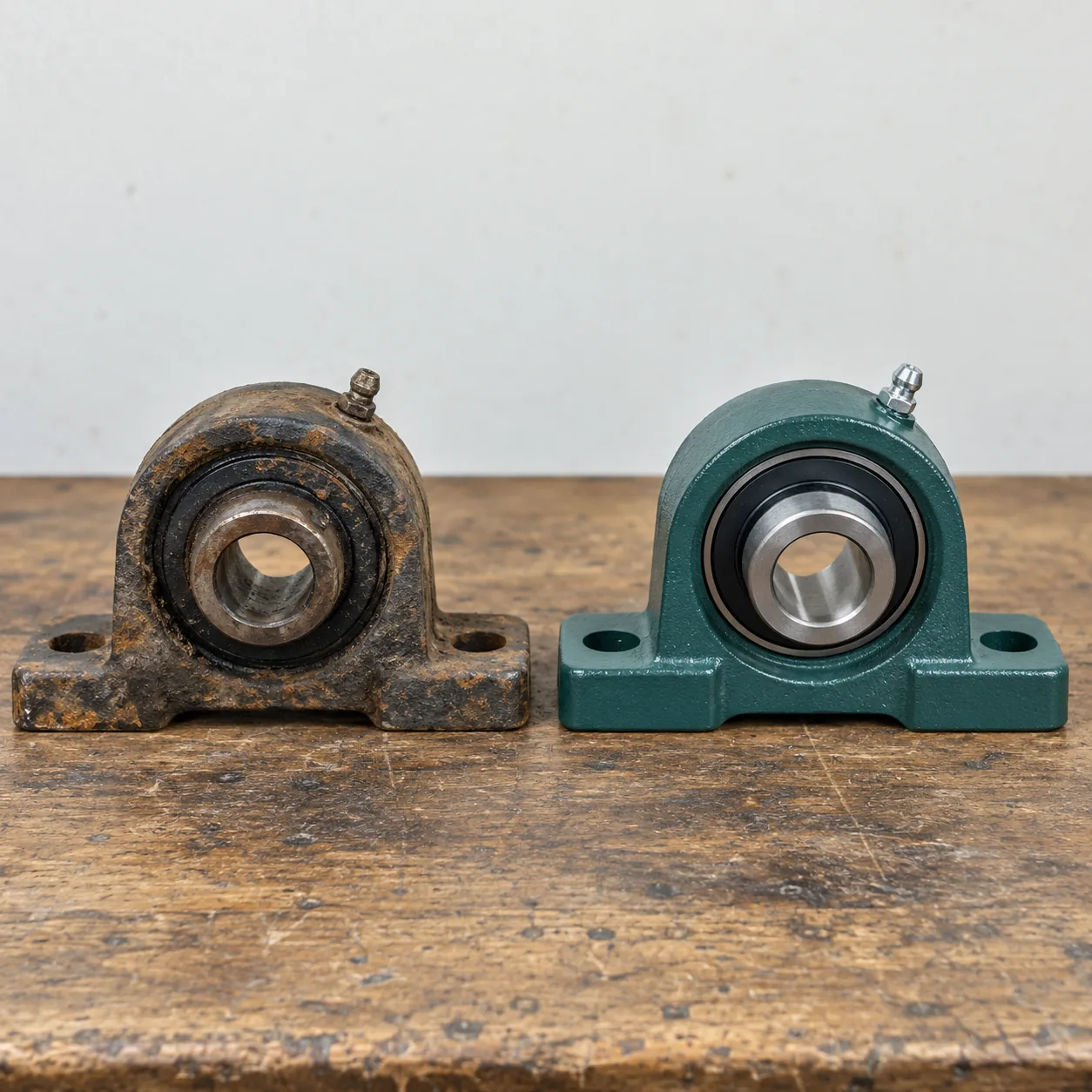
The honest split: what a "bearing problem" actually is
| The problem | The honest fix | Who does it |
|---|---|---|
| The rolling bearing itself is worn or obsolete | Identify the current ISO equivalent from the worn part — not remake the bearing | We identify, you buy a catalogue part |
| Everything around it — housing, sleeve, nut, spacer — is broken, worn or was never standard | Measure and machine from billet | Us — this is the page |
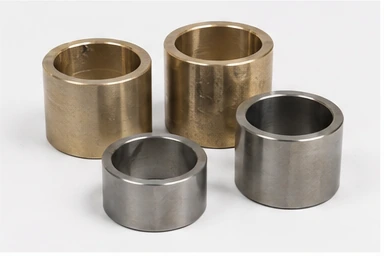
| Plain bearings — bronze bushings, sleeve bearings | Turned parts, remade like-for-like or improved (standard sizes: ISO 4379 / DIN 1850 bushing size chart) | Us |
We will not sell you a remanufactured rolling bearing — raceways are ground and superfinished on dedicated lines, and a one-off remake would cost multiples of a catalogue equivalent and run worse. Anyone who promises otherwise at quantity one is selling you a problem. The machining problem — and the reason the machine is still down — is almost always the part around the bearing.
Identifying an obsolete bearing from what survives
A bearing dies at its raceways. But the three numbers that identify it — bore, outside diameter, width — are press-fit and location surfaces that stay measurable to the last day. Those three place it in the ISO dimension series that rolling bearings have followed for decades; a part-legible marking on a face confirms it. A current bearing with the same envelope drops in.
When it does not drop in — the original was a special, an odd imperial size, or a long-dead maker's own design — the answer flips from buying to machining: an adapter sleeve or a new housing bored to a standard bearing, so the obsolete size stops mattering permanently. That is usually cheaper than hunting old stock of a bearing that will only wear out again.
What we machine around the bearing
| Part | Typical situation | Material |
|---|---|---|
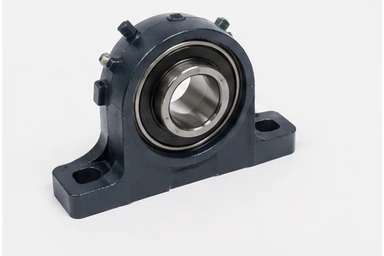
| Plummer block / flanged housings | Grey-iron casting cracked, maker gone — remade from billet, bore machined in one setup | Steel, 6061 where weight matters |
| Bushings & plain bearings | Worn sleeve bearing from an old machine — remade with oil grooves and flange to pattern | Bearing bronze, brass C360, steel, POM/PEEK |
| Repair sleeves for worn seats | Bearing spins on shaft or in bore — seat restored to nominal with a precision sleeve | Steel, 42CrMo4, 304/316 stainless |
| Adapter sleeves | Obsolete bearing size bridged so a current ISO bearing fits the old machine | Steel, stainless |
| Bearing lock nuts & washers | KM/AN-style and specials — see bearing lock nuts | Steel, stainless |
| Spacers, seal carriers, end caps | The small parts that vanish with the manufacturer | Steel, 6061/7075, brass |
The most misdiagnosed case: the bearing is replaced, runs a few weeks, fails again. The bearing was never the problem — the seat is worn and the ring spins on the shaft. A new bearing cannot fix a worn seat. A repair sleeve or a mating part cut to the actual worn diameter can, and that is a machining job from your measurements or the shaft itself.
How it runs from the worn part
- Send the part — post the worn bearing, housing or shaft; or a photo with a caliper on the critical diameters. No drawing needed — how that works
- We measure and split the problem — what is a catalogue buy, what is a machining job; you get both answers, not a quote for things you can buy cheaper elsewhere
- Drawing for approval — the machined parts are drawn, dimensioned and sent to you before production
- Machined, gauged, shipped — bores and seats checked against the bearing they must fit, worldwide courier
Where the bearing catalogue stops
| What you need | In the catalogue? | The sensible route |
|---|---|---|
| A rolling-element cartridge (ball or roller) that still has a live number | Yes | Buy a modern standard bearing — it is metallurgically better and cheaper than anything remade. Reverse engineering a rolling element is almost never worth it, and we will tell you so. |
| The housing, plummer block, cap or retainer around the bearing | No | This is what goes obsolete. Machined from the worn original or from the shaft and bearing it has to hold. |
| A plain bearing, bush or sleeve in an obsolete size | No | Turned from the worn original in bronze, sintered or polymer-lined stock, with wear compensated back to the original fit rather than copied as measured. |
| The markings are gone and nobody knows what bearing it was | No | Identified from the surviving dimensions and the seat it runs in — bore, outside diameter, width and the shoulder it sits against — not from a part number that no longer exists. |
| A repair sleeve so a worn shaft can be saved instead of replaced | Rare | Sized to the shaft as it is now and to the seal that has to run on it. Often cheaper than remaking the shaft. |
| An oversize or undersize seat because the housing was line-bored | No | Fit chosen for the repaired bore, h7 or k6 as the duty requires, gauged with calibrated instruments. |
| A material that outlasts the original | No | Bronze, sintered bronze, 304 (1.4301) or 316L (1.4404) where the environment is wet, 6061 for weight; 7075 only where the original was a stressed structural carrier. |
| A certified aerospace or class-approved bearing assembly | — | Honest boundary: certification is not something we issue. Those belong with an approved supplier. We make the geometry, with a 3.1 material certificate on request. |
When the housing is the part that is worn or gone: pillow block UCP 204 to 212 sizes, the three dimensions a remade housing keeps and stainless or split versions are on bearing housing replacement.
Frequently asked questions
No, and neither should anyone at one-off quantities — raceways are ground and superfinished on dedicated lines, and a remake would cost multiples of a catalogue equivalent and run worse. We identify the current equivalent from your worn part instead, and machine everything around it: the housing, sleeve, seat or nut that has no supplier.
From the dimensions that survive wear: bore, outside diameter and width are press-fit surfaces that stay measurable to the last day, and they place the bearing in the ISO dimension series. A part-legible face marking confirms it. If the original was a special, we machine an adapter sleeve or a new housing so a standard current bearing fits instead.
Yes — measured from the pieces and remade by CNC from billet steel (or 6061 where weight matters). No casting pattern is needed, which is why it works at quantity one, and the billet version is typically stronger than the grey-iron original with a rounder bore.
Yes — plain bearings are the exception to the do-not-remake rule, because they are turned parts. Bearing bronze, brass C360, steel, POM or PEEK for dry-running positions; oil grooves, flanges and graphite plugs to your pattern, from one piece.
Yes — that is the most misdiagnosed bearing failure. A repair sleeve restores the seat to nominal, or the mating part is cut to the actual worn diameter. Send the shaft or the measurements; we quote the route the residual material allows.
The worn part is the best input; a photo with a caliper or a surviving drawing also works. You approve a dimensioned drawing before machining. MOQ 1, no tooling cost, price breaks at 1 / 10 / 50 / 200, quote with lead time in 12 hours.
Send the Worn Part
Photos with a caliper, or post the part itself. Engineers reply in 12 hours.
// Quick facts
- →Rolling bearings: identified, not remade
- →Housings, bushings, sleeves: machined, MOQ 1
- →Worn seats restored with repair sleeves
- →Bronze · C360 · steel · 42CrMo4 · 304/316
- →Drawing approved before machining
or email [email protected]