Simple Shape, Two Critical Fits
A bushing or sleeve looks trivial — a tube with an outer and inner diameter — but it does two precise jobs at once: it press-fits into a housing on its outside, and provides a running fit for a shaft on its inside. Those two diameters carry tight, opposite tolerances (interference outside, clearance inside). That's exactly what turning controls well, and it's why a worn bushing is one of the most reproducible parts we make. A worked example of the two fits fighting each other — where pressing the bushing in closed its bore by 0,025 mm — is in the case study pilot bushing 32,025 × 17 × 20.
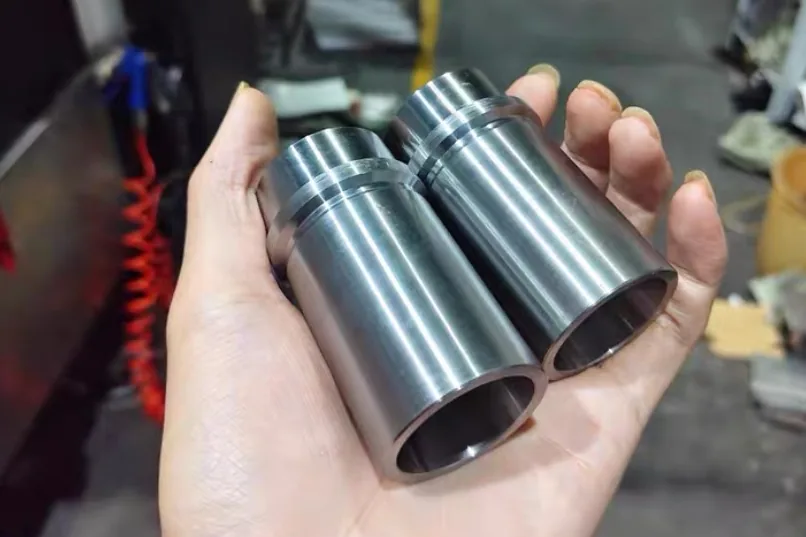
Custom Bushing Specifications
| Attribute | Capability |
|---|---|
| Materials | SAE 660 & aluminium bronze, brass, steel, stainless, Delrin/PTFE/nylon |
| Outer diameter (press fit) | Interference class, e.g. r6 / s6 to the housing |
| Bore (running fit) | Clearance class, e.g. H7 / F7 over the shaft |
| Tolerance | ±0.01–0.02 mm on both diameters |
| Features | Flange, oil grooves, lube cross-holes, chamfers, split |
| Size range | ~Ø4–200 mm (larger on request) |
Two variants have enough of their own detail to sit on separate pages: bushes whose bore is square, hexagonal, keyed or splined rather than round, and bushes that are bored complete and then split into segments so they can be fitted round a shaft that cannot be withdrawn.
Bushing Types We Machine
- Plain sleeve bushings — straight OD and bore
- Flanged bushings — with a shoulder to locate axially
- Oil-grooved / lubricated — internal grooves and cross-holes
- Bearing sleeves — bronze for sliding-contact bearings
- Thrust washers & split bushings — axial bearing & clamp-on types
- Wear sleeves & spacers — protective sleeves on shafts
Standard sleeve and flanged sizes, with their E6 bore and s6 outside-diameter limits, are tabulated in our ISO 4379 / DIN 1850 bushing size chart — check there first; if your bush has a row, a stockist is cheaper.
Sleeve and bushing names — and what each one needs
The same turned sleeve is ordered under a dozen names; the name tells us which surface carries the fit.
| Name on the order | What it does | Features we machine | Usual material |
|---|---|---|---|
| Flanged sleeve / flanged bushing | Locates axially on its collar | Press-fit OD, running-fit bore, flange face square to the bore | Bronze, 304 (1.4301), 6061 aluminium |
| Guide sleeve / guide bush | Guides a rod, pin or plunger | Bore to H7 or closer, lead-in chamfer, lubrication groove | Steel, bronze, 316L (1.4404) |
| Liner / cylinder sleeve | Wear bore pressed into a housing | Fine-bored or honed bore, press-fit OD | Steel, bronze |
| Seal housing / gland sleeve | Carries a seal, packing or O-ring | Seal bore, O-ring grooves, finish on the sealing faces | 316L, brass |
| Wear sleeve / shaft sleeve | Protects a shaft under a seal or bearing | Thin wall, OD finish for the seal lip | 304, 316L |
| Threaded sleeve | Screws in or takes a screw | Outside or inside thread concentric to the bore | Steel, brass, 304 |
| Crimp ferrule | Thin-wall sleeve pressed onto a hose | Internal grooves, thin wall, collar end | Brass, steel, 304 |
| Spacer bush | Sets a gap between two parts | Length tolerance, parallel faces — see custom spacers | Aluminium, steel |
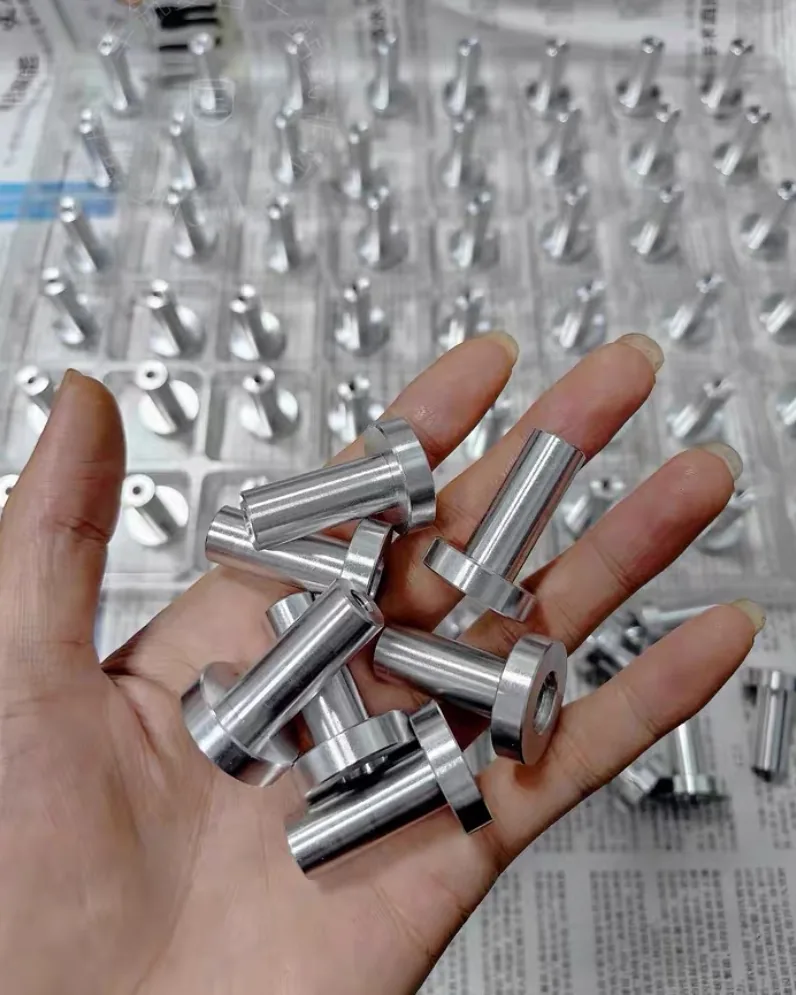
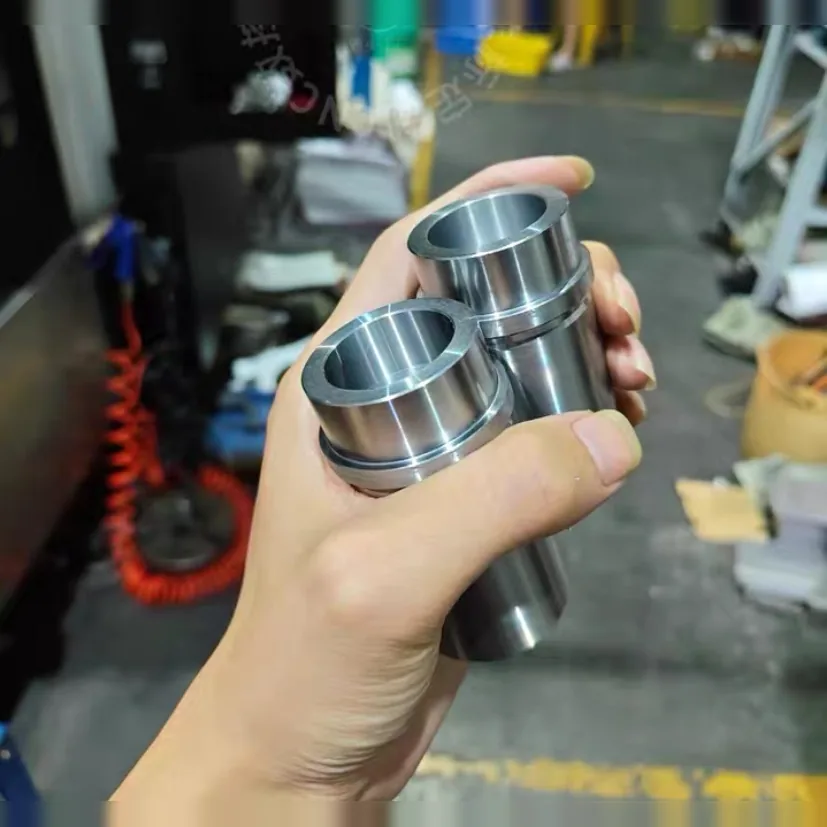
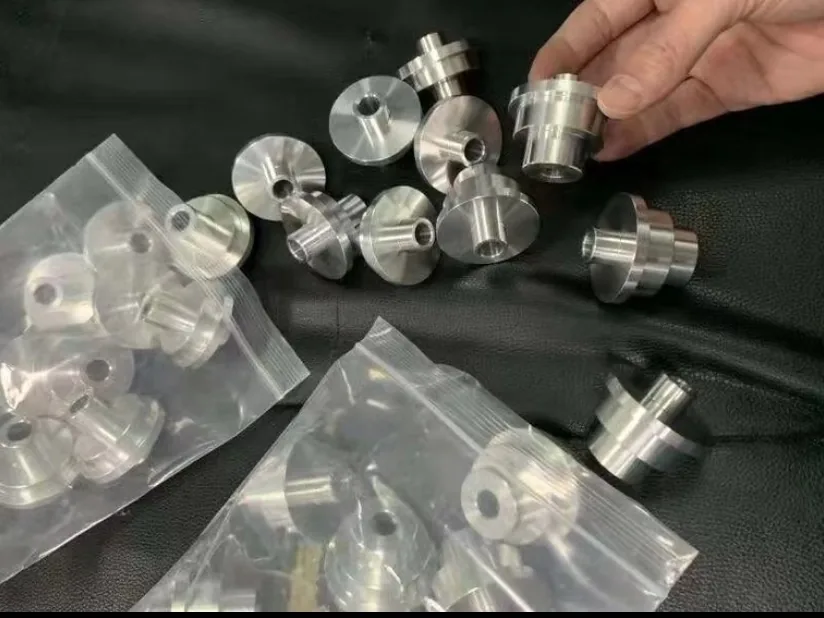
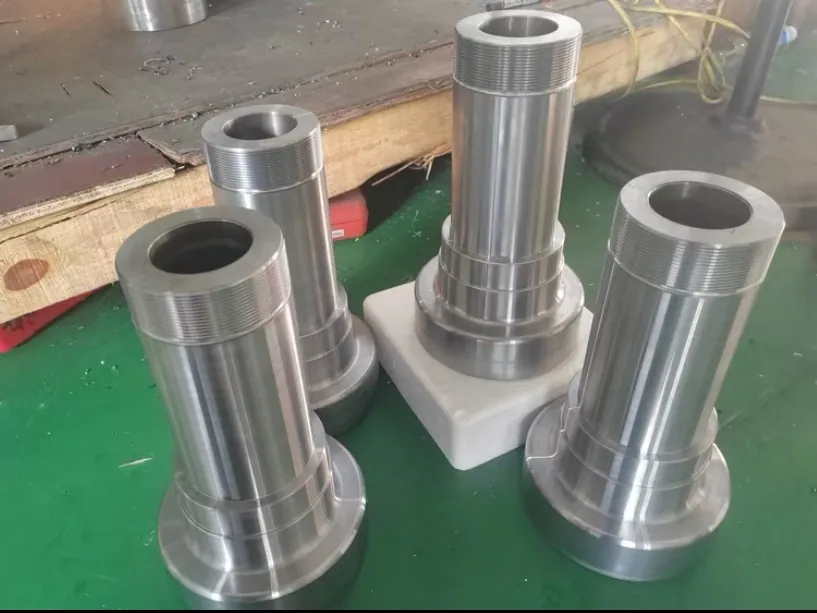
Bushing Materials — Including Self-Lubricating
Material is the biggest decision on a bushing, and the right one depends on load, speed and whether the part can be oiled. Self-lubricating ("oilless") bushings run without external grease — ideal where maintenance is hard or oil isn't allowed. Our full menu:
| Material | Type | Best for |
|---|---|---|
| SAE 660 (C93200) bronze | Cast bearing bronze | General sliding bearings — strong all-rounder |
| Oil-impregnated bronze | Self-lubricating (sintered) | Low-maintenance, dry-start, light–medium load |
| Graphite-plugged bronze | Self-lubricating (solid) | High temp, oscillating, no-oil / dirty environments |
| Aluminium bronze (C954) | High-strength bronze | Heavy load, shock, marine |
| Brass (C360) | Free-machining | Light-duty, low-cost |
| Steel / 304 & 316 stainless | Structural sleeve | Wear sleeves, structural, corrosion (304 general, 316 marine) |
| Aluminium 6061 | Light structural sleeve | Weight-critical spacer sleeves — structural, not a sliding bearing surface |
| PTFE / Rulon / filled | Self-lubricating plastic | Chemical, dry, low friction |
| UHMWPE / nylon / Delrin | Machined or molded plastic | Dry-running, quiet, light load, food-safe |
Not sure which? Tell us the load, speed and whether it's lubricated and we'll recommend. For higher plastic quantities we can also mold rather than machine — part of being a full custom parts maker in any material.
A note on self-lubricating limits. Oil-impregnated (sintered) bronze runs maintenance-free in a typical band of about −30 to 100 °C and is best for rotary, low-to-moderate speed and load — its self-lubrication comes from oil drawn out of the pores, so it suits dry-start but not high heat. For high temperature, oscillating motion or dirty, no-oil environments, graphite-plugged bronze (solid lubricant) is the better choice; for chemical or very-low-friction dry running, PTFE-based liners win. Give us the load, surface speed and temperature and we'll match the material to the duty (PV).
Worn or seized bushing? Send the old one — even damaged. We restore the OD and bore to nominal and machine a new one to the right fits. It's the same approach as our reverse engineering service; no drawing required.
Bushing Weight & Material Cost — Compare Live
Bushing material drives cost, weight and how it runs against the shaft. Bronze and self-lubricating grades suit bearing duty; 316L resists corrosion; a plastic liner runs dry and light. Enter your bushing's outer diameter, bore and length to compare the exact weight and relative material cost of each option:
Typical Applications
- Pivot and hinge bushings on machinery and equipment
- Sliding bearings in pumps, gearboxes and presses
- Wear sleeves on shafts and pins
- Replacement bushings for discontinued machines
- Vintage and classic restoration parts
Bushing, Bush, Sleeve or Plain Bearing — Naming the Same Part
US catalogues call it a bushing, UK suppliers write bush, a longer thin-walled one is a sleeve, and when it carries a rotating shaft it becomes a plain bearing — in bronze, often a bronze bearing bush. They are all the same turned part to us: an OD, an ID, a length and a fit. If your drawing says any of the four, or nothing at all, we machine it to the dimensions that matter.
The same two-fit logic runs through the neighbouring parts: a piston is an OD plus its seal grooves, and a bearing housing is the bore the bush presses into.
See also plastic bushings and plain bearings — cast nylon, POM and PE-UHMW bushes bored to a measured shaft, with the press-fit bore closure and running clearance worked out — and PE-UHMW machined parts.
Frequently Asked Questions
Yes — one of the easiest parts to reproduce. We measure OD, bore, length and any flange/groove, restore to nominal, and machine a new one. We confirm the two critical fits with you; no drawing needed.
OD to a press/interference class (e.g. r6/s6 into the housing), bore to a running-clearance class (e.g. H7/F7 over the shaft), typically ±0.01–0.02 mm. Give us the housing bore and shaft size, or your specified fits.
SAE 660 and aluminium bronze for bearings, brass for light duty, steel/stainless for structural sleeves, and Delrin/PTFE/nylon for dry-running plastic bushings. We recommend by load, speed and lubrication.
Yes — flanged bushings, internal/external oil grooves, lubrication cross-holes, and split or solid sleeves to your pattern.
Right here — EKINSUN machines bushings, bushes and sleeves to size. Send a drawing, a sketch or just the three numbers (OD, bore, length) and the fit that matters: one piece up, in bronze, stainless, steel, brass or POM, quoted in 12 hours and shipped worldwide. If a standard catalogue bushing fits your dimensions, we say so — stock always costs less.
Turning shops that work from bar — a bushing is the classic turned part, which is why one-offs stay economical. EKINSUN works that way: OD, bore and fit turned and gauged to your callout with no tooling cost, including plain bearings in bronze or POM. No drawing needed; the dimensions or the worn part itself are enough.
Quote a Custom Bushing
Worn sample, drawing or sizes — all accepted. Reply in 12h.
// Qty & price
1 pc
Sample price
Confirm fit before a run
10–50
Unit price drops
Setup cost shared
100+
Best price
All tiers quoted upfront
- →No distributor — you pay the maker directly
- →CAD saved after first order — reorder anytime at lower unit price