Article Contents
A Gear Is Math, Not Mystery
Customers often assume a worn gear is impossible to copy because the teeth are damaged. The opposite is true: a gear is one of the most reproducible parts there is, because its geometry is defined by a handful of standard parameters and a mathematical tooth form. We don't copy the worn surface — we derive the correct gear from its numbers.
That's the key difference between a real gear shop and a tracing job. Get the parameters right and the new gear meshes, even if the sample was missing teeth.
The Parameters We Capture
| Parameter | How we get it |
|---|---|
| Number of teeth | Counted directly |
| Module / diametral pitch | Derived from outside diameter ÷ (teeth + 2), verified vs mating gear |
| Pressure angle (14.5°/20°/25°) | Gear-tooth gauges or profile measurement |
| Helix angle (helical gears) | Measured on lead / over-pins |
| Face width & bore / keyway | Caliper + CMM |
| Centre distance | From the housing / mating gear |
The mating gear and the gearbox housing are powerful cross-checks — they fix the module and centre distance independently of the worn sample.
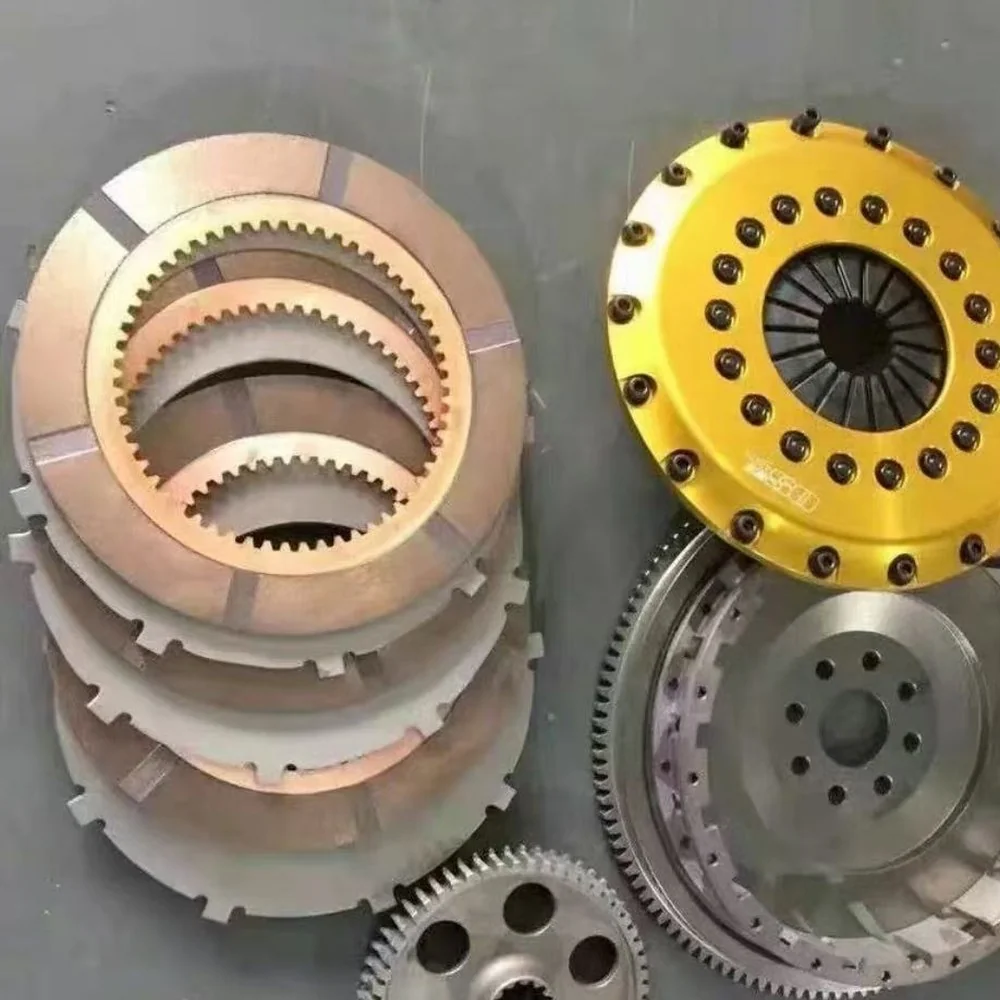
Gear Types We Reproduce
- Spur & helical — the everyday cases, module ~0.5–8
- Bevel & miter — right-angle drives
- Worm & worm wheel — high reduction, self-locking drives
- Internal / ring gears — planetary sets, hubs
- Splines & rack — linear and shaft couplings
- Cluster gears & gear-shafts — combined in one piece
Material & Hardening — Match or Upgrade
A discontinued gear is a chance to make it last longer. Typical choices: 4140 / 8620 steel (often case-hardened) for power transmission, 4340 for high load, brass or bronze for quiet light-duty drives, and Delrin / nylon for low-noise plastic gears. We can case-harden, through-harden, or nitride to match the original's wear life — or beat it.
Before swapping in a harder grade, check what the original material was carrying: on a light drive the soft gear is often the part meant to wear first — see what changes when you copy a part, and what must not.
Send the mating gear too, if you can. Even if it's fine, having both halves lets us confirm module, pressure angle and backlash precisely — the single best way to guarantee the new gear meshes correctly. No drawing? Start with no-CAD ordering or our reverse engineering service.
What to Send Us for the Fastest Quote
The more of these we have, the quicker and more precise the quote — but the worn gear alone is enough to begin:
- The gear itself — even chipped or missing teeth; we reconstruct from what remains.
- The mating gear, if you have it — the single best cross-check for module, pressure angle and backlash.
- The shaft bore and keyway / spline details, or the shaft it mounts on.
- The centre distance or a photo of the gear in its housing.
- What it drives and how hard — speed and load guide the material and hardening choice.
No measuring tools to hand? A clear photo next to a ruler plus the tooth count gets us started; we confirm every critical value before cutting metal. The same workflow lets us reproduce a discontinued gear as a one-off prototype or a small batch — there's no minimum order.
Two caliper readings unlock most spur gears: module m = OD ÷ (z + 2), so a 13-tooth gear with a 30.0 mm tip diameter is module 2. Pressure angle is 20° on most modern equipment and 14.5° on older American machines. Replacements are typically cut in C45 or 42CrMo4 and case-hardened where the original was, with geometry checked against the DIN 3962 accuracy classes.
The same method on neighbouring assemblies: engine parts go back to the original bolt circle, and a discontinued pump part can be quoted from photographs plus one known dimension.
Frequently Asked Questions
Yes. We measure module/pitch, pressure angle, tooth count, helix angle, face width and bore from the worn gear and reconstruct the correct tooth form mathematically — not by copying the worn surface.
Spur, helical, bevel, worm and worm wheel, internal ring gears, splines and rack, plus clusters and gear-shafts. Module ~0.5–8 is routine.
Yes. Because the tooth form is a standard involute defined by the parameters, a gear missing several teeth is fully reconstructed from what remains plus the mating gear.
Commonly 4140/8620 steel (case-hardened), 4340 for high load, brass/bronze for light duty, Delrin/nylon for quiet plastic gears. We match or upgrade the original and harden as needed.
Tooth count is simply counted. Module/pitch is derived from the outside diameter and tooth count, then verified against the mating gear and the centre distance. Pressure angle is measured with gear-tooth gauges or on a profile measurement. Even a gear missing several teeth can be fully reconstructed this way.
Quote a Replacement Gear
Send the worn gear (and its mate if possible). Engineers reply within 12 hours.
// Qty & price
1 pc
Sample price
Confirm fit before a run
10–50
Unit price drops
Setup cost shared
100+
Best price
All tiers quoted upfront
- →No distributor — you pay the maker directly
- →CAD saved after first order — reorder anytime at lower unit price
No drawing needed · Files kept confidential