// Torque Calculator — size · class · lubrication
Coarse thread, new uncoated fastener, steel joint. Stainless values already assume µ ≈ 0.20 (MoS₂ option ≈ anti-seize). Classes 4.6/5.8 are derived from the 8.8 base by yield ratio (240/400 vs 640 MPa). Titanium Gr5: conservative guide equal to class 8.8 preload — always assemble with anti-seize. Brass: guide value ≈ 0.4× class 8.8 — verify on soft joints. Safety-critical joints: verify per VDI 2230 or the equipment manual.
Torque Chart — Coarse Thread, Classes 8.8 / 10.9 / 12.9
Values in newton-metres (Nm) for new, uncoated bolts with a steel nut or steel tapped hole, thread and head bearing surface lightly oiled (µtotal = 0.14), preload at 90% of yield per the VDI 2230 convention. If your bolts are lubricated or fully degreased, apply the correction factors below.
Need a bolt or nut in one of these sizes in a length, class or material the catalogue does not stock? Any row is made to order from 1 piece, standard sizes can also be supplied from stock, quote in 12 hours, delivered DDP. Get a price on WhatsApp · Quote form
| Size | Class 8.8 | Class 10.9 | Class 12.9 |
|---|---|---|---|
| M3 | 1.3 12 in-lb | 2.0 18 in-lb | 2.3 20 in-lb |
| M4 | 2.9 26 in-lb | 4.3 38 in-lb | 5.0 44 in-lb |
| M5 | 5.8 51 in-lb | 8.4 74 in-lb | 9.9 88 in-lb |
| M6 | 9.9 88 in-lb | 14.5 11 ft-lb | 17 13 ft-lb |
| M8 | 24 18 ft-lb | 35 26 ft-lb | 41 30 ft-lb |
| M10 | 47 35 ft-lb | 69 51 ft-lb | 81 60 ft-lb |
| M12 | 81 60 ft-lb | 119 88 ft-lb | 139 103 ft-lb |
| M14 | 129 95 ft-lb | 190 140 ft-lb | 222 164 ft-lb |
| M16 | 198 146 ft-lb | 291 215 ft-lb | 341 252 ft-lb |
| M18 | 283 209 ft-lb | 402 296 ft-lb | 471 347 ft-lb |
| M20 | 402 296 ft-lb | 570 420 ft-lb | 667 492 ft-lb |
| M22 | 552 407 ft-lb | 783 578 ft-lb | 917 676 ft-lb |
| M24 | 691 510 ft-lb | 981 724 ft-lb | 1148 847 ft-lb |
| M27 | 1022 754 ft-lb | 1452 1071 ft-lb | 1700 1254 ft-lb |
| M30 | 1387 1023 ft-lb | 1969 1452 ft-lb | 2305 1700 ft-lb |
| M33 | 1884 1390 ft-lb | 2676 1974 ft-lb | 3132 2310 ft-lb |
| M36 | 2418 1783 ft-lb | 3435 2534 ft-lb | 4020 2965 ft-lb |
Need a bolt or stud for a torque the catalogue size cannot take? EKINSUN is a custom parts manufacturer: we make bolts and studs in the class, length and thread your joint needs to your drawing, sketch or sample — 42CrMo4 for 8.8 to 12.9, 304 or 316L stainless steel or titanium — from 1 piece, quoted in 12 hours and shipped duties paid. Standard sizes can often be supplied from stock; the more pieces, the lower the unit price. All custom fasteners →
M9, M11, M15 and M17 — sizes no torque table carries
Torque tables are built on the preferred sizes, so a bolt in one of the in-between diameters has no published figure — not because it is exotic, but because DIN 933 and ISO 4017 never gave those diameters a bolt to tabulate. The thread is standard: ISO 261 gives M9 a 1.25 mm coarse pitch, M11 a 1.5, M25 and M28 2 mm.
You can still get the number, because torque figures are derived, not measured. Work from the tensile stress area: As = π/4 × ((d2+d3)/2)², which gives 28.9 mm² for M7×1, 48.1 for M9×1.25, 72.3 for M11×1.5, 145.1 for M15×1.5, 191.0 for M17×1.5, 420.0 for M25×2 and 536.0 for M28×2. The same formula returns 58.0 mm² at M10 and 84.3 at M12 — the published values — so these sit on the same basis as the rows above, and the class and friction assumptions in this chart carry over unchanged. Full table for M7, M9, M11, M15, M17, M25 and M28 →
Where this chart stops applying — and what we machine instead
These figures assume a standard bolt with a full shank cross-section. Change the shank and the torque has to be recalculated on the section that actually carries the load, not on the thread. EKINSUN LTD is a custom parts manufacturer in Guangdong, China and makes those non-catalogue fasteners from one piece, quoted within 12 hours.
| Your case | Stocked? | How we make it |
|---|---|---|
| A standard bolt in a catalogue size and class | Yes, off the shelf | Buy it from a distributor — cheaper and faster than anything machined. Honest recommendation. Standard parts: ask us too — we may have them in stock. |
| Reduced or waisted shank, so the shank is thinner than the thread | Rare, a handful of sizes | Turned to drawing; torque referenced to the shank area, which is now the weakest section, not the thread stress area |
| Hollow or cross-drilled bolt | Only as a banjo bolt | Bore diameter free; the load-bearing area and its torque limit are stated in the quotation |
| A grip length that must land exactly, thread clear of the shear plane | Catalogues jump in 5 or 10 mm steps | Cut to the exact grip so the shank carries the shear — a thread across a shear plane is a different, lower rating |
| A fine pitch combination nobody lists | Common pitches only | Single-point cut to any pitch; the larger stress area raises the torque figure accordingly |
| Class 10.9 or 12.9 that also needs corrosion protection | Electroplated zinc is a risk | Zinc flake instead of electroplating, to avoid hydrogen embrittlement under ISO 4042 |
Reading the units: every cell carries the imperial equivalent under the N·m figure. Above 10 ft-lb that second line is in ft-lb; below it the value switches to in-lb, because that is the range US torque wrenches are actually graduated in — an M4 at 2.9 N·m is 26 in-lb, and a wrench asking for "2.1 ft-lb" is not a wrench you can set. Conversions used: 1 N·m = 0.7376 ft-lb = 8.851 in-lb.
Reading the classes: the first figure is tensile strength in hundreds of MPa, and the product of both figures is yield in tens of MPa — so 8.8 = 800 MPa tensile / 640 MPa yield, 10.9 = 1000/900, 12.9 = 1200/1080. Same size, higher class, higher preload, higher torque. If your bolt head carries no class marking, treat it as 4.6/5.8 commercial hardware and do not use this table's values.
Stainless Steel A2 / A4 Torque Chart (Classes 70 & 80)
Stainless bolts are weaker than 8.8 (class 70 yields ≈450 MPa) and gall easily, so they get their own table — commonly published for µtotal ≈ 0.20 with anti-seize recommended. A2 (≈304 chemistry) and A4 (≈316, marine) share the same property classes, so torque values are identical; only corrosion resistance differs.
Need an A2 or A4 stainless bolt in one of these sizes, or a non-catalogue length or thread? Any row is made to order from 1 piece, standard sizes can also be supplied from stock, quote in 12 hours, delivered DDP. Get a price on WhatsApp · Quote form
| Size | Class 70 (A2-70 / A4-70) | Class 80 (A2-80 / A4-80) |
|---|---|---|
| M3 | 1.1 9.7 in-lb | 1.5 13 in-lb |
| M4 | 2.6 23 in-lb | 3.4 30 in-lb |
| M5 | 5.1 45 in-lb | 6.8 60 in-lb |
| M6 | 8.8 78 in-lb | 11.7 104 in-lb |
| M8 | 21 15 ft-lb | 29 21 ft-lb |
| M10 | 44 32 ft-lb | 58 43 ft-lb |
| M12 | 74 55 ft-lb | 99 73 ft-lb |
| M14 | 119 88 ft-lb | 158 117 ft-lb |
| M16 | 183 135 ft-lb | 244 180 ft-lb |
| M18 | 259 191 ft-lb | 345 254 ft-lb |
| M20 | 364 268 ft-lb | 485 358 ft-lb |
| M22 | 495 365 ft-lb | 660 487 ft-lb |
| M24 | 630 465 ft-lb | 840 620 ft-lb |
| M27 | 920 679 ft-lb | 1225 904 ft-lb |
| M30 | 1246 919 ft-lb | 1660 1224 ft-lb |
Ordering stainless hardware in non-catalog dimensions? We machine custom stainless bolts in A2/304 and A4/316 to drawing, from single pieces.
Fine Pitch Torque Chart
Fine threads have a larger tensile stress area than coarse threads of the same nominal size, so preload and torque run slightly higher. Don't approximate — use the dedicated values:
Need a fine-pitch bolt or nut in one of these threads? Any row is made to order from 1 piece, standard sizes can also be supplied from stock, quote in 12 hours, delivered DDP. Get a price on WhatsApp · Quote form
| Thread | Class 8.8 | Class 10.9 | Class 12.9 |
|---|---|---|---|
| M8 × 1 | 26 19 ft-lb | 38 28 ft-lb | 44 32 ft-lb |
| M10 × 1.25 | 49 36 ft-lb | 72 53 ft-lb | 84 62 ft-lb |
| M12 × 1.25 | 88 65 ft-lb | 129 95 ft-lb | 151 111 ft-lb |
| M12 × 1.5 | 86 63 ft-lb | 126 93 ft-lb | 148 109 ft-lb |
| M14 × 1.5 | 138 102 ft-lb | 203 150 ft-lb | 237 175 ft-lb |
| M16 × 1.5 | 210 155 ft-lb | 308 227 ft-lb | 360 266 ft-lb |
| M18 × 1.5 | 308 227 ft-lb | 438 323 ft-lb | 513 378 ft-lb |
| M20 × 1.5 | 431 318 ft-lb | 615 454 ft-lb | 719 530 ft-lb |
| M22 × 1.5 | 580 428 ft-lb | 826 609 ft-lb | 966 712 ft-lb |
| M24 × 2 | 731 539 ft-lb | 1044 770 ft-lb | 1221 901 ft-lb |
Dry vs Lubricated: the Correction Most Charts Skip
Tightening torque mostly fights friction — only a small share becomes bolt tension. Change the friction and the "right" torque changes with it, which is why quoting one number per size without stating the thread condition is meaningless:
- Lightly oiled, as-delivered (µ ≈ 0.14): use the table values above — this is the standard assumption.
- MoS₂ paste, assembly grease, wax (µ ≈ 0.10): multiply by ≈0.82. Applying dry-table torque to well-lubricated threads can stretch the bolt past yield.
- Degreased, bone-dry threads (µ ≈ 0.20): multiply by ≈1.25 to reach the same preload.
- Threads into aluminum (6061, 7075): the tapped hole strips before the bolt fails — cut torque substantially, use ≥1.5–2×d engagement, or fit a threaded insert. Details in our stainless-in-aluminum guide.
Quick Answers by Size
Every answer below is for a new, plain (uncoated) bolt with a dry thread, µ = 0.14, tightened to 90 % of yield — the VDI 2230 convention the tables above use; a lubricated thread takes less, see the correction section above. The class values (8.8 = 800 / 640 N/mm², see the bolt grade chart) apply just as much to a bolt no catalogue stocks — a longer shank, a special head, a left-hand or fine thread — which is what special fasteners machined to drawing are for.
What torque for an M5 bolt?
An M5 bolt in property class 8.8 is tightened to 5.8 N·m (51 in-lb) dry, at µ = 0.14 and 90 % yield utilisation; class 10.9 takes 8.4 N·m and class 12.9 takes 9.9 N·m for the same M5 coarse thread.
Coarse M5: 5.8 Nm · 51 in-lb (8.8), 8.4 Nm · 74 in-lb (10.9), 9.9 Nm · 88 in-lb (12.9); stainless A2/A4-70 ≈ 5.1 Nm. Small screws are torn off easily by power tools — use a torque-limiting driver near these values.
What torque for an M6 bolt?
An M6 bolt in property class 8.8 is tightened to 9.9 N·m (88 in-lb) dry, at µ = 0.14 and 90 % yield utilisation; class 10.9 takes 14.5 N·m and class 12.9 takes 17 N·m for the same M6 coarse thread.
Coarse M6: 9.9 Nm · 88 in-lb (8.8), 14.5 Nm · 11 ft-lb (10.9), 17 Nm · 13 ft-lb (12.9); A2/A4-70 ≈ 8.8 Nm. M6 into tapped aluminum housings is the classic stripped-thread case — drop the torque or spec an insert.
What torque for an M8 bolt?
An M8 bolt in property class 8.8 is tightened to 24 N·m (18 ft-lb) dry, at µ = 0.14 and 90 % yield utilisation; class 10.9 takes 35 N·m and class 12.9 takes 41 N·m for the same M8 coarse thread.
Coarse M8: 24 Nm · 18 ft-lb (8.8), 35 Nm · 26 ft-lb (10.9), 41 Nm · 30 ft-lb (12.9); fine M8×1: 26/38/44 Nm (19/28/32 ft-lb); stainless 70/80: 21/29 Nm (15/21 ft-lb). The most-asked size on this chart — and the answer changes ±20% with lubrication, so check the thread condition first.
What torque for an M10 bolt?
An M10 bolt in property class 8.8 is tightened to 47 N·m (35 ft-lb) dry, at µ = 0.14 and 90 % yield utilisation; class 10.9 takes 69 N·m and class 12.9 takes 81 N·m for the same M10 coarse thread.
Coarse M10: 47 Nm · 35 ft-lb (8.8), 69 Nm · 51 ft-lb (10.9), 81 Nm · 60 ft-lb (12.9); fine M10×1.25: 49/72/84 Nm (36/53/62 ft-lb); stainless 70/80: 44/58 Nm (32/43 ft-lb).
What torque for an M12 bolt?
An M12 bolt in property class 8.8 is tightened to 81 N·m (60 ft-lb) dry, at µ = 0.14 and 90 % yield utilisation; class 10.9 takes 119 N·m and class 12.9 takes 139 N·m for the same M12 coarse thread.
Coarse M12: 81 Nm · 60 ft-lb (8.8), 119 Nm · 88 ft-lb (10.9), 139 Nm · 103 ft-lb (12.9). Automotive fine pitches are common here — M12×1.25 runs 88/129/151 Nm (65/95/111 ft-lb) and M12×1.5 runs 86/126/148 Nm (63/93/109 ft-lb).
What torque for an M14 bolt?
An M14 bolt in property class 8.8 is tightened to 129 N·m (95 ft-lb) dry, at µ = 0.14 and 90 % yield utilisation; class 10.9 takes 190 N·m and class 12.9 takes 222 N·m for the same M14 coarse thread.
Coarse M14: 129 Nm · 95 ft-lb (8.8), 190 Nm · 140 ft-lb (10.9), 222 Nm · 164 ft-lb (12.9); M14×1.5: 138/203/237 Nm (102/150/175 ft-lb); stainless 70/80: 119/158 Nm (88/117 ft-lb).
What torque for an M16 bolt?
An M16 bolt in property class 8.8 is tightened to 198 N·m (146 ft-lb) dry, at µ = 0.14 and 90 % yield utilisation; class 10.9 takes 291 N·m and class 12.9 takes 341 N·m for the same M16 coarse thread.
Coarse M16: 198 Nm · 146 ft-lb (8.8), 291 Nm · 215 ft-lb (10.9), 341 Nm · 252 ft-lb (12.9); M16×1.5: 210/308/360 Nm (155/227/266 ft-lb). From M16 up, verify with a calibrated wrench — hand feel is hopeless at these levels.
What torque for an M18 bolt?
An M18 bolt in property class 8.8 is tightened to 283 N·m (209 ft-lb) dry, at µ = 0.14 and 90 % yield utilisation; class 10.9 takes 402 N·m and class 12.9 takes 471 N·m for the same M18 coarse thread.
Coarse M18: 283 Nm · 209 ft-lb (8.8), 402 Nm · 296 ft-lb (10.9), 471 Nm · 347 ft-lb (12.9); M18×1.5: 308/438/513 Nm (227/323/378 ft-lb).
What torque for an M20 bolt?
An M20 bolt in property class 8.8 is tightened to 402 N·m (296 ft-lb) dry, at µ = 0.14 and 90 % yield utilisation; class 10.9 takes 570 N·m and class 12.9 takes 667 N·m for the same M20 coarse thread.
Coarse M20: 402 Nm · 296 ft-lb (8.8), 570 Nm · 420 ft-lb (10.9), 667 Nm · 492 ft-lb (12.9); stainless 70/80: 364/485 Nm (268/358 ft-lb). Structural M20 connections normally follow the joint spec (e.g. EN 1090 preloading), not a generic chart.
What torque for an M24 bolt?
An M24 bolt in property class 8.8 is tightened to 691 N·m (510 ft-lb) dry, at µ = 0.14 and 90 % yield utilisation; class 10.9 takes 981 N·m and class 12.9 takes 1148 N·m for the same M24 coarse thread.
Coarse M24: 691 Nm · 510 ft-lb (8.8), 981 Nm · 724 ft-lb (10.9), 1148 Nm · 847 ft-lb (12.9); M24×2: 731/1044/1221 Nm (539/770/901 ft-lb); stainless 70/80: 630/840 Nm (465/620 ft-lb). At this size, thread condition swings the number by hundreds of Nm — state it on the drawing. Large and oversize bolts beyond catalog ranges are our specialty: see large custom bolts.
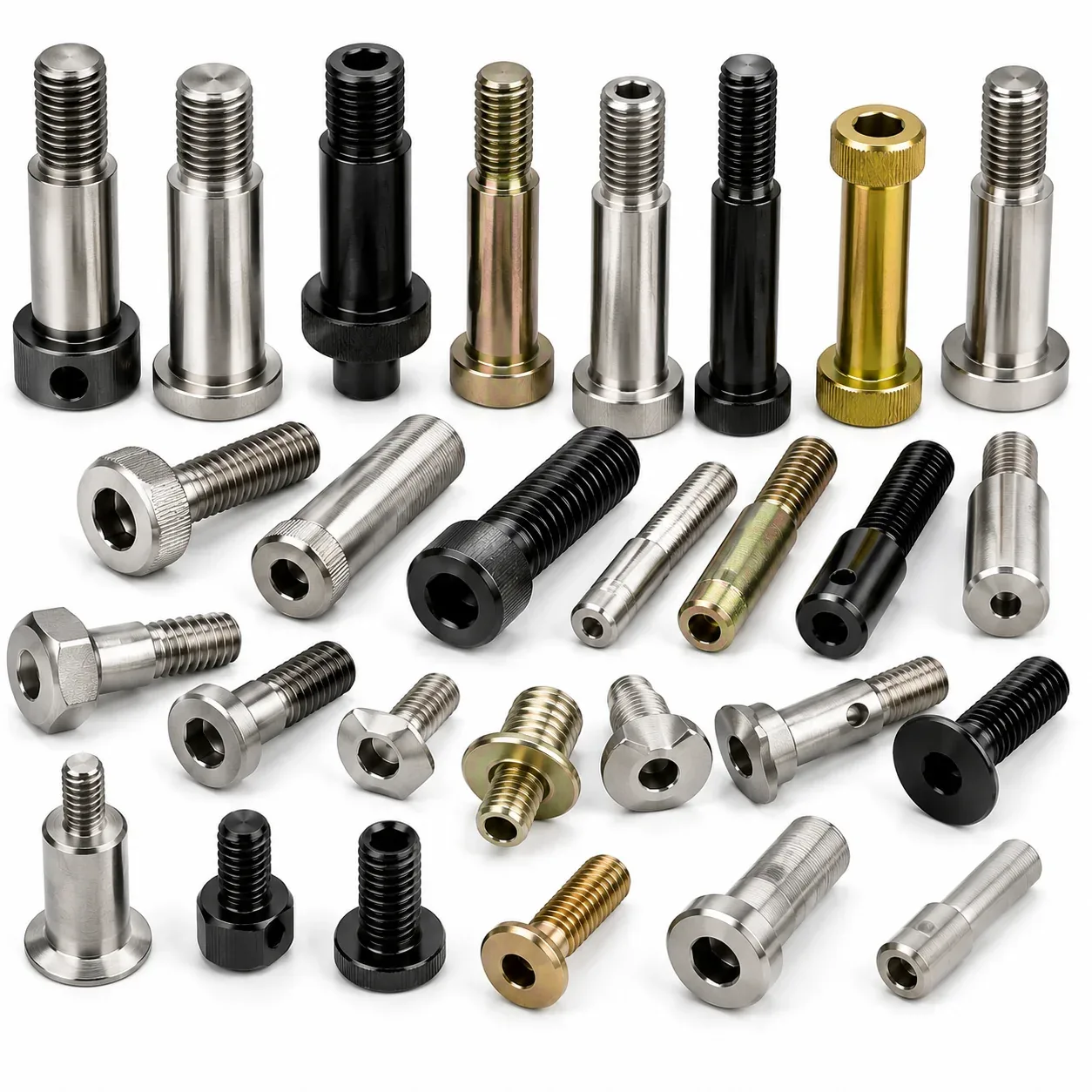
When this chart doesn't apply: non-standard threads, oversize or repaired threads, special materials (titanium, brass), reused or coated bolts, and any safety-critical joint. Those need a per-joint calculation — and if the bolt itself can't be bought, we machine non-standard thread bolts and replacement bolts from a sample, from one piece, with the torque guidance included.
When this chart stops being enough: A torque figure is only valid while the bolt is the weakest thing in the joint. It stops being valid when: the female thread is in aluminium or a casting and will strip long before the bolt yields, so the bolt class is the wrong limit entirely; the bolt is stainless going into aluminium, where galling seizes the thread before the wrench reaches the number; the grade looks stronger than it is - A4-80 reads like a big number but its 800 MPa tensile is below a plain 8.8 above M16; the pitch is fine or non-standard, so the tension for a given torque is not what the coarse table says; or the fastener simply is not made in that length, hand or head. That last one is most of our work. We machine the part that the table cannot describe — special screws and bolts cut to your size, double-end studs with two different threads, or when the thread in the part is the thing that failed. From one piece, quoted within 12 hours.
In a tapped aluminium plate, 2 × d of engagement also sets the plate thickness: an M8 needs 16 mm of full thread and a blind hole drilled 20–22.5 mm deep, so the plate has to be thicker than that; drill depths from M3 to M20 are on plates with tapped holes.
A shoulder bolt is torqued on its thread, not its shoulder: an ISO 7379 bolt with a 10 mm shoulder carries an M8 thread, so the M8 row applies, and a custom shoulder bolt with a non-catalogue shoulder keeps the thread of the nearest standard size.
Torque Chart FAQ
24 Nm / 18 ft-lb (8.8), 35 Nm / 26 ft-lb (10.9), 41 Nm / 30 ft-lb (12.9) — coarse thread, lightly oiled. Stainless A2/A4: 21 Nm / 15 ft-lb (70) or 29 Nm / 21 ft-lb (80).
18 ft-lb for class 8.8, 26 ft-lb for 10.9 and 30 ft-lb for 12.9 — coarse thread, lightly oiled. Every table on this page carries the ft-lb figure under the N·m value, so you never have to convert by hand. Below roughly 10 ft-lb the numbers are given in in-lb instead, because that is the range most US torque wrenches are actually graduated in: an M4 at 2.9 N·m reads 26 in-lb, not 2.1 ft-lb.
Multiply N·m by 0.7376 for ft-lb, or by 8.851 for in-lb. Going the other way, multiply ft-lb by 1.3558. A rough field check: ft-lb ≈ three quarters of the N·m figure.
Strength classes: first figure = tensile in hundreds of MPa, product of both = yield in tens of MPa. 8.8 → 800/640 MPa; 10.9 → 1000/900; 12.9 → 1200/1080.
Yes — with MoS₂ or assembly paste apply ≈0.82× the table value; degreased dry threads need ≈1.25×. Torque is mostly friction, so the thread condition decides the number.
No — A2/A4 class 70 is markedly weaker than 8.8 and galls without anti-seize. Use the dedicated stainless table above.
Slightly, yes: fine threads have a larger stress area — e.g. M12×1.25 takes 88 Nm (8.8) vs 81 Nm coarse. Use the fine-pitch table.
Tapped 6061/7075 strips before the bolt yields. Reduce torque substantially, use 1.5–2×d thread engagement, or spec a threaded insert. Drilling or tapping the hole yourself? See the metric clearance hole & tap drill chart.
Bolts tightened to these near-yield values may be reused only if the joint spec allows and they're undamaged; torque-to-yield and stretch bolts are single-use. When in doubt, replace — the bolt is the cheapest part of the joint.
Yes — download the free PDF with all three tables and the lubrication corrections. No email required.
Yes — A2/A4 class 70 yields around 450 MPa versus 640 MPa for 8.8, so torques are lower, and stainless galls easily so friction is higher and anti-seize is recommended. Use the dedicated A2/A4 table, not the carbon-steel one.
Fine-pitch threads have a larger stress area, so they carry slightly higher preload and torque — for example M12×1.25 at 88 Nm (8.8) versus 81 Nm for coarse M12. Use the fine-pitch table for fine threads rather than approximating from coarse values.
Standard tables assume a steel nut or steel tapped hole. Threads tapped directly into aluminum such as 6061 or 7075 strip long before the bolt yields — reduce torque substantially (often to roughly 60% or per joint calculation), increase engagement length to at least 1.5–2×d, or use a threaded insert.
Free PDF Chart
All three tables + lubrication factors on one printable sheet.
Download PDF ↓Bolt You Can't Buy?
Non-standard thread, oversize, obsolete or worn sample — we machine custom bolts from 1 piece. Send a drawing, sketch or photo.