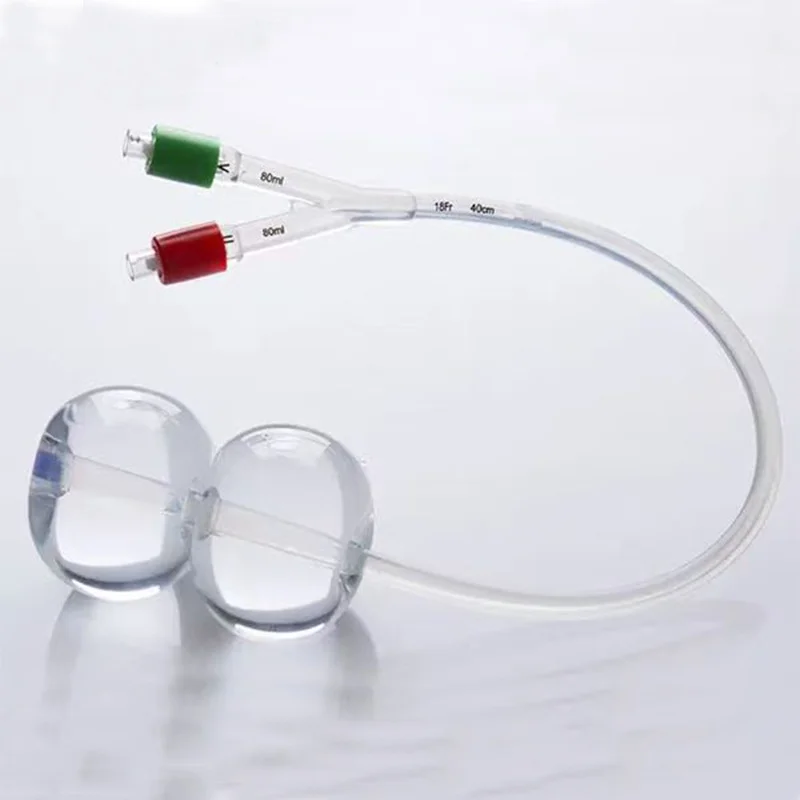
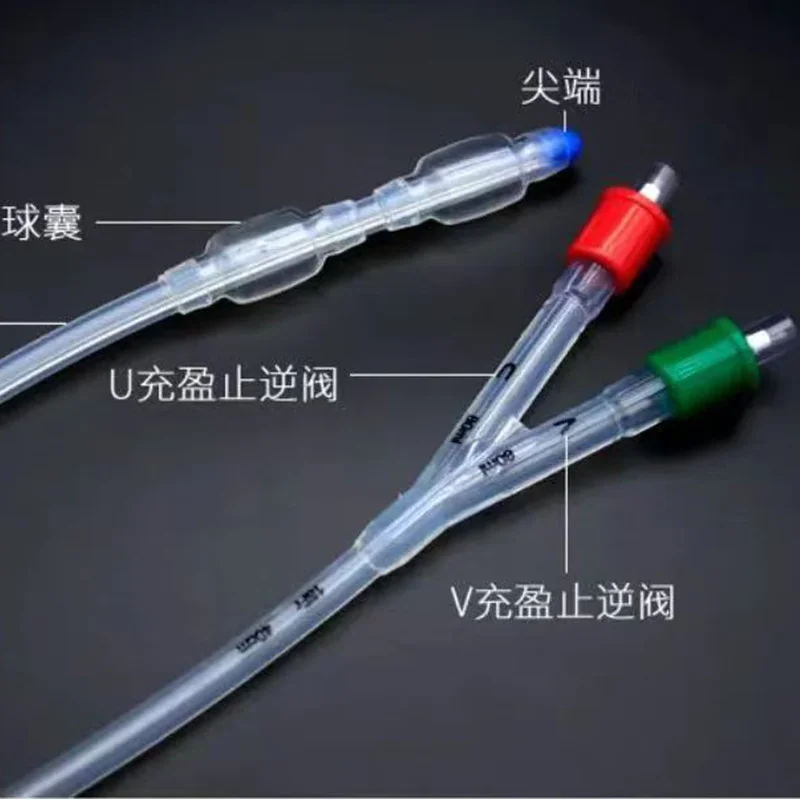
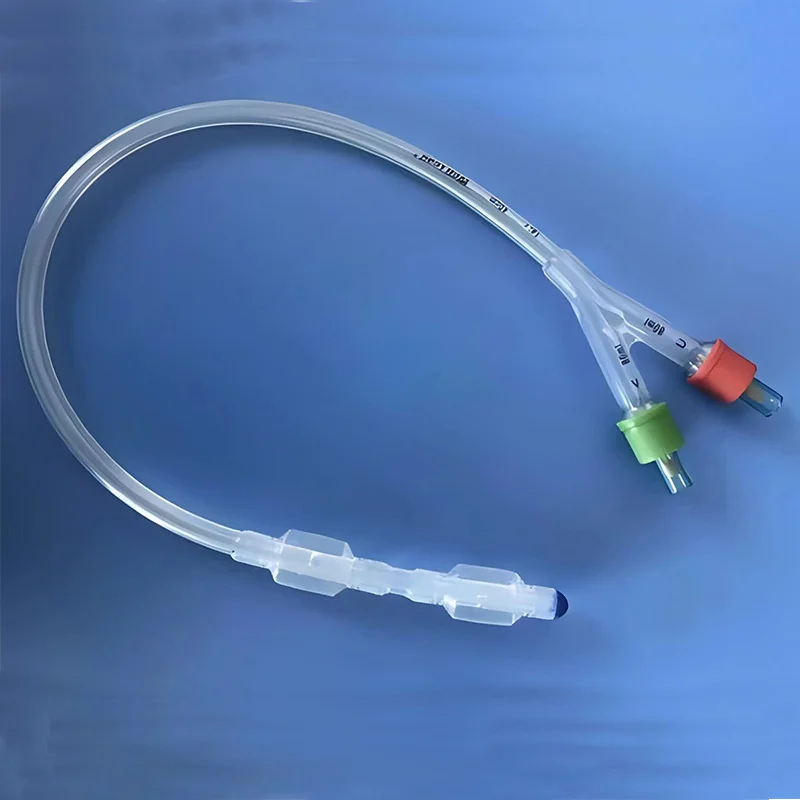
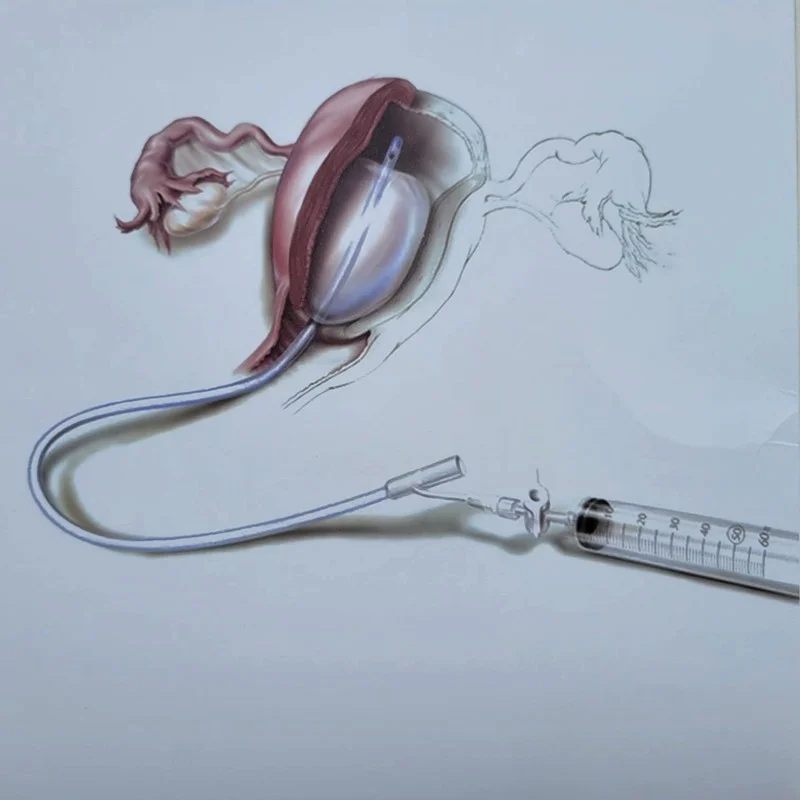
Drainage lumen allows continuous blood loss monitoring while balloon tamponade is maintained. One-way valve prevents accidental deflation.
EKINSUN manufactures three balloon catheter variants for obstetric and gynecologic applications: a cervical ripening balloon for pre-labor cervical dilation, a uterine tamponade balloon for postpartum hemorrhage (PPH) control, and a triangle-profile uterine stent for shape-matched hemostatic compression. All use medical-grade silicone balloons with one-way inflation valves and drainage lumens.
| Product variants | Cervical dilation / Uterine tamponade / Triangle stent |
| Balloon material | Medical-grade silicone |
| Catheter material | Medical PVC / Silicone shaft |
| Cervical balloon volume | 30ml to 80ml |
| Tamponade balloon volume | 300ml to 500ml |
| Triangle stent volume | 150ml to 300ml |
| Catheter diameter | 16Fr to 24Fr (variant dependent) |
| Drainage lumen | Yes - continuous blood loss monitoring |
| Inflation valve | One-way - prevents accidental deflation |
| Inflation medium | Sterile saline (0.9% NaCl) |
| Sterilization | EO sterile - SAL 10e-6 - single-use |
| Shelf life | 3 years from sterilization date |
| Certification | CE - ISO 13485 - ISO 10993 |
| Stock lead time | 7 to 10 business days |
| Custom MOQ | 500 pcs (custom shapes or volumes) |
GET PRICING - FREE SAMPLES - OEM QUOTE
Request OEM Quote WhatsApp - Reply Within HoursFREE SAMPLES FOR DISTRIBUTORS - NDA ON REQUEST - CE DOCS SUPPLIED
Three Product Lines — Clinical Applications
1. Cervical Dilation Balloon — Pre-Labor Cervical Ripening
Mechanical cervical ripening using a balloon catheter is an evidence-based alternative to pharmacological induction with prostaglandins. The balloon is introduced through the cervix and inflated with 30 to 80ml of sterile saline, applying mechanical pressure that stimulates prostaglandin release from the cervical stroma and promotes cervical softening and dilation. The balloon naturally expels when the cervix dilates to approximately 3cm.
Mechanical ripening with a balloon catheter has a favorable safety profile compared to prostaglandins — lower risk of uterine hyperstimulation, can be used in patients with a previous cesarean section, and is more suitable for outpatient induction protocols. Procurement context: obstetrics departments, labor and delivery units, and maternal-fetal medicine practices sourcing cervical ripening devices.
2. Uterine Tamponade Balloon — Postpartum Hemorrhage (PPH)
Postpartum hemorrhage is the leading cause of maternal mortality worldwide, accounting for approximately 27% of maternal deaths. Uterine balloon tamponade is a key step in the WHO and FIGO PPH management protocols when oxytocin and other first-line uterotonics fail to control bleeding from uterine atony. The balloon is rapidly inserted into the uterine cavity and inflated with 300 to 500ml of saline, compressing the uterine sinusoids and reducing bleeding. It buys time for surgical intervention or, in many cases, controls bleeding without surgery.
Our tamponade balloon includes a drainage lumen — allowing the clinical team to monitor ongoing blood loss through the catheter while the balloon is inflated, which is essential for assessing whether tamponade is effective. The one-way inflation valve maintains balloon pressure for the typical 12 to 24-hour tamponade period without the need for continuous syringe pressure.
3. Triangle Uterine Stent Balloon — Shape-Matched Hemostasis
The triangular cross-section of the uterine cavity means that a cylindrical balloon cannot achieve complete wall-to-wall contact — leaving untamponaded triangular recesses at the cornual regions where significant bleeding can continue. Our triangle-profile stent balloon is designed with a cross-sectional geometry that matches the uterine cavity, achieving full wall-to-wall hemostatic contact with less inflation volume (150 to 300ml) and more effective cornual region compression. This is particularly valuable in postpartum cases with cornual bleeding or placenta previa-related hemorrhage.
Comparison of Three Balloon Variants
| Product | Clinical Use | Volume | Key Advantage |
|---|---|---|---|
| Cervical Dilation Balloon | Pre-labor cervical ripening | 30 to 80ml | No hyperstimulation risk vs prostaglandins |
| Uterine Tamponade Balloon | PPH - uterine atony | 300 to 500ml | Standard WHO/FIGO protocol device |
| Triangle Stent Balloon | PPH - cornual bleeding | 150 to 300ml | Full wall-to-wall contact, less volume needed |
Quality and Safety Standards
All balloon catheters undergo the following quality control steps before release:
- Balloon inflation test: every balloon inflated to 1.5x maximum recommended volume and held for 5 minutes — zero tolerance for rupture or leak
- One-way valve function test: valve tested for leak-free retention of inflation pressure over 24-hour hold period
- Drainage lumen patency: every drainage lumen flow-tested at 100ml/min to confirm no obstruction
- Biocompatibility: silicone balloon and catheter materials tested per ISO 10993 (cytotoxicity, sensitization, intracutaneous reactivity)
- EO sterilization: SAL 10e-6 with EO residual testing per ISO 10993-7
Related products: see our HSG catheter for fallopian tube imaging, Foley catheters for urinary drainage, and laparoscopic trocars for minimally invasive gynecologic surgery.
Custom & OEM Cervical and Uterine Tamponade Balloon Catheters
We build cervical ripening and uterine tamponade balloon catheters to your clinical specification — balloon capacity, single- vs double-balloon layout, shaft length and French size, drainage lumen and sterile private-label packaging under your own brand. Configurations obstetric distributors do not stock off the shelf are our normal scope of work.
No engineering drawing is needed to begin. Send a reference sample or a written brief of the balloon volumes and lumen layout, and we model it, advise on silicone grade and quote tooling plus per-unit cost — low-volume bridge batches included. See the OEM medical molding service.
Related Products
HSG Catheter
Fallopian tube imaging
Foley Catheter
2-way, 3-way, pediatric
Laparoscopic Trocar
5 to 15mm disposable
Tracheotomy Kit
ICU PDT set
O2 Mask and Nebulizer
Respiratory disposables
Frequently Asked Questions
Cervical dilation balloons are small-volume (30 to 80ml) and are placed at the cervical os to mechanically ripen the cervix prior to labor induction — an alternative to prostaglandin pharmacological induction. Uterine tamponade balloons are large-volume (300 to 500ml) placed inside the uterine cavity to compress bleeding vessels and control postpartum hemorrhage (PPH). The two are used in different clinical scenarios and differ in balloon size and catheter design.
The triangle-profile stent balloon is designed to match the triangular shape of the human uterine cavity, unlike conventional cylindrical or spherical tamponade balloons. The triangular profile achieves wall-to-wall hemostatic contact with less saline volume needed — typically 150 to 300ml versus 300 to 500ml for cylindrical designs — reducing the risk of over-distension. The shape also prevents balloon migration out of the uterine cavity more effectively than cylindrical designs.
Yes. Our uterine balloon is designed for both vaginal delivery and post-cesarean uterine atony hemorrhage. In cesarean cases, the balloon is placed through the uterine incision under direct visualization before uterine closure, with the inflation tube and drainage lumen exiting through the cervix for monitoring. Clinical protocol confirmation with your obstetric team is recommended for technique-specific questions.
Yes. Our uterine tamponade catheter has a dedicated drainage lumen that allows continuous monitoring of ongoing uterine blood loss even while the balloon is inflated. This is a critical clinical advantage over single-lumen designs, as it allows the clinical team to assess hemostatic effectiveness without deflating the balloon.
Sterile saline (0.9% NaCl) is the standard inflation medium. Maximum recommended volumes: cervical dilation 80ml, uterine tamponade 500ml, triangle stent 300ml. Over-inflation beyond recommended volumes risks uterine wall ischemia and should be avoided. The balloon material is medical-grade silicone rated well beyond clinical inflation volumes for safety margin.
MOQ is 200 pcs for standard configurations available in stock. Stock items ship within 7 to 10 business days. Custom configurations (non-standard balloon volume, non-standard Fr size, custom packaging) require 500 pcs MOQ with 30 to 45 day lead time.
Yes. The one-way inflation valve prevents spontaneous balloon deflation during the tamponade period, which typically lasts 12 to 24 hours. The valve is tested for leak-free performance under 1.5x maximum recommended inflation pressure. An inflation volume gauge is included in each kit to assist accurate controlled inflation.
CE marking under EU MDR 2017/745, ISO 13485 manufacturing certificate, and EO sterilization validation certificate are standard. ISO 10993 biocompatibility data for all balloon and catheter materials is available in the technical file under NDA.
Yes. We can develop custom balloon geometries from client specifications or clinical consultation. New balloon mold development requires 500 pcs MOQ and a 45 to 60 day development timeline including first article approval. NDA signed before beginning any custom design work.
We can supply a complete PPH kit including the uterine balloon catheter, inflation syringe, drainage collection bag, and instruction card — all co-packed in a single sterile tray. This is commonly ordered by hospitals and distributors that want a single ready-to-use emergency hemorrhage kit rather than assembling individual components.