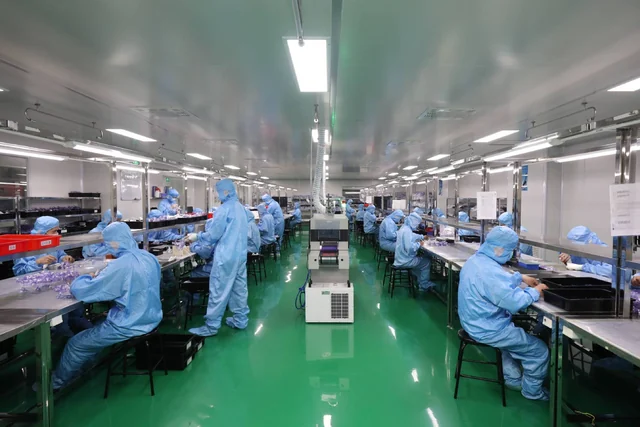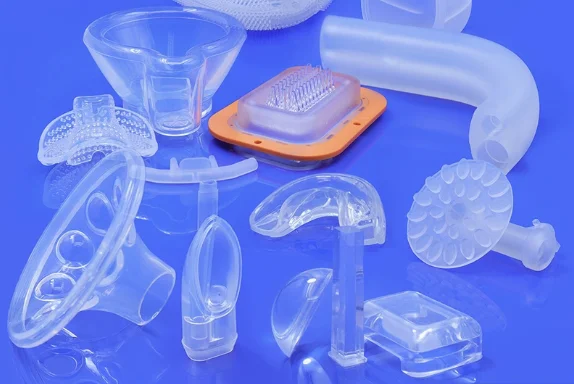

FDA 21 CFR 177.2600 and EU 10/2011 food-grade certified. ISO 10993 biocompatibility data available. NDA signed before receiving any proprietary design files.
EKINSUN operates dedicated LSR injection molding cells for custom silicone product development and production. We serve medical device brands, dental product companies, CPAP accessory manufacturers, and consumer health brands requiring food-grade or medical-grade silicone components with custom geometries, Shore hardness specifications, and regulatory compliance documentation.
| Product categories | Face masks / Nose pads / Dental guards / Mouthguards / Custom components |
| Material | Platinum-cured liquid silicone rubber (LSR) |
| Shore hardness range | Shore A 20 to 80 (specify per application) |
| Colors | Clear / Translucent / Custom Pantone (FDA pigments) |
| Food-grade certification | FDA 21 CFR 177.2600 / EU 10/2011 / LFGB |
| Medical-grade certification | ISO 10993 (cytotoxicity, sensitization, intracutaneous) |
| Overmolding | Available onto PC, ABS, PP, Nylon substrates |
| Design input accepted | STEP / IGES / STL / PDF drawing / Physical sample |
| Prototype tooling lead time | 15 to 20 days |
| Production tooling lead time | 20 to 50 days (cavity count dependent) |
| Production MOQ | 500 pcs after tooling approval |
| First article | 20 to 30 units + full dimensional FAR |
GET PRICING - FREE SAMPLES - OEM QUOTE
Request OEM Quote WhatsApp - Reply Within HoursFREE SAMPLES FOR DISTRIBUTORS - NDA ON REQUEST - CE DOCS SUPPLIED
Three Product Categories
1. Custom Silicone Face Masks
Silicone face masks are used in medical and consumer health applications where a conformal, skin-friendly seal is required: CPAP and BiPAP cushions and full-face masks, oxygen delivery masks with custom face seal geometry, and consumer skincare masks. The platinum-cured silicone material is hypoallergenic, does not cause contact dermatitis, and conforms to facial contours under gentle compression. Overmolding onto rigid PP or PC frames is available for masks requiring a structural outer shell with a soft sealing interface.
2. Silicone Nose Pads
Custom silicone nose pads are used on eyeglass frames, safety glasses, protective masks, and CPAP nasal pillows. The geometry must conform to the nasal anatomy of the target user population. Shore A 25 to 40 is typical for maximum comfort. Key manufacturing considerations include: dimensional accuracy of the pad geometry, surface finish (smooth vs. textured for anti-slip), and the attachment method (screw-on vs. push-on vs. overmolded). EKINSUN produces nose pads from customer-supplied drawings or from reverse-engineered samples.
3. Dental Guards and Mouthguards
Silicone dental guards are manufactured for three primary applications:
- Night guards (bruxism splints): Shore A 40 to 60; protects teeth from grinding damage during sleep; typically covers upper or lower arch; custom fit from dental impression
- Sports mouthguards: Shore A 50 to 70; absorbs impact forces to reduce dental and jaw injury; custom or boil-and-bite configurations; can be co-branded for sports teams and clubs
- Whitening trays: Shore A 25 to 35; ultra-soft for close adaptation to tooth surfaces; holds whitening gel in contact with enamel; custom from dental impression or standard arch form
Shore Hardness Selection Guide
| Shore A | Feel | Application |
|---|---|---|
| 20 to 30 | Very soft, gel-like | Whitening trays, thin skin-contact seals, CPAP nasal pillows |
| 30 to 45 | Soft rubber | CPAP cushions, nose pads, light-duty mouthguards, oxygen mask seals |
| 45 to 60 | Medium rubber | Night guards, moderate-impact sports guards, valve components |
| 60 to 70 | Firm rubber | High-impact sports mouthguards, structural seals |
| 70 to 80 | Hard rubber | Structural components, grips, high-pressure seals |
LSR OEM Development Process
- NDA — signed before receiving any design files or proprietary product information
- DFM consultation — we review your design for LSR-specific manufacturing requirements (draft angles, parting line, venting, gate placement) and suggest modifications if needed. Free of charge.
- Tooling quotation — 5 to 7 business days after receiving approved design files
- Prototype tooling — aluminum single-cavity tool, 15 to 20 days lead time, first article samples and FAR provided
- Design freeze and production tooling — hardened steel multi-cavity production mold, 30 to 45 days
- Pilot production — 500 pcs initial run with full QC documentation
- Mass production — ongoing supply with batch CoA and material certificates per shipment
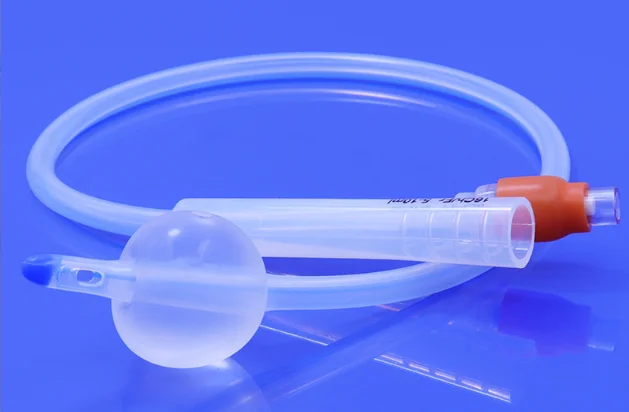
EKINSUN also manufactures platinum-cured silicone veterinary catheters and performs silicone overmolding for medical device component assemblies. Contact us to discuss your complete silicone component requirements as part of a broader OEM program.
Custom Silicone Masks, Nose Pads and Dental Guards — Molded to Your Shape
Every soft-silicone part we make is essentially bespoke: we mold custom food-grade silicone masks, nose pads and dental guards to your exact shape and durometer — from your impression, a 3D scan, or a physical sample of the part you want reproduced. Hardness, wall thickness, colour and surface finish are all specified by you.
You do not need CAD — a dental impression, a worn sample, or a sketch with key dimensions is enough for us to build the mold and quote. Low quantities are welcome for fitting trials. See the custom molding service.
Related Products
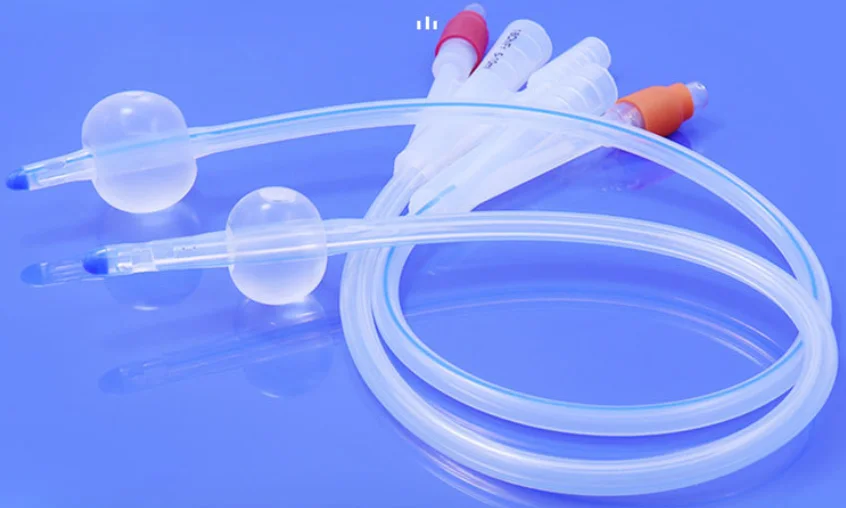
Silicone Vet Catheter
Platinum-cured, ISO 10993
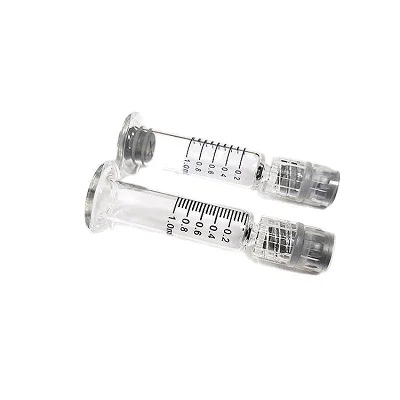
Pre-filled Syringe
Mesotherapy aesthetics
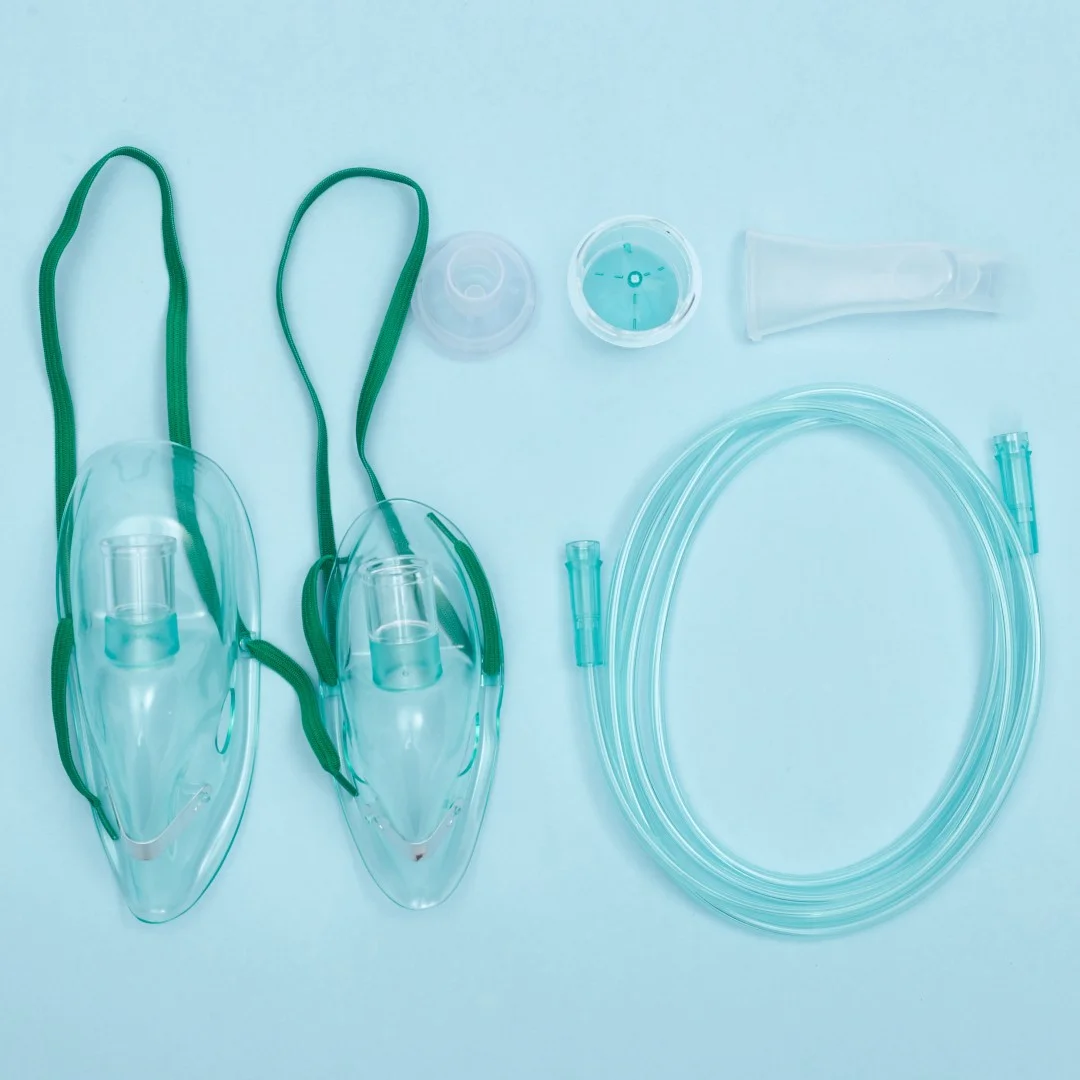
O2 Mask and Nebulizer
Respiratory face masks
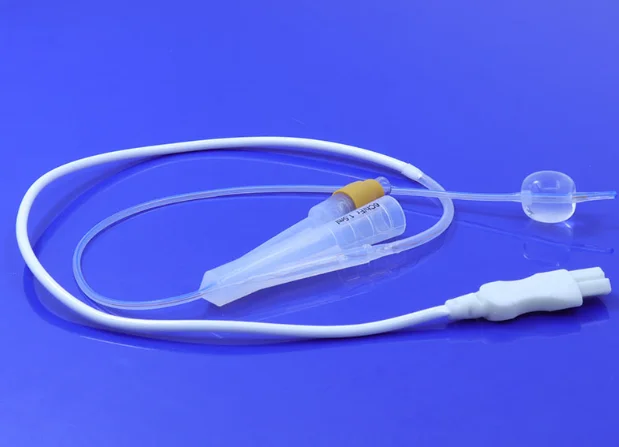
Foley Catheter
Silicone urinary catheter
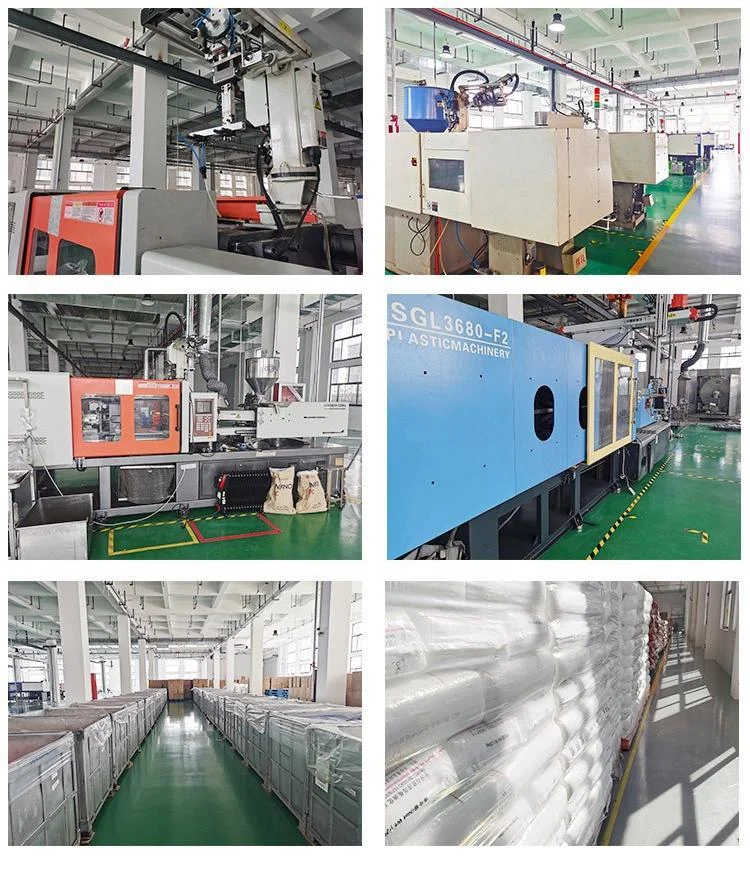
OEM Injection Molding
Custom medical plastics
Frequently Asked Questions
LSR injection molding uses a two-component platinum-cured silicone system (base + crosslinker) that is pumped in precise ratio through a static mixer into a heated mold (typically 150 to 200 degrees Celsius), where it cures in 20 to 60 seconds. Unlike thermoplastic injection molding where the material is melted then cooled, LSR starts liquid and becomes solid by chemical cure. This means LSR parts have no weld lines, excellent tear resistance, and consistent elasticity throughout the part. The process requires specialized injection equipment, precision temperature control, and different tooling design rules compared to thermoplastic molding.
Our food-grade liquid silicone rubber complies with: FDA 21 CFR 177.2600 (rubber articles intended for repeated use in food contact), EU Regulation 10/2011 (plastic materials and articles intended to contact food), and German LFGB (food contact materials). These certifications verify that the cured silicone material does not transfer harmful substances to food or body fluids at levels exceeding regulated limits. Material certification documents are supplied with every order.
We produce silicone in Shore A hardness from 20 (Soft, gel-like) to 80 (firm rubber) from the same facility. Dental applications typically require: night guards for bruxism - Shore A 40 to 60 (firm enough to resist grinding forces without excessive jaw muscle fatigue); sports mouthguards - Shore A 50 to 70 (impact absorption with structural integrity); whitening trays - Shore A 25 to 35 (soft, conformable for close adaptation to tooth surfaces); custom orthodontic appliances - Shore A 30 to 50. Specify intended clinical use and we recommend the appropriate hardness.
Yes. We accept design input in three formats: (1) 3D CAD files in STEP, IGES, or STL format for direct tooling design, (2) 2D drawings in PDF or DXF with critical dimensions annotated, or (3) physical samples (reverse-engineered by CMM measurement under NDA). LSR parts require specific design guidelines for draft angles, parting line placement, gate location, and venting - we provide DFM consultation at no charge before tooling quotation.
Standard single-cavity mold: 20 to 30 days. Multi-cavity production mold (4 to 16 cavities for high-volume products): 35 to 50 days. Tooling is manufactured from hardened P20 steel for production molds or aluminum for prototype tooling. First article samples (20 to 30 units) and a first article report (FAR) with full dimensional inspection are provided before production approval.
Production MOQ after tooling approval is 500 pcs. This applies to medical-grade and food-grade silicone products. Prototype or pre-production samples (20 to 50 units from prototype tooling) are available during the development phase before committing to production tooling. NDA is signed before beginning any custom development work.
Yes. 2-shot overmolding of silicone onto thermoplastic substrates (PC, ABS, PP, nylon) is available. Common applications include: CPAP mask frames (PC frame with silicone cushion overmolded), oxygen mask bodies (PP body with silicone face seal overmolded), and custom device handles (PP core with silicone grip overmolded). Overmolding requires surface preparation or primer application on the substrate for strong silicone-to-plastic adhesion.
Yes. Custom Pantone color matching in silicone is available using FDA-listed pigment dispersions. Transparent (clear), translucent (milky white), and full-color options are available. For food-grade and medical-grade products, all colorants must be approved for the intended contact application. Standard colors (clear, white, blue, red, green) are available from stock pigments. Custom Pantone colors require minimum 2,000 pcs per color.
Surface treatments available for LSR parts: (1) Plasma treatment - increases surface energy for improved printing adhesion or bonding; (2) Printing - screen printing, pad printing, or laser marking for logos and part numbers; (3) Punching and die-cutting - for thin silicone sheet products; (4) Assembly and bonding - silicone-to-silicone bonding with platinum catalyst, silicone-to-plastic bonding with primer. EO sterilization for medical-grade products is available for completed assemblies.
Food-grade silicone (FDA 21 CFR / EU 10/2011) is certified safe for incidental oral or nasal contact with food or liquids - it does not transfer substances above regulatory limits in food contact tests. Medical-grade silicone adds ISO 10993 biocompatibility testing for prolonged direct tissue contact (cytotoxicity, sensitization, intracutaneous reactivity, systemic toxicity). For products that contact mucous membranes, wounds, or are implanted, medical-grade certification is required. For products with only incidental or indirect body contact (masks, handles, grips), food-grade is typically sufficient.