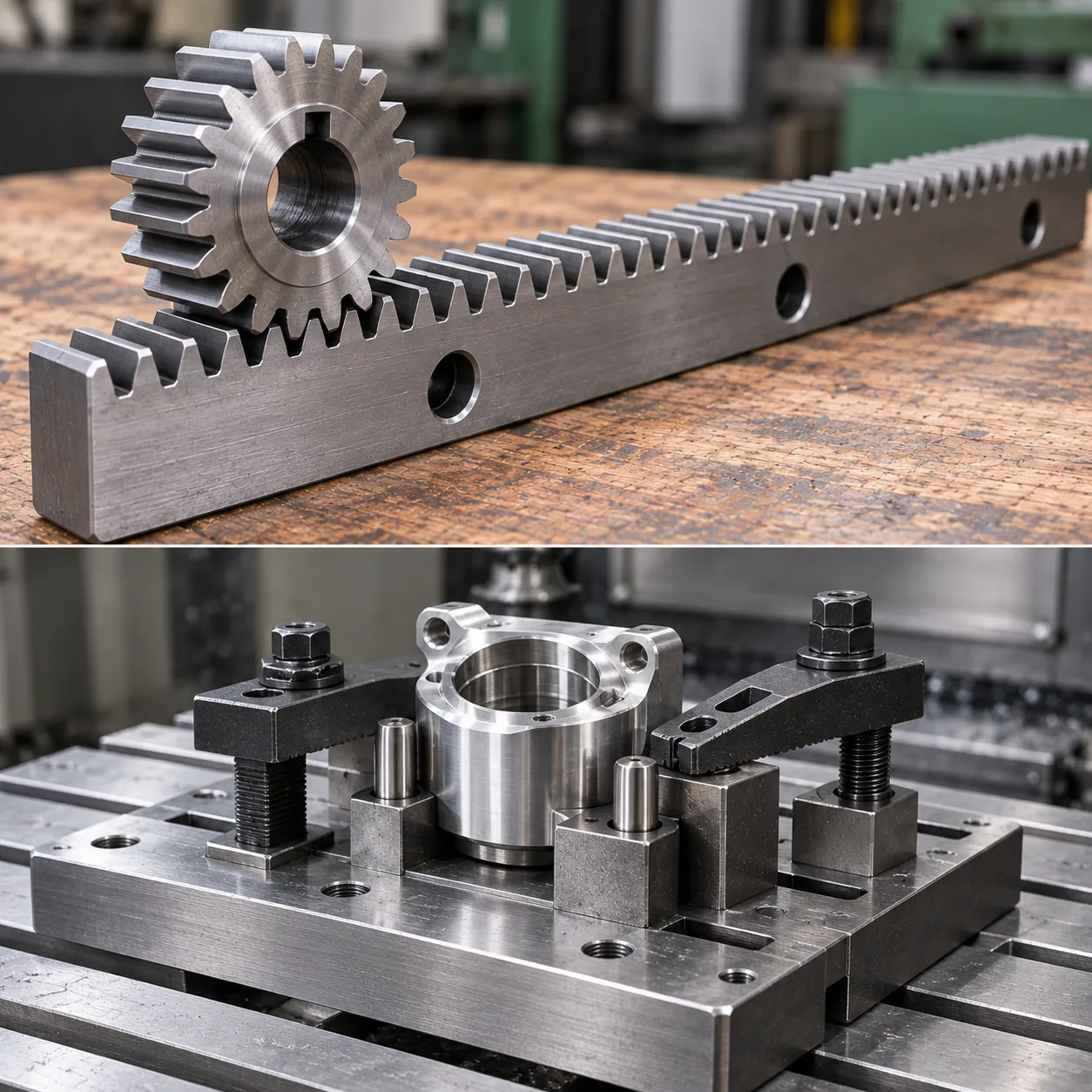
We Make the Fixture — Not Another Explainer
There is no shortage of articles explaining what a jig is versus a fixture. There is a shortage of shops that will take your part, your operation and a single fixture order, and hand you back a hardened tool that holds tolerance. That is what this page is for. Send us the part the fixture has to hold — or a drawing, or a worn fixture that's stopped locating properly — and we machine the replacement or the new design in hardened steel, MOQ 1.
Most fixture problems are not design problems; they are manufacturing problems. A locating corner that should be sharp comes back with a 3mm radius because it was milled. A datum face wears in six months because it was left soft. A pair of dowel holes drift because they were drilled, not jig-bored or wire-cut. We build fixtures the way they have to be built to stay accurate — which is the part the explainers skip.
Fixtures & Jigs We Machine
Tell us the operation and the part; we'll build the tool around it. The most common work, by function:
Machining Fixtures
Milling, turning, boring and grinding fixtures that hold the part in the same position every cycle — clamps, locators, rest pads and stops sized to your machine table.
CNC milling →Checking & Inspection Fixtures
Hardened, ground gauges a part drops into to pass or fail in seconds — datum locators, go/no-go pins, trim and flush/gap surfaces built to your inspection drawing.
Held to gauge tolerance →Drill Jigs & Bushing Plates
Jigs with hardened drill bushings that put every hole in the right place without marking out — fixed, liner or slip-renewable bushings to your hole pattern.
Wire-cut bushing bores →Assembly & Welding Fixtures
Locating and clamping fixtures that hold components in register for welding, bonding or assembly — repeatable, fool-proofed, built to survive the shop floor.
Production tooling →Locating & Setup Fixtures
Dowel-located plates, sub-plates, vise jaws and soft-jaw sets that cut setup time and make a job repeatable across machines and operators.
All custom parts →Worn Fixture Reproduced
An old fixture that no longer locates — or that you have only one of and need a second. We measure it and remake it, hardened, with the worn datums restored.
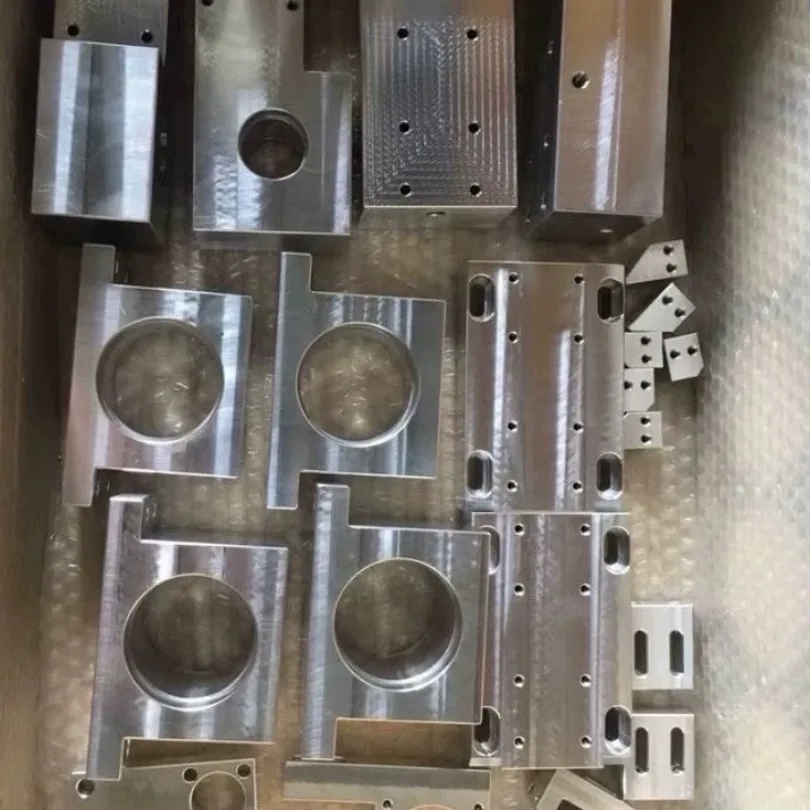
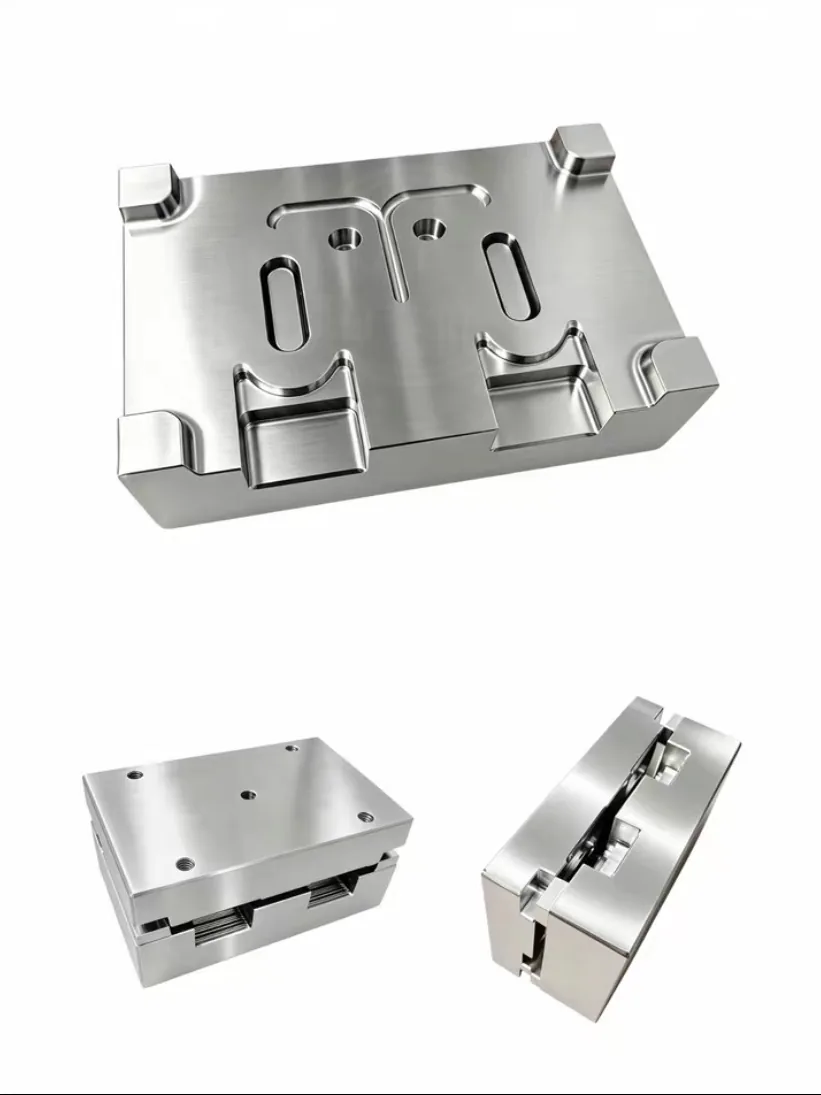
Reverse engineering →Fixture work often starts as milled blocks rather than finished tools: bearing and locating blocks with a large bore, slotted plates, small locator plates and two-part clamping bases.
A Fixture Is Only as Accurate as How It's Cut
This is the section the generic guides leave out, and it's the whole reason a fixture works or doesn't. Holding ±0.005mm on a locating feature is not about the CAD — it's about the order of operations and the right process for each feature. Here is how we keep a hardened fixture dead-on:
Sharp internal corners, cut after hardening
A milled internal corner carries the cutter's radius — 3mm or more — so a square part rocks instead of seating. Wire EDM cuts a true ~0.05mm corner, and cuts it after heat-treat, so the locating geometry is set in the final hardened state with zero distortion.
Ground reference faces & datums
Datum and rest faces are surface-ground flat to within ~0.005mm and Ra 0.4µm after hardening, so the part registers on a true plane — not a milled face that's already wearing.
Dowel & bushing bores in true position
Locating-pin and drill-bushing bores are jig-bored or wire-cut to H7 / ±0.005mm and true position, so pins press in where the design says and holes don't drift over a production run.
Hardened where it wears
Locators, pads and bushings are hardened tool steel at 58–62 HRC so the fixture survives tens of thousands of load/unload cycles without the datums creeping out of tolerance.
Materials We Build Fixtures In
The body, the locators and the wear points often want different materials — we pick each to suit the job:
Tool Steel (hardened)
A2, D2, O1, S7 — for locators, rest pads, bushings and checking surfaces that must stay sharp at 58–62 HRC. Wire-EDM cut after heat-treat.
EDM machining →Pre-Hardened & Alloy
4140 and P20 for stable fixture bodies that won't move after machining; ground where datums matter.
4140 steel →Aluminium Tooling Plate
MIC-6 / cast plate for light, flat, stable fixture bodies and sub-plates where the loads are low and weight matters. Where the plate also carries load, 6061-T6 is roughly twice as strong but will bow when a deep pocket goes in one face — the trade is set out under billet blocks and plates.
Aluminium →Stainless
420 and 17-4PH where the fixture lives in coolant, washdown or a corrosive line and still needs to be hardened.
Stainless →Fixture Build Specifications
| Parameter | Capability |
|---|---|
| Locating / datum tolerance | ±0.005–0.01 mm |
| Dowel & bushing bore fit | H7 / ±0.005 mm, true position |
| Reference face flatness | to 0.005 mm (surface ground) |
| Internal corner radius | ~0.05 mm (wire EDM) vs ~3 mm milled |
| Hardness | to 60+ HRC (hardened tool steel) |
| Surface finish (datums) | Ra 0.4 µm ground |
| Minimum order | 1 fixture |
| Standard lead time | 5 working days |
| Quality standard | ISO 9001:2015 |
Reproduce or Duplicate a Worn Fixture
Two of the most common requests have nothing to do with a new design. The first: a fixture that has run for years, whose locating pins and pads have worn until it no longer holds the part true — and there's no drawing, because the toolmaker who built it is long gone. The second: you have one good fixture and need an identical second for another station. Both are routine here. We measure the fixture (CMM for the locating scheme), separate the worn features from the original design intent, and machine a new one — hardened, with the datums restored to where they should be, not copied at their worn size.
No fixture drawing? That's expected. Send the part it has to hold, or the worn fixture itself. The CAD is our job — built and confirmed with you before anything is cut, and kept on file so duplicate stations are a fast reorder.
A note on branded equipment. We manufacture fixtures and jigs to your part, drawing or sample. We don't supply branded original tooling or imply affiliation with any equipment maker — the result is a tool made to your part's form, fit and function.
Fixtures that swivel or slide to set positions lock with an indexing plunger; pin sizes, index-hole fits and the hole spacing on an index plate are on indexing plungers and index plates.
Frequently Asked Questions
Yes. Send the part the fixture has to hold, or the worn fixture itself. We measure it — on a CMM for complex geometry — reconstruct the locating scheme to design intent, and machine a new fixture. No fixture drawing or CAD is required, and we keep the model so duplicate fixtures for extra stations are a fast reorder.
Locating faces and pins on a soft fixture wear, and once they wear the fixture stops holding tolerance and starts passing bad parts. Hardened tool steel (A2, D2, O1) at 58–62 HRC keeps the locating geometry stable over tens of thousands of cycles. We harden first, then cut the critical features by wire EDM and grinding so heat-treat distortion never enters the finished dimension.
Yes — this is where wire EDM matters for fixtures. A milling cutter leaves an internal radius equal to the tool (often 3mm or more), so a square or pocketed part won't seat properly against a milled corner. Wire EDM leaves a true sharp corner (radius about 0.05mm), so the part locates exactly where the design intends.
A jig holds the workpiece and also guides the cutting tool — a drill jig with hardened bushings is the classic example. A fixture holds and locates the workpiece but does not guide the tool — milling, welding, assembly and inspection fixtures. If you need repeatable hole positions without marking out, you want a jig; if you need a part held in the same position every cycle, you want a fixture. Tell us the operation and we'll tell you which applies.
Yes — checking fixtures are a core job. We build a hardened, ground fixture that a production part either drops into or doesn't, so an operator can pass or fail it in seconds without a CMM. Locating and datum features are held to gauge tolerance (commonly ±0.005–0.01mm), with go/no-go pins, trim profiles and flush/gap surfaces to your inspection drawing.
One fixture — no setup-fee floor, so a single fixture or a duplicate for an added station is welcome. Typical lead time is 5 working days depending on size, hardness and how many EDM and grinding operations the locating features need; simple jig plates are faster. You get a quotation within 12 hours of seeing the part or drawing.
Get a Fixture Quote
Drawing, part or worn fixture — all accepted. Engineers reply in 12h.
// Order & price
1 pc
Single fixture
No setup-fee floor
2–5
Multi-station
Duplicates off one CAD
Repeat
Reorder
CAD kept on file
- →No distributor — you pay the maker directly
- →Hardened & wire-EDM cut — holds tolerance for the life of the job