Need a castle or slotted nut a stockist can't supply? If it's a non-standard size, an odd or vintage thread, an exotic material, or a nut defined only by your drawing or an old sample, we machine it to order — standard DIN 935 sizes too, from a single piece.
What Is a Castle Nut?
A castle nut is a hexagon nut with a turned-down cylindrical crown above the hex, cut with slots (the "castellations" or turret) across the top. A split pin, cotter pin, taper pin or locking wire passes through the slots and a cross-drilled hole in the bolt or axle, mechanically preventing the nut from turning. It's the fastener you reach for where vibration would loosen an ordinary nut, but the joint must not be over-torqued — the pin, not friction, holds it in place.
Castle nut vs slotted nut — the difference
The two terms are often used together but aren't identical. A castle (castellated) nut — DIN 935, BS 1768 — has the raised crown, so the slots sit clear of the bearing face; it's the taller, classic "castle" shape. A plain slotted nut — DIN 979 — is thinner, with the slots cut straight into the hexagon and no crown. Both take a locking pin; you choose by height clearance and the standard your assembly calls out. We make both, plus the round slotted nuts (DIN 1804) tightened with a hook or C-spanner.
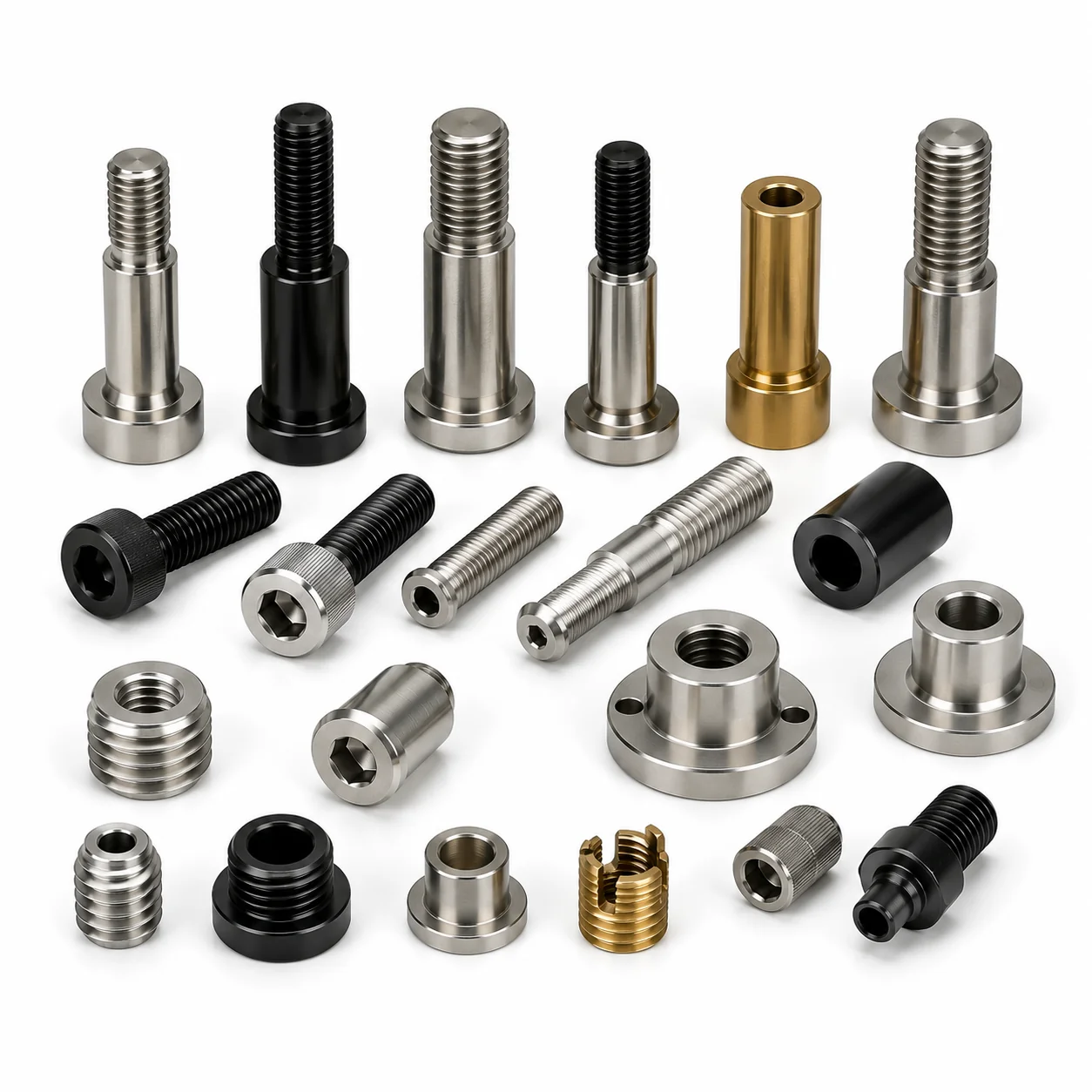
Types We Machine
Hex castle nuts (DIN 935)
The classic crowned castellated nut, metric or imperial, standard or oversize across-flats.
Thin slotted nuts (DIN 979)
Low-profile slotted hex nuts where height clearance is tight.
Slotted round nuts (DIN 1804)
Round nuts with face or side slots for a hook/C-spanner, for bearings and spindles.
Vintage BSW / BSF castle nuts
Whitworth-form castellated nuts for classic vehicle and machine restoration.
Special & spigot castle nuts
Extra slots, custom crown height, spigot/collar features, left-hand or fine pitch.
Exotic-alloy castle nuts
Duplex, Inconel, Monel and titanium for corrosion, heat and weight-critical work.
DIN 935 Castle Nut Dimensions
Standard metric DIN 935 (coarse pitch) reference dimensions. We machine these off the shelf, and any non-standard size, fine pitch or imperial thread to the same quality:
| Thread | Pitch (mm) | Width A/F, s (mm) | Total height, m (mm) |
|---|---|---|---|
| M4 | 0.7 | 7 | 5.0 |
| M5 | 0.8 | 8 | 6.0 |
| M6 | 1.0 | 10 | 7.5 |
| M8 | 1.25 | 13 | 9.5 |
| M10 | 1.5 | 16 | 12 |
| M12 | 1.75 | 18 | 15 |
| M14 | 2.0 | 21 | 17 |
| M16 | 2.0 | 24 | 19 |
| M20 | 2.5 | 30 | 22 |
| M24 | 3.0 | 36 | 27 |
| M30 | 3.5 | 46 | 33 |
| M36 | 4.0 | 55 | 38 |
Width across flats follows current DIN 935 / ISO 7035. Older DIN 935 and many vintage nuts use a larger across-flats (e.g. M10 = 17 mm, M12 = 19 mm, M22 = 32 mm) to match standard hex nuts — we machine those and imperial (UNF/UNC, BSW/BSF) sizes too. Slot width and count are to standard unless you specify otherwise.
Standards We Work To
We manufacture slotted and castle nuts to the recognised standards — or exactly to your drawing:
| Family | Standards |
|---|---|
| Metric castle / slotted | DIN 935 (castle), DIN 937 (low castle), DIN 979 (thin slotted), DIN 1804 (round slotted), ISO 7035 / ISO 7038 |
| British | BS 1768, BS 3692, and vintage BSW / BSF castellated forms |
| Imperial / American | ANSI/ASME B18.2.2, UNF / UNC slotted & castle |
| To drawing | Any non-standard across-flats, crown height, slot count, thread or material |
Materials & Finishes
| Material | Best for |
|---|---|
| Steel, class 8 / 10 | General and load-bearing castellated nuts; zinc or black oxide |
| Stainless A2 / A4 / 17-4PH | Marine, outdoor, corrosion-prone joints (A4/316 for saltwater) |
| Duplex & super duplex | Chloride/seawater with high strength |
| Inconel / Monel | High temperature and aggressive chemical service |
| Titanium | Motorsport and aerospace, weight-critical |
| Brass & bronze | Electrical, decorative and non-sparking |
Material certification to EN 10204 3.1 and dimensional inspection are available on request under our ISO 9001:2015 system.
Why Use a Castle Nut?
- Positive locking — a pin through the slot mechanically prevents rotation, not just friction.
- Vibration resistance — stays put on axles, hubs and machinery that would shake a plain nut loose.
- Controlled preload — ideal where the nut must be set to a bearing clearance, not torqued hard.
- Inspectable — the pin is visible, so security can be checked at a glance.
- Reusable — replace the split pin and the nut serves again.
Typical Applications
Castle and slotted nuts appear wherever a pinned, vibration-proof, clearance-set joint is needed:
- Wheel bearings, hubs, stub axles and steering knuckles on vehicles and trailers
- Castor forks, kingpins, tie-rod ends and ball joints
- Machine tool spindles and bearing retainers (round DIN 1804 nuts)
- Agricultural, plant and heavy-engineering pivots
- Classic car, motorcycle and machinery restoration, where the original vintage nut is obsolete
Vintage or obsolete castle nut? Send the original — even worn — and we gauge the thread (including BSW / BSF Whitworth forms) and reproduce a matching castellated nut. No drawing needed; see how we reverse engineer from a sample.
Custom & Non-Standard Castle Nuts — Our Speciality
Stockists carry common DIN 935 sizes in steel and stainless. Everything past that is us: oversize across-flats, custom crown height, extra or narrower slots, left-hand and fine-pitch threads, imperial and vintage BSW/BSF, and exotic alloys. Draw it, or send the nut you're copying — with no tooling cost, one piece is a normal order, and we keep the CAD on file so reorders are quick. See also our special fasteners and custom nuts.
Frequently Asked Questions
It locks onto a bolt or axle by taking a split/cotter pin through its slots and a cross-drilled hole — used where vibration would loosen an ordinary nut but the joint must not be over-tightened, e.g. wheel bearings, axles, hubs, steering and trailer spindles.
Both are slotted for a locking pin. A castle nut (DIN 935/BS 1768) has a raised crown so the slots clear the bearing face; a plain slotted nut (DIN 979) is thinner and cut straight into the hex with no crown.
Yes — our core work. Oversize, fine-pitch, left-hand, imperial (UNF/UNC) and vintage BSW/BSF, plus special across-flats, extra slots and custom crown heights, from your drawing or a sample. No tooling cost; single pieces welcome.
Yes. Send the original — even worn — and we gauge the thread (BSW/Whitworth, BSF, CEI, BA, UNF) and reproduce a matching castellated nut. Common for classic vehicle and machine-tool restoration.
Steel class 8/10, stainless (A2/A4/17-4PH), duplex and super duplex, Inconel and Monel, titanium, brass and bronze — with zinc, black oxide or passivation, and EN 10204 3.1 certification on request.
DIN 935, DIN 979, DIN 1804, BS 1768/3692, ISO 7035/7038, ANSI/ASME B18.2.2 — or exactly to your drawing, under ISO 9001:2015.
One piece, no tooling charge; unit price drops across small-batch tiers. Quote in 24 hours; typically 1–3 weeks machining by material and quantity, plus tracked worldwide shipping.
Get a Castle Nut Quote
Send the size & thread, a drawing, or one sample — we reply within 24 hours.
// Qty & price
1 pc
Sample price
Confirm fit before a run
10–100
Unit price drops
Setup cost shared
500+
Best price
All tiers quoted upfront
- →No distributor — you pay the maker directly
- →CAD saved after first order — reorder anytime at lower unit price