Spring shackle worn oval, hanger bracket cracked, pin seized or the whole set sloppy — and the part number comes back dead? We machine replacement shackle plates, spring hangers, pillow brackets and shackle pins from your worn originals, for trailers, agricultural and construction machinery. No drawing needed, from one piece. Get a quote →
First: If Your Axle Is a Standard Commercial One, Buy the Stock Part
This page is not trying to sell you a machined part you do not need, so the honest advice comes first.
Standard commercial trailer axles are one of the best supplied corners of the whole parts industry. Hangers, equalisers, shackle kits, bolts and pins for the common tube sizes and spring centres are held in depth by trailer parts distributors, in bolt-on and weld-on versions, and a stock hanger will reach you in days for a fraction of what a machined one costs. If your machine takes one of those, go and buy it. We would rather tell you that than take the order.
Where the stock route runs out. The machine is not a standard commercial trailer — it is a spreader, a tanker, a harvester, a site dumper, a yard trailer built by a firm that no longer exists. The bracket is an OEM casting specific to that machine. The spring centre or pin diameter is not a catalogue option. Or the dealer has the part listed but the answer is “no stock, no substitute” — because what dealers hold as obsolete stock is surplus somebody else bought and never used, and when that runs out nobody is making more.
What the Parts Channel Can Supply — and Where We Take Over
| What you need | Axle / parts dealer | EKINSUN |
|---|---|---|
| Standard axle, standard spring centre | Ships from stock, cheap | Buy it from them — we will say so |
| OEM bracket, machine builder gone | “No longer available” | Copied from your bracket |
| Listed as obsolete, surplus exhausted | Sells surplus until it runs out | Made new, and again in five years |
| Non-catalogue pin diameter or spring centre | Nearest size, drill it out | Machined to the dimension your machine uses |
| Pin and bore both worn, clearance unknown | Not a question they answer | Fit reconstructed from unworn surfaces |
| Complete set for every position at once | Limited by remaining stock | One batch, tiered pricing |
| Ball joints, rubber bushes, the spring itself | Standard stocked items | Bought-in — we size the housing to suit, we do not make them |
Everyone Calls These Parts Something Different
There is no settled vocabulary here, which is part of why they are hard to source. The workshop, the manual and the dealer will each use a different word for the same lump of steel, and buyers routinely search for one and find nothing. If any of the left-hand column is what your manual calls it, you are in the right place.
| What buyers call it | Usual trade term | What it actually is |
|---|---|---|
| Rear spring drop shackle | Spring shackle, swinging shackle | Two side plates and two pins, letting the spring change length as it flexes |
| Rear spring pillow | Spring hanger, pillow bracket, spring seat | The bracket bolted or welded to the chassis that the spring eye hangs from |
| Rear upper axle mount | Axle bracket, top pad, U-bolt plate | Clamps the axle to the spring, usually with U-bolts |
| Rear wheel mount flange | Hub flange, wheel flange | Turned flange carrying the stud circle the wheel bolts to |
| Rear damper drop link | Shock link, anti-roll bar link | Machined link body plus bought-in joints or bushes at each end |
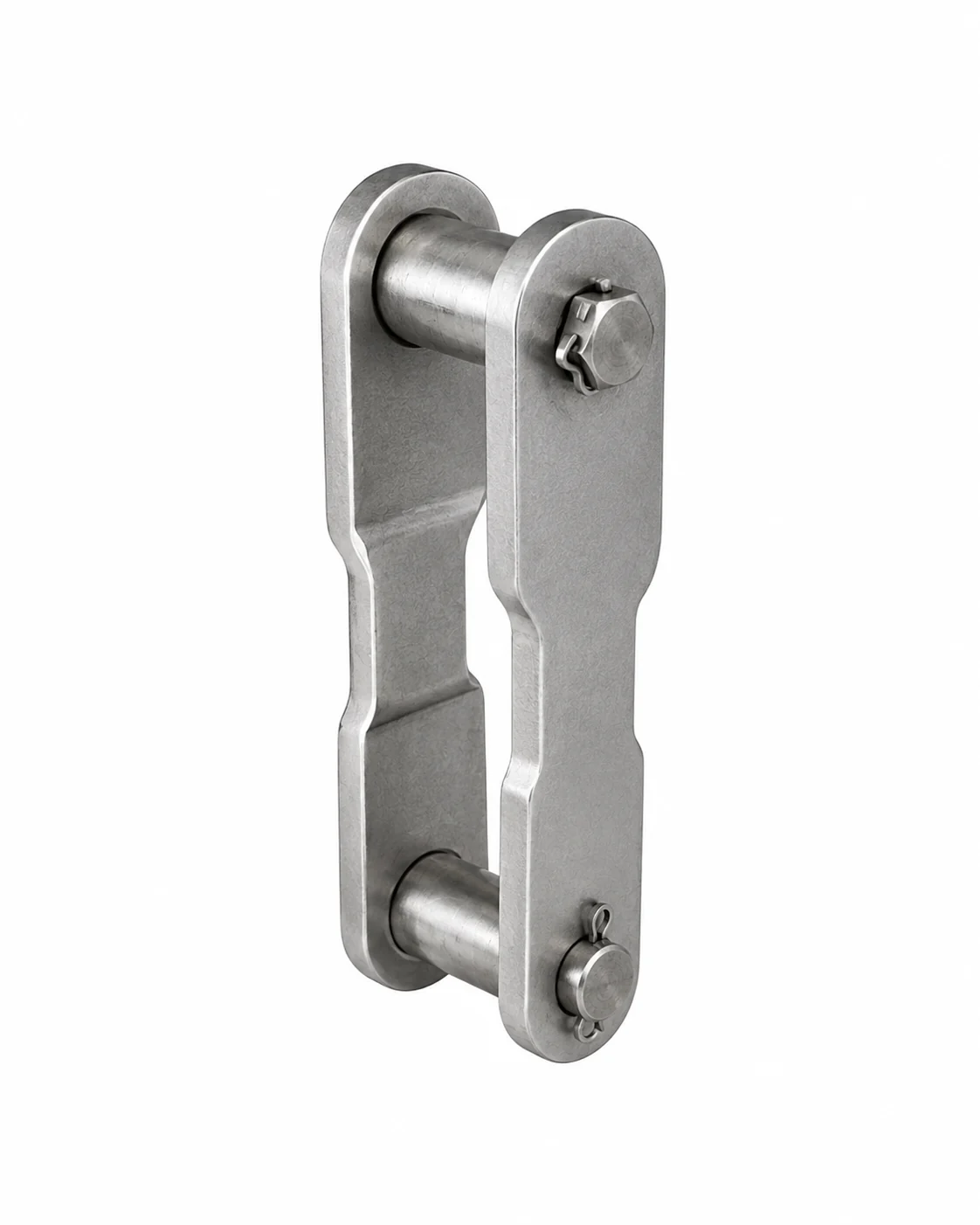
A Worn Shackle Is Two Worn Parts, Not One
This is the measurement problem that makes shackles different from most reverse engineering work, and it is worth being precise about.
Normally a worn part still carries its own specification, because wear is uneven: you measure the surfaces that did not wear and reconstruct the rest. A shackle breaks that rule, because both halves of the joint have worn against each other. The pin is thinner than it was. The bore is bigger than it was. If you put a caliper on the old pin and a bore gauge in the old plate and machine to what you find, you get a brand new set carrying the accumulated slop of both parts — the joint is loose from the first day, and it will hammer itself oval again quickly.
So we do not measure the gap. We reconstruct each half independently:
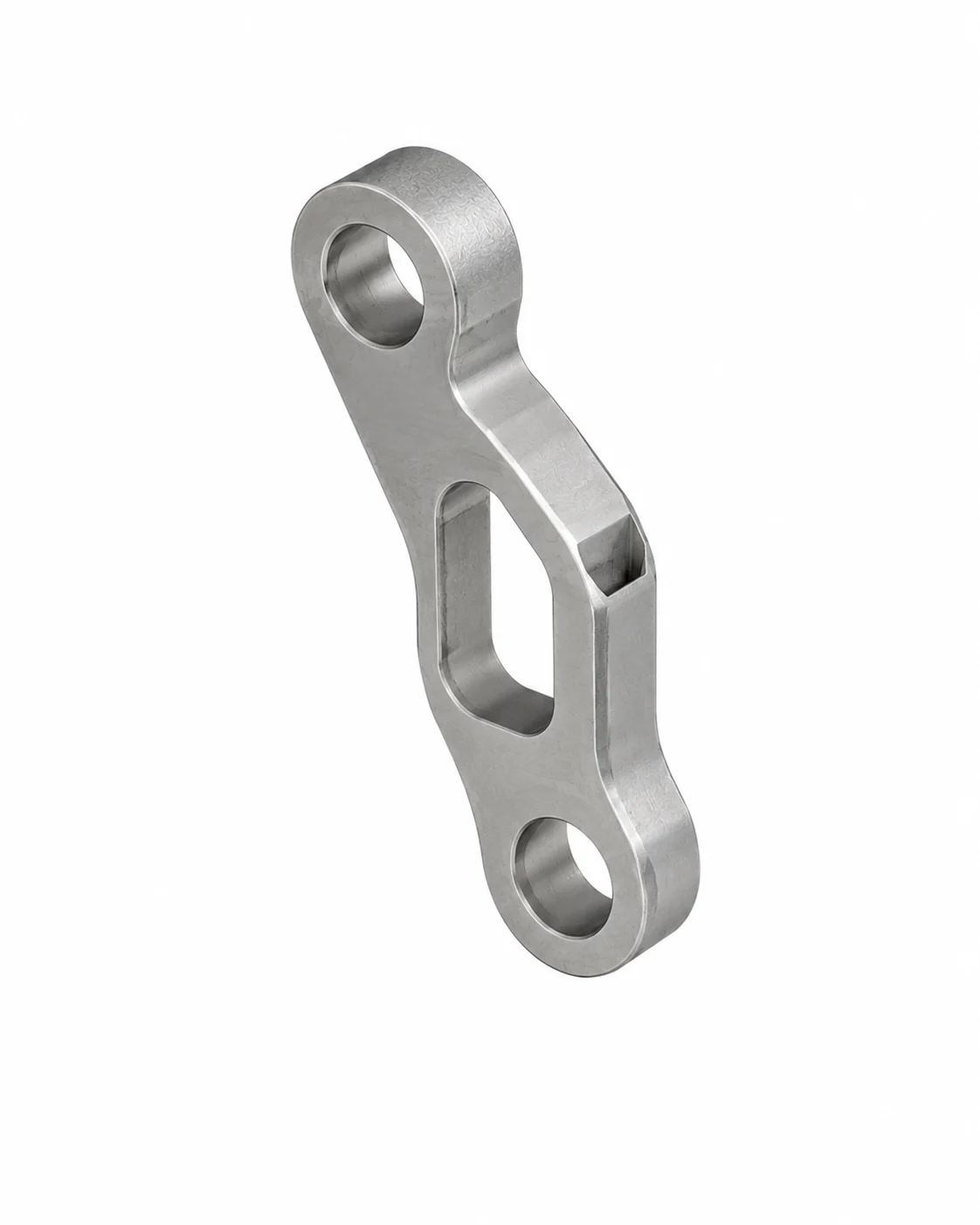
| Feature | Where the dimension comes from | Why |
|---|---|---|
| Pin diameter | Measured across the unworn axis | A pin wears in the loaded arc and stays near nominal ninety degrees to it |
| Plate bore | Never from the worn direction | The bore goes oval along the load line; the cross axis is the survivor |
| Running clearance | Specified fresh | Never inherited — the old gap is the sum of two wear histories |
| Bush housing bore | Sized to a bush you can buy again | Makes the next rebuild a stock purchase, not a repeat order |
| Eye centre distance | Measured from the sample | Set by the chassis and the spring; does not wear |
| Plate thickness, outline, radii | Copied from the sample | Sized by whoever engineered the machine — not ours to change |
If the machine has more than one axle, this gets easier. Pull a shackle from the position that has done least work and send it alongside the failed one. Two examples at different stages of wear tell us far more than either alone — the difference between them is the wear map, and it lets us separate the original geometry from the damage.
The Original Is a Casting. Yours Will Be Machined From Solid.
Almost every spring hanger and pillow bracket on an older machine started life as a sand casting, and buyers often assume a machined replacement is a compromise. It is the other way round.
The bracket was cast because casting is the cheap way to make several thousand identical parts. That decision was about unit cost at volume, not about strength. It brought with it the things castings bring: porosity, variable section quality, and no grain direction. You are buying two. Paying for pattern and tooling to reproduce a casting at that quantity would be absurd — and it is unnecessary, because at these numbers cutting the same shape out of solid wrought bar is both cheaper and metallurgically better. Rolled bar has no casting porosity and has grain flow along its length.
What does not change is the geometry. Section thicknesses, radii, hole positions and centre distances get copied, because those were sized by whoever engineered the machine and we are not in a position to re-engineer them from a photograph. We copy the shape and improve the stock it is cut from. That is the whole trade.
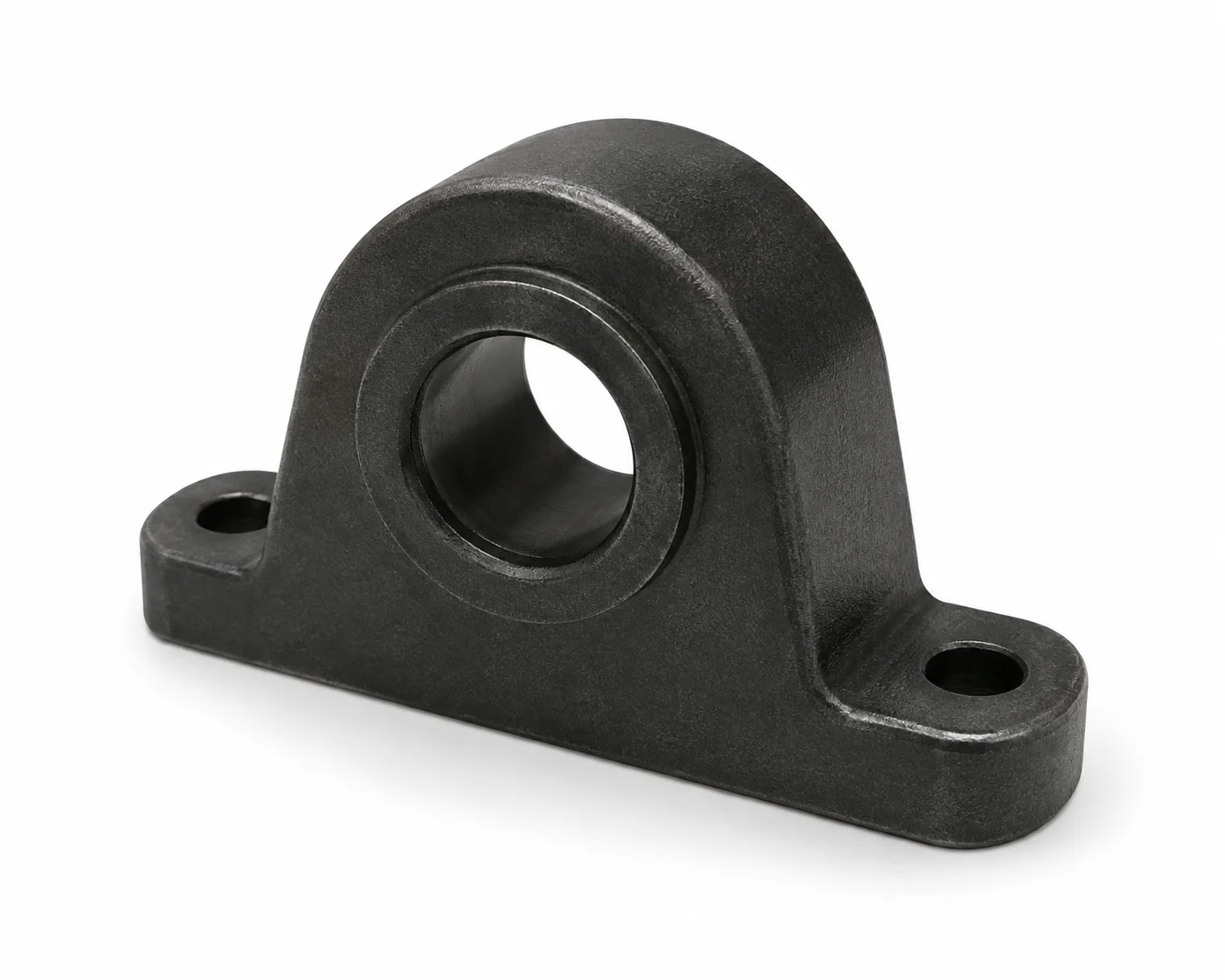
You Cannot Identify a Casting by Looking at It
A grey, sand-cast bracket in your hand might be grey cast iron, ductile (nodular) iron, or cast steel. They can look identical under the paint and the rust. In a load path they behave nothing alike — grey iron in particular has very little ductility and will fail without warning under impact, which is exactly the load a suspension bracket sees on a rough yard.
This is the one place on the job where guessing is unsafe, so we test rather than assume. Hardness testing narrows the family quickly, and where the part is load bearing we confirm before choosing stock. If the original turns out to be grey iron, we will normally recommend making the replacement in steel instead of faithfully reproducing a brittle part — and we will explain why rather than quietly substituting.
What we will not do. We copy geometry and match or better the material class of the original. We do not issue a load rating or a re-certification for an axle assembly we did not design, and we will not put a number on a part's capacity to make a quote look better. If your application needs a rated component, that is a design job, not a copying job, and we will tell you so.
Material: What Goes In This Load Path, and What Does Not
Grade follows function here, and the split is fairly clean. Pins are a wear surface under high contact pressure. Plates and brackets carry the load in bending and tension. Corrosion only enters the picture on machines that live in slurry, fertiliser or salt.
| Material | Where it fits here | Notes |
|---|---|---|
| 42CrMo4 / 4140 | Shackle pins, high-load links | Through-hardening alloy steel; the usual answer where contact pressure is high |
| C45 / EN8 medium carbon | Shackle plates, lighter pins | Good strength without the cost or distortion risk of a full alloy grade |
| S355 / structural carbon steel | Hangers, pillow brackets, axle pads | Weldable, tough, the sensible stand-in for a mild cast bracket |
| 304 / 316 stainless | Corrosive service only | Lower yield than the carbon grades — sections get reviewed, sometimes increased, not copied one for one |
| 6061 / 7075 aluminium | Not in this load path | Steel has a fatigue endurance limit; aluminium does not, so it keeps accumulating damage under repeating suspension load. 7075 is notch sensitive as well. Right material, wrong job. |
| Grey cast iron | Not reproduced by choice | If the original was grey iron we will usually propose steel and tell you why |
Plating Closes the Clearance You Just Machined
A small detail that causes real problems, and one most buyers only discover after assembly.
These parts are usually protected — zinc plated, phosphated or painted. Electroplated zinc to ISO 4042 is commonly specified in the 5, 8, 12 or 25 micrometre classes, and coating lands on the whole surface. On a shaft that means roughly twice the coating thickness added to the diameter: a 12 µm class puts about 24 µm on a pin. Against a running clearance measured in a few hundredths of a millimetre, that is not a rounding error, and a pin machined to size and then plated can end up a press fit in a bore that was correct on the drawing.
So the allowance goes in before the coating, not after. We machine the pin undersize by the plating class, or mask the bearing surface, or leave the fit surfaces bare and protect them with grease — whichever suits how the joint is serviced. Tell us how you intend to finish the parts, or let us specify it, but it needs deciding before anything is cut. The same logic applies to any plated fit; it is the same trap we handle on sealed hydraulic components.
What a Complete Set Actually Includes
Shackle plates
Machined from solid, in pairs, with bores sized for the reconstructed fit rather than the worn one.
Shackle pins
Turned, cross-drilled for split pins or threaded for castle nuts, hardened where contact pressure needs it.
Hangers & pillow brackets
Bore and base holes cut in as few setups as possible so their relative position cannot drift.
Retention
Split pins to ISO 1234 and castle nuts are standard hardware — supplied alongside, not machined.
Bushes
Housing sized to a bush you can rebuy locally, so the next rebuild is a stock purchase.
Pins & clevis work
Related turned parts — see custom clevis pins for the same job on linkages.
What to Send
A CAD file, a drawing or a part number all speed things up — and none of them is required. What helps, in order of usefulness:
- The parts themselves — the least worn examples you have, not the ones that failed. They come back with the order.
- Photographs with a rule in shot, both faces, plus a few caliper readings — enough for a budget figure.
- Eye centre distance and pin diameter if you can get them, even roughly.
- The machine — make, model, year, and what it does for a living. A spreader and a yard trailer wear the same part differently.
- How many positions the machine has, and whether you want spares.
Photographs and measurements get you a budget price. Sending the parts is what turns that into a firm quote, because eye centres and bore positions have to be right to a tenth of a millimetre or the set will not go back on. If you have never done this before, the walk-through on ordering without CAD covers what a usable photograph looks like, and reproduction from a sample explains how the measuring stage works.
Frequently Asked Questions
My trailer runs a standard commercial axle. Should I just buy a stock hanger?
Yes, and we will tell you so. Standard commercial trailer axles are well supplied: hangers, equalisers, shackle kits and pins for the common tube sizes and spring centres are held in depth by trailer parts distributors, and a stock hanger will reach you faster and cheaper than anything machined. Check the stock route first. Come to us when the machine is not a standard commercial trailer, when the builder has gone and nobody lists the bracket, when the spring centre or the pin diameter is not a catalogue option, or when the part is an OEM casting specific to one machine and the surplus has run out.
Both the pin and the shackle plates are worn. How do you work out the right clearance?
Not by measuring the worn joint, because a worn shackle is two worn parts and their gap is the sum of both. Copying that gap would give you a brand new set with an old joint's slop. We reconstruct the fit instead. The pin does not wear evenly: it wears in the loaded arc and stays close to nominal on the unloaded side, so we measure across the unworn axis and take that as the true pin size. The plate bore goes oval in the direction of load, so we measure across the axis at ninety degrees to the wear. Where the shackle carries a bush or mates with a spring eye bush, that bush bore is a better reference again because it is a replaceable wear item and often less worn than the steel around it. From those we set the running clearance fresh rather than inheriting it.
The original hanger is a casting. Is a machined one as strong?
In general it is stronger, not weaker, and it is worth understanding why. The original is a sand casting because casting is the cheap way to make thousands of identical brackets. That process is not chosen for strength; it is chosen for unit cost at volume, and it brings porosity, variable section quality and no grain direction. When we machine the same geometry from solid wrought bar, you get material with no casting porosity and rolled grain flow, and we can choose a steel grade at or above the class the casting was in. The same shape in wrought steel is a conservative substitution. What we do not do is quietly change the geometry: section thicknesses, radii and hole positions are copied, because those were sized by whoever engineered the machine.
The substitution runs the other way when the drawing never asked for a fit. A connecting pin with an eye and a collar, sitting in a clearance bore, is cheaper cast than machined and loses nothing the joint can feel — the worked example is a Ø22 × 165 mm eye pin in C45, cast instead of CNC machined.
Can you tell what my old bracket is made of?
Not by looking at it, and neither can anyone else. A grey, sand-cast bracket can be grey cast iron, ductile or nodular iron, or cast steel, and those three have different behaviour in a load path: grey iron in particular has almost no ductility and fails without warning under impact. On a suspension bracket that difference matters. So we test rather than guess. Hardness testing narrows it quickly, and where the part is load bearing we confirm the family before choosing what to make it from. If the original turns out to be grey iron, we will usually recommend making the replacement in steel rather than reproducing a brittle part faithfully, and we will say why.
Can you make the shackle plates in stainless, or in aluminium to save weight?
Stainless yes, with a caveat; aluminium no. 304 and 316 stainless are sensible where corrosion is the thing that kills the part, on slurry tankers, fertiliser spreaders and coastal machinery, but both have lower yield strength than the medium-carbon steel usually used, so sections have to be reviewed and sometimes increased rather than copied one for one. Aluminium is a different matter. 6061 and 7075 are all over the rest of this site for brackets, housings and spacers, and they are the right choice there. They are the wrong family here, because steel has a fatigue endurance limit and aluminium does not: an aluminium part under a repeating suspension load keeps accumulating damage no matter how low the stress. 7075 is also notch sensitive. We will not put either into this load path.
Do you supply the pins and split pins as well, or only the plates?
We machine the plates and the pins, and we cross-drill the pins for split pins or thread them for castle nuts to match how your set is retained. Split pins and castle nuts themselves are standard hardware to ISO 1234 and DIN 935, so we normally supply them alongside rather than machine them. Bushes are worth deciding early: if your shackle runs on rubber or bronze bushes we size the housing bore to a bush you can buy again locally, so future rebuilds are a stock purchase rather than a repeat order. What we do not manufacture is the ball joint in a ball-jointed link. That is a bought-in bearing assembly. We can machine the link body and size it for the joints you specify.
The machine builder went out of business and there is no part number. Is that a problem?
No. That is the normal case for this work and it is why the page exists. We do not need a part number, a drawing or a CAD file. We need the parts themselves, or photographs with a rule in shot plus a few caliper readings. The geometry that matters is all present in the set you are holding: spring centre distance, plate thickness, eye spacing, pin diameter, bolt hole positions. Send the least worn examples you have rather than the ones that finally failed, because on a multi-axle machine the units wear at different rates and the best one on the machine is a better master than the worst.
How many should I order?
Count the positions on the machine, then add spares. Every shackle on an axle set has carried the same load for the same hours, so the first one to go is a schedule rather than an accident, and the others are usually not far behind. The expensive part of this job is the one-off work: measuring the set, reconstructing the geometry, drawing it and setting up. That is charged once whether you order one pair or twelve. From one piece up, with tiers so you can see where the per-piece price flattens out.
Related Work
Machinery whose builder has disappeared is most of what we do. When the manufacturer is out of business covers the sourcing problem in general; obsolete and discontinued parts covers the same ground from the parts side. For vehicles specifically, see automotive and classic vehicle reverse engineering. Everything on this page is a one-off or small-batch job — the economics of that are set out under one-off parts.
GET A QUOTE
Send photographs of the worn set with a rule in shot, the machine make and model, and how many positions you need. CAD, drawing or part number all welcome — none of them required. Reply in 12 hours.
Get a Quote → WhatsAppRELATED
- → Reproduction From a Sample
- → Obsolete & Discontinued Parts
- → Manufacturer Out of Business
- → Custom Clevis Pins
- → Worn Holes — Bushings & Oversize Pins
- → "The Part That Connects…" Name Table
- → Tractor Front Spindles
- → Trailer Axle Spindles
- → Trunnion Pins & Mounts
- → Custom U-Bolts
- → All Replacement Parts