The High-Strength Aluminum
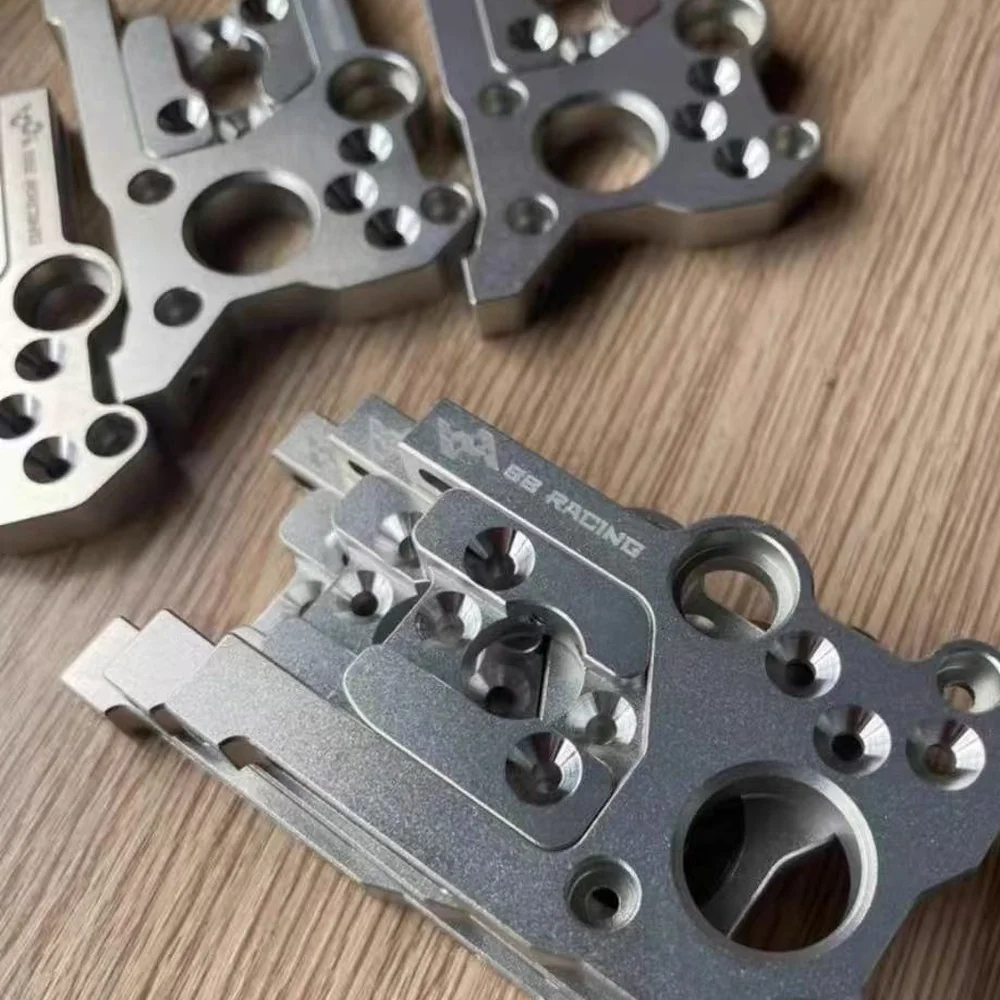
7075 is a zinc-primary aluminium alloy that, in the T6 temper, reaches strength levels close to some steels at roughly a third of the weight. That's why it dominates aerospace structures, motorsport, defence and high-performance sporting goods. It machines to a superb finish, but it asks for more in return than 6061: it costs more, corrodes more readily bare, and is not practically weldable. You reach for 7075 deliberately — when the strength-to-weight matters.
7075-T6 Mechanical & Physical Properties
| Property | Typical value (7075-T6) |
|---|---|
| Ultimate tensile strength | 572 MPa (83,000 psi) |
| Yield strength (0.2%) | 503 MPa (73,000 psi) |
| Elongation at break | ~11% |
| Hardness | ~150 HB |
| Density | 2.81 g/cm³ |
| Elastic modulus | 71.7 GPa |
| Thermal conductivity | ~130 W/m·K |
| Weldability | Poor (not recommended) |
| Machinability | Good — excellent finish, more abrasive |
Representative T6-temper values; we machine to the certified mill spec of the stock and provide certs on request. Aerospace-traceable 7075 is available when required. T6 = solution heat-treated then artificially aged for peak strength.
7075 Chemical Composition
7075 is a zinc-primary (7xxx series) alloy — zinc with magnesium and copper gives its high heat-treated strength. Nominal composition (balance aluminium):
| Element | Content | Element | Content |
|---|---|---|---|
| Zinc (Zn) | 5.1–6.1% | Chromium (Cr) | 0.18–0.28% |
| Magnesium (Mg) | 2.1–2.9% | Iron (Fe) | ≤0.50% |
| Copper (Cu) | 1.2–2.0% | Silicon (Si) | ≤0.40% |
| Manganese (Mn) | ≤0.30% | Titanium (Ti) | ≤0.20% |
How We Machine 7075
- Finish: 7075 takes a crisp, bright finish — often better than 6061 — and holds sharp detail well.
- Tooling: more abrasive than 6061, so we manage tool wear with appropriate coatings and feeds.
- Distortion: Stressed stock can move; we use stress-relieved plate and balanced toolpaths for thin or flat precision parts.
- Tolerances: ±0.025 mm (±0.001 in) on critical features is routine — see tolerance & inspection.
Tooling, Speeds & Feeds — Starting Points
Like all aluminium, 7075's risk is the built-up edge; its higher hardness helps it cut cleanly, but it's more abrasive, so tool wear is the thing to manage. Typical starting points (tuned per part):
| Parameter | Typical for 7075-T6 |
|---|---|
| Tooling | Sharp carbide, polished flutes; coatings (ZrN/TiB₂) help with the abrasion |
| Cutting speed | High — roughly 250–750 m/min (800–2,500 SFM) with carbide |
| Feed / chip load | Moderate & positive so chips clear before welding to the tool |
| Milling style | Climb milling; high positive rake |
| Coolant | Flood/mist with lubricity to prevent BUE |
Finishing 7075
Because bare 7075 corrodes more readily than 6061, a protective finish is usually recommended:
- Clear / hard anodize (Type II / III) — corrosion and wear protection
- Color anodize — common on motorsport and consumer parts
- Chromate / alodine — conductive corrosion protection where needed
- Bead blast — uniform matte before anodize
7075-T6 vs 6061-T6 — Quick Comparison
| 7075-T6 | 6061-T6 | |
|---|---|---|
| Yield strength | 503 MPa | 276 MPa |
| Weldability | Poor | Good |
| Corrosion resistance | Lower (anodize advised) | Very good |
| Cost | Higher | Lower |
| Best for | High-stress / aerospace | General structural |
If 6061's strength is enough, 6061-T6 is the cheaper, more forgiving choice. See all options on our aluminium machining overview, or the full 6061 vs 7075 comparison with part-price impact.
Typical 7075 Parts
- Aerospace structural fittings and brackets
- Motorsport suspension, chassis and driveline parts — e.g. a one-off motorcycle suspension link machined from a notepad sketch
- Firearm and defence components
- High-load tooling and molds
- Bicycle and climbing hardware
Custom 7075 Aluminum Parts — Who Orders and Why
Buyers specify 7075-T6 when 6061 isn't strong enough but steel is too heavy — loaded structural parts that still have to be light. Most are aerospace, motorsport or defence engineers who need the strength documented and the part machined without distortion.
"Structural fittings and brackets in 7075 — strength critical, certs required"
We machine custom 7075-T6 structural brackets, fittings and frames to your drawing, controlling distortion by rough-machining, letting the plate relax, then finish-machining the warp out (we can order low-residual-stress T651 plate). Mill certs and traceability supplied; hard-anodise (Type III) for wear and corrosion. Low MOQ for development builds.
"Suspension and drivetrain parts in 7075 — light, must take the load"
We machine custom uprights, mounts, pulleys, spacers and linkage parts in 7075-T6 for loaded motorsport use, hold tight tolerance on bearing bores, and hard-anodise. Send a sample or drawing — one-off and small-batch welcome.
"7075 components — high strength-to-weight, Type III hard anodize"
We machine custom 7075-T6 housings, rails, mounts and mechanism parts to tight tolerance and finish with Type III hard anodise for a durable, low-glare surface. Material certs and repeatable batch production available.
"Lightweight tooling and fixtures in 7075 — stiffer than 6061"
We machine custom jigs, fixtures, mould frames and check gauges in 7075-T6 where its higher strength and stiffness beat 6061. For large flat plates we rough, let the stock settle, then finish to keep them flat — and order T651 plate for the lowest residual stress. MOQ 1 through to production volume; reorders run from the saved model, so no new setup.
What 7075 Aluminum Buyers Search For
Frequently Asked Questions
It's a zinc-primary alloy heat-treated to T6, giving ~503 MPa yield — nearly double 6061's 276 MPa. The trade-offs are higher cost, lower corrosion resistance and poor weldability.
It machines well and finishes beautifully, but is more abrasive on tooling and less forgiving on thin walls. We adjust speeds, feeds and fixturing and use stress-relieved stock for precision parts.
Yes, and it's often recommended since bare 7075 corrodes more readily. Clear, hard and color anodizing are all available.
If the part must be welded, needs maximum bare corrosion resistance, or if 6061's strength is already enough — then 6061 is cheaper and more suitable.
7075-T6 and T651 plate carry high locked-in residual stress. As you remove material those stresses rebalance and the part can bow, twist or warp — especially thin plates. We control it by rough-machining first, letting the stock relax, then finish-machining the warp out, leaving enough stock for that final cleanup. We don't thermal stress-relieve a finished 7075 part — that softens it and ruins the temper. Where flatness is critical we order T651 plate, which is stretched to relieve residual stress before machining.
Both give the same strength. T651 is the same alloy stretched after solution treatment to relieve internal stress, so it machines flatter with less warp, tool wear and scrap — the better choice for plates and tight-tolerance parts. Plain T6 is fine for smaller or less stress-sensitive parts. For corrosion-critical aerospace use, the overaged T73 / T7351 tempers trade a little strength for much better stress-corrosion-cracking resistance — tell us the environment and we'll recommend.
Get a 7075 Quote
Any drawing format accepted — sketch, photo or CAD. Reply in 12h.
// Qty & price
1 pc
Sample price
Confirm fit before a run
10–50
Unit price drops
Setup cost shared
100+
Best price
All tiers quoted upfront
- →No distributor — you pay the maker directly
- →CAD saved after first order — reorder anytime at lower unit price