Carbon Steel for CNC Machining — the Workhorse
Low-carbon steel (mild steel) is the most widely machined structural metal in industrial production. It is inexpensive, readily available in precision sizes, welds and case-hardens well, and machines cleanly in the correct grades. At EKINSUN we machine A36, 1018, 1020 and 1045 for shafts, gears, brackets, and tooling, and 4130/4140 alloy steels for higher strength applications. If a part needs to be strong and cheap, carbon steel is the answer.
Carbon Steel Grades We Machine
| Grade | Carbon content | Machinability | Best for |
|---|---|---|---|
| 1018 (low carbon) | 0.15–0.20% C | ~72% | Shafts, pins, key stock, general machined parts — the default low-carbon grade |
| A36 (structural) | ≤0.25% C | ~70% | Structural brackets, weldments, plates — widely available, cost-effective |
| 1045 (medium carbon) | 0.43–0.50% C | ~55% | Gears, crankshafts, axles, bolts — can be case-hardened or induction-hardened |
| 4130 (Chromoly) | 0.28–0.33% C + Cr + Mo | ~70% | Aerospace, motorsport, pressure vessels — weldable high-strength alloy steel |
| 4140 (Chromoly) | 0.38–0.43% C + Cr + Mo | ~65% | Heavily loaded shafts, gears, dies, tooling — see our 4140 machining page |
1018 is our default carbon steel for general machined parts. If the part requires case hardening, 1045 or 4140 are the standard choices. 4130 is the go-to for weldable structural aerospace/motorsport parts.
Mechanical Properties (1018 Cold Drawn)
| Property | Typical value |
|---|---|
| Ultimate tensile strength | 440 MPa (64,000 psi) |
| Yield strength (0.2%) | 370 MPa (54,000 psi) |
| Elongation at break | ~15% |
| Hardness | ~126 HB (cold drawn) |
| Density | 7.87 g/cm³ |
| Elastic modulus | 200 GPa |
| Thermal conductivity | ~52 W/m·K |
How We Machine Carbon Steel
1018 and A36 machine well at moderate speeds with proper carbide tooling and cooling. Key points:
- Tolerances: ±0.025 mm on critical features; general dimensions to ISO 2768-m or -f.
- Surface finish: Ra 1.6 µm as-machined; Ra 0.8 µm achievable with fine finishing passes.
- Tool life: Cold-drawn 1018 machines cleanly; hot-rolled A36 has more scale and variable properties — we prefer cold-drawn for precision parts.
- Hardening: After rough machining, we can send to heat treatment (case harden, through harden, induction harden) and finish-grind the critical surfaces after hardening.
- Welding: 1018, A36 and 4130 weld readily — ideal for fabricated assemblies that also have machined features.
Heat Treatment Options
- Case carburising — hard outer layer (HRC 58–65), tough core; common for gears and bearing journals
- Through hardening & tempering — uniform hardness throughout; for 1045, 4140 parts
- Induction hardening — selective surface hardening of specific features (cams, journals, gear teeth)
- Normalising — relieves stress from machining, improves toughness
- Annealing — softens for further cold forming or machining
Surface Protection for Carbon Steel
- Black oxide — minimal corrosion protection, low-cost, preserves dimensions
- Zinc plating (electroplated) — good corrosion protection, bright silver finish
- Hot-dip galvanising — heavy zinc coating, excellent outdoor corrosion protection (structural parts)
- Powder coat or paint — attractive, good corrosion resistance for light environments
- Phosphate + oil — military-grade dimensional protection under oil film
Note: carbon steel will rust without surface protection. For corrosion-critical environments, specify a coating or switch to 304 stainless or 316L stainless.
Typical Carbon Steel CNC Parts
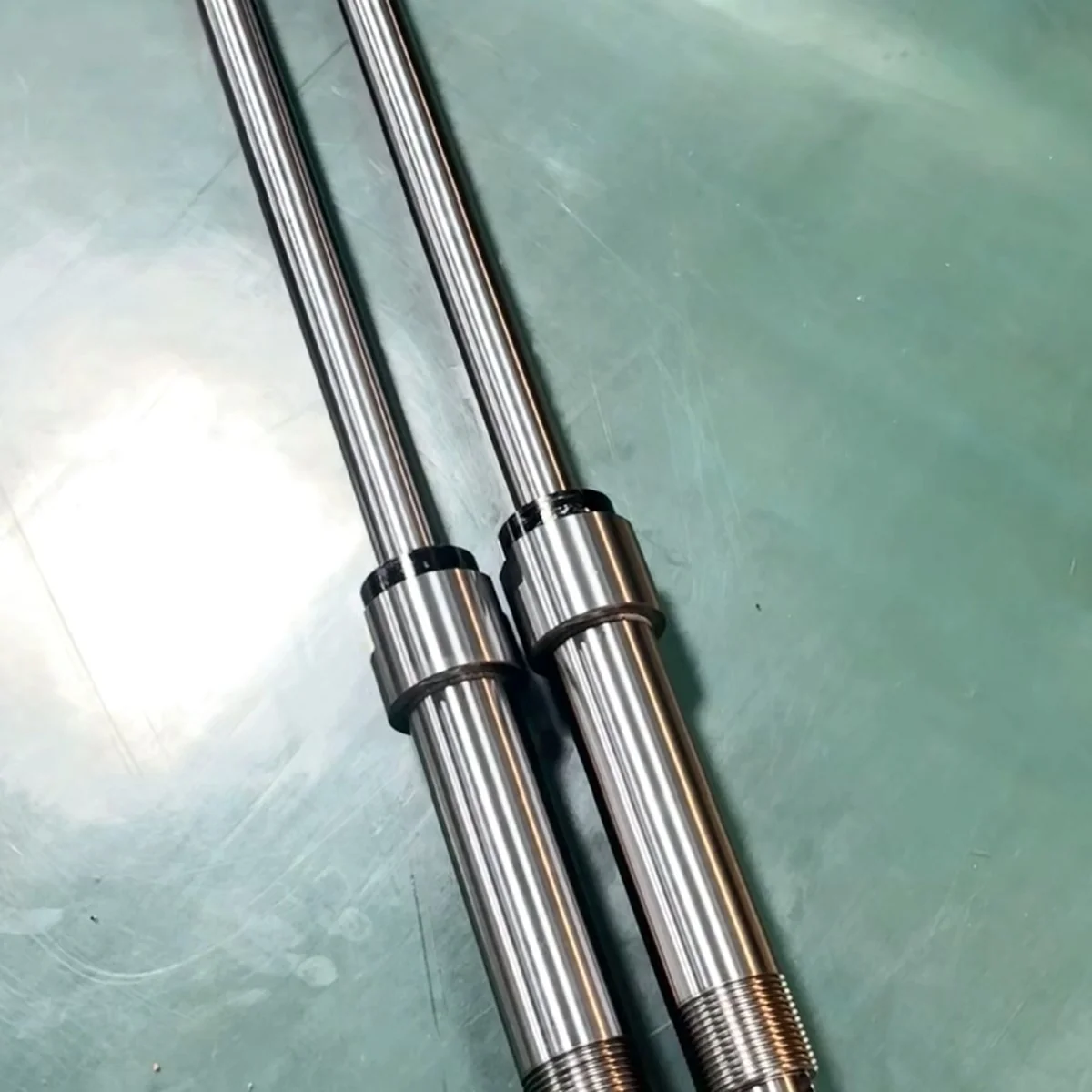
- Shafts, pins and key stock — drive shafts, motor shafts, keyway shafts in 1018
- Gears and sprockets — 1045 for case-hardened gears; 4140 for heavily loaded spur gears
- Structural brackets and frames — A36 weldable brackets, mounting plates
- Tooling and fixtures — jig bodies, fixture plates, locating blocks
- Replacement machine parts — reproduced from worn samples, including keyway shafts, gear teeth and bearing housings; see our replacement parts service
- Fasteners and studs — standard and non-standard thread forms in 1018 and 4140
Custom Carbon Steel Parts — Who Orders and Why
Carbon steel buyers typically need a part that's strong and economical — or a replacement for a shaft, gear or bracket that can no longer be sourced. The most common requests are keyway shafts, gears, and machine parts reproduced from worn originals.
"Conveyor drive shaft failed — no drawing, machine was built in 1998"
Send us the worn shaft or measurements from the original. We machine a replacement in 1018 or 1045, match the keyway, thread and bearing journal dimensions, and ship in 2–3 weeks. No drawing or CAD required — we work from the worn sample or your measurements.
"1045 keyway shafts, case hardened, 100 pcs quarterly — need a reliable supplier"
We machine 1045 shafts to your drawing, send to case carburising (HRC 58–65 surface, tough core), finish-grind the bearing journals and keyway after hardening. Quarterly batches from 50 pcs. All drawings and process records retained for repeat orders.
"4130 chromoly structural brackets — custom geometry, 10 pcs, weldable condition"
4130 chromoly in normalised condition for weldability — ready to weld without preheat. We machine to your drawing, drill and tap features, and leave in weldable condition. 10 pcs in 2 weeks. Common for roll cage mounting plates, engine mounts and chassis hardware.
"Replacement spur gear in 4140, heat treated — single piece, from a worn original"
Send us the worn gear. We measure tooth profile, PCD, module, bore and keyway from the sample. We machine in 4140, through-harden and temper to the required hardness, then finish the bore and keyway. Single-piece replacement gears are a routine request — no minimum.
What Carbon Steel Parts Buyers Search For
Frequently Asked Questions
1018 is a specific low-carbon grade (0.15–0.20% C) produced to tighter chemistry and typically supplied cold-drawn — it machines more predictably, holds tighter tolerances, and comes in precision sizes. A36 is a structural steel specified by minimum yield (250 MPa) and is usually hot-rolled; it is excellent for welded structures and cut plate but less predictable for precision machining. For machined parts, specify 1018. For structural weldments, A36 is fine.
Yes. We rough-machine the part, send to heat treatment for case carburising (or carbonitriding), and then finish-grind or finish-machine the critical surfaces after hardening. This gives a hard wear-resistant surface (HRC 58–65) over a tough core. Common for gears, cams and bearing journals. We coordinate the heat treatment step and adjust pre-hardening tolerances to account for distortion.
Yes — this is a common request. Send us the worn or broken shaft, gear, bracket or fitting and we measure it, reconstruct the geometry, and machine a reproduction in the appropriate grade. For parts that were originally hardened, we can reproduce the geometry and apply the same heat treatment. See our reverse engineering and replacement parts services for more detail.
Use carbon steel (1018, A36, 4140) when corrosion is managed by coating/painting and you need lower cost, easier welding or heat treatability. Use stainless (304 or 316L) when the part is exposed to water, weather, food or chemicals without additional coating — or when appearance must remain bright and rust-free. Carbon steel parts will rust if the coating fails; stainless will not.
MOQ is 1 piece. We machine single prototypes, small batches (2–50 pieces) and medium runs (50–500 pieces) in carbon steel. The unit price at 1 piece reflects full setup cost; batches of 10+ are more cost-effective.
Get a Carbon Steel Quote
Sketch, photo or CAD accepted. Reply in 12h.
// Qty & price
1 pc
Sample price
Confirm fit before a run
10–50
Unit price drops
Setup cost shared
100+
Best price
All tiers quoted upfront
- →No distributor — you pay the maker directly
- →CAD saved after first order — reorder anytime at lower unit price