The Tooth Form Follows the Chain
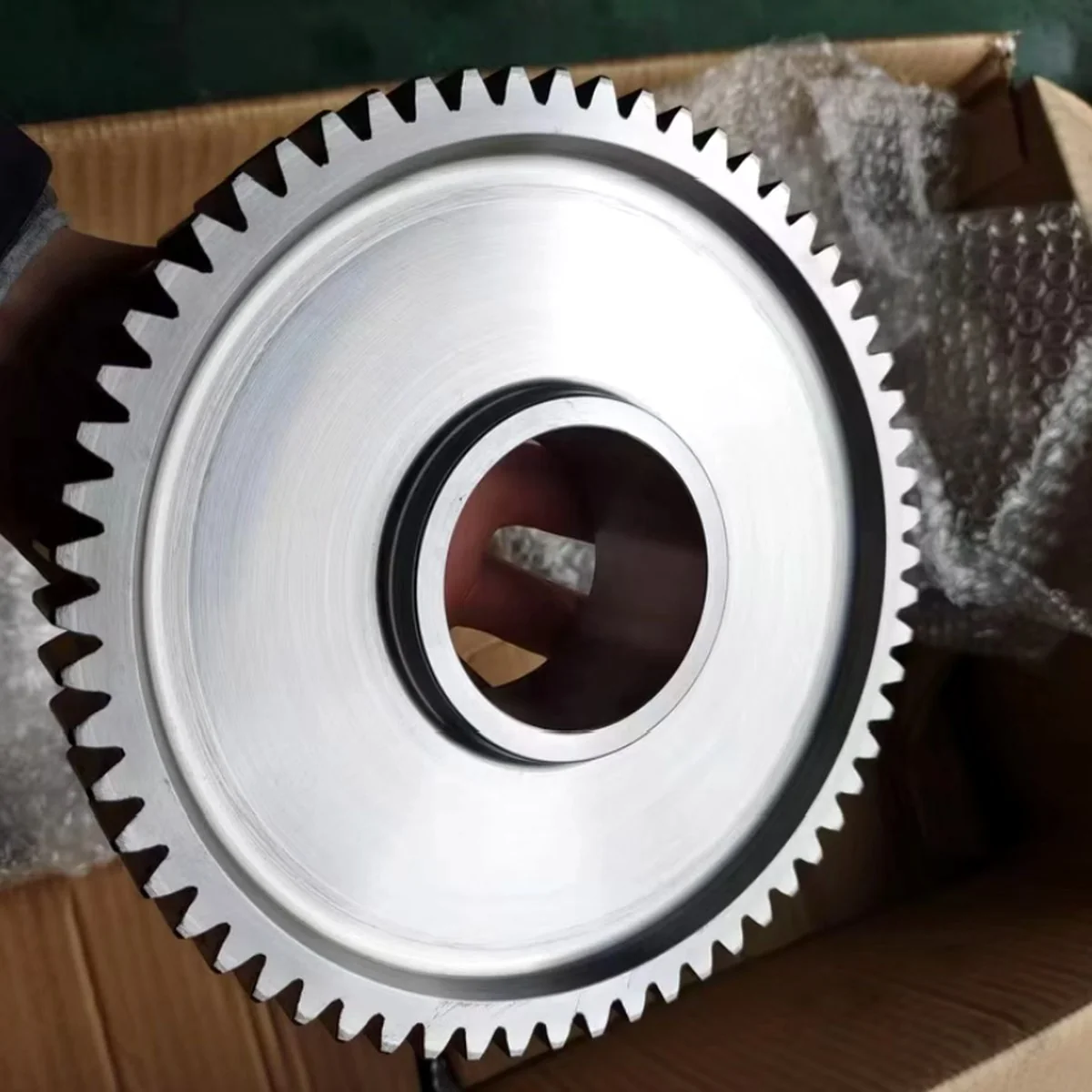
A sprocket's tooth form isn't arbitrary — it's defined by the chain pitch and roller diameter, so once we know your chain, the geometry follows. That's why a worn or even partly broken sprocket can be reproduced exactly: we work from the chain standard, not the damaged teeth. The dimensions that then matter for fit are the bore, keyway and overall width.
What the Sprocket Catalogue Covers — and Where It Stops
Most sprocket work is not a machining job at all. Standard pitches in standard tooth counts are stocked by the chain houses, and a stock sprocket costs less than anything cut from solid. There is also a whole trade that exists to bore and key a stock sprocket to your shaft, usually within days. Neither of those is us, and we will say so.
What those routes have in common is that the sprocket body already exists in somebody's catalogue. The work below starts where it doesn't.
| What you need | Off the shelf? | What to do |
|---|---|---|
| ANSI 35/40/50/60/80 or ISO 08B–16B, common tooth count, plain or stock bore | Stocked | Buy it. A stock sprocket is cheaper and available now — we would only be slower and dearer |
| Stock sprocket, but your shaft is an odd diameter or wants an oversized keyway | Stock body, bored to order | A sprocket house will do this in days. Re-boring a catalogue body is their trade, not ours |
| Tooth count outside what is stocked for that pitch, or a diameter no catalogue carries | No | Cut from solid to the chain standard — tooth count is free to choose because the form is derived, not copied |
| Obsolete or non-standard pitch, or a chain nobody can identify from a number | No | Send a short length of the chain. Pitch measured over ten links, then the tooth form is rebuilt from it |
| Sprocket integral with a hub, shaft, flange or cam — one piece, not an assembly | Never — it was never a separate part | Machined as one piece from your worn original. This is the most common reason a sprocket cannot be bought |
| Split or segmental sprocket for a machine still running, where pulling the shaft is not an option | Rarely, and seldom in your size | Made in halves with dowelled joints, so it fits without dismantling the drive |
| Only the worn original survives and the machine builder is gone | No | Reproduced from the original plus its chain — see obsolete & discontinued parts |
What a Worn Sprocket Can and Cannot Tell You
A worn sprocket is a poor witness to its own tooth form. Teeth wear hooked on the driving flank and the profile you can measure is the profile that failed, not the one that was cut. Copy the worn teeth and the new sprocket is worn before it turns.
What survives is more useful than what wore away:
| Measure this | Why it survives |
|---|---|
| Tooth count | Wear removes material, not teeth. Count them and one of the two variables is settled exactly |
| A short length of the chain | Pitch measured over ten links and divided by ten averages out chain stretch — this fixes the second variable, and the tooth form follows from the standard |
| Bore, keyway width and depth | The shaft fit barely wears. It gives the true nominal size when the teeth cannot |
| Overall width and hub projection | Sets whether the replacement clears the guard, the bearing and the next sprocket on the shaft |
| Which face the hub projects from | A sprocket fitted the wrong way round moves the chain line — and a hub is not symmetrical |
One thing worth checking before you order: if the teeth wore out fast, the sprocket may not be the fault. Chain stretched beyond about 3% no longer sits in the pockets and will destroy a new sprocket the same way. Replace the pair, or tell us the drive's history and we will say whether a harder tooth is worth paying for.
Custom Sprocket Specifications
| Attribute | Capability |
|---|---|
| Chain standards | ANSI 25–100+, ISO 06B–16B+ |
| Strands | Single, duplex, triplex |
| Materials | 1045 / 4140 steel, stainless |
| Teeth | Induction- or case-hardened for wear |
| Bore | Plain, keyed (DIN 6885), set-screw, taper bush |
| Styles | Hub, platewheel, double-pitch, idler |
Chain Sizes & Pitch Diameter — How to Identify Your Sprocket
A sprocket is fully defined by its chain size (which fixes the pitch) and its tooth count. ANSI chain pitch runs in ⅛-inch steps — the chain number ÷ 8 gives the pitch in inches:
| ANSI no. | Pitch | ISO equiv. |
|---|---|---|
| 25 | 1/4" (6.35 mm) | 04C |
| 35 | 3/8" (9.525 mm) | 06C |
| 40 | 1/2" (12.7 mm) | 08A |
| 50 | 5/8" (15.875 mm) | 10A |
| 60 | 3/4" (19.05 mm) | 12A |
| 80 | 1" (25.4 mm) | 16A |
The pitch diameter then follows from the pitch (P) and tooth count (N): PD = P ÷ sin(180° / N) (per ASME B29.1). So with the chain identified and the teeth counted, the sprocket is fully specified — which is exactly how we reproduce one. The surest way to confirm the chain is to send a short length of it with the worn sprocket.
How We Make / Reproduce a Sprocket
- From specs: chain size + tooth count + shaft bore — the rest is derived from the standard.
- From a sample: we identify the chain pitch from the sprocket and a length of chain, then rebuild it (see reverse engineering).
- Harden: teeth hardened for wear while the bore stays machinable.
Material & Hardness
Most sprockets are machined in 4140 or 1045 steel with hardened teeth for chain-wear life; stainless suits wet or corrosive lines. Light-duty or quiet drives can use nylon. Tooth form, bore and keyway are verified on inspection.
Obsolete sprocket? Send the worn sprocket and a short length of the chain it runs. We identify the pitch, rebuild the tooth form, and machine new ones — one or a batch. No drawing required.
See also plastic gears, racks and sprockets — the same tooth geometry cut in cast nylon, POM and PE-UHMW, module 1–10 and DP 8 to 16, for drives that have to run quietly and without grease.
Custom Roller Chain Sprockets — What “Custom” Covers
A custom roller chain sprocket is a sprocket cut for a standard chain — ANSI 25 to 100 and up, ISO 06B to 16B and up — with something the catalogue does not list: a tooth count between stock sizes, a bore and keyway to your shaft, the hub on the other side, a double or triple strand, stainless steel, or hardened teeth. The chain stays a standard chain; the sprocket is what gets made. EKINSUN machines roller chain sprockets from 1 piece: send the chain size or the old sprocket, the tooth count, the bore and the keyway, and the quote comes back within 12 hours with the price at 1, 10 and 100 pieces, DDP to your door.
Do you make the roller chain as well?
No. Roller chain is a stocked, standardised product and costs less from a chain supplier. We make the sprockets, idlers and shafts it runs on, and match them to the chain you buy.
Frequently Asked Questions
Yes — give us the chain size (ANSI 40/50/60 or ISO 08B/10B/12B) and tooth count, or send the old sprocket and a length of chain. The tooth form follows the chain pitch and roller diameter.
Yes — steel sprockets with induction- or case-hardened teeth for wear life, bore and keyway left machinable. Stainless for corrosive lines.
ANSI 25–100+ and ISO 06B–16B+ single or multi-strand, a wide range of tooth counts, plus idlers and double-pitch sprockets.
All available — keyway to DIN 6885, set-screw flats, or taper-lock bush bore to your shaft.
Often, yes. If your chain is a common ANSI or ISO size and the tooth count is one the chain houses carry, a stock sprocket is cheaper and available immediately. If the only problem is that your shaft is an odd diameter or wants an oversized keyway, a sprocket house will bore a stock body to suit within days — that is their trade. Machining from solid earns its cost when the sprocket body itself is not in anyone's catalogue: an unlisted tooth count, an obsolete pitch, a one-piece sprocket-and-hub, or a part that now exists only as your worn original.
Yes, and it is the most common reason a sprocket cannot simply be bought. When the teeth are cut into a shaft, a flange or a cam body, the part was never sold separately and no catalogue covers it. We machine the whole component as one piece from your original, holding the mounting interfaces — bore, keyway, bearing seats, overall length — and deriving the tooth form from the chain rather than from the worn teeth.
Send a short length of the chain and count the teeth on the old sprocket. Measure across ten pitches and divide by ten — averaging over ten links cancels most of the stretch in a used chain and gives the pitch reliably, where measuring one link does not. Pitch plus tooth count fully specifies the sprocket; everything else follows from the chain standard. If you cannot get the chain off the machine, a photograph with a rule laid along it usually settles the size.
Quote a Custom Sprocket
Chain size, sample or drawing — all accepted. Reply in 12h.
// Qty & price
1 pc
Sample price
Confirm fit before a run
10–50
Unit price drops
Setup cost shared
100+
Best price
All tiers quoted upfront
- →No distributor — you pay the maker directly
- →CAD saved after first order — reorder anytime at lower unit price