The Profile Has to Match the Belt
A pulley only works if its groove or tooth profile matches the belt and its pitch diameter gives the right ratio. Off-the-shelf pulleys come in fixed bores and tooth counts, so a custom shaft size, an unusual ratio, or a discontinued part means machining one. For a timing pulley the tooth form is a standard profile (HTD, GT2, T5, MXL…), so we reproduce it precisely; for a V-belt pulley the groove angle and depth match the belt section.
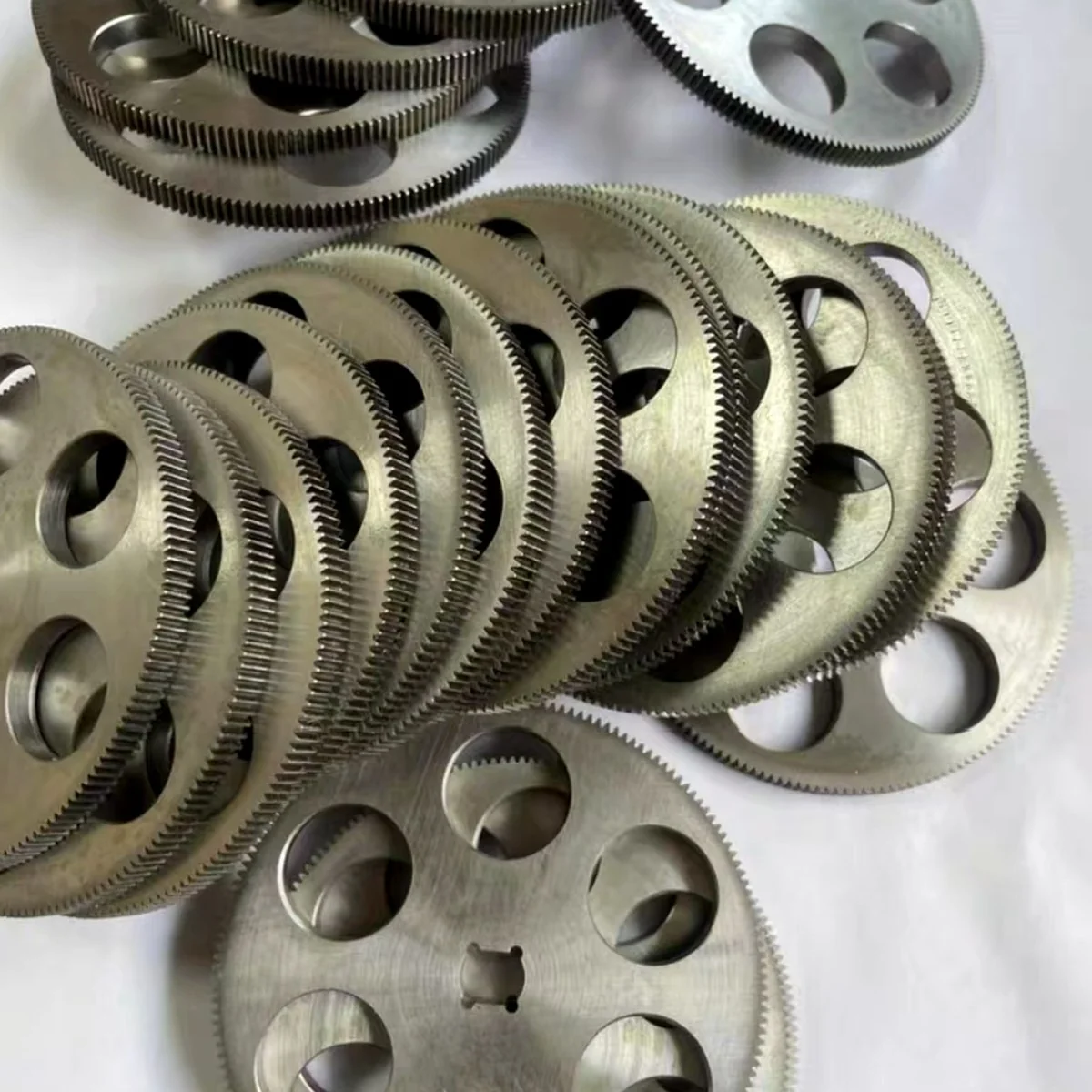
Custom Pulley Specifications
| Attribute | Capability |
|---|---|
| Types | Timing (toothed), V-belt, flat, idler |
| Timing profiles | HTD 3M/5M/8M, GT2, T5/T10, MXL, XL |
| Materials | 6061 aluminium, steel, stainless |
| Bore | Plain, keyed (DIN 6885), set-screw, taper bush |
| Flanges | One or both sides to retain the belt |
| Quantity | One-off to batch |
Belt Profiles & Pitch Diameter — How to Identify Your Pulley
A timing pulley is defined by its belt profile (tooth shape) and pitch (tooth-to-tooth spacing). Match those and the tooth count, and the pulley meshes correctly. The common profiles and pitches:
| Profile | Pitches | Notes |
|---|---|---|
| GT2 / GT3 (PowerGrip) | 2, 3, 5, 8, 14 mm | Higher load, low backlash, quiet — modern standard |
| HTD | 3M, 5M, 8M, 14M | Rounded teeth; more backlash than GT2, high power |
| T / AT (metric trapezoidal) | T2.5, T5, T10 / AT5, AT10 | Positioning, linear drives |
| MXL / XL / L (imperial) | 0.080" / 0.200" / 0.375" | Older imperial trapezoidal |
The pitch diameter follows directly from the tooth count and belt pitch: PD = N × p ÷ π (N = teeth, p = belt pitch). So if you know the belt and count the pulley's teeth, the pulley is fully specified — which is exactly how we reproduce one from a sample. Note GT2 and HTD of the same pitch number are not interchangeable (different tooth shape), so tell us the exact profile or send the belt.
How We Make / Reproduce a Pulley
- From specs: give us belt profile, tooth count or pitch diameter, width and shaft size.
- From a sample: we measure the profile, OD, width, bore and keyway and rebuild it — see reverse engineering.
- Bore to fit: keyway, set-screw flats or taper bore to your shaft and drive.
Material Choice
Aluminium keeps a pulley light and low-inertia (anodized for wear); steel or stainless for high torque or harsh environments. Light-duty pulleys can also run in Delrin/nylon. Bore and profile are verified on inspection.
Discontinued pulley, no drawing? Send the worn pulley (and the belt if you can) and we reproduce it with the correct profile and shaft fit — one or a batch. No drawing required.
Same family, different profile: a cam is the case where the profile itself is the whole part, and a gear rack is cut to match the pinion you already have.
See also plastic rollers, wheels and sheaves — cast nylon and PE-UHMW turned to your groove form and bearing seat, with the wire rope groove radius and the 6000 and 6200 series seat sizes.
Will it fit the belt? Pulley checks before you order
Same pitch is not the same belt. T5, HTD 5M and GT2 5 mm all have a 5 mm pitch, and each has its own tooth profile: a trapezoidal T5 belt on an HTD pulley rides on the tooth tips and skips under load, and a GT2 belt on a T5 pulley wears its teeth off in weeks. Read the profile off the belt's back — the moulding says T5, 5M or GT — and count the teeth on the old pulley; the pulley's pitch diameter follows from those two numbers, not from the outside diameter you can measure, which is smaller by twice the belt's pitch-line height.
What do I need to drive an 8 mm shaft from a 5 mm motor shaft with a GT2 belt?
Two GT2 pulleys of the same pitch — say 20 teeth on a 5 mm bore and 60 teeth on an 8 mm bore for a 3:1 reduction — at least one of them flanged so the belt cannot walk off, each bore with a set screw on a flat or a keyway, and a centre distance that gives a whole number of belt teeth.
Same pulley, but an 8 mm bore, flanged, or in steel
The same tooth count with a different bore, a flange added on one or both sides, steel instead of 6061 for a hardened drive, or a taper-bush hub in place of a plain bore — each is a variant of the same drawing, one piece and up, quoted in 12 hours.
Frequently Asked Questions
Yes — tell us the belt profile (HTD/GT2/T5/MXL) and tooth count, or send the belt and old pulley, and we machine the correct tooth form, pitch diameter, bore and keyway, with flanges if needed.
Yes — we measure profile, OD, width, bore and keyway and rebuild it. Timing profiles are standard, so even a worn pulley yields a correct new one.
Timing, V-belt and flat pulleys plus idlers, in aluminium, steel and stainless, with plain, keyed or taper bores.
All available — keyway to DIN 6885, set-screw flats, or taper-lock bush bore to your shaft.
Quote a Custom Pulley
Belt profile, sample or drawing — all accepted. Reply in 12h.
// Qty & price
1 pc
Sample price
Confirm fit before a run
10–50
Unit price drops
Setup cost shared
100+
Best price
All tiers quoted upfront
- →No distributor — you pay the maker directly
- →CAD saved after first order — reorder anytime at lower unit price