When the Catalog Bracket Doesn't Fit
Sensor makers sell brackets for their own sensors in their own standard positions. The moment your installation deviates — a tight corner, a non-standard tube diameter, a sensor aimed at an angle the right-angle bracket can't reach, or an old machine whose original bracket snapped and was never sold separately — the catalog goes quiet. The sensor works fine; what's missing is a piece of metal shaped for your machine.
That piece of metal is what EKINSUN makes. We machine custom sensor mounting brackets and mounts for inductive proximity, photoelectric, ultrasonic, laser and vision sensors — one-offs for a repair, or repeat batches for machine builders — cut from solid aluminium, stainless or steel and quoted within 12 hours.
If the problem is the thread on the sensor port rather than the bracket, see sensor thread adapters. For general-purpose machine brackets, see custom mounting brackets.
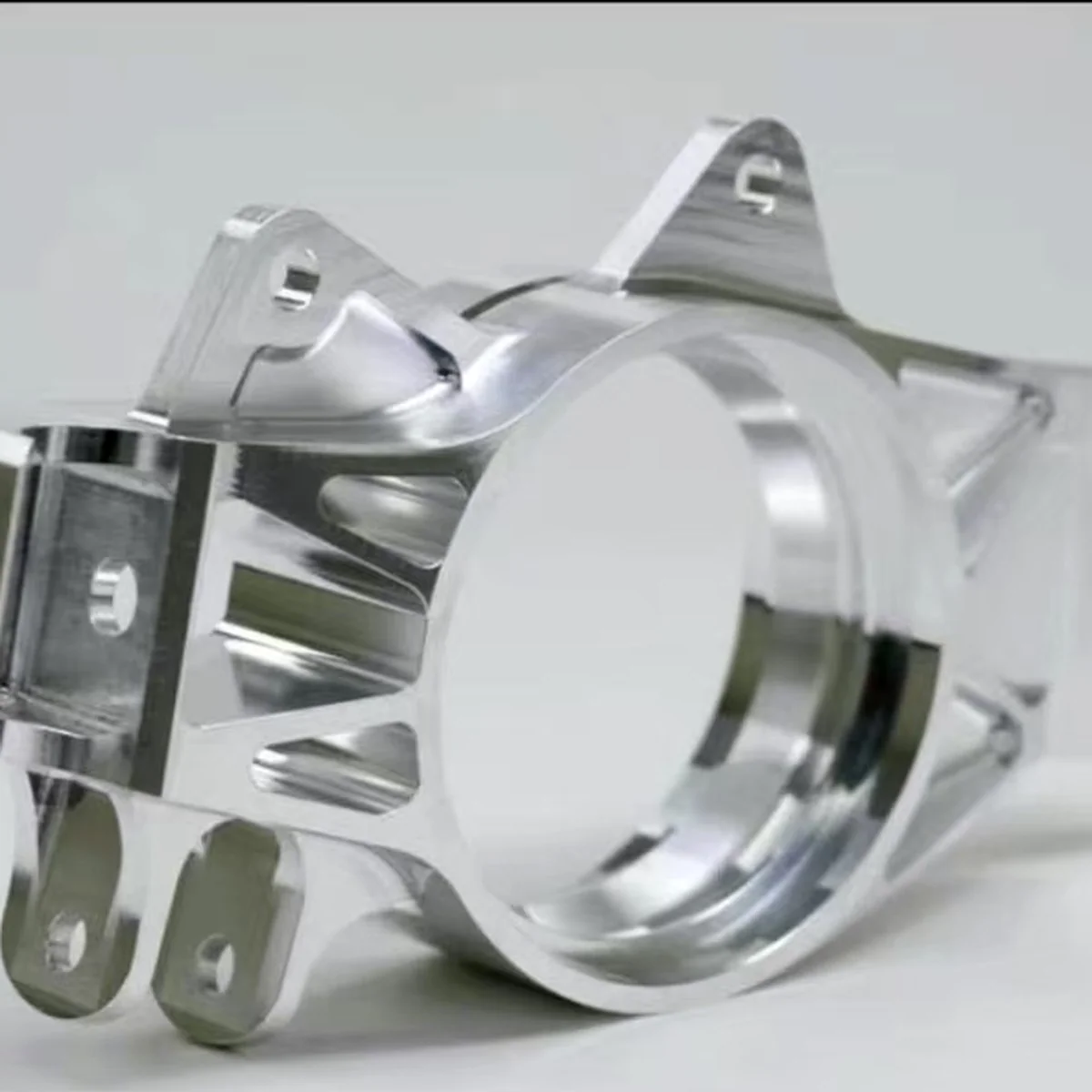
Bracket & Mount Types We Machine
Right-angle brackets
The workhorse L-bracket, sized to your sensor body and bolt pattern instead of the nearest catalog number.
Swivel & angle mounts
Fixed compound angles machined in — or a two-piece pivot when the aim must be tuned on site.
Clamp & ring mounts
Split clamps and bored rings for barrel sensors, rods and tubes — including odd diameters no clamp is sold for.
Plate & offset mounts
Flat, stepped or gooseneck plates that carry the sensor past an obstruction to where it needs to sit.
Multi-sensor rails
One machined rail locating several sensors at fixed pitch — repeatable across every machine you build.
Replacement OEM brackets
Broken or discontinued original brackets reproduced from the old part.
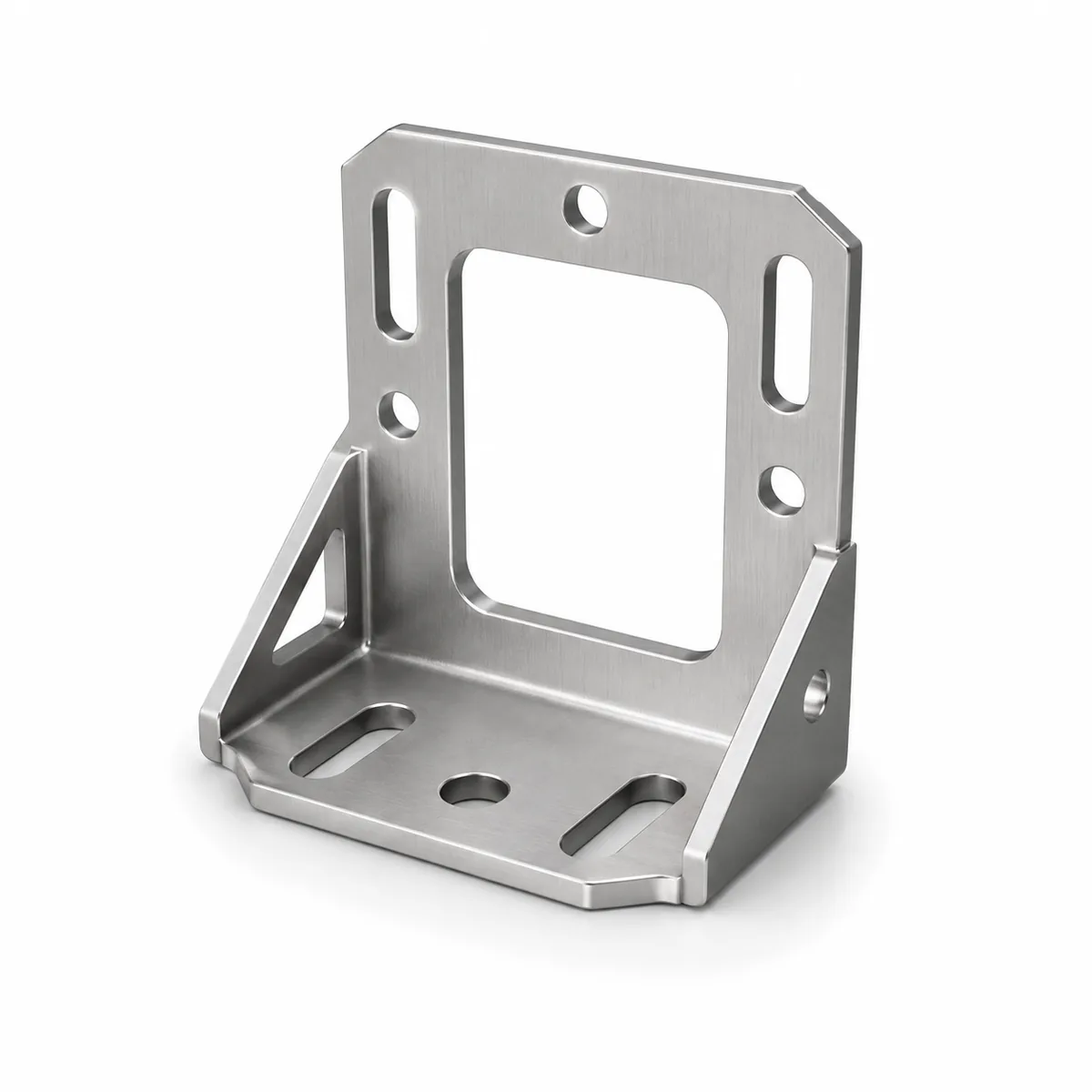
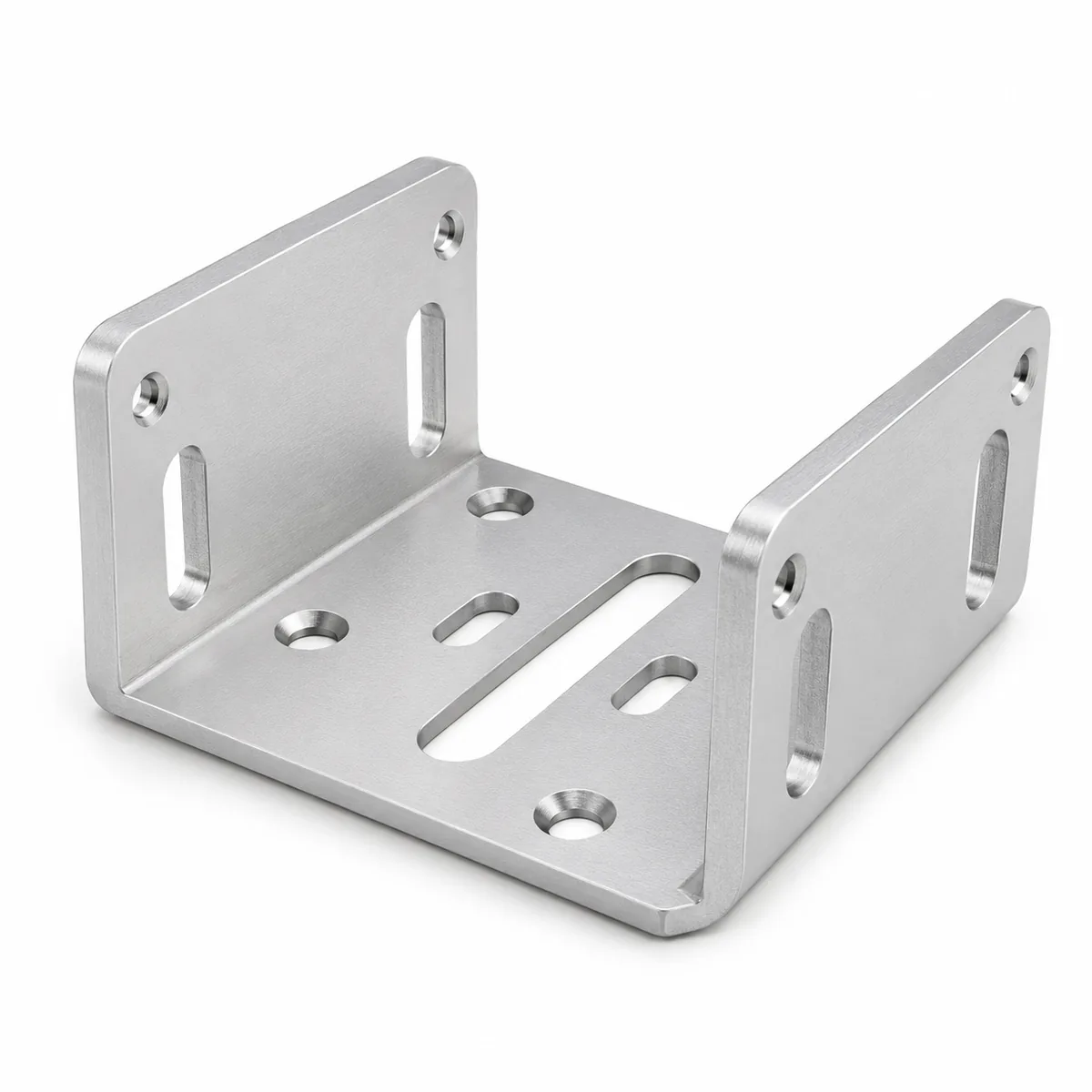
Match the Mount to Your Sensor
Most industrial sensors fall into a few mechanical families, and each one asks something different of its bracket:
| Sensor type | What the bracket must provide |
|---|---|
| Barrel proximity (M8 / M12 / M18 / M30) | A through-hole or split clamp at the exact barrel diameter, with face clearance for the lock nuts and enough thread showing to set the sensing gap |
| Photoelectric & laser | The maker's two- or three-hole pattern, held rigid — beam alignment drifts if the bracket flexes |
| Ultrasonic | A stiff stand-off holding the transducer square to the target; a tilted or springy mount skews the echo and the reading |
| Vision cameras | A stable platform with fine position adjustment — slots for setup, dowel pins so the image is repeatable after removal |
| Limit & mechanical switches | Slotted mounting so the trip point can be set, then locked without the switch walking under vibration |
Catalog, Modular or Custom — What Do You Actually Need?
Not every sensor needs a custom bracket, and it costs nothing to check before you ask us to quote:
| Your situation | Honest answer |
|---|---|
| Standard M12/M18 sensor, standard right-angle position | Buy the catalog bracket — it's cheaper and on the shelf |
| Position will be re-tuned often during commissioning | A modular rod-and-clamp system may serve — if its clamps fit your surfaces |
| Odd diameter, tight space, compound angle, vibration, washdown | Custom machined — this is the gap the catalog can't close |
| Original bracket broken and no longer sold | Custom machined from the old part — usually in a stronger material than the original |
Rigidity is the whole job. A field-bent sheet bracket flexes, and a flexing bracket means drifting trip points and noisy readings. We machine sensor mounts from solid billet, so stiffness comes from the section — not from hope. Where you need adjustment we machine slots; where you need the position back after maintenance we add dowel-pin holes. You get both only when the bracket is designed around your sensor.
When the bracket is just a stand-off distance — the sensor held a set height off a plate, isolated or grounded — a machined standoff to that exact length is often the simpler part.
Materials for Sensor Brackets
6061 aluminium
Light, stiff and economical for dry indoor automation; anodised for wear and a clean look.
6061 machining →303 / 304 stainless
The default for washdown, outdoor and general corrosion duty — most catalog sensor brackets are thin 304; ours are machined full-section.
304 machining →316 stainless & steel
316 for chemical, coastal and food-plant chemistry; carbon steel where the bracket doubles as a guard or heavy fixture.
316 machining →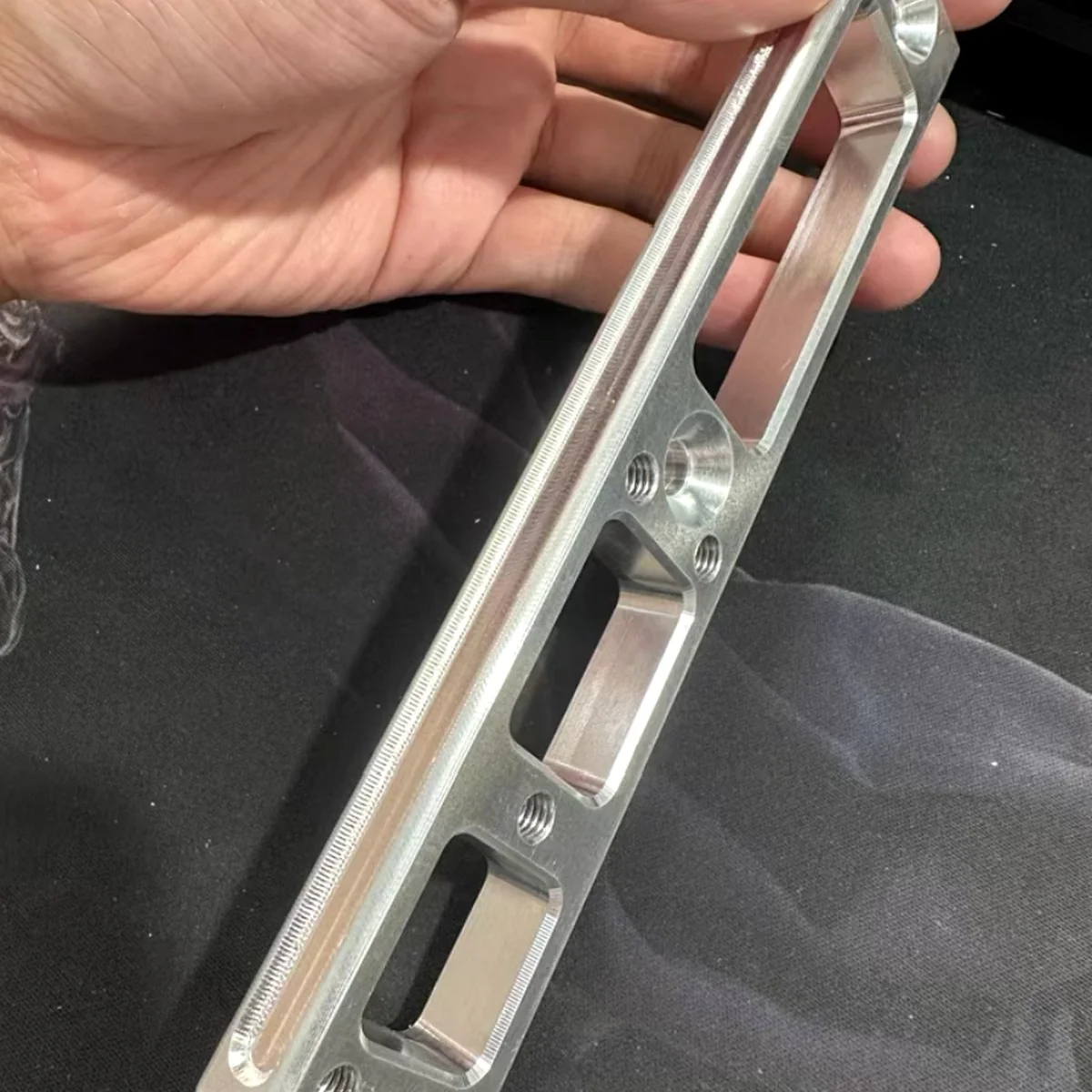
No Drawing? Start From the Sensor Itself
Send what you have
The sensor model or datasheet, photos of where it must mount, a sketch with rough dimensions — or the broken bracket itself.
We draw the bracket
We design around the sensor's barrel or hole pattern and your mounting surface, and send the drawing for approval — free. How reverse engineering works →
Machine, inspect, ship
Milled from solid, deburred, finished and dimensionally checked before it ships. Copy from a sample →
What to Send for a Fast Quote
- Sensor make and model (or its barrel diameter / hole pattern), and how many sensors per bracket
- Photos or a sketch of the mounting spot, with one or two known dimensions for scale
- Environment — washdown, outdoor, chemicals, vibration — so we pick material and thickness
- Whether the position must be adjustable, fixed, or repeatable after removal
- Quantity and delivery country — one piece to prove the fit, or a batch per machine
No CAD, no problem. Most sensor-bracket orders start from a photo and a tape measure. We rebuild the drawing and confirm it with you before cutting — see how to order with no CAD file.
Will the sensor fit? Bracket checks before you order
A barrel sensor is held by its thread and two nuts, so the bracket hole is a clearance for the barrel, not the thread size: 12.5 mm for an M12 sensor, 18.5 mm for M18, 30.5 mm for M30, with enough flat around the hole for the nut — 17 mm across flats on M12, 24 mm on M18. A 12 mm hole on an M12 sensor scratches the thread and never seats square. Photoelectric and laser sensors use the maker's own two- or three-hole pattern, which is copied from the datasheet drawing, not measured off the sensor.
What do I need to mount an M18 inductive sensor 40 mm above a conveyor edge?
An L-bracket with an 18.5 mm hole in the upright, a slot in the base so the sensing distance can be set, the base drilled to the frame's holes, in 304 for a dry line or 316 for washdown. Send the sensor's part number and a photo of where it mounts; the datasheet gives the rest.
Same bracket, but for M12, in 316, or 20 mm taller
A 12.5 mm hole in place of 18.5, 316 stainless for a washdown line, a taller upright, an adjustable angle, or a split clamp instead of a through-hole — each is a variant of the same drawing, one piece and up, quoted in 12 hours.
Frequently Asked Questions
Yes. Tell us the sensor — barrel diameter or body dimensions, or just the datasheet or a photo — plus where it has to sit and at what angle. We design and machine the bracket around that sensor and its lock nuts or mounting holes, so it drops in without filing or shimming.
Yes. Send the broken bracket — or the machine surface and the sensor it must hold — and we measure it, rebuild the drawing at no charge and machine a replacement, usually in a stronger material than the bent-sheet original.
You can order a single piece. A sensor bracket is a small milled or turned part with no tooling cost, so a one-off is routine — common for repairs, retrofits and prototypes before a production run.
304 stainless covers most washdown and outdoor duty; 316 is the safer choice around chemicals, coastal air or food-plant chemistry. Anodised 6061 aluminium suits dry indoor automation where weight and cost matter.
Yes — we machine slotted holes or curved slots where you need field adjustment, and dowel-pin locations where the position must be repeatable after removal. Tell us which matters for your sensor and we design accordingly.
Get a Sensor Bracket Quoted
The sensor and a photo of the spot — that's enough to start. Engineers reply in 12h.
// Qty & price
1 pc
Sample price
Prove the fit first
10–50
Unit price drops
Setup cost shared
100+
Best price
All tiers quoted upfront
- →No distributor — you pay the maker directly
- →CAD saved after first order — reorder anytime at lower unit price