CNC Machined Turbo Compressor Housing
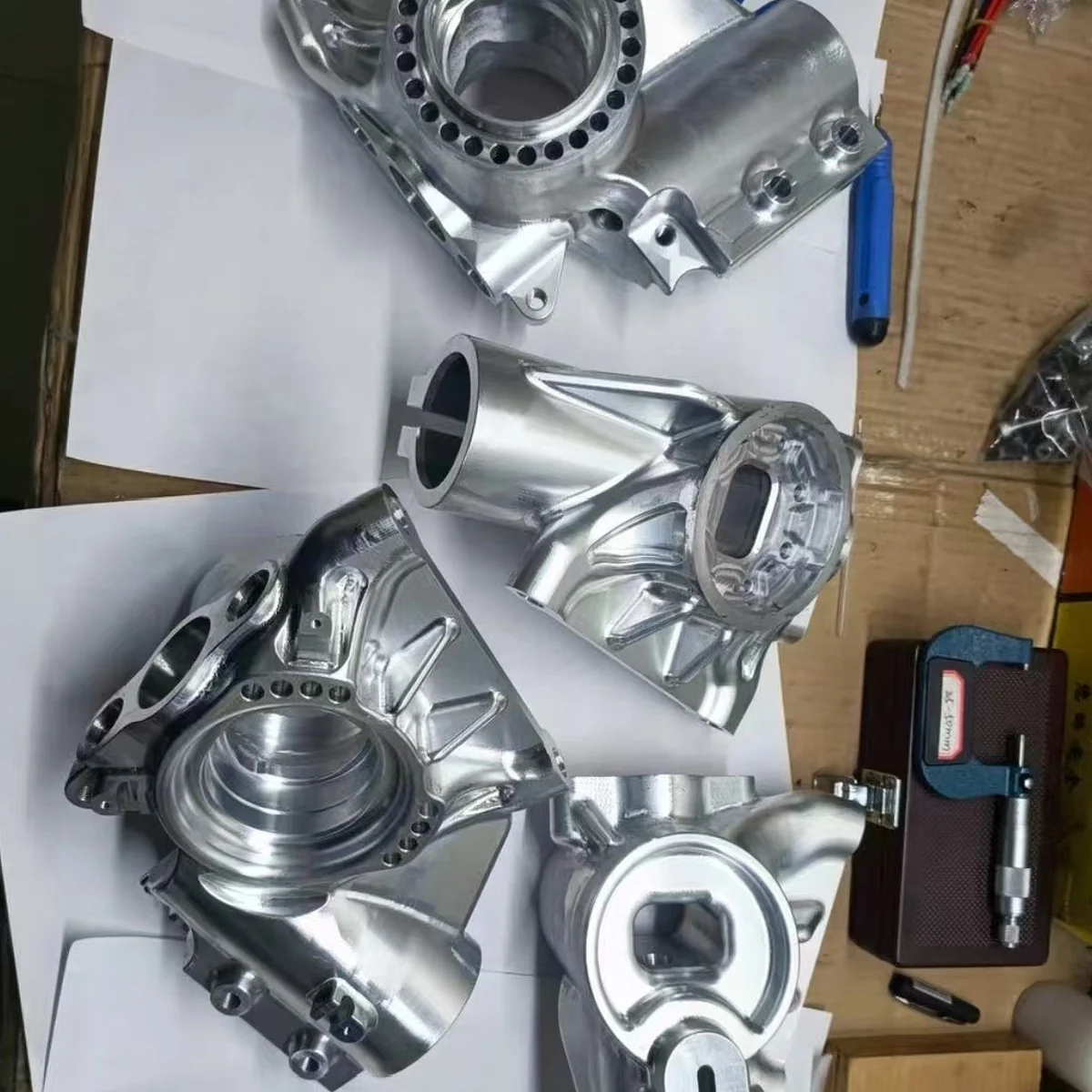
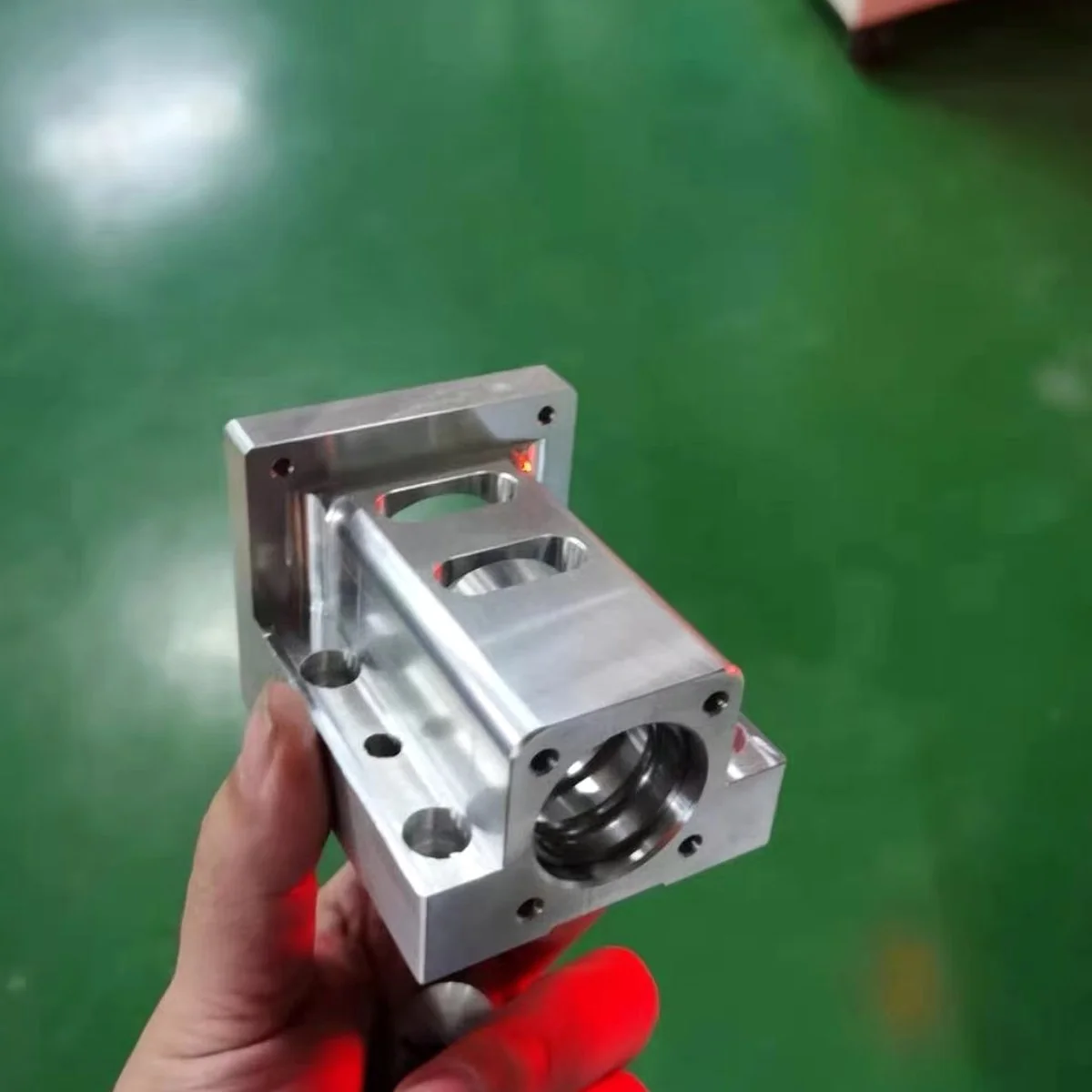
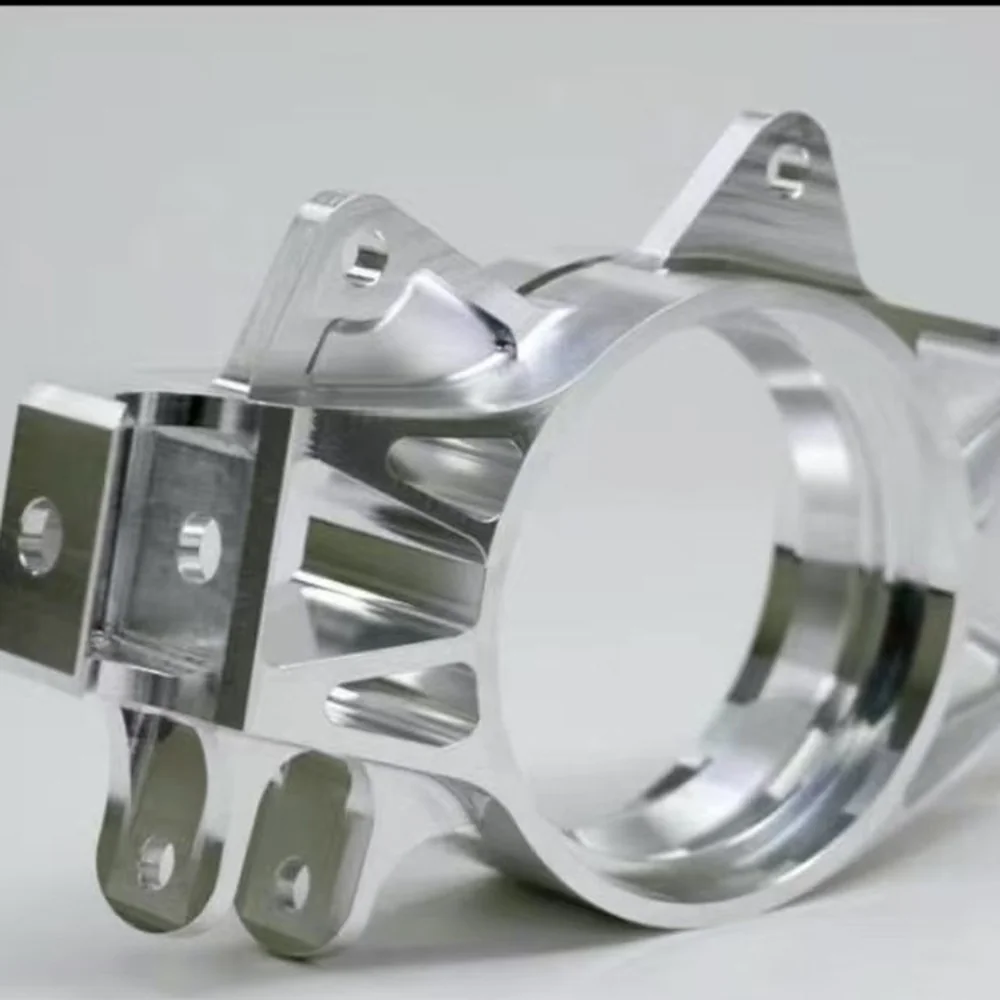
Custom billet aluminum turbo compressor housings machined from your drawing. Complex internal scroll geometry machined on 5-axis centers. Prototype to batch production. Hand drawings and CAD files accepted.
Quote within 12h · MOQ: 1 piece · Drawings kept confidential
About This Part
The turbocharger compressor housing is one of the most geometrically complex components we machine. It contains the internal scroll and volute that accelerates compressed air into the engine intake. The scroll geometry must be precisely machined to match the compressor wheel and achieve the designed pressure ratio and flow characteristics.
EKINSUN machines turbo compressor housings from billet aluminum on our 5-axis CNC machining centers. 5-axis machining allows the complex internal and external geometry to be cut in a single setup, eliminating the alignment errors that occur when parts are re-fixtured between operations.
Why Billet Aluminum?
Cast iron is the traditional material for OEM turbo housings — it is cheap in high volume and handles the thermal cycling well. However, for custom and performance applications, billet aluminum has significant advantages:
- Weight — aluminum is approximately one-third the weight of cast iron. This reduces rotating inertia (turbo lag) and overall vehicle weight.
- Machinability — billet aluminum can be machined to much tighter tolerances than castings, allowing more precise scroll geometry and better surface finish on flow surfaces.
- Customization — billet housings can be machined to exactly the dimensions you specify, including non-standard scroll sizes, port angles, and flange patterns.
- Visual appeal — polished or anodized aluminum housings are a feature in high-performance and show vehicles.
We Can Machine from Your Drawing or Existing Part
If you have a CAD file, send it directly. If you have a hand-drawn cross-section with scroll dimensions, we can work from that. If you have an existing turbo housing you want replicated or modified, send it to us for reverse engineering.
This is one of the cases where our hand-drawing acceptance is especially valuable — turbo housing designs are often developed by engineers who sketch the scroll geometry by hand before committing to CAD.
Surface Finishing Options
- As-machined — natural aluminum with machining marks visible
- Bead blasted — uniform matte finish
- Clear anodized — protective clear coat, natural aluminum color
- Hard anodized — thick, wear-resistant black or grey coating
- Polished — mirror finish on external surfaces
- Custom anodized color — red, blue, gold, black, etc.
What Fixes Each Dimension — and Where the Catalogue Stops
A compressor housing has almost no free dimensions. Every one of them is set by a part you already own — the wheel, the bearing housing, the charge pipe — so the first job is measuring, not drawing.
| Housing feature | What sets the number — measure this | Off the shelf? | If there is no catalogue part |
|---|---|---|---|
| Inducer bore | The compressor wheel’s inducer OD plus running tip clearance. Measure the wheel, not the old housing — a housing that has rubbed is already oversize, and copying it copies the fault. | Only while the turbo maker still lists that wheel | Bore cut to the wheel in your hand, contour blended to the measured inducer |
| Diffuser width & backplate face | The wheel’s exducer height and the axial position the bearing housing sets. Both come off the rotating assembly, not off a catalogue page. | Matched set, but only as a complete catalogue housing | Cut in the same setup as the bore, so diffuser and volute stay concentric to the inducer |
| Volute A/R | A/R is a ratio, not a size: cross-sectional area at any station divided by the radius from the turbo axis to that section’s centroid. Both terms scale together, which is why one A/R number describes the whole volute. | Fixed — you choose from the A/R steps offered for that frame | Any A/R between the offered steps, or one the frame never offered |
| Compressor outlet | Your charge pipe, not the turbo. Size, angle and clocking are all downstream constraints. | Fixed to the frame’s standard outlet and clocking | Outlet cut to the pipe run and the space you have |
| Inlet bore | Filter or intake pipe ID, plus enough straight length ahead of the inducer. | Fixed | Bored to your intake, with the anti-surge port placed where your build needs it |
| Mounting interface | The bearing housing (CHRA) you already own — bolt circle or V-band. | Yes, while the CHRA is a current part | Cut to the CHRA in hand, including frames the maker has discontinued |
| Current frame, standard A/R | Nothing to determine — the turbo maker already did. | Yes | Buy it from them. It is cheaper than machining and it arrives already matched. |
If the turbo is a current model and a standard A/R suits the build, the housing from the turbo manufacturer is cheaper and already matched to the wheel. Machining earns its cost in four cases:
| What you need | In the catalogue? | What we machine |
|---|---|---|
| A housing for a current turbo frame in one of its standard A/R steps | Yes — the turbo manufacturer lists it, already matched to the wheel | Buy it off the shelf; you don’t need us for that one. It is cheaper than machining and it arrives matched. |
| An A/R between the two steps the frame offers | No — A/R is sold in steps, and the value a build wants usually falls between them | Volute cut to the A/R you specify, on the same wheel and the same bearing housing |
| A housing for a discontinued frame whose wheel still turns | No — wheels outlive housings, and once the frame is dropped the listing goes with it | Bore and diffuser cut to the wheel in hand, mounting face cut to the CHRA you already own |
| Outlet rotated to clear a bulkhead, or a size the frame never offered | No — outlet size and clocking are fixed features of a catalogue housing | Outlet cut to the pipe run and the clearance you have |
| A housing for a hybrid or one-off compressor wheel | No — there is no frame for it to be listed under | Measured from the wheel itself; no drawing and no CAD file needed |
| Stainless instead of billet aluminum | Rare — catalogue compressor housings are cast or billet aluminum | We machine 304 and 316 when the duty calls for it, and we say plainly when it does not: the compressor side sees the air temperature in the table above, not exhaust temperature, so on most builds stainless only adds mass. |
How Hot Is the Air Leaving the Compressor?
Compressing air heats it, and the housing carries that air. The discharge temperature is not a guess — it follows from the pressure ratio and the compressor’s isentropic efficiency:
T₂ = T₁ × [ 1 + ( PR0.2857 − 1 ) ÷ η ]
with T₁ = 20 °C intake air, an exponent of (γ−1)/γ = 0.2857 for air, and η the compressor’s isentropic efficiency — typically 0.70 to 0.78 away from the extremes of the map. Read the row for your pressure ratio and the column for how efficiently your compressor is running:
| Pressure ratio | Boost at sea level | η = 0.70 | η = 0.74 | η = 0.78 |
|---|---|---|---|---|
| 1.5 | 0.5 bar / 7 psi | 71 °C | 69 °C | 66 °C |
| 2.0 | 1.0 bar / 15 psi | 112 °C | 107 °C | 102 °C |
| 2.5 | 1.5 bar / 22 psi | 145 °C | 139 °C | 132 °C |
| 3.0 | 2.0 bar / 29 psi | 174 °C | 166 °C | 159 °C |
| 3.5 | 2.5 bar / 36 psi | 200 °C | 190 °C | 182 °C |
| 4.0 | 3.0 bar / 44 psi | 224 °C | 213 °C | 203 °C |
A compressor running at η 0.78 instead of η 0.70 delivers air about 15 °C cooler at PR 3.0, so the wheel and the A/R are a thermal decision as well as a flow decision. Read the figure as the temperature of the air, not of the metal: the housing sits below it, cooled by ambient flow and by the charge pipe carrying heat downstream, and how far below depends on the installation. It is a sustained service temperature rather than a peak, which is why alloy and temper are specified against a duty cycle instead of published as one grade correct for every build.
Technical Specifications
Standard specifications for our CNC machined turbo compressor housings. All dimensions, materials, and finishes are customizable.
| Parameter | Specification | Notes |
|---|---|---|
| Material | Aluminum 6061-T6 (standard), 7075-T6 (high strength) | Other alloys available on request |
| Machining Process | 5-Axis Simultaneous CNC Milling | Single setup eliminates re-fixturing error |
| Dimensional Tolerance | ±0.01mm standard, ±0.005mm on critical features | Specify critical dimensions on drawing |
| Surface Finish (as-machined) | Ra 1.6μm standard, Ra 0.8μm fine | Internal flow surfaces can be polished |
| Post-Processing Options | As-machined / Bead blast / Clear anodize / Hard anodize / Polish / Color anodize | Specify at time of order |
| Max Part Envelope | 600 × 400 × 400mm | Larger parts possible — contact us |
| Drawing Formats Accepted | STEP, IGES, SolidWorks, DXF, PDF, Hand Sketch, Photo | Hand sketches converted to CAD free |
| Minimum Order Quantity | 1 piece (prototype) | Volume pricing from 5 pieces |
| Prototype Lead Time | 10–20 business days | Express service available |
| Inspection & Reports | CMM dimensional report + material certificate | Included on request |
| Shipping | DHL / FedEx / UPS Express worldwide | 5–7 working days to USA/EU after dispatch |
Frequently Asked Questions
Yes. Send us your hand sketch with the critical dimensions — scroll radius, width, inlet/outlet sizes, flange patterns. Our engineers create a 3D CAD model, send it for your approval, and machine the housing once you confirm it's correct.
6061-T6 for most applications — good balance of strength, machinability, and cost. 7075-T6 for high-boost or motorsport applications where maximum strength-to-weight ratio is needed. We advise on material selection based on your boost pressure targets and application.
Yes. Our 5-axis CNC centers machine the internal scroll in a single setup, holding tolerances of ±0.01mm on critical dimensions. The single-setup approach eliminates repositioning errors that occur with 3-axis multi-setup machining.
MOQ is 1 piece. We machine single prototypes regularly. Production run pricing is lower — contact us for a quote at your required quantity.
Four things, and none of them is a CAD file: the compressor wheel itself or its inducer and exducer diameters, the bearing housing or its mounting interface, the A/R you want, and the outlet size and clocking your charge pipe needs. Send the parts and we measure them here. If you only have the old housing, say so — we measure it, but we treat a rubbed bore as evidence of the fault rather than as the dimension to copy.
Yes, and it is the main reason this work exists. When a turbo frame is discontinued the wheels often outlive the housings, and there is no catalogue part left to buy. We cut the bore and diffuser to the wheel in hand and the mounting interface to the bearing housing you already own, so the assembly stays original everywhere except the part that no longer exists.
It carries the air leaving the compressor, so its temperature follows the pressure ratio and the compressor’s isentropic efficiency: roughly 112 °C at a pressure ratio of 2.0 and about 174 °C at 3.0, from 20 °C intake air at an efficiency of 0.70. A compressor running at 0.78 efficiency instead of 0.70 delivers air about 15 °C cooler at the same pressure ratio.
Related CNC Parts
// Also From EKINSUN