You need plastic parts made. What you probably do not have is a CAD file, a settled annual volume, or a clear answer on whether this job needs a mold at all.
Those three unknowns are what decide the price, and they are the reason most quotes come back either uselessly high or attached to a tooling bill that dwarfs the order. So start from what you have and how many you need — the process falls out of that.
Start Here: How Many Do You Need?
| Quantity | Route | Tooling | Typical lead time |
|---|---|---|---|
| 1–5 | Machined from plastic stock | None | Days |
| 5–500 | Vacuum casting in silicone molds | Low, and consumable every ~20–25 parts | ~1 week |
| 100–10,000 | Aluminium bridge tool | Mid | Weeks |
| Thousands per year, ongoing | Steel-tooled injection molding | High, but amortises | Weeks to months |
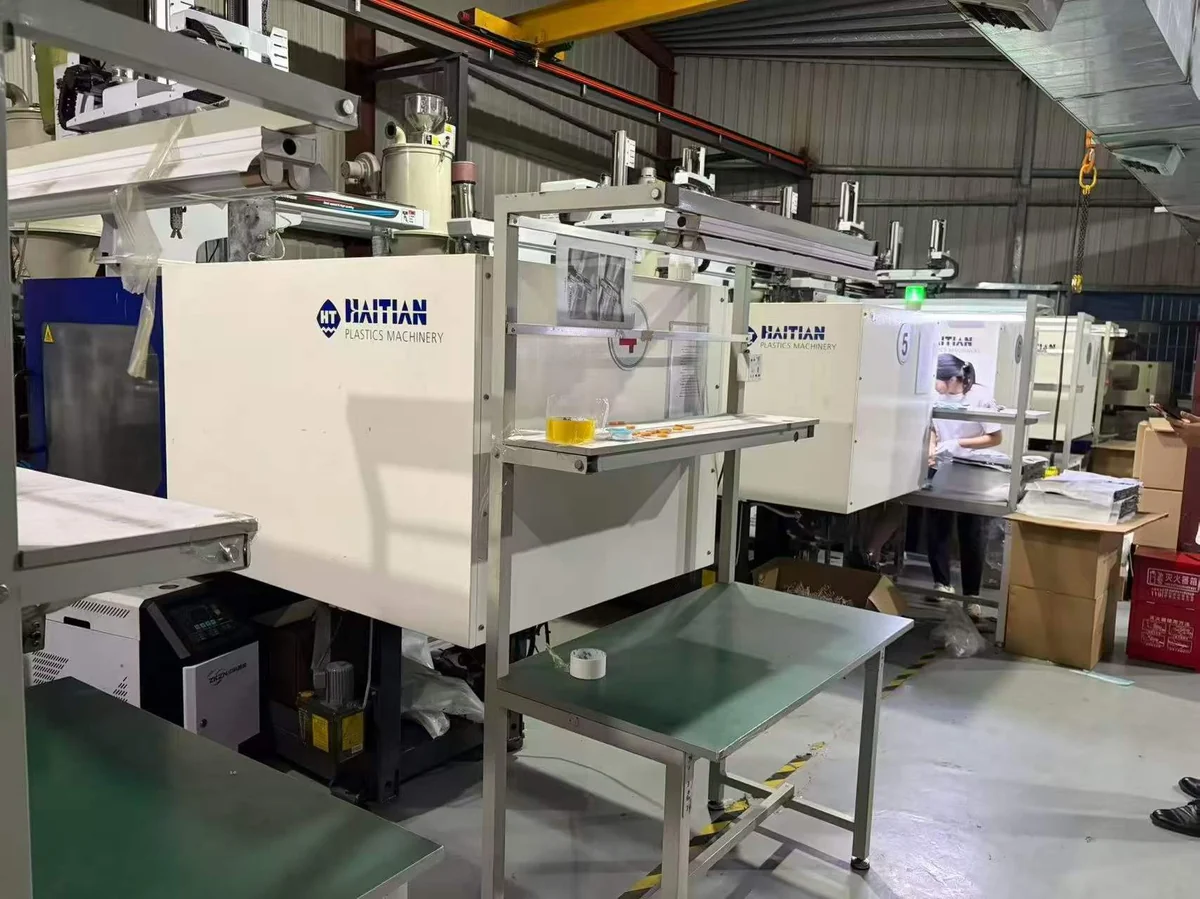
If your number sits in the 5–500 band and someone has quoted you a steel mold, get a second opinion before you sign. That band is where tooling cost most often swallows an entire project budget for no reason. A payment terminal keypad frame is one of those parts: the button apertures have to hold ±0.1 mm, so it is machined and measured as a prototype before any tooling is cut.
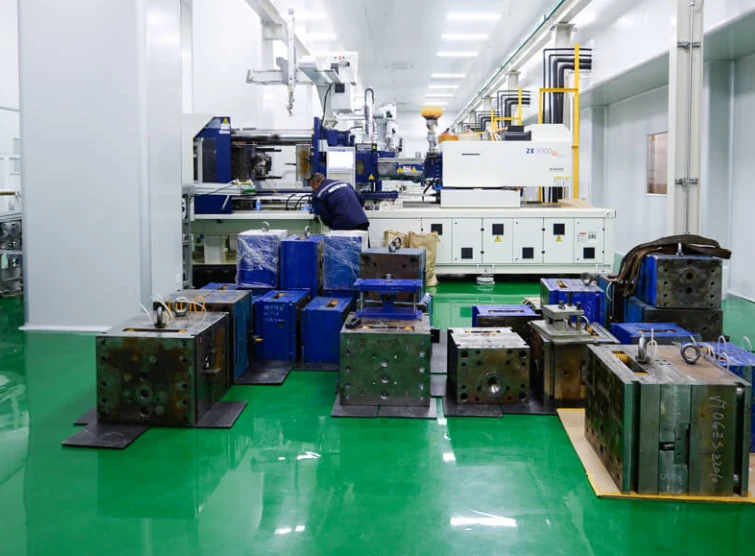
Each of those steel blocks is one part number. That is what "tooling" means in practice, and why the first question is how many you need rather than what the part looks like — the mold is a capital item that has to be earned back across the run.
Industrial Grade and Medical Grade Are the Same Processes
This trips people up, so it is worth being direct about: medical-grade is not a separate business or a different factory floor. It is the same injection molding, with a heavier set of controls stacked on top.
| Industrial grade | Medical grade | |
|---|---|---|
| Process | Same — injection molding, casting, machining | |
| Material | Commercial resin, datasheet | Medical-grade resin with certificates and lot traceability |
| Environment | Standard production floor | Cleanroom molding and assembly |
| Documentation | Dimensional report on request | Documented process parameters, validation records |
| Testing | Fit, function, dimensions | Adds biocompatibility and sterility work where the application requires it |
| Lead time | Baseline | Longer — qualification is the slow part, not the molding |
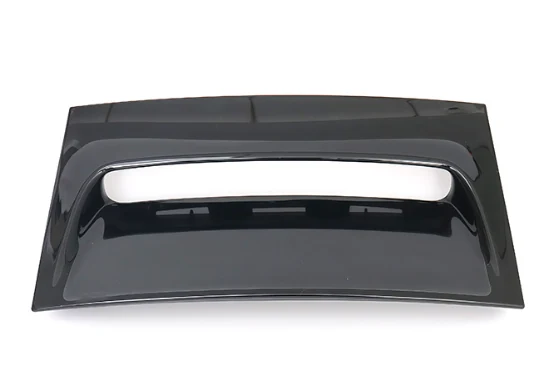
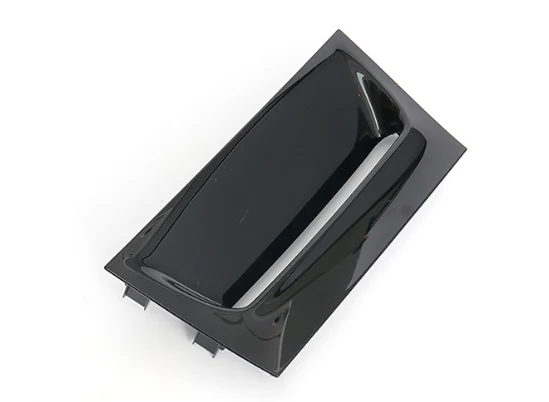
Practically, this means you do not have to decide which "kind" of supplier we are before you enquire. Tell us what the part does and where it ends up, and we route it to a facility qualified for that grade. You keep the same contact either way.
Medical-grade work has its own section, because the documentation and the product families are specific: medical plastic components and devices →
What Sits Under This Capability
Plastics We Work In
| Material | Why you would pick it | Available as |
|---|---|---|
| ABS | The default for housings and covers — rigid, tough, paints and textures well | Molded, cast (ABS-like resin) |
| PC (polycarbonate) | Impact strength and optical clarity; lenses, light pipes, guards | Molded, cast (PC-like / clear resin) |
| PE-UHMW (UHMWPE) | The most abrasion-resistant of these, and the lowest friction against steel — liners, guides, scrapers, screen panels. Will not hold a tight tolerance and stops at 80 °C | Machined from pressed sheet and rod |
| PE-HD (PE300) | The cheaper stand-in for PE-UHMW where sliding wear is light — tank linings, boards, light guides | Machined from sheet and rod |
| PP (polypropylene) | Chemical resistance and living hinges; fluid-contact parts. Machined from sheet and rod, or welded up into tanks and ducts | Molded, cast (PP-like resin), machined, welded |
| PA / nylon, cast and extruded | Wear and fatigue resistance; clips, gears, wheels, bushes. Cast rod runs to Ø500 mm, so large parts are possible at all | Molded, cast, machined |
| POM / acetal | Dimensional stability and low friction; bushings, gears, precision parts. The one that keeps its size when nylon does not | Molded, machined |
| PMMA / acrylic | Optical clarity where PC's toughness is not needed | Molded, machined |
| PEEK, PTFE | High temperature, chemical attack, low friction under load | Machined from stock |
| TPU / rubber-like | Seals, grips, gaskets, soft-touch — Shore A20 to A90 | Molded, cast |
| Silicone | Heat, flexibility, skin and fluid contact | Molded, industrial or medical grade |
| Flame-retardant grades | Electrical enclosures and terminal covers — state the standard you must meet | Molded, cast |
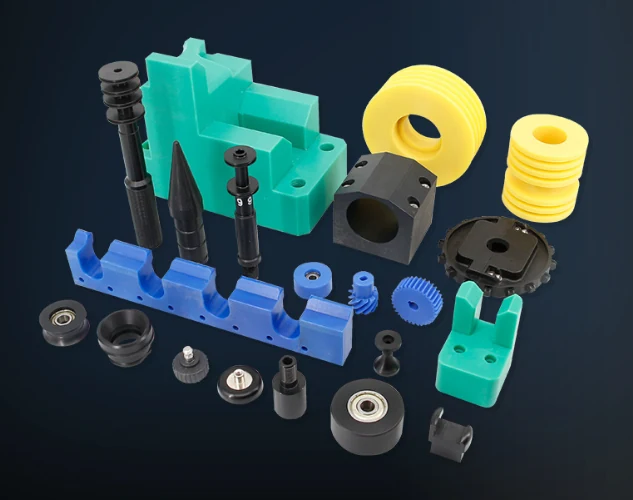
Which of these a part should be made from is decided by five numbers — density, water uptake, service temperature, sliding friction and abrasion. The engineering plastics comparison chart puts all ten side by side, with the moisture allowance that makes a nylon part measure oversize a week after machining.
Need the part in metal instead, or a plastic part with metal inserts? See materials we machine — aluminium 6061 and 7075, stainless 304 and 316L, brass, titanium and carbon steel — or custom metal parts.
Machined Plastic Parts, by Part Family
Everything above is molded or cast. These are cut from stock — sheet, rod and profile — which is the route for one to a few hundred pieces, for a size no catalogue holds, and for a part copied from the worn one.
What This Is Not the Right Route For
Two enquiries in ten are for something a catalogue already sells at a price no low-volume route matches. The table is the dividing line, and the rows marked No are the ones where we say so rather than quote against it.
| What you need | In the catalogue? | What we do |
|---|---|---|
| 1 to 5 pieces, any shape | Yes | Machined from plastic stock. No tooling, no minimum, and the part exists this week. |
| 5 to 500 pieces of a moulded-looking part | Yes | Vacuum cast in silicone moulds from a machined master. About a week, no steel tool. |
| 100 to 10,000 pieces | Yes | An aluminium bridge tool. Real moulded parts at a tooling cost that a launch can carry. |
| A part copied from one you already have | Yes | The part becomes the master. No CAD file, no original tooling, no surviving supplier needed. |
| Plain sheet, rod or tube in a catalogue size | No | Buy it from stock. Semi-finished plastic is a commodity and no one-off competes on it. |
| 100,000 standard parts a year | No | A commodity moulder with a tooling library beats us on price. We say so instead of quoting against it. |
| A standard O-ring, seal, bearing or fastener | No | Buy it by part number. Remaking a standard sealing element is slower, dearer and worse. |
| A part that runs above 150 °C | Partly | PEEK and PTFE go there; ABS, PC, PP, nylon and PE-UHMW do not. Send the temperature and it is checked first. |
You Do Not Need a CAD File
This is the part most suppliers make hardest. Here is what works as a starting point:
| What you send | What we do with it | Adds to lead time |
|---|---|---|
| The physical part | Measured and used directly as the master, or reverse engineered into CAD | — |
| A hand sketch with dimensions | Modelled, drawing sent back for your approval before anything is cut | ~1–2 days |
| Photos with a ruler in frame | Same — modelled and confirmed with you | ~2–3 days |
| A worn or broken original | Reverse engineered back to correct geometry, not copied in its damaged state | ~2–4 days |
| A STEP or STL file | Straight into DFM review and quoting | — |
How the Work Is Actually Delivered
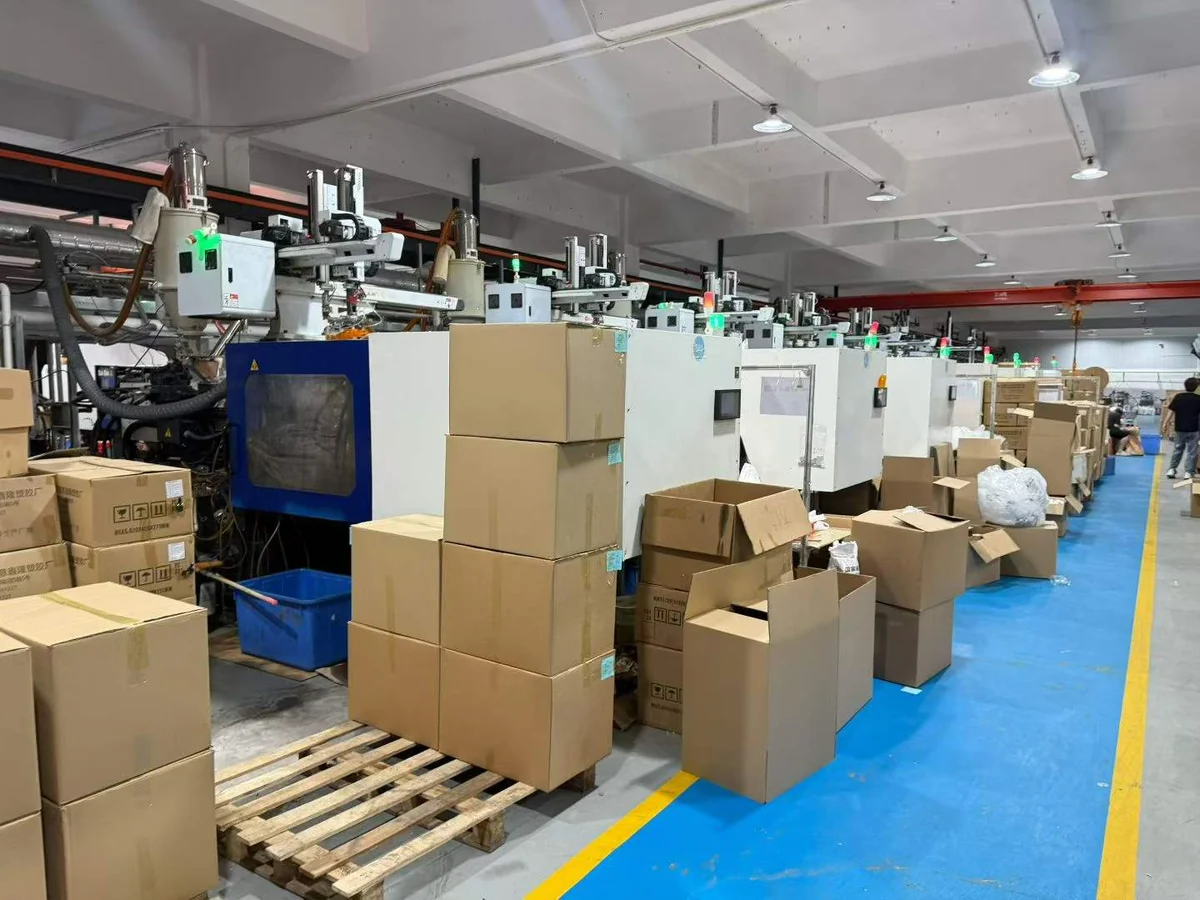
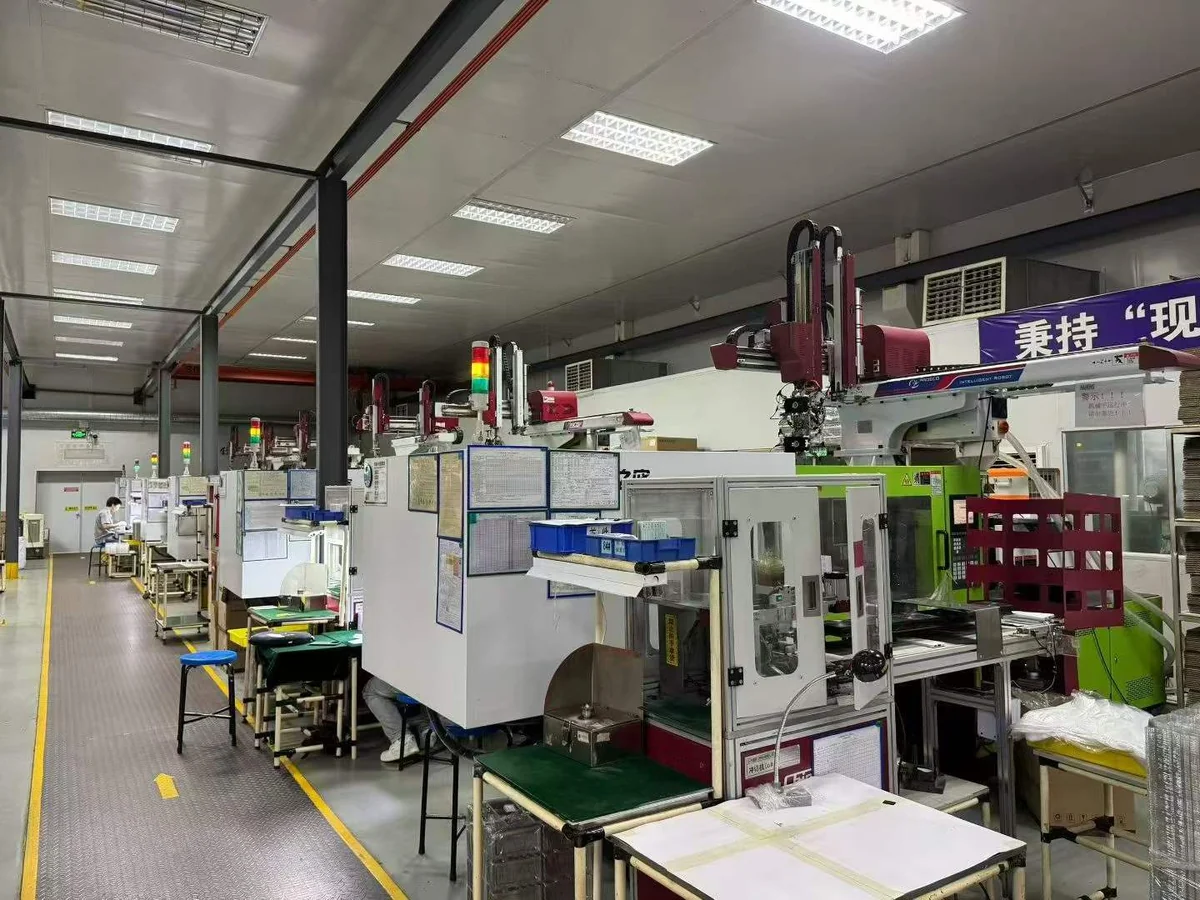
EKINSUN is your single point of contact: engineering and DFM, quoting, quality control, documentation and delivery. Tooling and production run through qualified manufacturing partners that we select and manage, which is how an industrial job and a medical-grade job can go through facilities suited to each without changing who you deal with.
MOQ is 1 piece. Quotes come back within 12 hours. An NDA is signed before you send files if you ask for one.
See also threaded inserts for plastic parts and plastic fasteners in nylon, PC and PEEK.
Common Questions
No. A photo of the part with something for scale, a hand sketch with dimensions on it, or the physical part itself is enough to quote from. If the part exists we can work from the part; if it does not, we can model it from your sketch and send you the CAD to approve before anything is made.
No — it is the same processes with a heavier set of controls layered on top: material certificates and resin traceability, cleanroom molding and assembly, documented process parameters, and biocompatibility testing where the application calls for it. Same tooling and same machines; tighter rules, more paperwork, longer qualification. Tell us the application and we will tell you which grade it needs.
One. Below about five pieces we normally machine them from plastic stock, because you would otherwise be paying for a mold you barely use. From roughly five upward, casting in a silicone mold is usually cheaper and looks closer to a molded part.
Almost always vacuum casting. Steel tooling cannot be justified at that quantity, and machining a thin-wall housing with ribs and snap features out of solid stock is impractical at any price. Expect two to three silicone molds for 50 pieces, and roughly a week.
Yes, and it is a large share of this work. The physical part becomes the master — no drawing, no original tooling and no surviving supplier required. A used part works; a cracked one usually works after we repair the master and get your approval on photos.
For molded and cast parts: ABS, PC, PP, PA (nylon), POM, PMMA, TPU and silicone, plus casting resins formulated to behave like each of those. For machined plastic parts: POM, PEEK, PTFE, nylon, acrylic and HDPE from stock. State what the part has to survive — heat, sunlight, oil, load, contact — and we will name the grade.
EKINSUN is your single point of contact and handles engineering, DFM, quality control and delivery. The tooling and molding themselves are run by qualified manufacturing partners we manage. That is why we can put an industrial job and a medical-grade job through different facilities without changing who you talk to.
We can, but the number will be worse than it needs to be. Route selection turns almost on quantity — the same housing can be a $0 tooling job or a five-figure tooling job depending on whether you need 40 a year or 40,000. Give us a rough annual figure and we will price the route that fits.