Article Contents
Short answer: Choose titanium when weight savings, extreme corrosion resistance (marine, medical, chemical) or biocompatibility are critical, and the budget allows a 3–5× premium. Choose stainless steel for the large majority of parts where cost, lead time and surface hardness matter more than shaving weight. When unsure, describe your application to your supplier and ask for a recommendation.
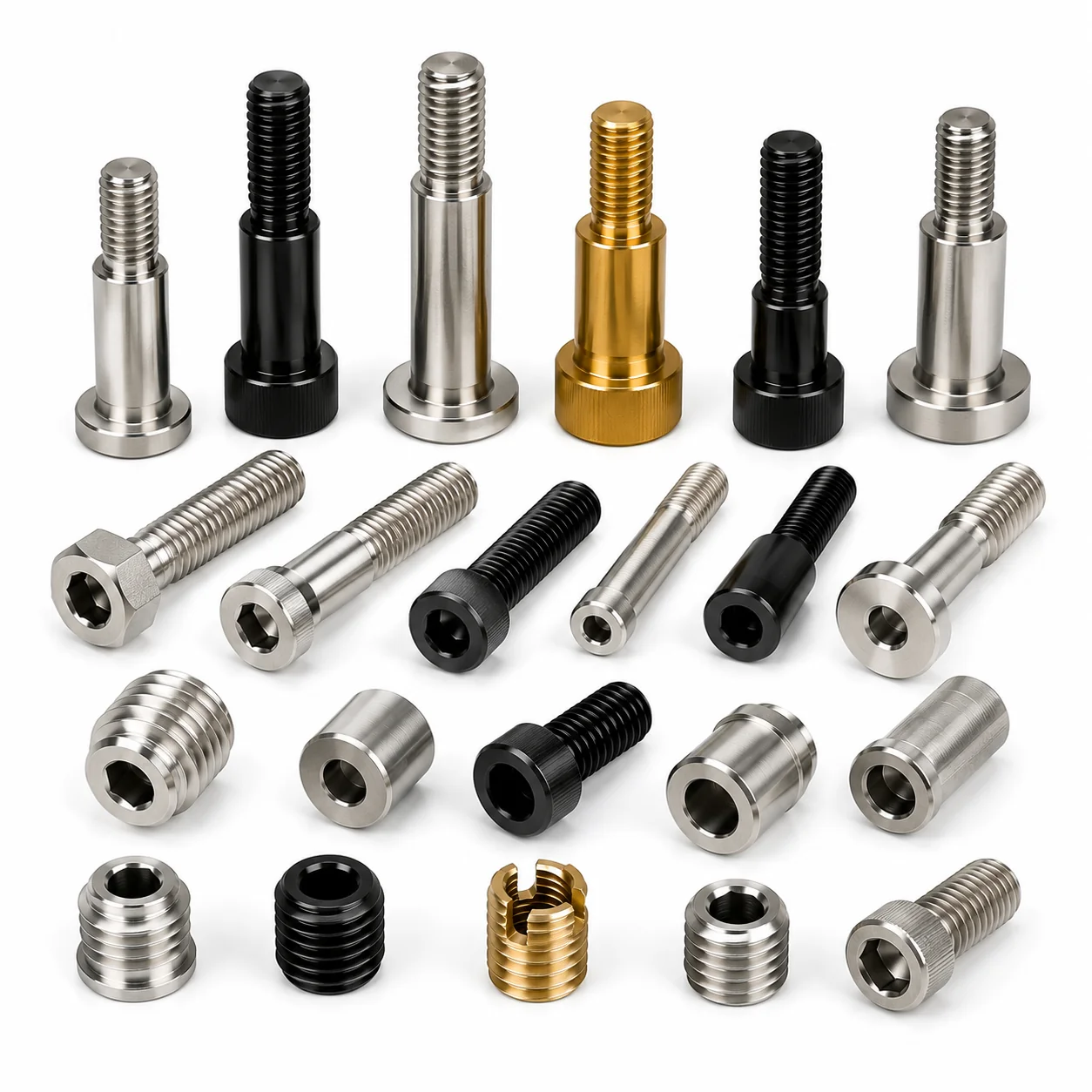
Titanium (gold/grey) and stainless steel fasteners machined to spec by EKINSUN
At a Glance
| Property | Titanium (Ti-6Al-4V, Grade 5) | Stainless Steel (304 / 316L) |
|---|---|---|
| Density | ~4.5 g/cm³ | ~8.0 g/cm³ |
| Tensile strength | ~950 MPa | ~515 MPa (304); 17-4PH up to ~1100 MPa |
| Strength-to-weight | Excellent — best in class | Moderate |
| Corrosion resistance | Near-perfect, including seawater | Very good (316L for marine) |
| Machinability | Difficult — slow, high tool wear | Good to moderate |
| Relative machined cost | 3–5× higher | Baseline |
| Biocompatible | Yes (medical implants) | 316L yes; others limited |
Strength & Weight
This is titanium's headline advantage. Titanium weighs roughly 4.5 g/cm³ against stainless steel's ~8.0 g/cm³ — close to half. A bracket that weighs 10 kg machined from 300-series stainless would weigh about 5.5 kg in Grade 5 titanium, while keeping comparable or greater strength.
In absolute terms, the picture is more nuanced. Grade 5 titanium reaches around 950 MPa tensile strength, comfortably above standard 304 stainless (~515 MPa). But precipitation-hardening stainless grades such as 17-4PH can exceed titanium in raw tensile strength and offer higher surface hardness. So if your part needs maximum hardness or wear resistance on the surface — gears, wear plates, cutting edges — a hardened stainless can beat titanium. If your part needs to be light and strong, titanium wins.
Corrosion Resistance
Both metals resist corrosion through a passive oxide layer, but titanium is in a league of its own:
- Titanium is essentially immune to seawater, chlorides and most acids. It will not pit or crevice-corrode in marine and offshore service, which is why it is used for subsea, desalination and chemical-processing hardware where stainless eventually fails.
- Stainless steel resists most environments well. Grade 316L is the marine and chemical choice and handles the great majority of corrosive duty at a fraction of titanium's cost. Standard 304 is fine for general outdoor and food use but can pit in salt-heavy conditions.
The practical rule: if the part lives in seawater, aggressive chemicals, or a body (medical implants), titanium earns its premium. For most other corrosive duty, 316L stainless is the economical answer. See our 316 stainless machining and titanium machining pages for grade detail.
Machinability & Cost
Stainless steel is much friendlier to machine. Titanium is difficult for two reasons: its low thermal conductivity keeps cutting heat concentrated at the tool edge, and it tends to work-harden. The result is slower cutting speeds, more frequent tool changes, specialised tooling and rigid setups.
Add the raw material premium — titanium bar stock can cost roughly nine times the price of equivalent stainless — and finished titanium parts typically run 3 to 5 times the cost of the same part in stainless. That premium can still pay off over a part's life in aggressive environments where titanium's zero-maintenance, decades-long service beats repeated stainless replacements. But for ordinary duty, the stainless part is the smarter buy.
- Stainless steel machined part = baseline cost
- Titanium machined part = roughly 3–5× the stainless cost
- Titanium only pays back where weight or extreme corrosion justify it
Common Grades
For titanium:
- Grade 5 (Ti-6Al-4V) — the workhorse. High strength, excellent fatigue life, aerospace and high-stress parts, custom fasteners. Used for most machined titanium.
- Grade 2 — commercially pure titanium. Lower strength but better corrosion resistance and formability; chemical and marine hardware.
For stainless steel:
- 304 — the default stainless. Good general corrosion resistance, food safe, cost-effective.
- 316L — marine and medical grade. Superior chloride/saltwater resistance; biocompatible.
- 17-4PH — precipitation-hardening grade with very high strength and hardness for shafts, gears and tooling.
- 303 — free-machining grade; easiest stainless to cut where corrosion demands are modest.
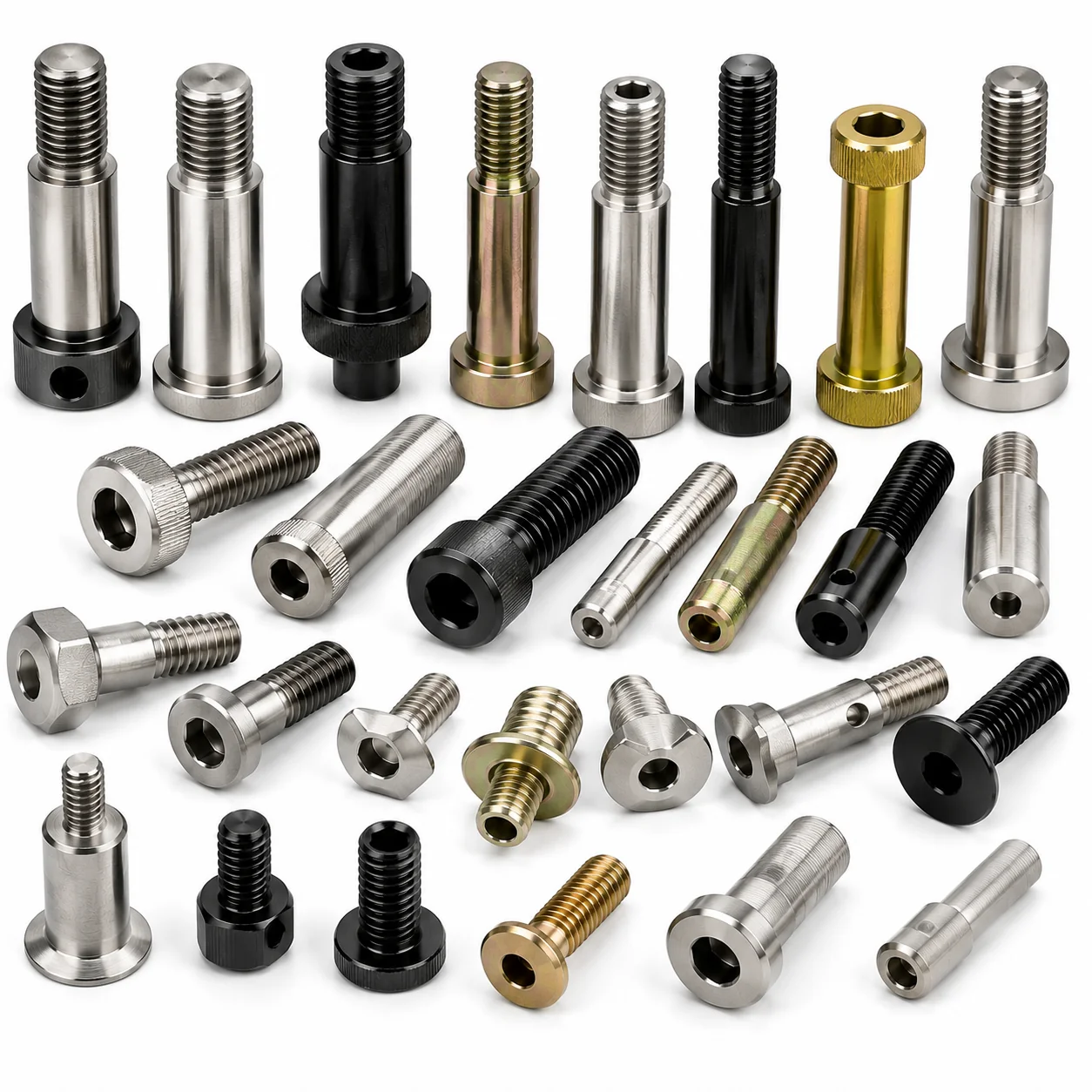
The same part can be machined in titanium, stainless, brass or alloy steel — material is chosen for the job
Typical Applications
Choose Titanium When…
- Weight is critical (aerospace, motorsport, drones)
- The part lives in seawater or aggressive chemicals
- Biocompatibility is required (medical, dental)
- You need high strength with minimal mass
- Long, maintenance-free service justifies the cost
Choose Stainless Steel When…
- Cost and lead time are priorities
- You need maximum surface hardness or wear resistance
- Conditions are normal indoor/outdoor or general marine (316L)
- The part is large or produced in quantity
- Food, medical or chemical contact at moderate cost (316L)
For weight-sensitive fasteners specifically, see our guide to custom titanium bolts. If you are also weighing aluminum, read aluminum vs stainless steel.
Frequently Asked Questions
By strength-to-weight, yes — titanium delivers similar strength at roughly 45% less weight. In absolute tensile strength Grade 5 titanium (~950 MPa) beats standard 304 stainless, but hardened grades like 17-4PH can exceed titanium and offer greater surface hardness.
Titanium stock costs several times more per kilogram, and the metal is hard to cut due to low thermal conductivity and work-hardening — meaning slower speeds, more tool wear and special tooling. Finished parts typically cost 3 to 5 times the stainless equivalent.
Titanium has near-perfect saltwater resistance and will not pit in seawater, making it the premium marine choice. Among stainless grades, 316L is the marine option and handles most applications at far lower cost. Choose titanium where failure is not an option or weight is critical.
Whenever cost and lead time matter, when you need maximum surface hardness, or when you don't need titanium's weight savings or extreme corrosion resistance. For most machined parts, stainless (304, 316L or 17-4PH) is the more economical, practical choice.
Not sure which metal is right for your part? Send us your drawing, photo or description and our engineering team will recommend the best material and grade for your application — at no charge as part of our quoting process.