Article Contents
The Real Risk Isn't China — It's the Broker
Most bad experiences "ordering from China" aren't about Chinese manufacturing quality, which at the top end is world-class. They come from dealing with a middleman who quietly resells your job to whichever unknown shop is cheapest that week. You never know who cut your parts, so quality swings wildly and accountability vanishes.
The whole game of vetting is therefore one question: am I talking to the people who will make my part? Everything below is a way to answer it.
The Vetting Checklist
| Check | Green flag | Red flag |
|---|---|---|
| Certification | Shares ISO 9001 (and ISO 13485 for medical) with numbers/dates | "Yes we are certified" with nothing to show |
| Engineering reply | A named engineer answers technical questions specifically | Only sales replies; dodges DFM questions |
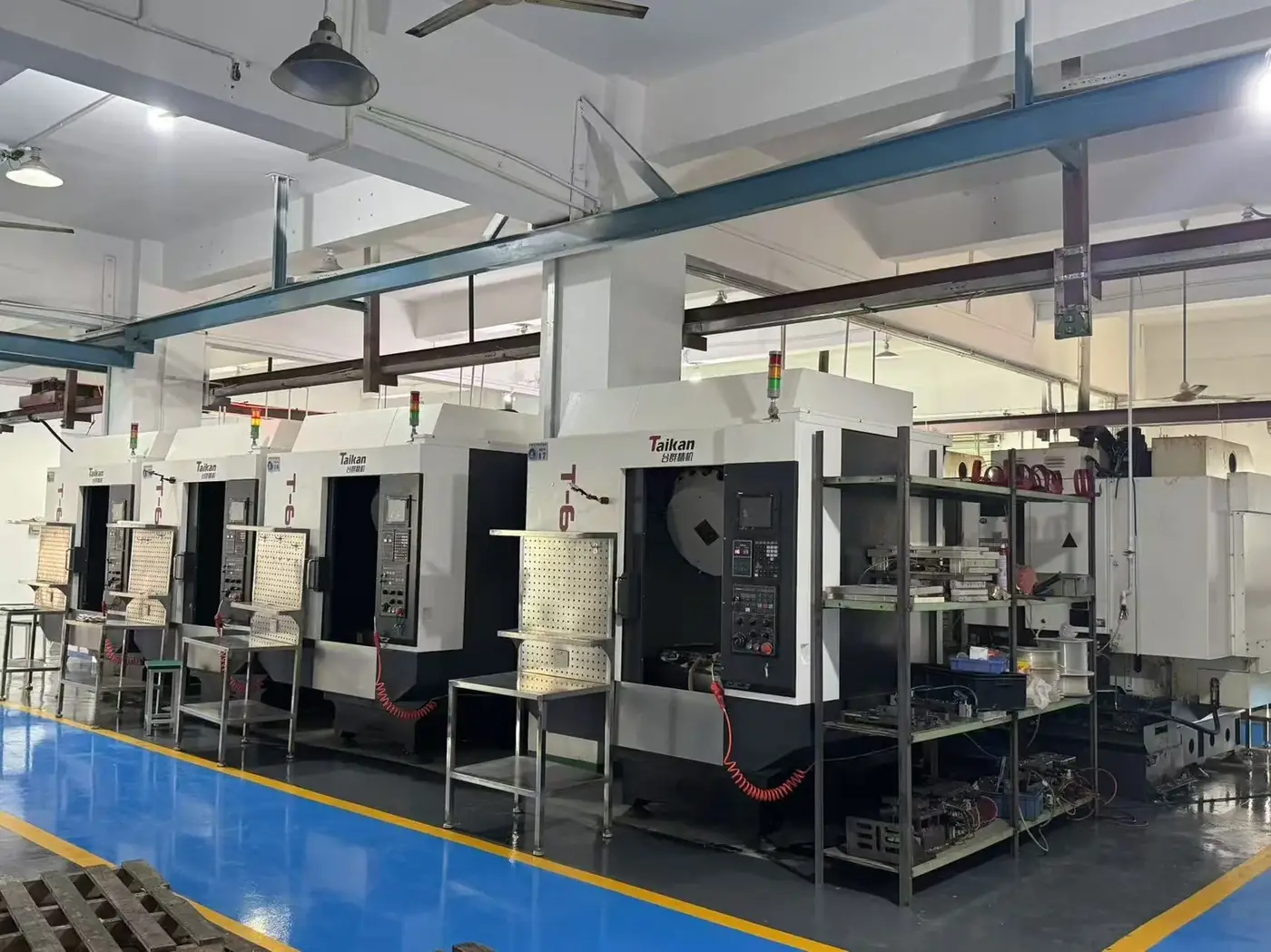
| The workshop | Photos/video of their own machines, or a video call | Stock photos; won't show the floor |
| Sampling | Offers a first-article sample before bulk | Pushes straight to a large paid order |
| Inspection | Provides a dimensional/CMM report | "Trust us, it's fine" |
| IP / NDA | Signs an NDA; deals factory-direct | Anonymous trading account; vague on reuse |
| Payment | Staged terms, traceable channel | 100% up front to a personal account |
Questions That Separate Makers From Brokers
- "Which machines will run this part, and what tolerance can you hold?" — a maker answers in specifics.
- "Can you do a video call from the workshop?" — a maker says yes.
- "Will you sign an NDA and run a first-article sample?" — a maker agrees readily.
- "Can you send a CMM/inspection report with the sample?" — a maker has the equipment.
China or Your Local Shop? The Honest Split
Vetting only matters once you've decided to look at China at all — so here is the decision the checklist sits inside. Neither answer is always right, and a supplier who claims otherwise is selling, not advising:
| Your situation | Better choice | Why |
|---|---|---|
| Machine down, part needed this week | Local shop | Same-week turnaround and hand-fit iteration beat any freight schedule |
| Heavy or bulky parts (roughly >30 kg or >Ø400 mm) | Local shop | Freight eats the price advantage; big parts favour short distances |
| Defense, ITAR or contractual domestic sourcing | Local shop | Not a price question — a compliance one |
| Palm-to-shoebox machined parts, drawings or samples in hand | China manufacturer | Landed price including courier typically comes in well under a Western quote; DHL adds 5–7 working days, not weeks |
| Batch pricing matters (10–1,000+ pieces) | China manufacturer | The unit-price gap widens with quantity; tooling and finishing sit under one roof |
| Turning + milling + molding + finishing on one order | China manufacturer | Breadth without juggling three local vendors |
| Prototype iterating weekly | Both, honestly | Many buyers iterate locally or in CAD, then produce in China once the design settles |
The cost sentence, with its conditions attached: for a palm-sized machined part, the landed price from China — courier included — typically comes in 30–60% under a Western shop quote; for a 200 kg weldment it usually doesn't. Run the comparison on your actual part and quantity, not on someone's average.
Common Mistakes When Choosing a Supplier
- Comparing unit price instead of landed cost. Add freight, duty and payment fees before comparing quotes. Small parts barely move; big parts can flip the answer.
- Blasting the RFQ to ten shops and taking the cheapest. The lowest quote in a broad blast is disproportionately often a broker who will resell your job to the real maker — the checklist above exists precisely for this moment.
- Skipping the first-article sample to save a week. The sample is the cheapest insurance in manufacturing; a bulk order of wrong parts costs the schedule you were protecting.
- Paying 100% upfront to an untraceable account. Staged payment through a traceable channel is standard practice at legitimate shops — insisting on it costs you nothing. Which channels are traceable and what escrow protects: safe payment methods when ordering parts from China.
- Assuming local automatically means better quality. The machine brands on the floor are global. What differs is process control — so ask for the CMM report either way, and judge the shop on it.
Where EKINSUN Stands on This
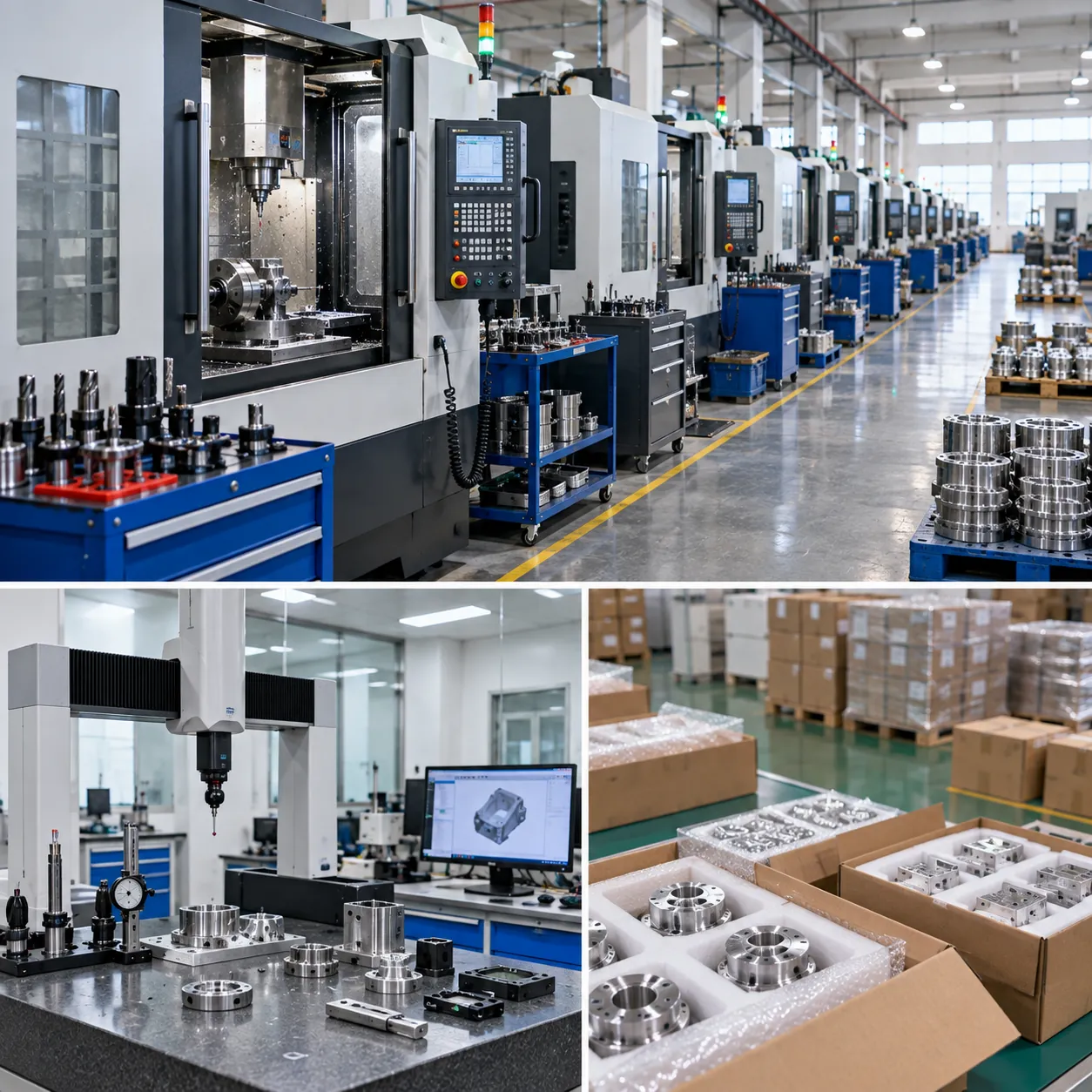
We're a manufacturing partner, not a trading desk — so we hold our production partners to this same checklist. Our manufacturing partners hold ISO 9001:2015 and ISO 13485:2016 and certificates are shared on request; you deal directly with our engineers; production runs on a vetted floor of 30+ four-axis and 5 five-axis CNC machines plus an injection-molding line; we offer a first-article sample before bulk, provide inspection data, and sign an NDA before you share anything. See more in our company & certifications and our guide to ordering from China for the first time.
One practical move beats every promise: ask for a paid first-article sample with an inspection report. It proves the shop's real capability, their honesty about tolerances, and that you're dealing with the maker — all at once.
Frequently Asked Questions
Verifiable ISO 9001, named engineers who answer technical questions, real workshop photos or a video call, and willingness to sample before bulk. A broker reselling your job usually dodges all four.
Yes. A first-article sample verifies dimensions, finish and material before you commit to volume. Any shop refusing a reasonable sample is a red flag.
Sign an NDA before sharing files, deal factory-direct, keep your most sensitive know-how separate, and confirm no reuse. We sign an NDA on request and never reuse customer designs.
ISO 9001:2015 as a baseline; ISO 13485 for medical/regulated parts. Ask for the certificate and dates. EKINSUN's manufacturing partners hold ISO 9001:2015 and ISO 13485:2016.
For palm-to-shoebox machined parts, the landed price from China — courier included — typically comes in 30–60% under a Western shop quote, and the gap widens with quantity. For heavy or bulky parts (roughly over 30 kg or Ø400 mm), freight eats the advantage and a local shop often wins. Compare landed cost on your actual part and quantity, never unit price alone.
Four honest cases: a machine down that needs the part this week; parts too heavy or large to ship economically; defense, ITAR or contractual domestic-sourcing requirements; and jobs that need hand-fit iteration against the machine the part goes into. Outside those, a vetted China manufacturer usually wins on price and breadth — which is what the checklist on this page is for.
Vet Us First
Ask for our ISO certificates, a video call, or a first-article sample. Engineers reply within 12 hours.
// Qty & price
1 pc
Sample price
Confirm fit before a run
10–50
Unit price drops
Setup cost shared
100+
Best price
All tiers quoted upfront
- →No distributor — you pay the maker directly
- →CAD saved after first order — reorder anytime at lower unit price
ISO 9001 & 13485 · NDA on request · Files confidential