You have one. You need forty. And the company that made it stopped making it years ago, took the tooling with them, or wants a five-figure minimum order to run it again.
This is the most common job that lands in our inbox, and it almost never arrives as a CAD file. It arrives as a photograph of a part on a workbench with a tape measure next to it. That is a good starting point.
The Routes People Try First — and Where Each One Stops
| Route | Where it works | Where it stops |
|---|---|---|
| Hunt for old stock | Common parts, popular models | Runs out. And the price climbs every year the part gets rarer. |
| 3D print copies | 1–3 pieces, fit checking, non-visible parts | Layer lines show through paint, parts split along layers under load, and unit cost barely drops with quantity. |
| Machine from solid | Simple, chunky, flat-ish parts | A thin-wall housing with ribs, snaps and internal bosses cannot be cut from a block at any sensible price. |
| Cut a steel mold | Thousands of pieces | The tool costs more than your whole order and takes weeks before you see part one. |
| Silicone mold + cast | Roughly 5 to a few hundred pieces | Mold is consumable — see how many per mold. |
If your number sits in that fifth row, the rest of this page is about how the job runs.
Step One Is the Part Itself
We do not need the original drawing. We do not need the original supplier, the original tooling, or a part number that still exists in somebody's system. We need the object.
It is sealed into a casting box, silicone is poured around it, and once cured the block is cut open along a parting line. What is left is a cavity that is a negative of your part — every radius, every rib, every bit of surface grain, and unfortunately every scratch too, which is why masters get cleaned up first.
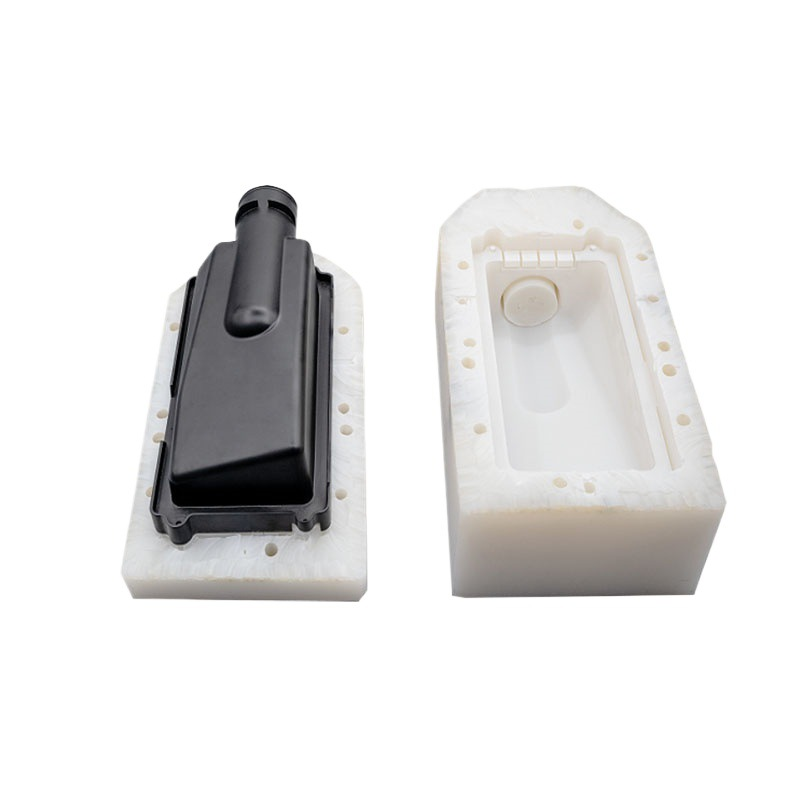
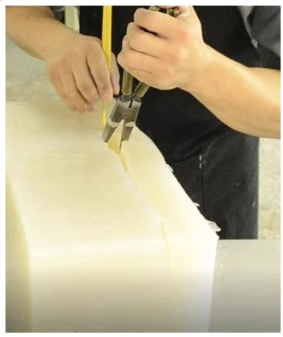
The question everyone asks next: do I get my part back? Yes. The master is lifted out of the mold and returned. The one exception is a part fragile enough that opening the silicone could break it — then we print a stand-in, use that as the master, and your original never goes near the silicone.
The Copy Is 0.15% Smaller. Here Is Why That Matters.
Polyurethane shrinks slightly as it cures — call it 0.15%. On a 100 mm cover that is about 0.15 mm; on a 300 mm panel, closer to half a millimetre.
For a cover, a trim piece or a housing that nobody measures, this is invisible. It matters in exactly two places: where your copy has to mate with an original part you are not replacing, and where a bore or shaft fit has a real tolerance on it. Tell us which faces have to fit something, and we either scale the master to compensate or machine that feature after casting.
Most suppliers leave this number off their page. It is better to know it before your parts arrive than after.
What Copies Actually Look Like
Detail transfer is the reason this process beats printing for anything visible. And the features that decide whether a copy is usable are the ones nobody photographs: snap hooks, screw bosses, locating ribs, wall steps. They come off the master exactly as they were.
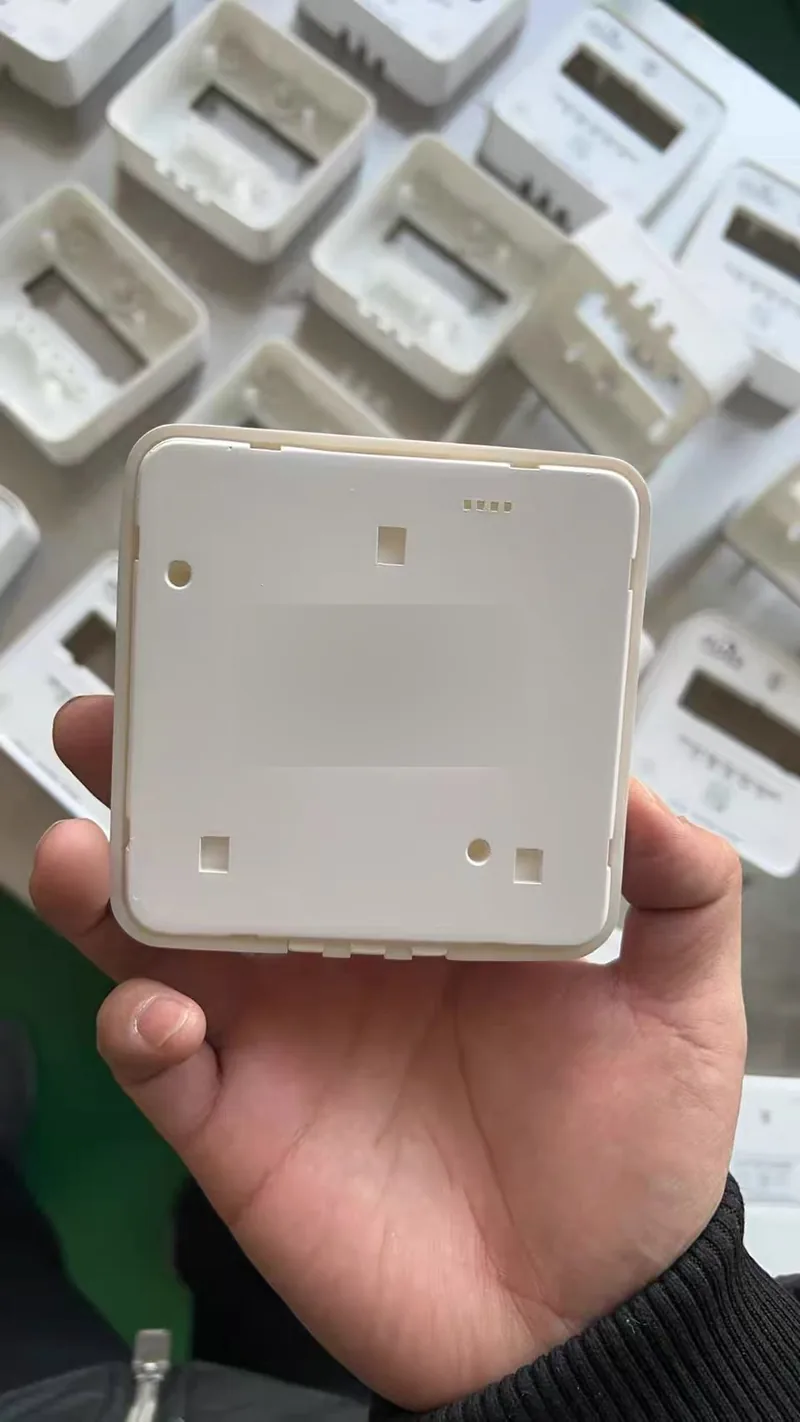
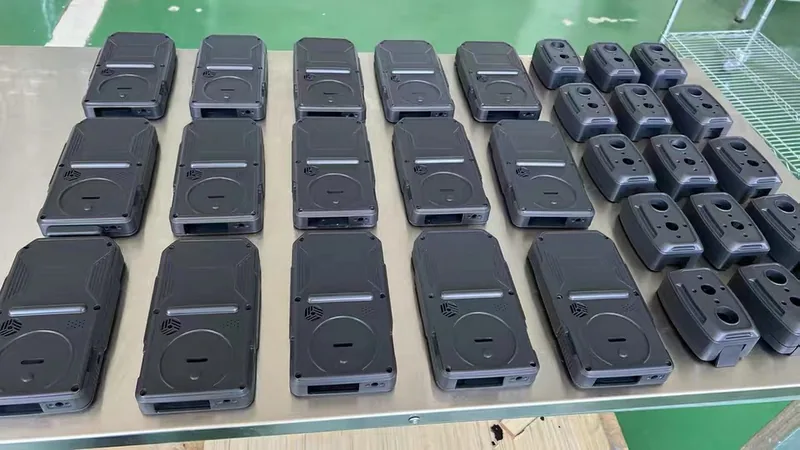
And a full run out of several molds, trimmed and painted, ready to go into assembly:
When the Original Is Broken, Warped or Incomplete
A cracked part is normal and usually fine — we rebuild the damaged area on the master, photograph it, and get your sign-off before pouring silicone. Copying the damage helps nobody.
A warped part is a different problem. Silicone will faithfully reproduce the warp, so if the part has sagged from heat or age we take it back to correct geometry through reverse engineering or 3D scanning first, then print a clean master. That adds a couple of days and is almost always worth it.
Missing a whole section? Then we are modelling, not copying — send photos of an intact one if you can find any, or the mating parts so we can work out what has to fit where.
What to Send Us
- Photos of the part — front, back, and any face with features on it. Put a ruler or caliper in frame.
- The quantity you need, not a round number. 18 and 25 price differently because of how many molds it takes.
- What the part has to survive — sunlight, heat, oil, being stood on. This picks the resin.
- Which faces have to fit something else you are not replacing.
That is enough for a price and a lead time inside 12 hours. Ship the physical part after we agree, not before.
Common Questions
Yes. The master is not consumed — silicone is poured around it, cured, then cut open and the part lifted out. It comes back with the release agent cleaned off. The only case where we warn you first is a part so fragile or so deeply undercut that opening the mold risks snapping it; then we print a copy, use that as the master, and your original never goes into silicone at all.
Dimensionally it lands about 0.15% under the original because polyurethane shrinks slightly as it cures — on a 100 mm part that is roughly 0.15 mm. Where that matters, we scale the master up to compensate. Visually, surface grain, lettering and parting lines all transfer, which is why cast copies of textured parts look right and 3D printed ones usually do not.
Usually yes. We repair the master first — fill the crack, rebuild the missing corner, re-cut the damaged thread area — and get your approval on photos before any silicone is poured. If the part is warped or a chunk is missing, we reverse engineer it back to correct geometry and print a fresh master instead of copying the damage.
Yes. Send the piece that failed. We do not need the mating parts, though sending them helps us check fit before the batch runs — and it is cheap insurance on a housing where a snap feature has to click into something we have never seen.
Close, in two ways. Pigment can be mixed into the resin so the colour goes all the way through, or the part can be sprayed to a reference. Send the original or a colour code and we match against it under normal light. Note that a sun-faded part is not the colour it left the factory as — tell us which one you want.
From about 5 pieces upward. Below that, machining or printing is usually cheaper because you are paying for a mold you barely use. Above roughly 500 a year, tooling starts to win. The comfortable range is 10 to a few hundred.
Then it is a modelling job before it is a casting job. Photos with a ruler in frame, plus a few caliper measurements, are usually enough for us to build CAD, send it to you to approve, and print a master from it.