Cast parts almost never get rejected on dimensions. They get rejected because the surface looks like a prototype next to the original part it is supposed to replace.
Most suppliers show you a bare grey casting and leave the rest to your imagination. This page is the rest.
What Comes Out of the Mold, and What Gets Added
| Comes out of the mold | Added afterwards |
|---|---|
| Surface grain and texture | Paint, primer, clear coat |
| Moulded-in lettering and logos | Silkscreen and pad printing |
| Through-colour if pigmented | Two-tone masking, gloss-level control |
| Ribs, bosses, snap features | Threaded inserts, heat staking |
| Parting line and gate witness | Trimming, sanding, polishing |
The left column is free — it is a property of the mold. The right column is hand work priced per piece, which is why finishing choices matter more at 100 pieces than at 10.
Texture Is in the Cavity, Not in the Spray Gun
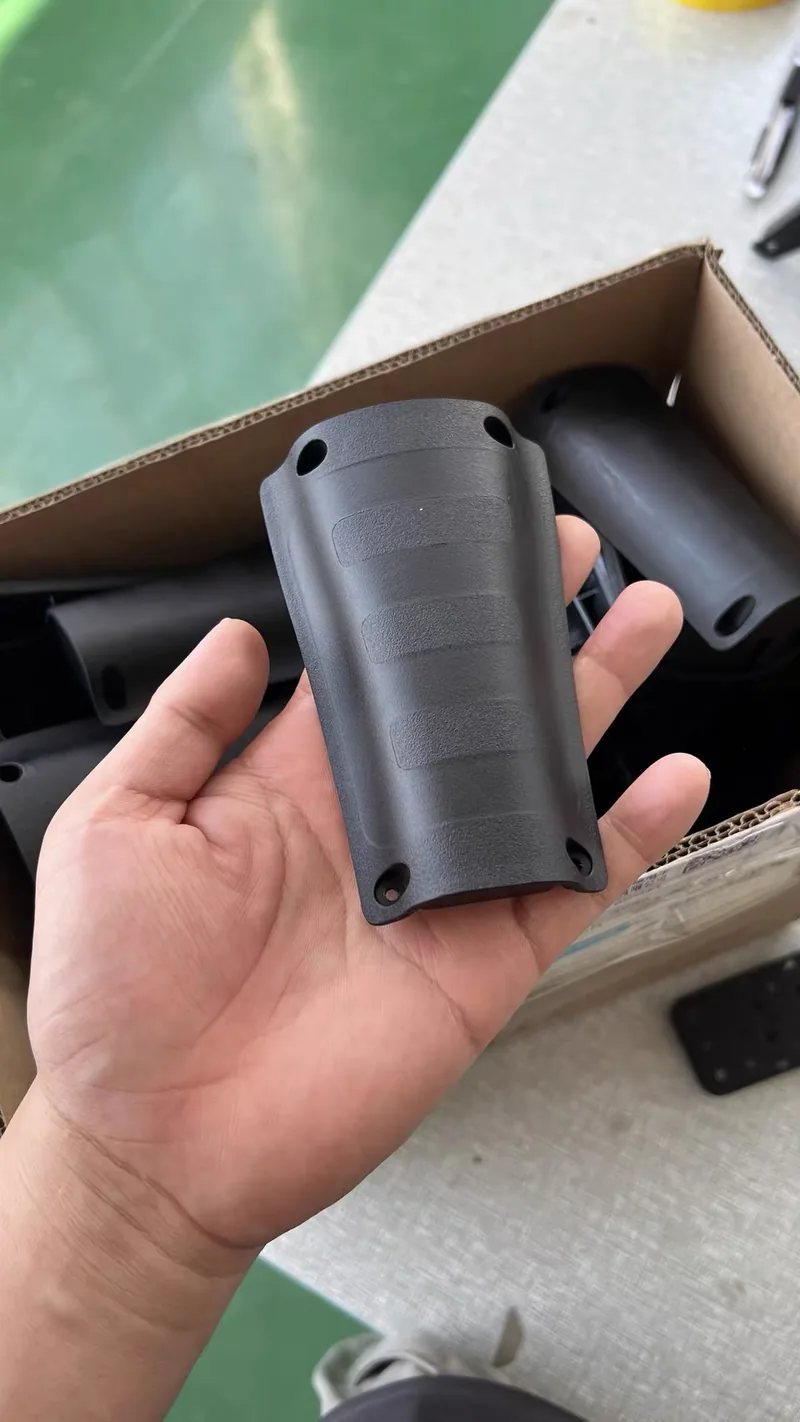
Grain the master carries is picked up by the silicone and appears in every casting. Below is an as-cast handle cover: the leather-grain surface came out of the mold, and the mounting holes carry inserts so screws bite into metal rather than plastic.
Compare that with parts before any finishing at all. Same process, nothing sprayed — the texture is already there in the raw white polyurethane.
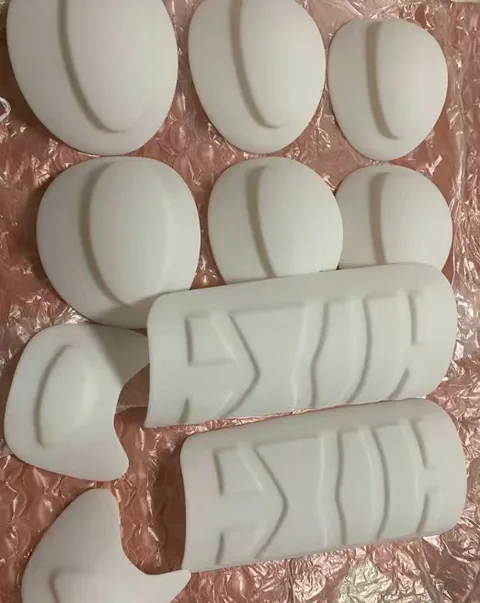
This is the difference that decides jobs. A 3D printed copy of a textured original has to be sanded flat and re-textured, and it usually still reads as a copy. A cast copy inherits the original's surface because it was pulled off the original's surface.
Paint: Two-Tone, Matte and Gloss on One Part
Masking and staged spraying let a single part carry more than one colour and more than one gloss level. The cover below has matte body panels running into gloss inserts, split along the styling lines.
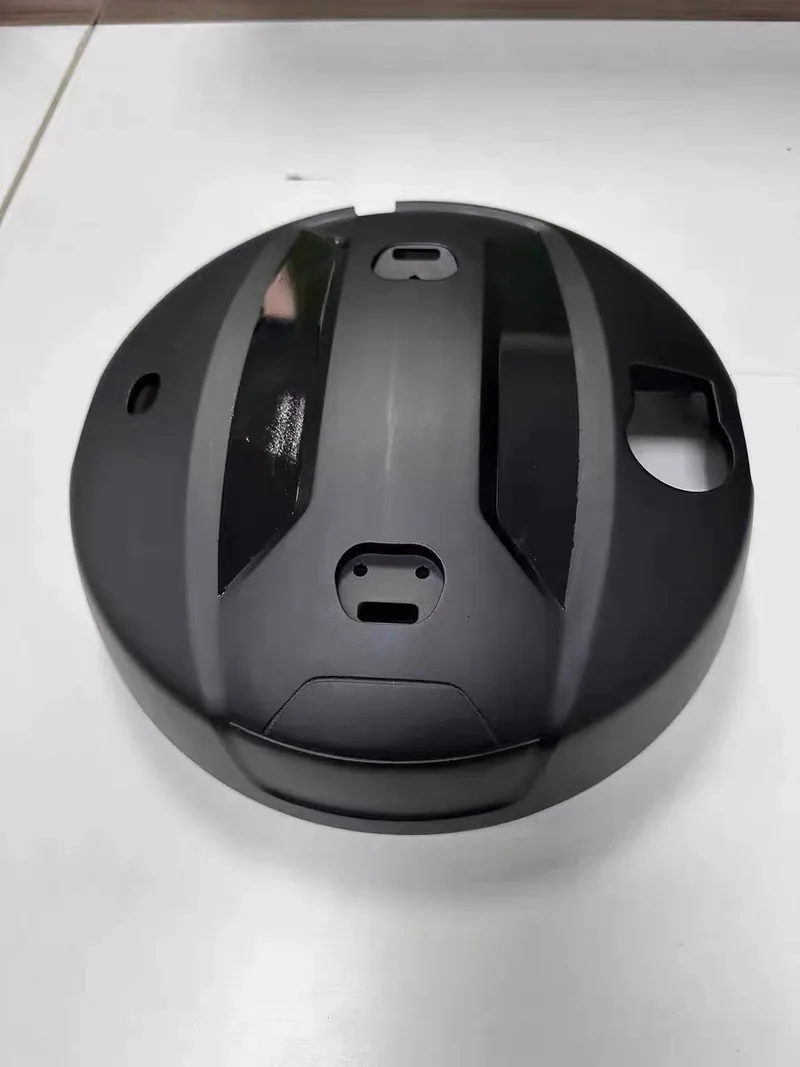
Worth knowing before you specify it: this is manual masking. It scales with piece count rather than being a one-time setup, so a two-tone spec that costs little at 15 pieces is a real line item at 150.
Printing: Legends, Logos and Panel Graphics
Cast polyurethane takes screen printing and pad printing much the way injection-molded ABS does. Fine cast detail and printed legends coexist on the same face — the louvers below are cast at full sharpness and the panel around them is printable.
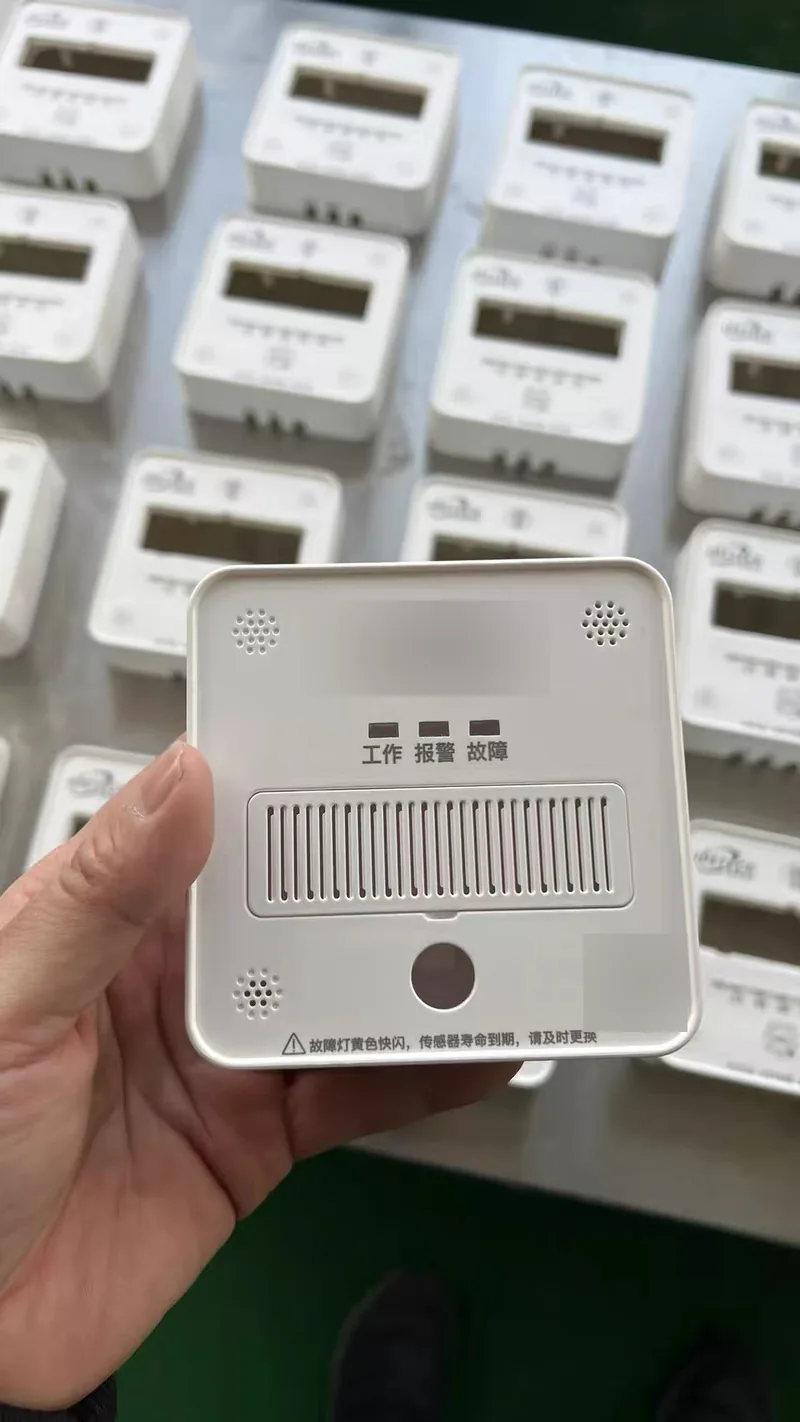
Send artwork as vector files with the colours called out. If the legend gets handled or wiped regularly, we can overcoat after printing.
Inserts and Hardware
The most common upgrade after a first batch: threaded inserts. Brass or stainless, cast in place or heat-set after demolding. Any cover that gets opened more than a couple of times should have them — screws driven repeatedly into bare cast plastic will strip out eventually.
Beyond inserts, cast parts accept the same assembly hardware as molded ones: heat-staked bosses, adhesive gasket channels, captive nuts and light pipes.
Where This Process Reaches Its Limit
- Mirror gloss. Piano-black and similar finishes need polishing or clear-coating on top of the casting. Straight from the mold, the surface is good but not that good.
- Micro-texture below about 0.05 mm. It reproduces on a fresh mold and softens as the mold ages, which shows up as a difference between early and late parts in a run.
- Knife-sharp edges. Always slightly softer than on a machined part. Where the edge is functional rather than cosmetic, we machine it after casting.
- Clear parts and mold life. Optically clear resins are chemically harder on silicone, so expect fewer castings per mold and budget accordingly.
Common Questions
In the part. Whatever grain the master carries is picked up by the silicone and reproduced in every casting. That is why a cast copy of a textured original looks right straight out of the mold, while a printed copy has to be sanded and re-textured to get close — and usually still reads as a copy.
Two routes. Pigment mixed into the resin gives colour through the whole wall, so a scratch does not show white underneath. Spraying gives a wider colour range and better control of gloss level. Send a sample part or a colour reference and say which route matters more to you.
Yes, by masking and spraying in stages. Matte and gloss areas on the same part, or two colours split along a feature line, are routine. It is hand work, so it adds cost per piece rather than a one-off setup — worth knowing when you scale the quantity.
Yes. Cast polyurethane takes screen printing and pad printing much like injection-molded ABS does. Send artwork as vector files with the colours specified. For legends that must survive handling, we can overcoat after printing.
For a cover that is opened once, straight into the plastic is fine. For anything that gets opened repeatedly, use brass or stainless threaded inserts — cast in place or heat-set after demolding. This is one of the most common upgrades customers ask for after the first batch.
Yes, with optically clear polyurethane. Straight out of the mold the surface is good but not optical — for lenses and light pipes we polish or clear-coat afterwards. Clear resins are also harder on silicone, so expect fewer castings per mold.
High gloss, mirror-like surfaces are difficult — the cast surface is good but a piano-black finish usually needs polishing or clear-coating afterwards. Fine micro-texture below roughly 0.05 mm can soften as a mold ages. And sharp knife edges will always be slightly softer than on a machined part.