Made to order only — and when you should not order from us
Be clear about the boundary first. If your lathe is in current production and your chuck maker sells an insert for it — the NOVA and Record insert systems cover most modern machines — buy the insert, or ask us — we may have it in stock. It is cheaper, faster and made by the people who made your chuck. The common conversions between the four modern nose threads are also stocked by turning retailers as ready-made adaptors.
Our lane opens where those charts stop — and the chart makers say so themselves: the selection guides end with a line to the effect of “you may have an unusual lathe with no match on the chart”. That lathe — the pre-war machine, the continental import, the short-run brand, the outboard nose, the damaged nose — is what this page is for. One piece, measured from your spindle, no CAD.
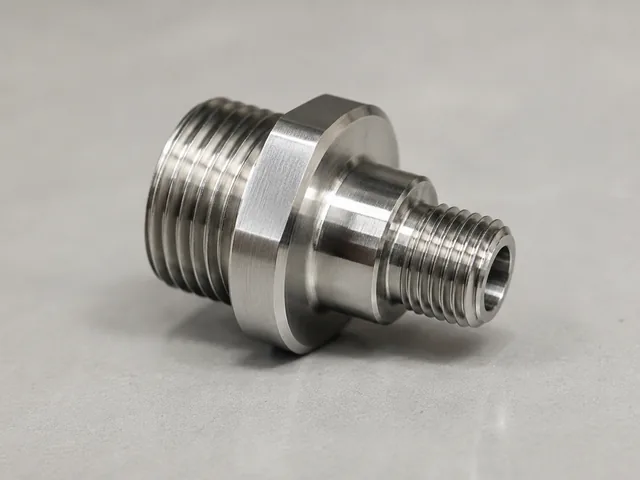
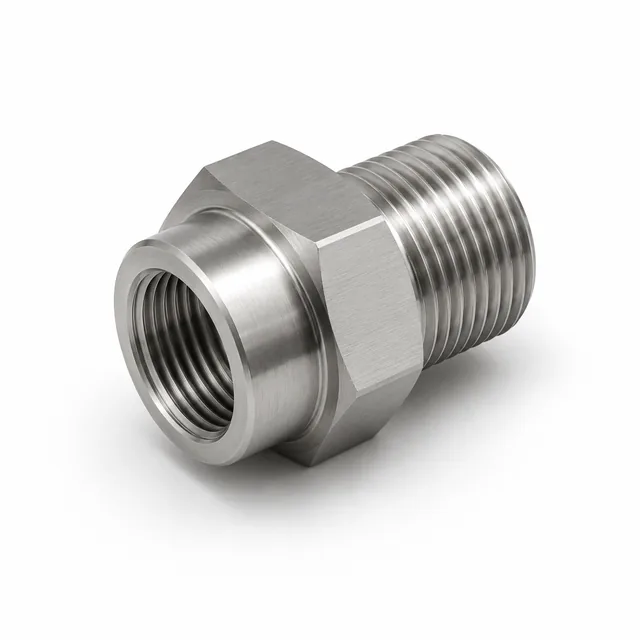
Whatever the catalogue calls it — spindle adapter, spindle nose adapter or chuck thread adapter — it is the same one-piece part: the nose thread inside, the chuck thread outside, a faced register between them.
The nose threads you are converting between
| Nose thread | Where it lives | In the catalogue? |
|---|---|---|
| 3/4″ × 16 TPI | Mini and older small lathes | Adaptors to 1×8 and M33×3.5 are stocked — buy those |
| 1″ × 8 TPI | The common North American midi nose | Insert charts cover it |
| 1-1/4″ × 8 TPI | Larger North American lathes | Insert charts cover it |
| M33 × 3.5 | The current European standard nose | Insert charts cover it |
| Left-hand outboard noses | Outboard ends of traditional lathes — LH so the chuck tightens against the reversed rotation | Chuck makers list a few LH inserts for their own current chucks; anything else is machined to order — see left-hand thread adapters |
| Whitworth-form 55° noses | Vintage British iron | No — measured and single-point cut, see Whitworth adapters |
| The nose no chart names | Pre-war, continental, short-run machines — noses that measure M31, odd TPI counts | No — this is the made-to-order case |
Need wood lathe spindle thread adapters in a size, thread or material no catalogue lists? EKINSUN is a custom parts manufacturer: we make wood lathe spindle thread adapters to your drawing, sketch or sample — steel or 304 stainless steel — from 1 piece, quoted in 12 hours and shipped duties paid. If the size is standard, ask anyway — it may be in stock, and the unit price drops as the quantity rises. All custom adapters and fittings →
The register does the locating; the thread only clamps
This is the single most important thing about spindle adapters, and the reason turning forums argue about whether they are safe. A chuck does not run true because of its thread — threads have clearance by design. It runs true because its back face pulls up hard against the machined shoulder (register) of the spindle nose, square to the axis.
An adapter inserts two more of those interfaces into the stack. So the part only works if both threads and both shoulder faces are machined in one setup, square to a single axis — which is how we cut them. A thread-only adapter with no faced register, or one machined in two operations, stacks its errors into the chuck and everything you turn after it. Overhang is the other honest physics: an adapter adds stickout, so we keep the body as short as the two threads allow, and if you ask for a combination that hangs a heavy chuck far off a small spindle, we will tell you rather than just quote it.
Measuring the nose you have
No drawing needed. Send four things: outside diameter over the thread crests (calipers), pitch (count threads against a ruler, or photograph the thread beside one), hand (right or left — outboard noses are commonly left-hand so the chuck tightens against the reversed rotation), and a photo of the shoulder behind the thread. Add the thread of the chuck or faceplate you want to mount. For reverse sanding we drill and tap a set-screw hole or machine a flat so the stack is locked when the spindle reverses.
What you can ask for that no chart covers
| What you need | In the catalogue? | What we machine |
|---|---|---|
| 1×8 or 3/4×16 to M33×3.5, current lathe | Yes — inserts and stock adaptors | Buy the insert from your chuck maker; it is the better part for that job. Standard parts: ask us too — we may have them in stock. |
| A nose with no chart match (measures M31, odd TPI) | No | Machined from your measurements with a faced register, one setup |
| Left-hand outboard nose to a modern chuck | Only as a few maker-specific inserts | LH one end, RH the other for any chuck and any nose — single-point cut, hand marked on the body |
| Vintage British lathe, Whitworth-form nose | No | 55° form cut to gauge; the metric or inch chuck thread on the other end |
| Damaged or bruised nose thread | No | Repair sleeve or adapter sized to the sound thread that remains — send photos |
| Faceplate blank with your nose thread | Thin | Machined with the female nose thread and faced flat, drilled to your pattern |
| Drill chuck thread adapter — a 1/2-20 or 3/8-24 chuck back onto a spindle or arbor it was never meant for | No | Machined to the chuck's back thread and the shank or spindle you have; measured the same way as a nose |
| Threaded Morse taper adapter — MT2 or MT3 shank with an M10 / M12 drawbar thread, or a taper carrying an external thread | No | Taper turned to gauge, thread single-point cut in the same setup; from your measurements or the old part |
| Spindle thread for a machine that isn't a wood lathe at all | — | Grinder, polisher and small metal-lathe noses follow the same logic — start at custom thread adapters |
“My lathe came over from Europe in the sixties. The nose measures 31 mm with a 3.5 mm pitch and it is on nobody's chart. I just want to bolt on a modern chuck.”
— the shape of the enquiry this page exists for. Diameter, pitch, hand, one photo: that is the whole intake.
Materials
| Material | When it is the right call | Note |
|---|---|---|
| 1045 / 4140 steel (4140 = 42CrMo4) | The default — what chucks and spindles are made of | Stiffest for the money; blackened or lightly oiled |
| 303 / 304 stainless | Wet turning, coastal workshops | Rust-free; slightly less stiff, and stainless-on-stainless threads want anti-seize |
| 316 stainless | Rarely needed here | Pay for it only if the shop chemistry demands it |
| 6061 aluminium | Light faceplates and vacuum drums only | Not for a chuck adapter — the nose thread would wear fast |
| 7075 aluminium | We will talk you out of it | Its strength does not fix aluminium threads on a steel spindle; use steel |
| Brass | No | Too soft for spindle loads — an honest no rather than a quote |
How to order
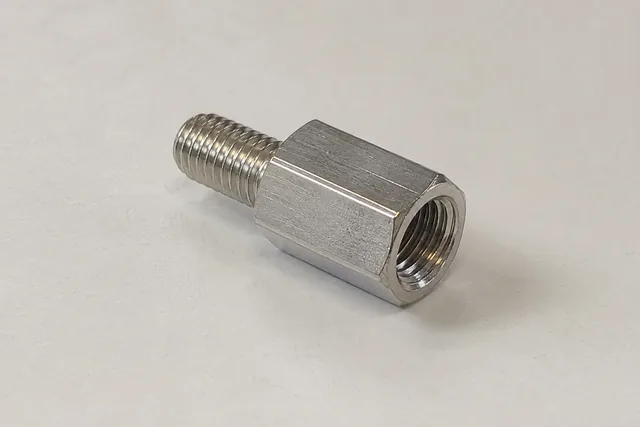
Send the four measurements from the section above plus the chuck or faceplate thread, the material, and whether you need the set-screw hole. A hand sketch or phone photos are enough — the intake is the same as thread adapters from a sketch. Quote in 12 hours, one piece minimum (MOQ 1). Related metric work lives at large metric thread adapters and custom metric reducers.
Frequently asked questions
A well-made one is; a thread-only one is a gamble. On a spindle nose the thread only clamps — location comes from the machined register shoulder seating flat against the chuck. An adapter therefore needs both of its faces cut square to the threads, in one setup, or the errors stack and the chuck runs out. That squareness is exactly what we machine for; it is also why the cheapest adapters get discussed nervously on turning forums.
Three numbers: the outside diameter over the thread crests with calipers, the pitch (thread a nut you know onto it, count threads against a ruler, or send a photo of the thread beside a ruler), and whether it is right or left hand. Add the length of the nose and a photo of the shoulder behind it. That is enough — no CAD, no drawing needed.
Yes — that is specifically the job this page exists for. The insert charts cover current production lathes; pre-war machines, continental imports and short-run brands fall outside them. We machine from your measurements, including Whitworth-form 55° noses and odd metric sizes that no catalogue names.
Yes. Outboard noses are commonly left-hand so the chuck tightens against the reversed rotation. One end left-hand and one end right-hand in the same body is normal single-point work here, and the hand is marked on the part.
The same rule as mounting a chuck directly: running in reverse needs a mechanical stop. We drill and tap a set-screw hole through the adapter body, or machine a flat for your chuck's grub screws to bear on, so the stack is locked when the spindle reverses.
It adds one joint and some stickout, so the honest answer is: a little, and the amount depends on the register fit. We keep the body as short as the two threads allow and face both shoulders in the same setup. Hanging a heavy chuck a long way off a small spindle is a leverage problem no adapter quality can remove — we will say so when the combination you ask for does that.
Send photos and the measurements of what remains. If enough sound thread is left, an adapter can be sized to it; if not, a repair sleeve machined to the remaining geometry is the better part. Both are made-to-order items — this is not something a chart can stock.
One piece — most spindle adapters are one piece. Send the spindle measurements and the chuck or faceplate thread, and a quote comes back within 12 hours.
Send the nose measurements
Diameter over the crests, pitch, right or left hand, a photo of the shoulder — and the chuck thread you want. No CAD. One piece minimum, quote within 12 hours.