The Packaging Line Spares Problem
Packaging machinery has two chronic parts problems. First, wear parts — cams, jaws, guides — that the OEM supplies slowly and expensively, treating spares as a profit centre. Second, change parts: when you switch to a new bottle or carton format, the OEM may no longer support your machine's generation, quoting months or declining entirely.
Both are machining problems, and both are solvable: we reproduce wear parts from your worn originals and design new change part sets from your machine's interface geometry plus the new container.
Everything here is made to order — bespoke packaging equipment parts cut to your machine rather than pulled off a shelf. There is no catalogue to match against and no minimum quantity: one feedscrew, one starwheel or a full format set are all handled the same way.
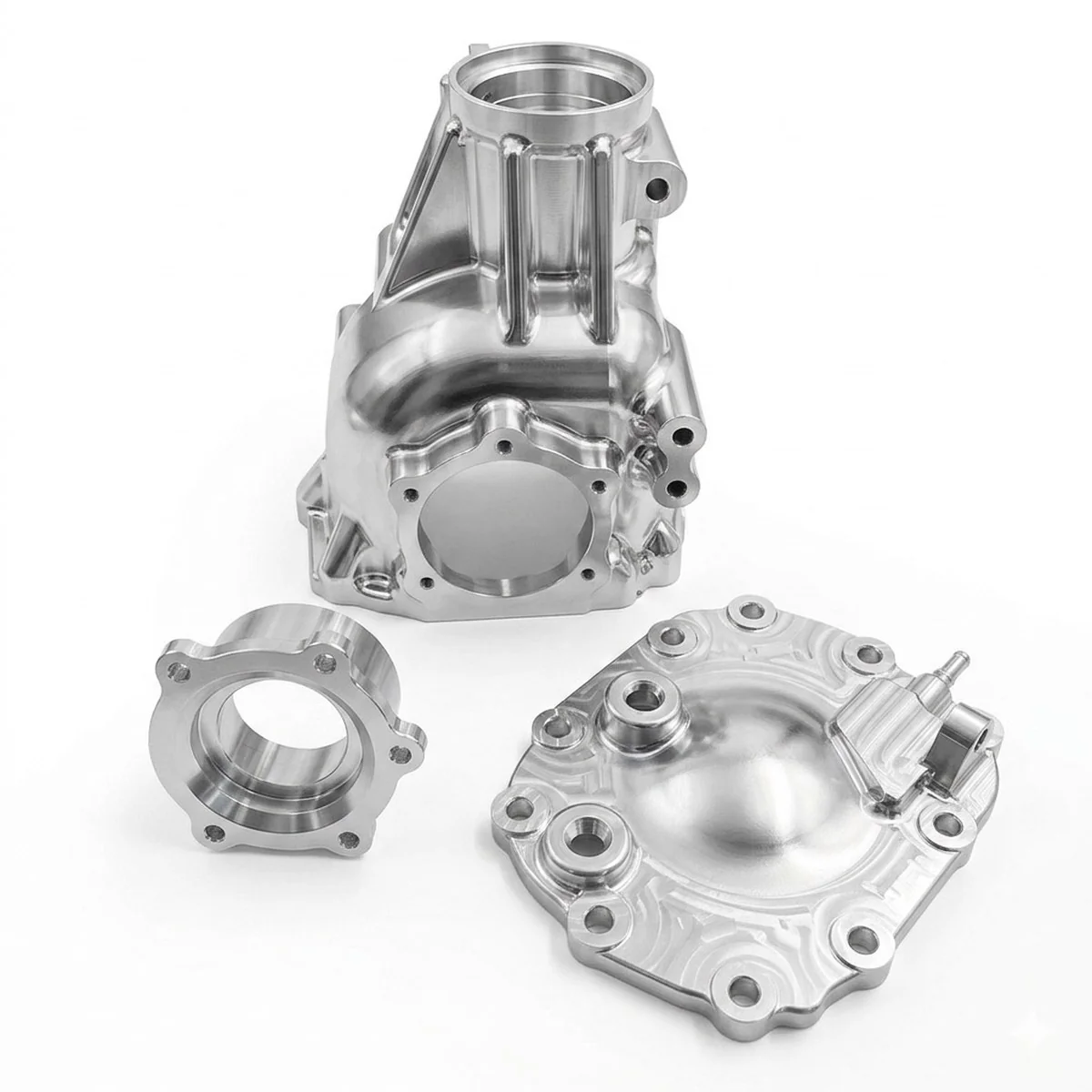
Parts We Make for Packaging Machines
Cam plates & tracks
Motion profiles measured and reproduced; hardened where the original wore.
Star wheels
Container-handling profiles in food-contact acetal, sized to your bottle.
Timing screws
Infeed worms machined to your container diameter and pitch.
Sealing jaws
FFS jaw sets in tool steel or aluminium-bronze, serrations reproduced.
Forming tubes & shoulders
VFFS film path geometry reproduced, product-contact polished.
Guide rails & wear strips
UHMW-PE and stainless rails to your line profile.
Filling nozzles
316L product-contact nozzles and valve components.
Capping chuck parts
Chuck inserts and clutch components sized to your closure.
Coding, Marking and Labelling Units — the Parts Around the Print Head
A packaging line also carries a coder, a labeller or a print-and-apply unit, and their spares are the same story as a star wheel: the maker sells the print head and the electronics, and the bracket, roller, peel plate or guide plate that wore or has to move 20 mm for a new pack is a machined part. The table lists the parts we machine for these units; an enquiry from a coding-machine maker in 2026 asked for the film guide plate in it, 2 prototypes first, then 50 to 200.
| Unit | Parts we machine | Material and detail |
|---|---|---|
| Thermal-transfer, inkjet and laser coders | Print head mounting bracket, printhead holder, printer stand clamp block, cross-arm clamp, bracket for a hot-swap head | 6061 aluminium anodised, 304 stainless; slots for height and angle; dowel holes where the head must return to the same place |
| Ribbon path (TTO) | Ribbon guide roller, ribbon spindle hub, core adapter for 25.4 mm (1 in) ribbon cores, tension roller shaft | Hard-anodised 6061 or 303 stainless; roller run-out 0.02 mm; surface Ra 0.4 where the ribbon slides |
| Label web and dispensing | Web guide roller, idler roller, dancer arm, peel plate / dispensing edge, label gap sensor bracket, encoder wheel bracket | 304 stainless peel plate with a 0.5 mm edge radius; rollers in hard-anodised 6061; brackets laser cut and folded from 2 mm 304 |
| Print-and-apply applicators | Tamp pad plate, applicator cylinder bracket, vacuum plate with the hole pattern of the label size, swing-arm pivot pin | 6061 plate 6–10 mm, holes to the label size; pins in 303 or hardened steel |
| Film and web guiding | Film guide plate, side guide, edge guide with a long rounded edge | 6061 with R6 rounded edges or 304 electropolished; surface smoother than milled where the film slides — a real order from a coding-machine maker |
| Hot-stamp coders | Type holder, heating block, pressure pad plate, foil guide roller | Brass CW614N type holder; aluminium 6061 heating block bored for the cartridge heater; rollers in 303 |
| Reels and cores | Reel hub, unwind / rewind spindle, core adapter 40 mm and 76.2 mm (3 in), tension brake disc | 6061 hub keyed to the spindle; adapters in POM or 6061; disc in steel |
Bottling Line & Container Handling Parts
Most of what comes through here is off a bottling or filling line. The wear parts are the ones that touch the container on every cycle, and they are the ones the OEM quotes twelve weeks for:
- Bottle feed and infeed parts — feedscrews (timing screws), infeed starwheels, transfer plates and dead plates
- Assembly parts for bottling equipment — guide rail brackets, clamp blocks, spacers and the small machined pieces that hold a format set together
- Capper and filler wear parts — chucks, centring bells, sleeves and bushes
- Conveyor and transfer components — guide fingers, wear strips and side-plate pieces
These are the same parts whether the line runs glass, PET or cans — what changes is the container profile, and that is what the part is cut to. Send the worn part and a sample container and we work from those; no OEM drawing is needed.
Change Parts for New Container Formats
A format change shouldn't require OEM permission. To design a change part set we need:
- One existing change part set — gives us the machine interface: mounting pattern, pitch circle, drive engagement
- The new container — physical samples preferred; accurate drawings acceptable
- Line speed — affects pocket clearance and lead-in geometry
We machine the set — star wheels, guides, timing screw — with the same interface as your existing sets, so changeover procedure stays identical.
Food-contact compliance. Product-contact components are machined in food-contact grades of acetal, UHMW-PE or 316L stainless with surface finishes appropriate for washdown. Tell us your product (dry, liquid, acidic) and washdown regime, and we specify materials accordingly. We supply the material's own food-contact declaration where the supplier issues one; we do not certify the finished assembly.
Material — and the CIP problem nobody mentions
Star wheels and guides are almost always acetal, and for good reason: it machines to a stable dimension, it is slippery against glass and PET, and it does not mark containers. But there is a failure mode that costs lines a set of change parts every year, and it is rarely on a spec sheet — acetal is attacked by chlorine-based CIP chemistry and by strong acids. The part does not soften or swell, which is what people watch for. It stress-cracks: fine cracks appear at the pocket roots and around the mounting bolts weeks after the cleaning regime changed, and the set is scrap.
Tell us the cleaning chemistry, not just the product. If your CIP runs hypochlorite or peracetic acid, the pockets belong in UHMW-PE or 316L, and we say so before cutting rather than after.
| Material | Continuous service | Density | Where it belongs | Where it fails |
|---|---|---|---|---|
| POM-C acetal | ≈90 °C | 1.41 g/cm³ | Star wheels, transfer plates, guide fingers — dimensionally stable, low friction on glass and PET | Chlorine-based CIP and strong acids cause stress cracking at pocket roots |
| UHMW-PE | ≈80 °C | 0.93 g/cm³ | Wear strips and rails — the best abrasion life per euro on the line | Creeps under sustained clamp load; softens under steam |
| 316L stainless | Steam and CIP without limit | 7.98 g/cm³ | Filling nozzles, sealing jaws, anything the product flows through | Heavy, and it galls against itself unless one face is hardened or coated |
| 304 stainless | Steam and CIP | 7.93 g/cm³ | Frames, guards, brackets away from product | Pits in chloride washdown — on the wet side of the line 316L is the one that survives |
| 6061-T6 aluminium | — | 2.70 g/cm³ | Cam housings, structural brackets, dry-side format hardware | Not a product-contact material. Anodising is a wear layer, not a food-contact finish, and it wears through where containers rub |
| 7075-T6 aluminium | — | 2.81 g/cm³ | Almost nothing here | Buys strength a packaging line rarely needs, costs more than 6061, and carries the same product-contact problem |
Two numbers worth putting on the enquiry because they change the part rather than the price. Pocket clearance: a star wheel pocket is not cut to the bottle's nominal diameter — blown PET carries ovality and a mould seam, so the pocket runs a clearance over nominal and the lead-in is relieved. Send three containers off the actual production run, not one sample, and we measure the spread. Surface finish on product-contact faces: specify it, because a face that is smooth enough to clean is a different machining operation from a face that merely looks finished.
What is on the OEM parts list — and where we come in
A fair share of packaging enquiries should end at the machine builder, and saying so up front saves a week of everyone's time.
| What you need | On the OEM parts list? | What we do about it |
|---|---|---|
| Wear part for a machine still in support | Yes, held in stock | Buy it from the OEM. A stocked spare is cheaper than anything cut as a one-off, and it ships tomorrow |
| Change part set for a container format the builder still lists | Yes | Buy their set — it is already proven on your machine |
| Bearings, belts, seals, drive chain | Catalogue items | Buy them by part number from any bearing factor. We design around them, we do not resell them |
| Format the builder dropped, or a machine out of support | No | Cut from your existing set's interface plus the new container |
| One star wheel — not the whole format set | Sets only | Single part, MOQ 1, same interface as the set you already run |
| A format the machine was never sold with | Never existed | Pocket profile and timing screw designed to your container and line speed |
| Discontinued machine, no drawings anywhere | No | Reproduced from the worn part; CAD sent back for approval before cutting |
What a Star Wheel or Change Part Costs — and What Moves the Number
We do not publish a price for a star wheel, because two wheels that look identical on a photograph are not the same job. A 24-pocket wheel for a round PET bottle and a 24-pocket wheel for a square handled container have the same diameter, the same bolt pattern and the same pocket count — and the second one takes several times longer to cut, because a round pocket is a 2D contour and a shaped pocket is a 3D profile. What follows is what actually moves the number, so you can tell in advance which side of it your part falls on.
| What we look at | Cheaper end | More expensive end |
|---|---|---|
| Do you still have the part? | The worn wheel arrives here. We measure it, rebuild the geometry and cut — no interpretation, no risk | Photos and a machine model only. The pocket profile has to be derived from a container sample first, and that is a step before any cutting starts |
| Container shape | Round bottle or can — the pocket is a 2D contour, one cutting strategy for every pocket | Square, oval, handled or neck-handled — the pocket is a 3D profile; more passes, more setups, and a sample container is mandatory |
| Material | POM-C acetal, 1.41 g/cm³ — the default for pockets and the fastest to cut | 316L stainless, 7.98 g/cm³ — the same blank weighs 5.7× as much and cuts far slower. Chosen when CIP chemistry rules acetal out, not for strength |
| Diameter and pocket count | One wheel, one diameter, pockets on a single pitch circle | Large-diameter wheels cut from plate, segmented wheels, or a set where every wheel runs a different timing |
| One part or the whole format | MOQ 1. You replace the wheel that broke. The interface — bore, keyway, bolt circle, hub height — is copied from your existing set, so the new wheel runs with the parts you already own | A full change-part set for a format the line has never run: star wheels, timing screw, guides and transfer plates all have to agree with each other |
| Timing screw in the same order | Screw profile copied from the existing screw | A new pitch progression worked out from container diameter, line speed and infeed spacing — engineering before machining |
The biggest lever in that table is the one that costs you nothing: send the worn part. A part that arrives here is copied. A part described in an email is re-engineered, and re-engineering is the step that adds both money and days.
| Send this | What it settles | If you cannot |
|---|---|---|
| The worn part (or one from the set) | Bore, keyway, bolt circle, hub height, pocket profile and thickness — every dimension at once | A drawing, or the part number stamped on the hub |
| One container | Pocket profile and clearance; mandatory for anything that is not round | A container drawing with body diameter, neck and any handle |
| Machine builder and model | Which interface family the wheel belongs to, and whether the format was ever catalogued | A photo of the machine plate |
| Your CIP chemistry | Whether acetal is allowed at all — hypochlorite or peracetic acid moves the pockets to UHMW-PE or 316L | The product and the wash temperature |
| How many, and when the line runs again | Whether this is a single rescue part or a spare set to hold | Say it is urgent — that is an answer too |
Send what you have and a priced answer comes back within 12 hours. If what you describe is a stocked OEM spare still in support, we will say so and tell you to buy it from them — a proven catalogue part beats a copied one every time, and that answer is free.
How It Works
- Send the worn part or change part set — plus container samples for format work
- Free CAD reconstruction — confirmed before machining. See machine parts RE
- Order duplicate sets — second sets from the same CAD at significantly lower cost
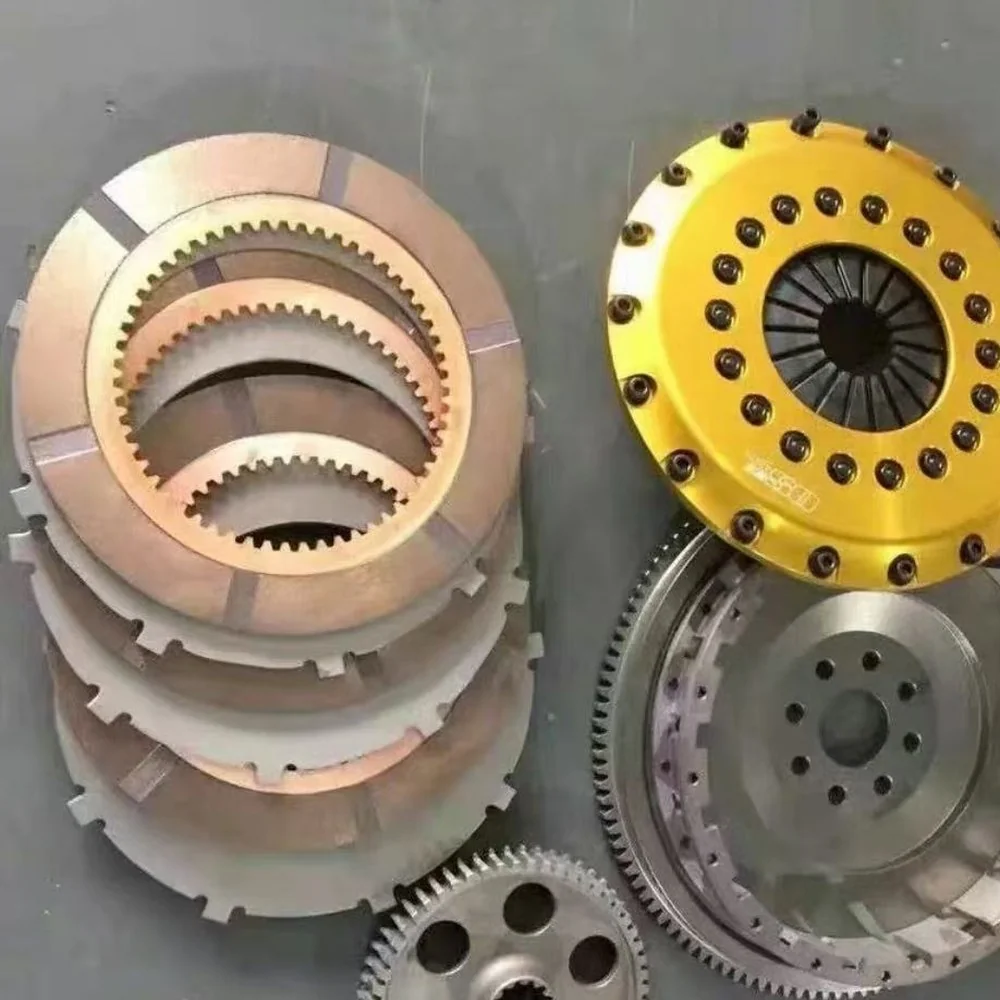
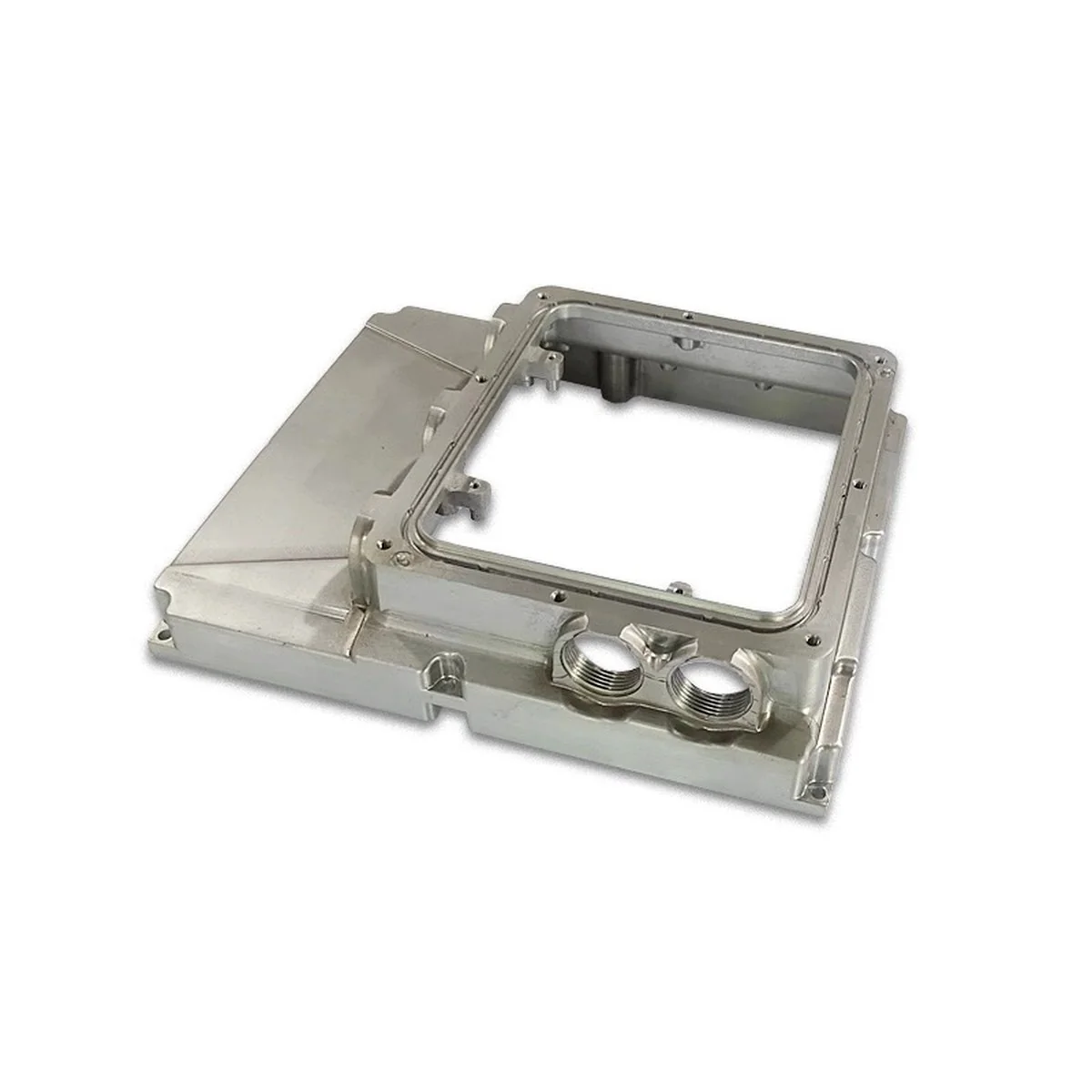
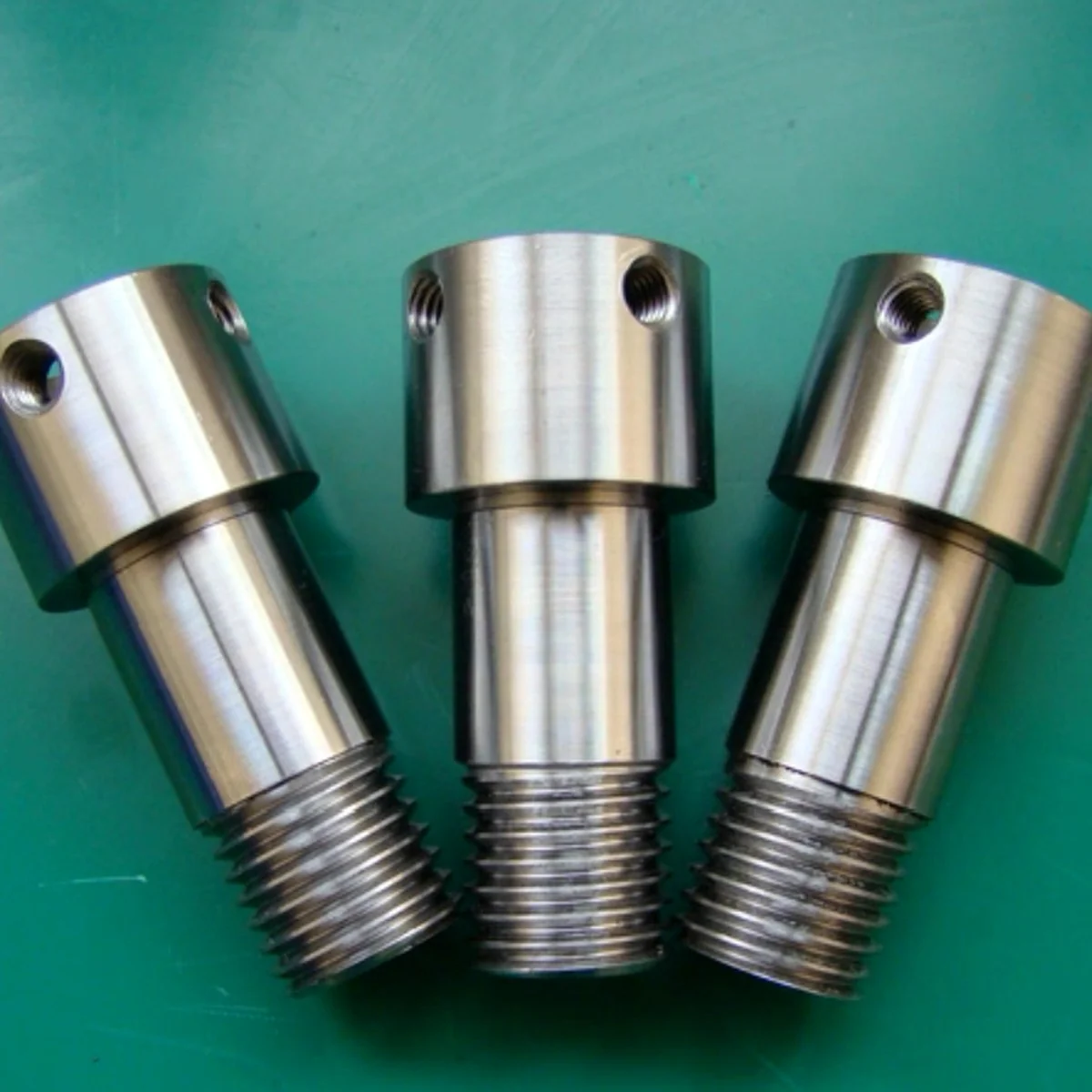
Packaging Machine Parts We Have Made
Recent replacement work for filling machines, form-fill-seal units, labellers, cappers and palletisers:
Held Hostage by a Change Part
This page is about breaking a double grip — the OEM's price for a simple change part, and the lead time when one wears out mid-campaign. We machine the star wheel, infeed screw or cam plate to your container instead of the badge, and quote it in days. Here is who reaches us, and what they're up against.
"We're launching a new bottle format and the OEM won't quote change parts for a filler this old"
Send a change part from the current format plus the new container — or just its dimensions. We design the new star wheels, guides and timing screw around it, keep the machine interface identical, and change only the product-contact profile. The line runs the new SKU without a new machine.
"The cam track is worn, the machine's out of warranty, and the OEM quotes months for a plate"
We measure the motion profile off your worn cam and reproduce it — hardened where the original gave out, so it lasts longer this time round. Send the part during a planned stop and we quote the day it lands; a spare in the same run means the next wear-out isn't a crisis.
"We run dozens of SKUs and need change-part sets for formats the OEM stopped supporting"
Routine work here: star wheels, infeed worms and guides sized to each container in food-contact acetal and 316L, reproducible from saved CAD as the format list grows. One quote covers a mixed set, and a reorder for a repeat run is a single email rather than a fresh project.
"A simple machined change part shouldn't cost what the OEM charges — I want a real second source"
You're paying for the badge, not the machining. We cut the same star wheels, jaws, nozzles and chuck parts to fit, with mill certs and food-contact materials where the line needs them, at a fraction of list — direct from the shop, CAD kept so the price drops again on the reorder.
"I recondition used packaging machines to resell, but they arrive with change parts missing"
We fill the gaps so a refurbished line ships complete: missing star wheels, guides and chuck parts remade from the surviving set or the container spec. One quote for the whole shortfall list, and the CAD stays on file so the next machine of the same model is a fast reorder, not a fresh measure-up.
What Buyers Search For When a Packaging Part Fails
See also conveyor scraper blades and flight bars, conveyor wear strips and chain guides and plastic rollers and wheels — the PE-UHMW, nylon and POM wear parts on the conveyors that feed and clear the machine, made from one worn sample or a drawing, from 1 piece.
Guide rollers and idler wheels on packaging lines usually sit on circlips — groove diameter, width and edge margin by size are in the circlip groove size chart.
Frequently Asked Questions
Usually yes, significantly. Change parts — star wheels, guide rails, timing screws sized to your container — are machined components without complex tooling. We reproduce them from your existing set or design them from your container dimensions, typically at a fraction of OEM list price.
Yes. Send us an existing change part set (for reference geometry) plus the new container — or its dimensions — and we design and machine the new set: star wheels, guides, timing screw. The machine interface stays identical; only the product-contact profile changes.
Yes. Forming tubes and shoulders are precision components with polished product-contact surfaces. We reproduce them from your existing tube including the film path geometry. 304/316 stainless, polished where film and product touch.
Yes. Sealing jaws are commonly reproduced in tool steel with hardened serrations, or in aluminium-bronze for heat conduction with better wear. Tell us the film type and seal temperature and we specify the right material and hardness.
For change parts the container is often enough. Send the bottle, jar or pouch — or a dimensioned drawing of it — plus a photo of how the part mounts, and we design star wheels, screws and guides around it. An existing change part helps us copy the machine interface exactly, but it isn't always essential.
Yes. We quote and machine the complete set — star wheel, timing screw, guide rails, any chuck or jaw parts — as a single job, so everything is dimensioned to the same container and arrives together. The CAD for each format stays on file, so adding the next SKU later is faster and cheaper.
There is no list price, because the pocket profile moves the cost more than the size does: a round-bottle pocket is a 2D contour, while a square, oval or handled container is a 3D profile that takes several times longer to cut at the same diameter and pocket count. Material moves it too — a 316L blank weighs 5.7× what the same acetal blank weighs and cuts far slower. What is fixed regardless of format: MOQ is 1, so you buy the wheel that broke rather than the format set, and the bore, keyway, bolt circle and hub height are copied from your existing set so the new wheel runs with the parts you already own. Send the worn wheel and one container and the priced answer comes back within 12 hours.
Packaging Part Quote
Wear part or change part set. Reply in 12h.
// Qty & price
1 pc
Sample price
Confirm fit before a run
10–50
Unit price drops
Setup cost shared
100+
Best price
All tiers quoted upfront
- →No distributor — you pay the maker directly
- →CAD saved after first order — reorder anytime at lower unit price