A moulded plastic part can be remade in machined aluminium, but its press and snap fits almost never work if they are copied number for number, because aluminium is about 30 times stiffer than ABS. Shapes copy across easily. Fits have to be designed again.
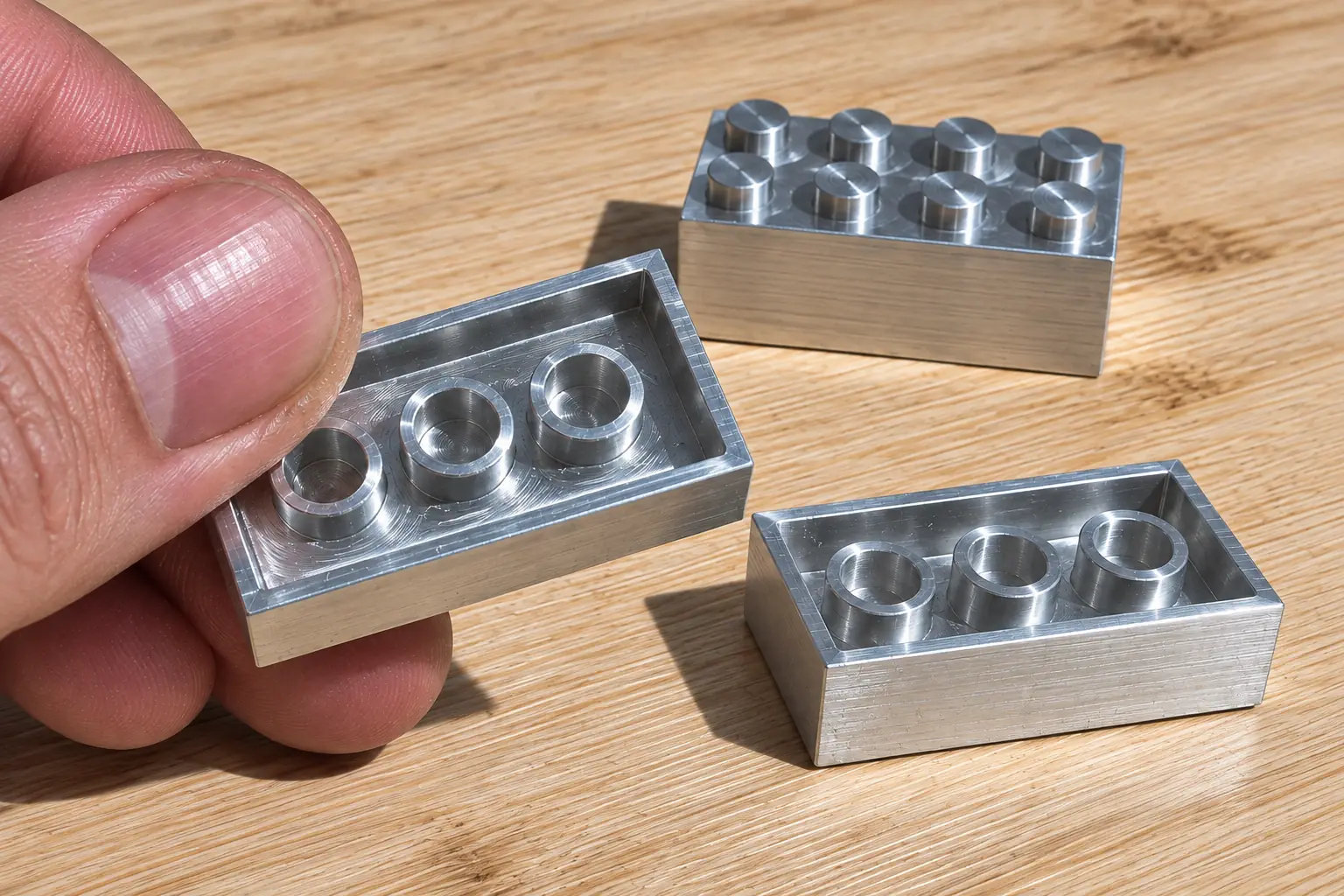
Recently a machinist on a machining forum showed a Friday project that makes the point well: toy building bricks of the familiar plastic kind, machined from aluminium, that actually clicked together. Getting there took seven variations and four fresh CAD models. Studs and pockets were given a half-degree taper, the fit was chased with micrometers and trial and error, and one row of studs held faintly while two rows held firmly. Commenters were impressed for a simple reason: plenty of plastic copies of those bricks do not grip properly, and plastic is the easy material for it.
That project is a small, fun version of a job that comes up in earnest. A moulded plastic part is to be remade in metal, for strength, heat, a short run with no mould, or because the plastic one keeps breaking. EKINSUN remakes plastic parts in aluminium, stainless steel or POM to a drawing or a sample, from one piece, and the fits are what we look at first.
Why Plastic Fits Forgive and Metal Fits Do Not
Plastic press fits work because both parts flex: a plastic peg is made slightly oversize, both sides give a little on assembly, and the elastic push-back holds it. Aluminium flexes too, but far less for the same force. Copy the same interference into metal and it needs roughly 30 times the force to assemble, or it simply will not go together. Make it loose enough to assemble by hand and it holds nothing.
| Property | ABS (moulded) | Aluminium 6061 | What it means for the fit |
|---|---|---|---|
| Stiffness (elastic modulus) | About 2 to 2.5 GPa | About 69 GPa | Same interference, about 30 times the force |
| Thermal expansion | About 70 to 100 µm/m·K | About 23 µm/m·K | Plastic fits loosen and tighten more with temperature |
| Long-term behaviour | Creeps and relaxes under load | Holds its size | Metal fits do not settle in, so they must be right from the start |
Redesigning the Fit for Metal
A plastic fit is redesigned for aluminium in four ways: a named ISO fit instead of a copied interference, a slight taper, a feature that can flex, and enough engaged features to add up to the grip you need.
- Use a named fit instead of a copied number. For a part that must be pressed in and stay, an ISO 286 interference fit such as H7/p6 sets the exact range; for a part that must locate and still come out by hand, a transition fit such as H7/k6. Values for every size are on the limits and fits chart.
- Add a slight taper. A 0.5° taper on both pin and socket, as on those bricks, lets grip build gradually with depth instead of jumping from loose to jammed.
- Give the metal something that can flex. A slotted wall, a thin tab or a full-depth pocket with thin side walls acts as a spring, the way a collet does. Solid metal around a pin does not.
- Count the engaged features. Holding force adds up: two rows of pins held where one row barely did. Grip that is weak per feature can be made up by number.
- Or let a standard part do the clicking: a spring plunger, a ball detent, a magnet or a screw gives a repeatable hold that machining tolerances alone struggle to match.
- Plan for first pieces. Even with the right fit class, a click fit is tuned on real parts with a micrometer. We machine first pieces, you try them, and the batch follows the version that works.
Draft is a separate question. Moulded parts carry draft so they release from the mould, and a machined copy does not need it. When a moulded part is remade by machining, draft is worth keeping only on faces where it does a job, such as a tapered fit; the rest can be machined straight.
Metal, POM or Keep It Moulded: Which Route for Your Part
Remaking a plastic part in metal is the right call only when the plastic one fails at its job; otherwise machined POM or the original mould is often better.
| What you need | In the catalogue? | What to do |
|---|---|---|
| A spring plunger, ball detent or dowel pin to give the click | Yes, stocked | Buy it there, or ask us, we may have it in stock |
| Thousands of identical plastic parts, and the mould still exists | Moulded to order | Keep moulding. No one-off can match that price, and we say so |
| A plastic part that keeps breaking, or needs stiffness or heat resistance | No | Machined aluminium 6061 (7075 where it must be stronger) or 304 stainless, with the fits redesigned, from 1 piece |
| A part that relies on snap hooks, clips or a living hinge, in a short run | No | Machined POM (acetal), which still flexes and springs back |
| A few dozen identical housings that must keep the moulded look | No | Vacuum casting from a silicone mould made on your part |
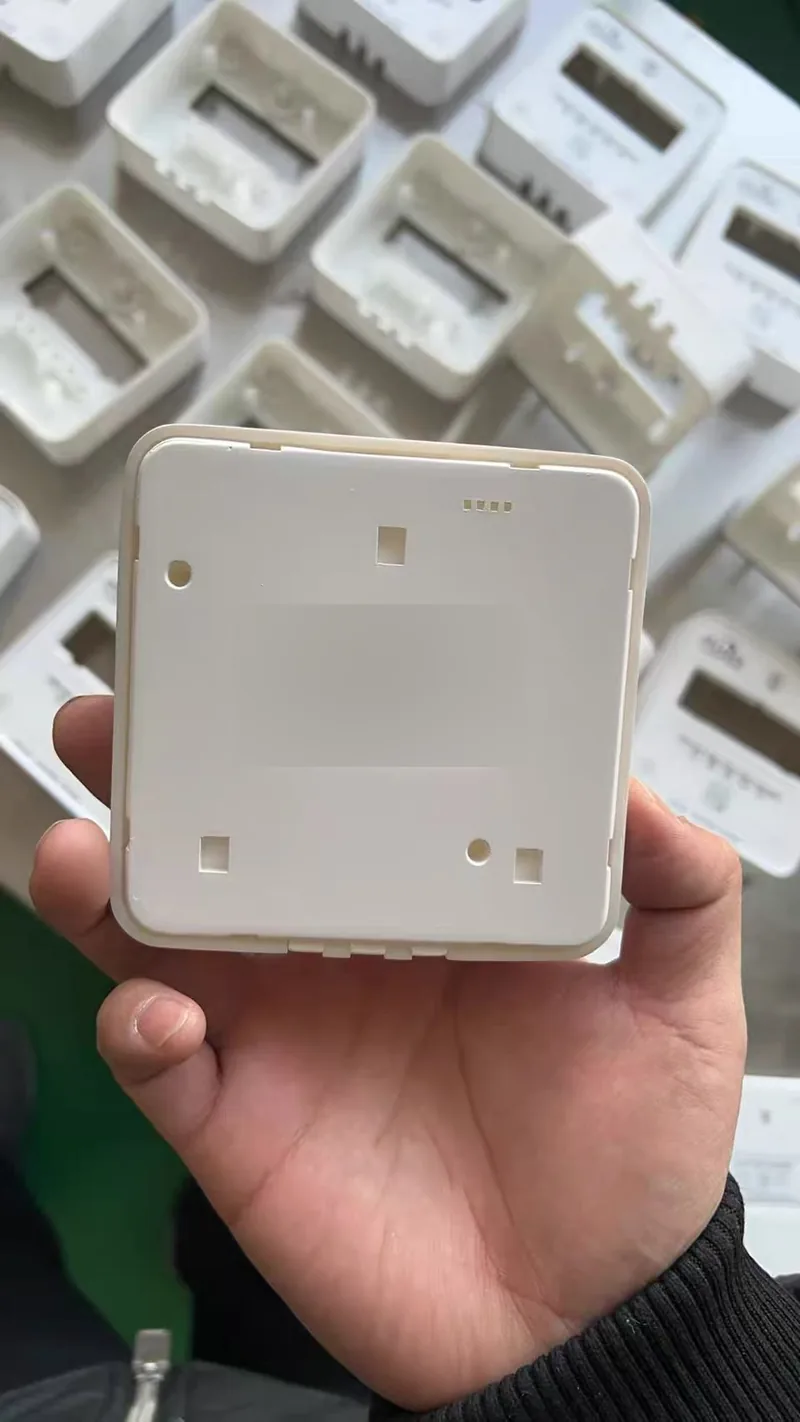
Both metal and POM are cut from solid from one piece. More on acetal is on POM and Delrin machining, on copying a housing in copy a plastic part, and on remaking parts without tooling in how to recreate a plastic part.
Finish and Wear on Metal Fits
Anodising an aluminium fit adds coating thickness to every surface it covers, enough to turn a good fit into a tight one. Type II anodising is typically about 5 to 25 µm thick, and part of that grows outward from the machined surface, so a bore gets smaller and a pin gets larger. Either mask the fit surfaces or size them for the coating, and say which on the drawing. Bare aluminium sliding on bare aluminium tends to gall, so a fit that is assembled and taken apart often is better with one side anodised, or with a pin in a different material. Left bare, aluminium stays bright indoors; a clear coat or clear anodising keeps it that way.
Sending a Plastic Part to Be Remade in Metal
To quote a plastic part in metal, we need the part or its drawing and a line on how each fit should behave.
- The plastic part itself, or a drawing or STEP file.
- What it mates with, and how each fit should behave: pressed in for good, located but removable, or clicking in and out.
- Why it is moving to metal: strength, heat, wear or quantity.
- Material, finish and quantity.
Quotes come back within 12 hours, from one piece, with a note on which fits need changing and whether aluminium, stainless or POM suits the job.
Questions About Plastic Fits in Metal
Rarely. Aluminium 6061 is about 30 times stiffer than ABS, so the interference that lets a plastic peg grip would need about 30 times the force in metal, or would not assemble at all. The fit has to be redesigned: less interference, a taper, or a feature that can flex.
A metal click fit needs something that can flex, such as a slotted wall or a thin tab, or a separate spring part: a spring plunger, a ball detent or a magnet. Tune the fit on first pieces measured with a micrometer before the batch.
Machine it in POM (acetal) if it relies on clips, snap hooks or a living hinge, because POM keeps that plastic behaviour. Choose aluminium when the part needs stiffness, heat resistance or a metal finish, and redesign the fits for it.
Type II anodising is typically about 5 to 25 µm thick, and part of it grows outward, so a bore gets smaller and a pin gets larger. On a press or click fit that is enough to matter: mask the fit faces or size them for the coating.
No. Draft lets a moulded part release from its mould, and a machined part has no mould. Keep draft only where it does a job, such as a half-degree taper on a fit.