Quantity decides how a small grub screw should be made. Millions a year belong to thread rolling or cold heading at a fastener plant, thousands to a Swiss-type lathe turning from bar, and anything from one piece upward with an odd length, point or material to a CNC lathe.
Recently a manufacturer asked on a machining forum how to bring one such part in-house: an M2.5 headless slotted screw, 7.5 and 12.5 mm long, in leaded EN1A free-cutting steel, bought in so far. The plan was an automatic flat-die thread rolling machine fed by a bowl feeder. Most machinists answered with a question first: how many? Several said a Swiss-type lathe would turn them finished, slot and all, in well under a minute each; others asked why not buy standard set screws; one pointed out that grinding the heads off stock screws is fine for five pieces and hopeless for five thousand.
EKINSUN turns custom grub screws to drawing, in lengths, threads, points and materials the catalogue does not carry, from one piece. Below is how we would answer that question, in order.
Is M2.5 a Standard Grub Screw Size?
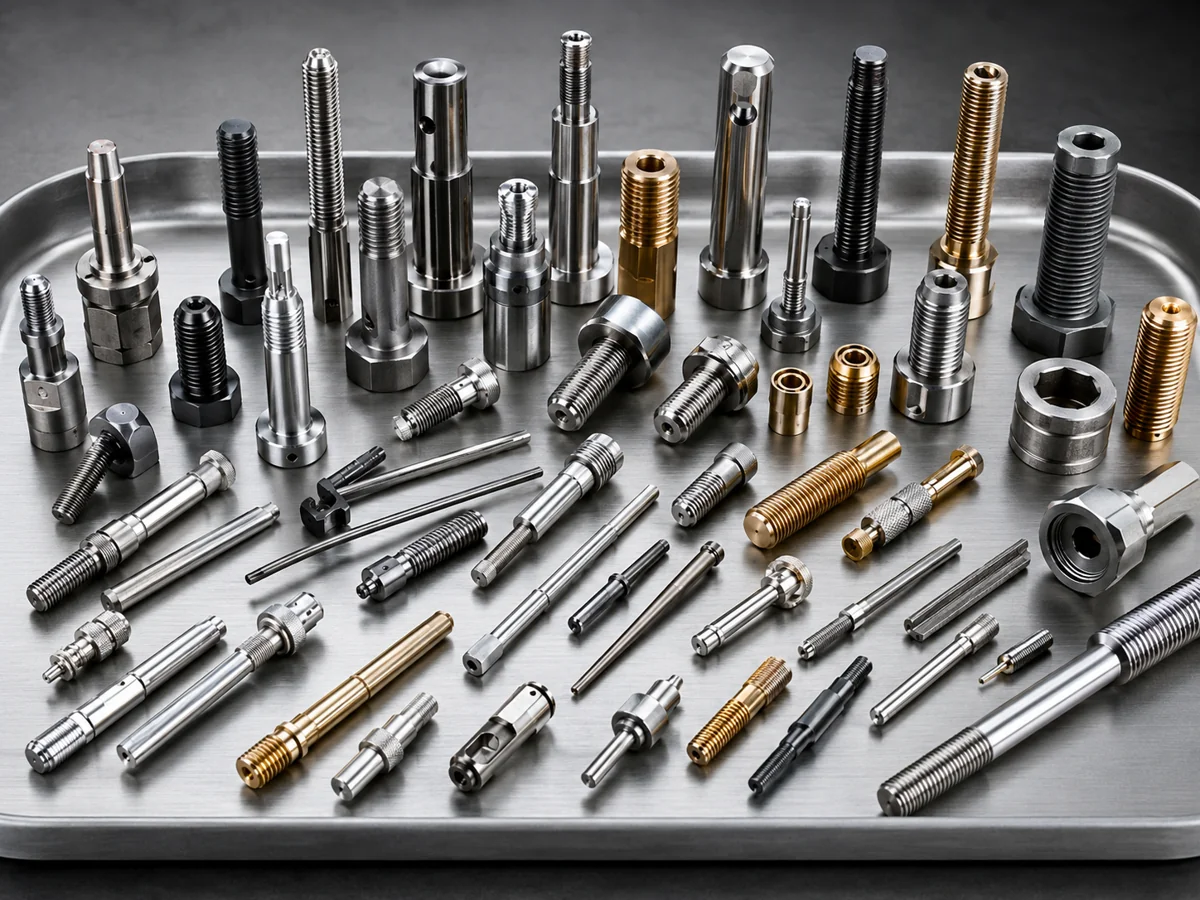
Yes: M2.5 × 0.45 is a standard set screw size in ISO 4026 (hex socket, flat point) and ISO 4766 (slotted, flat point), stocked in catalogue lengths of about 3 to 12 mm. Those lengths follow the ISO 888 nominal series, which steps 6, 8, 10, 12 mm, so 7.5 mm falls between two steps and 12.5 mm sits beyond the usual range. A non-standard length, a special point, a fine or left-hand thread, or a material the catalogue does not carry turns a standard screw into a custom part.
| What you need | In the catalogue? | What to do |
|---|---|---|
| M2.5 set screw in a stock length, steel or A2 stainless, slot or hex socket | Yes, stocked | Buy it there, or ask us, we may have it in stock |
| Millions a year of one standard size | Made to order by fastener plants | Rolled or headed at a fastener plant. No one-off can match that price, and we say so |
| 7.5 or 12.5 mm long, slotted, in EN1A Pb | No | Turned from bar, from 1 piece; on a Swiss-type automatic from about 1,000 |
| Special point, fine or left-hand thread, brass, 303 (1.4305) or 316 (1.4404) stainless | Rarely | Turned from bar to your drawing or sample |
Point styles, lengths and materials for the whole family are on custom set screws and grub screws.
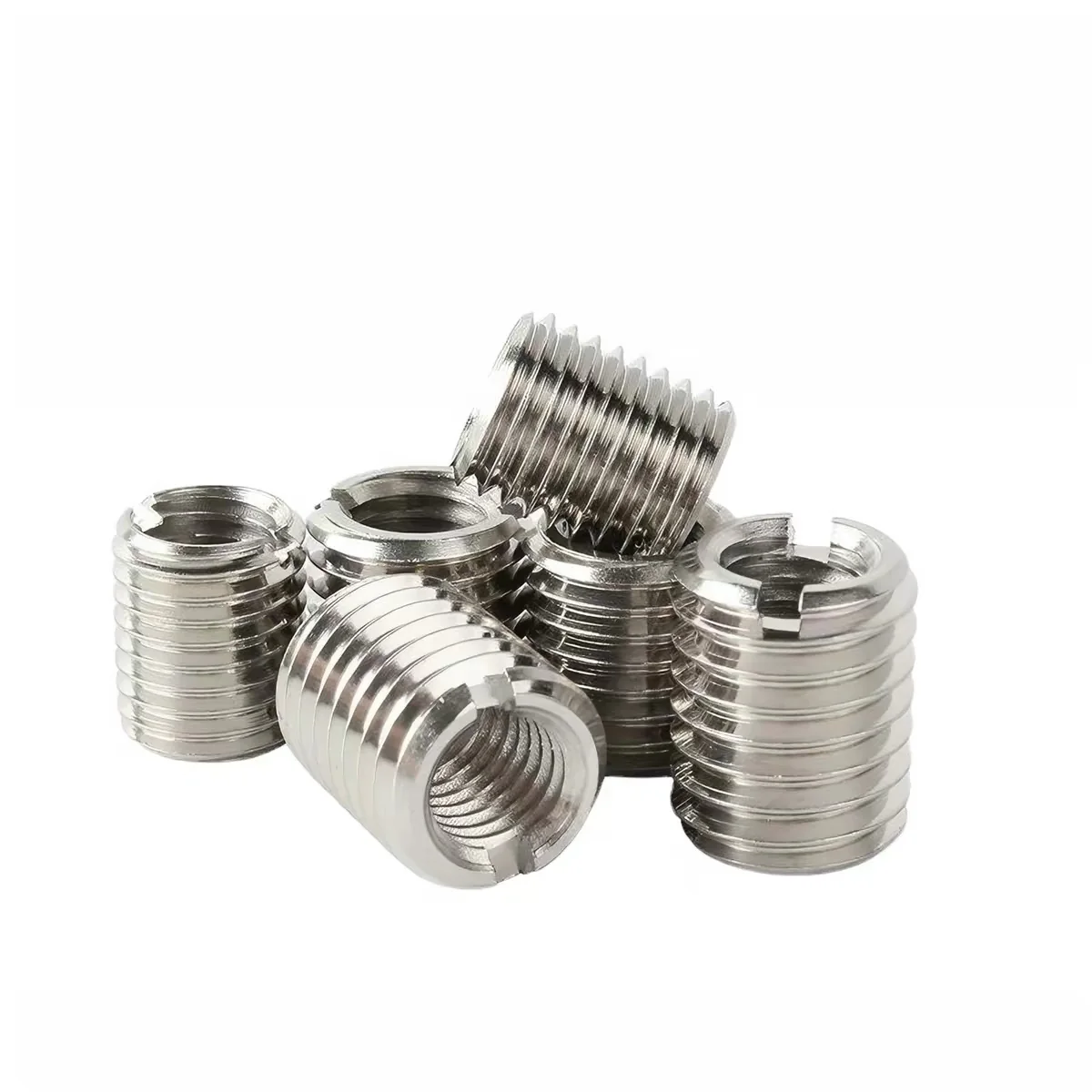
Hollow parts with the same slotted, headless outside are turned from bar the same way. A thread reducer insert is in effect a grub screw with a tapped bore: it screws into a larger hole so that a smaller screw can be used, and it is driven by the same kind of slot. See thread reducer inserts.
Thread Rolling, Swiss Turning or a CNC Lathe: How Each Makes the Thread
Thread rolling forms the thread without cutting, while Swiss-type and standard CNC lathes cut it; that difference sets the quantity each route suits.
| Route | How the screw is made | Suits | Watch for |
|---|---|---|---|
| Flat-die thread rolling | A blank is rolled between two flat dies that press the thread into it; no chips, and the grain follows the thread | Very large runs of one size | Blanks must already be cut to length, chamfered and sized for rolling; the slot is a separate operation; dies per size |
| Swiss-type (sliding head) lathe | Bar is fed through a guide bush; the thread is single-point cut or whirled, and chamfer, slot and cut-off happen in the same cycle | Thousands to hundreds of thousands, unattended runs | Setup skill and small collets; worthwhile once the batch is large |
| Standard CNC lathe | Turned and threaded from bar, slotted in a second operation or with live tooling | One piece to a few hundred, specials and repairs | Minutes per part rather than seconds |
Either way the thread is checked the same way: with GO and NO-GO ring gauges for M2.5 6g. A rolled thread and a cut thread that pass the same gauges fit the same tapped hole.
Why Leaded Free-Cutting Steel Points to a Turned Part
EN1A Pb is a leaded free-cutting steel, 230M07 Pb in BS 970, which corresponds to 11SMnPb30 (1.0718) and to 12L14. Sulphur and lead make its chips break short and let tools run fast for long, so it is chosen for high-speed turning, not for strength. Hardened set screws in property class 45H are made from quenched and tempered steel; a free-cutting steel grub screw is a light-duty locking part. If the screw has to bite hard into a shaft, say so, and we will propose a hardened grade. Cross-references for the family are on free-machining steel equivalents.
Before Buying a Thread Rolling Machine for Small Screws
A rolling machine only pays when the annual quantity keeps it busy; at a few thousand pieces a year, buying turned screws usually costs less than owning the process.
- Annual quantity per size against the machine output, including changeovers between lengths.
- Blank supply: who cuts, chamfers and sizes the blanks, and who puts the slot in.
- Feeding: tiny headless blanks have to arrive in the dies the right way round, every time.
- Dies: cost per size and how long they last in your material.
- Inspection: thread gauges for every size, and someone to check the first parts of each run.
Ordering Custom Grub Screws
To quote a custom grub screw we need the thread, length, point, drive, material, finish and the quantity per year, or a drawing or sample that shows them. Quotes come back within 12 hours. We turn from one piece, move to a Swiss-type automatic from about 1,000 pieces, and gauge every custom screw for pitch and diameter before it ships. For how quantity changes the price, see CNC machining MOQ explained.
Questions About Small Grub Screws
Yes. M2.5 × 0.45 is a standard set screw size in ISO 4026 (hex socket, flat point) and ISO 4766 (slotted, flat point), stocked in catalogue lengths of about 3 to 12 mm. Lengths between those steps, special points or other materials are made to order.
Rolling is faster and gives a thread with unbroken grain flow, which is why fastener plants roll threads by the million. Cutting needs no dies, so any length, pitch or material can be made from one piece. Both meet a 6g thread class when they are gauged.
Yes. A grub screw turned from bar can be any length, with a slot or hex socket, a flat, cone, dog or cup point, and in free-cutting steel, stainless or brass. EKINSUN makes them from one piece.
EN1A Pb is the old British name for leaded free-cutting steel 230M07 Pb, which corresponds to 11SMnPb30 (1.0718) in EN 10087 and to 12L14 in AISI. It is made for fast turning and is a light-duty material for set screws.
From about 1,000 pieces the same drawing moves from a standard CNC lathe to a Swiss-type automatic, which turns, threads and slots each screw in one cycle and the unit price falls. Volumes in the millions belong to rolling or heading at a fastener plant.