Article Contents
Three Measurements Settle It
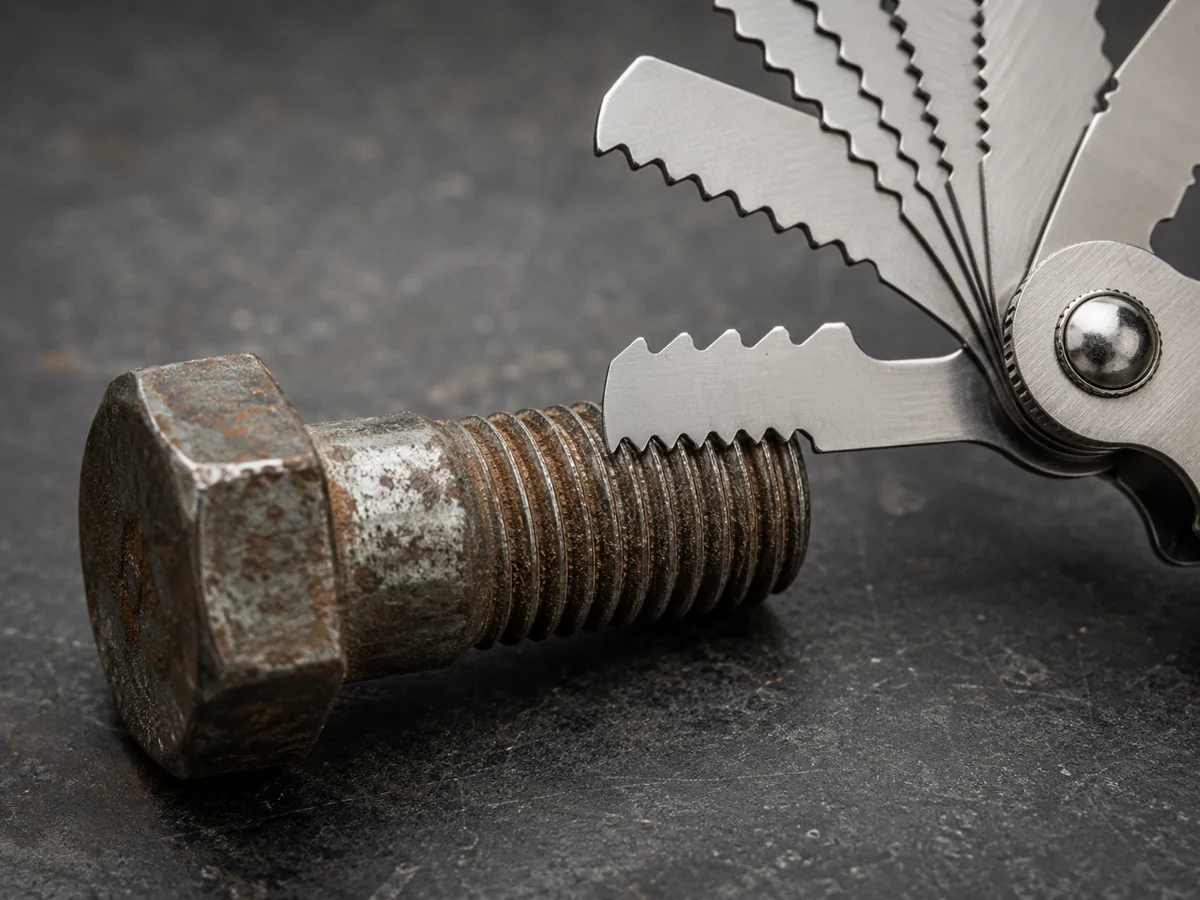
Threads look interchangeable until they aren't. The reason a fitting "almost" threads in is usually that you're mixing standards — a metric thread into a UNF hole, or a BSP fitting into an NPT port. To identify any external thread you only need three numbers:
Major Diameter
Measure the outside diameter of the thread crests with calipers (for a hole, measure the minor diameter).
Pitch / TPI
Use a thread pitch gauge — the leaf that seats with no rocking gives metric pitch in mm or imperial threads-per-inch.
Thread Angle & Taper
60° for metric & Unified, 55° for BSP/Whitworth. A visibly tapered thread is a pipe thread (NPT/BSPT). If a fastener reads 55°, our Whitworth thread chart pins down BSW, BSF, BA or BSC from the count alone.
Each of those three readings narrows the answer, and none of them settles it alone. The table below says what each one proves and where it stops — the last column is the reason threads still get mixed up by people who measured carefully.
| Step | What you measure | With | What the reading proves | Why it is not enough on its own |
|---|---|---|---|---|
| 1 | Major diameter, over the crests | Calipers | Narrows the thread to a size band | Neighbouring standards sit inside that band: M5 and #10-32 are 0,174 mm apart, which a worn crest can hide |
| 2 | Pitch, or threads per inch | Pitch gauge, or ten pitches on a rule divided by ten | Usually separates metric from inch — a whole number of threads in one inch means inch | Not always: M5 is 0,800 mm and #10-32 is 0,794 mm, a difference of 0,006 mm that no gauge resolves. M2 against #2-64 is closer still, 0,400 against 0,397 mm |
| 3 | Flank angle | Thread form gauge, or the profile against the light | 60° is metric and Unified, 55° is BSP and the Whitworth family, 47,5° is BA | It cannot separate two 60° standards from each other — both M5 and #10-32 are 60° |
| 4 | Taper along the thread | Eye along the axis, or two caliper readings a few threads apart | A visible taper means a pipe thread: NPT or BSPT rather than NPS or G | A parallel pipe thread reads like a coarse straight thread and needs the diameter to place it |
Put the four together and most threads are settled. The ones that are not have their own table: 22 metric and inch pairs within 0,10 mm, each row saying what happens in both directions — for the M5 and #10-32 pair, a #10-32 bolt runs several turns into an M5 nut and gives itself away by looseness rather than resistance, drifting 0,030 mm over five turns.
The Common Thread Families
| Family | Angle | Pitch stated as | How to spot it |
|---|---|---|---|
| Metric (M) | 60° | mm (e.g. 1.5) | Pitch gauge reads a round mm value |
| UNC / UNF | 60° | TPI (e.g. 20) | Pitch gauge reads whole threads-per-inch |
| BSW / BSF | 55° | TPI | 55° leaf seats; rounded crests |
| BSP (G / R) | 55° | TPI | Pipe thread, 55°; common outside North America |
| NPT / NPTF | 60° | TPI | Tapered pipe thread, 60°; North American |
| ACME / trapezoidal | 29° / 30° | per inch / mm | Square-ish lead-screw profile; sizes on the trapezoidal lead screw size chart |
A frequent trap: 1/8 NPT vs 1/8 BSP look almost identical but have different angles and pitches, so a fitting will start, cross-thread, and leak. Confirm the angle before you seal anything.
You Don't Actually Have to Identify It
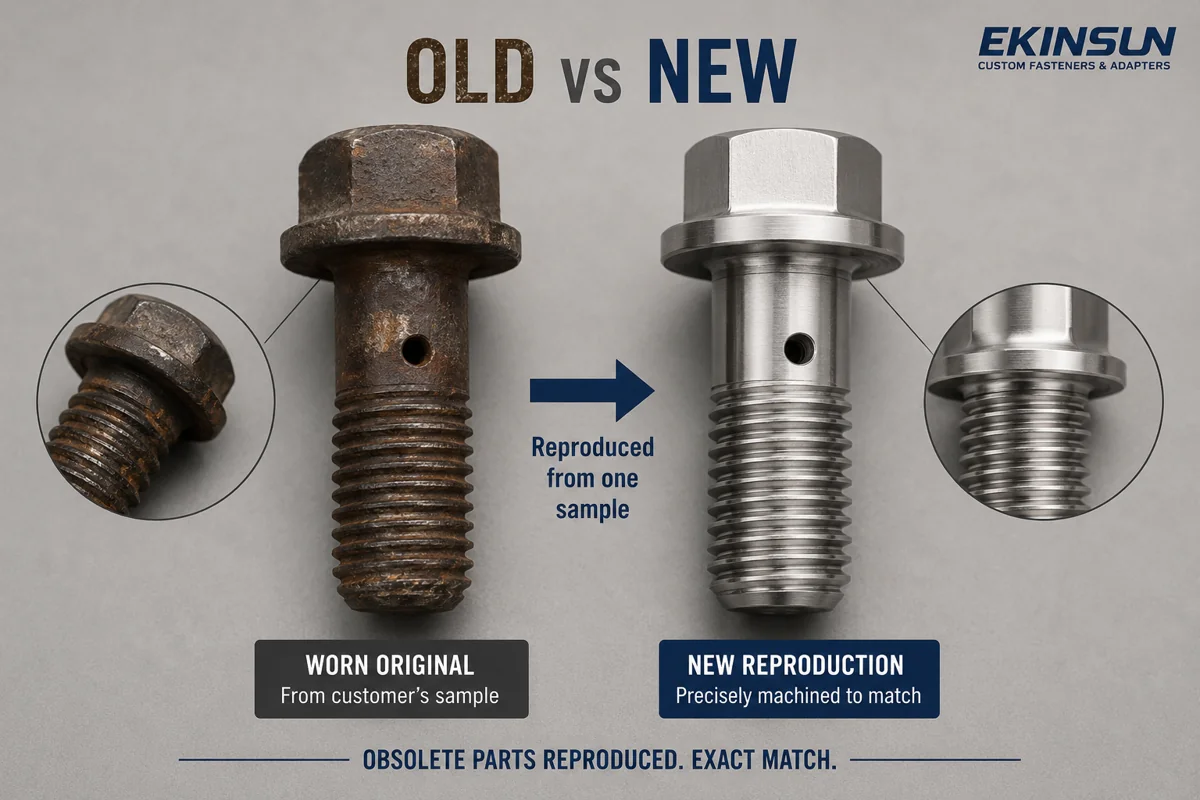
Identifying a thread is useful if you want to buy a standard fitting. But if the threaded part is bespoke or discontinued, naming the standard is optional — we measure the thread directly off your sample and cut a matching one. We machine metric, UNC/UNF, BSW/BSF, BSP/BSPT, NPT/NPTF, ACME and fully custom threads, internal or external.
Send the mating part if you have it. The fitting or port the thread screws into is the best gauge of all — it confirms size, pitch and class in one go. No drawing? Use no-CAD ordering, or see how we handle threaded components in reverse engineering.
Measuring an Internal Thread (a Tapped Hole)
Internal threads are harder because you can't lay a caliper across the crests. Three practical methods, in order of accuracy:
- Thread the unknown into a known fitting. If a known M10×1.5 bolt runs in cleanly with no slop or binding, you have your answer — the fastest test of all.
- Measure the minor diameter (the hole's smallest bore) with caliper jaws or a bore gauge, and the pitch with a gauge inserted into the threads. Minor diameter plus pitch points to the nominal size.
- Make a cast. Press plumber's putty or moulding compound into the thread, withdraw it, and measure the impression as if it were an external thread.
If none of that is conclusive, it's the same answer as everything else on this page: send us the part. We gauge the internal thread directly and cut a mating component to fit it — no name required.
Parts Made With Non-Standard or Unknown Threads
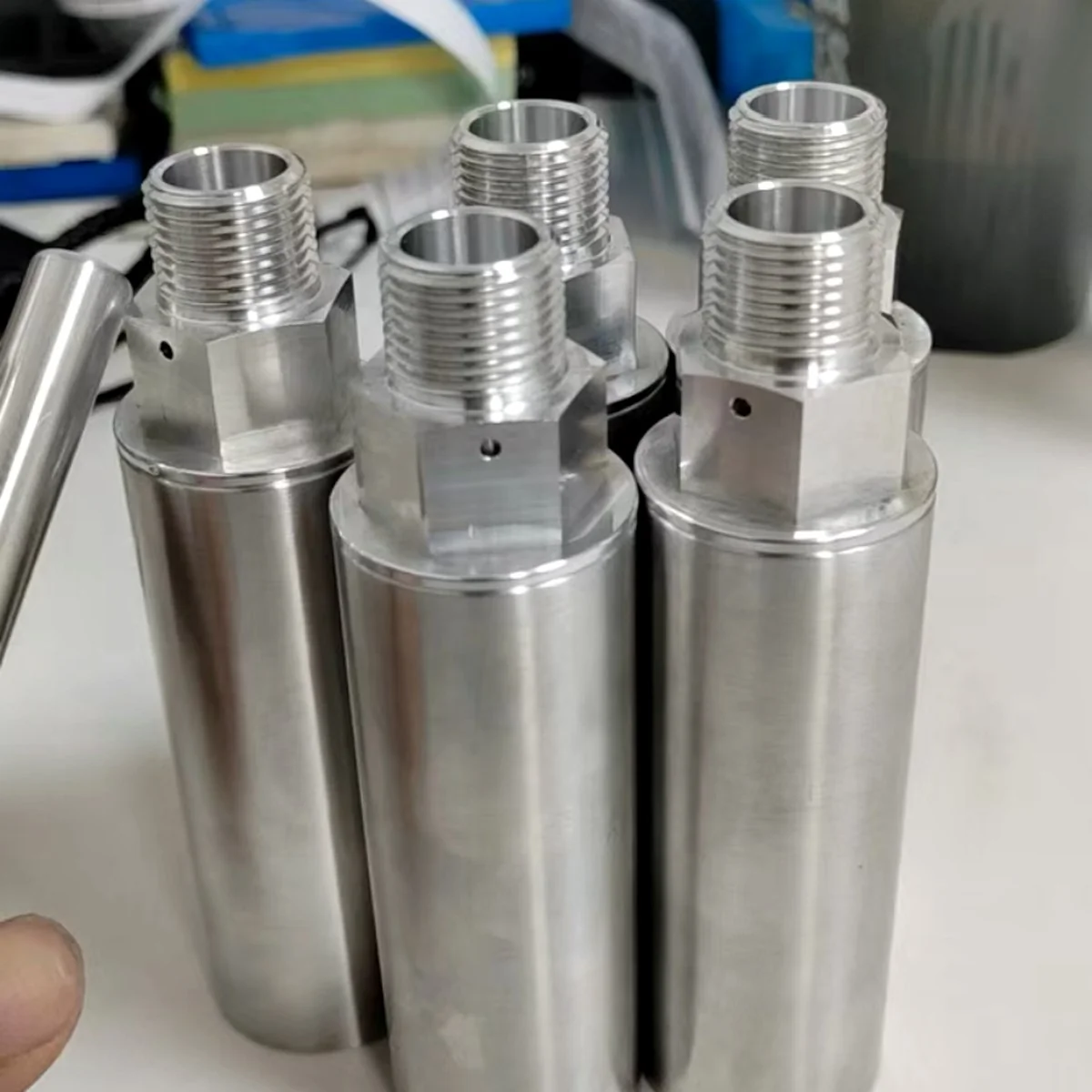
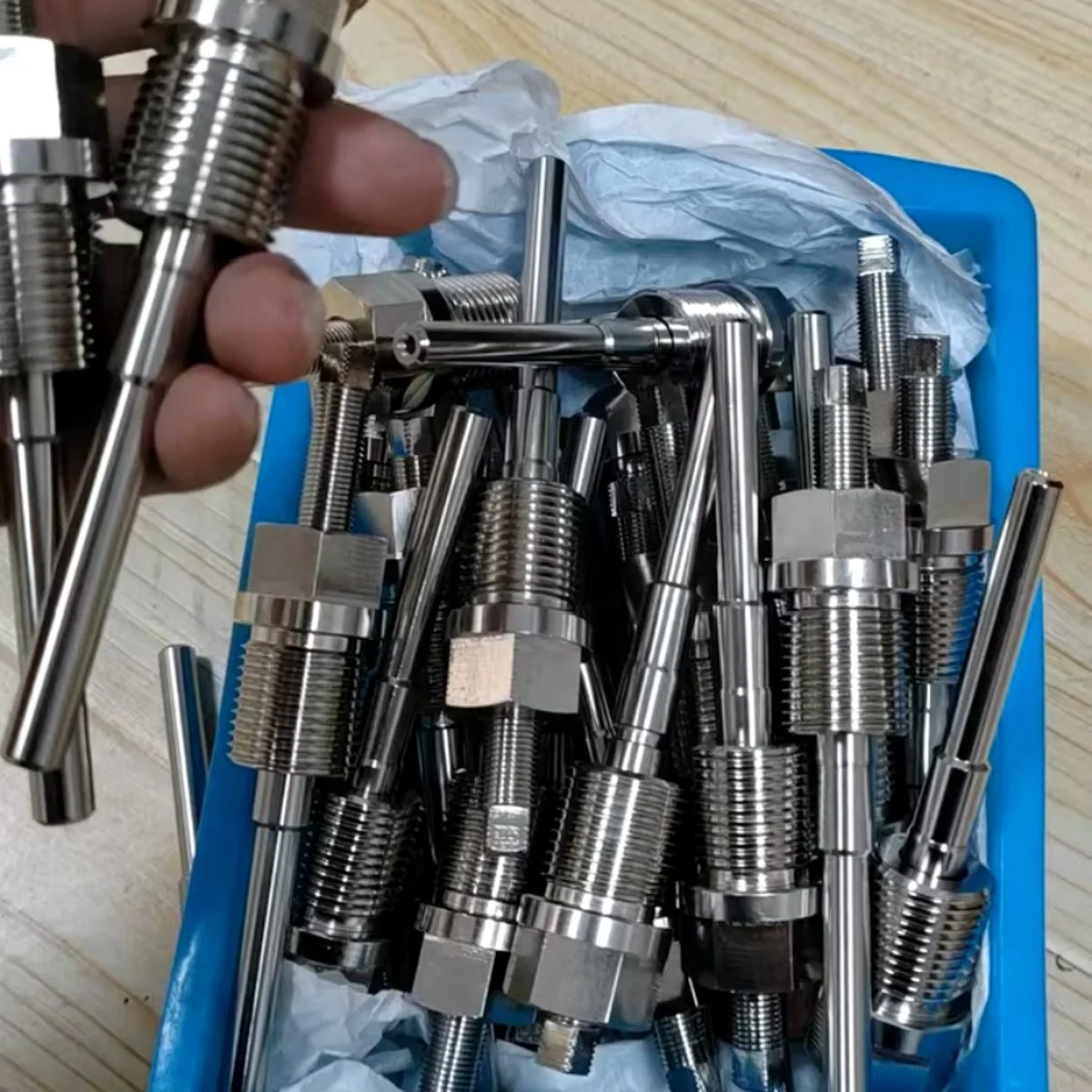
Parts where we had to identify an unknown thread before machining — BSF, BSP, BA and obsolete metric threads included:
Frequently Asked Questions
Measure major diameter (calipers), pitch (pitch gauge), and thread angle (60° metric/Unified, 55° BSP/Whitworth). Add whether it's tapered to separate pipe threads. Those values place almost any thread.
Both are 60°, so check pitch: metric is mm between threads, imperial is threads-per-inch. The pitch-gauge leaf that seats without rocking gives the system and value.
BSP is 55°, NPT is 60°, and their pitches differ at the same nominal size. BSP is common outside North America, NPT inside it. They don't interchange — identify before sealing.
Yes. Send the part; we measure the thread on the sample and cut a match. We machine metric, UNC/UNF, BSW/BSF, BSP/BSPT, NPT/NPTF, ACME and custom threads.
Match or Cut a Thread
Send the threaded part (and its mate if possible). Engineers reply within 12 hours.
// Qty & price
1 pc
Sample price
Confirm fit before a run
10–50
Unit price drops
Setup cost shared
100+
Best price
All tiers quoted upfront
- →No distributor — you pay the maker directly
- →CAD saved after first order — reorder anytime at lower unit price
No ID needed · Files kept confidential