Property Class Chart — ISO 898-1 Minimum Values
ISO 898-1 defines each class by minimum values a finished bolt must meet in test: tensile strength Rm, yield (or proof) strength Re / Rp0.2, Vickers hardness and elongation after fracture. Classes 4.8, 5.8 and 6.8 may be delivered cold-worked rather than heat-treated, so the standard sets no elongation for them. Class 8.8 is split at M16: above it the minima rise to 830 / 660 N/mm².
| Class | Tensile Rm min, N/mm² | Yield Re / Rp0.2 min, N/mm² | Hardness HV min | Elongation A min, % | Material |
|---|---|---|---|---|---|
| 4.6 | 400 | 240 | 120 | 22 | Carbon steel, not heat-treated |
| 4.8 | 420 | 340 | 130 | — | Carbon steel, not heat-treated |
| 5.6 | 500 | 300 | 155 | 20 | Carbon steel, not heat-treated |
| 5.8 | 520 | 420 | 160 | — | Carbon steel, not heat-treated |
| 6.8 | 600 | 480 | 190 | — | Carbon steel, not heat-treated |
| 8.8 | 800 | 640 | 250 | 12 | Carbon steel, quenched and tempered, or boron steel |
| 9.8 | 900 | 720 | 290 | 10 | Carbon steel, quenched and tempered, or boron steel |
| 10.9 | 1040 | 940 | 320 | 9 | Alloy steel, quenched and tempered |
| 12.9 | 1220 | 1100 | 385 | 8 | Alloy steel, quenched and tempered |
| 8.8 (above M16) | 830 | 660 | 255 | 12 | Carbon steel, quenched and tempered, or boron steel |
N/mm² and MPa are the same unit. Hardness is the quickest field check: 8.8 sits between 250 and 320 HV, 10.9 between 320 and 380, 12.9 between 385 and 435 — a hardness tester on the head sorts unmarked bolts in seconds.
Need a bolt in a grade, length or thread the catalogue does not stock? EKINSUN is a custom parts manufacturer: we make bolts and studs in the property class you need to your drawing, sketch or sample — 42CrMo4 for 8.8 to 12.9, 304 or 316L stainless steel, brass or titanium — from 1 piece, quoted in 12 hours and shipped duties paid. Standard sizes can often be supplied from stock; the more pieces, the lower the unit price. All custom fasteners →
How to Read the Marking — the Two Numbers Are the Strength
The class designation is a formula, not a code to look up. The first figure × 100 is the nominal tensile strength; the first figure × the second figure × 10 is the nominal yield strength. So 8.8 = 800 N/mm² tensile and 8 × 8 × 10 = 640 N/mm² yield; 10.9 = 1000 and 900; 12.9 = 1200 and 1080. The table lists the nominal figure the marking encodes next to the minimum the standard actually tests, and the steels normally used to reach each class.
| Class | Nominal tensile | Nominal yield | Tested minima Rm / Re | Typical steels (EN / AISI) |
|---|---|---|---|---|
| 4.6 | 4 × 100 = 400 | 4 × 6 × 10 = 240 | 400 / 240 | S235 structural steel, C15 (1015) |
| 4.8 | 4 × 100 = 400 | 4 × 8 × 10 = 320 | 420 / 340 | C15 (1015), C22 (1020) |
| 5.6 | 5 × 100 = 500 | 5 × 6 × 10 = 300 | 500 / 300 | C22 (1020), C35 (1035) |
| 5.8 | 5 × 100 = 500 | 5 × 8 × 10 = 400 | 520 / 420 | C35 (1035) |
| 6.8 | 6 × 100 = 600 | 6 × 8 × 10 = 480 | 600 / 480 | C45 (1045) |
| 8.8 | 8 × 100 = 800 | 8 × 8 × 10 = 640 | 800 / 640 | C35, C45 (1045), 34Cr4, 37Cr4 |
| 9.8 | 9 × 100 = 900 | 9 × 8 × 10 = 720 | 900 / 720 | 34Cr4, 37Cr4 (5132, 5135) |
| 10.9 | 10 × 100 = 1000 | 10 × 9 × 10 = 900 | 1040 / 940 | 34CrMo4 (4135), 42CrMo4 (4140) |
| 12.9 | 12 × 100 = 1200 | 12 × 9 × 10 = 1080 | 1220 / 1100 | 42CrMo4 (4140), 34CrNiMo6 (4340) |
Marking is mandatory from M5 upward on hex and socket head bolts; below M5 the class travels on the packaging and the certificate. Nuts carry their class as a single figure (8, 10, 12) or as a clock-face code on small sizes.
Stainless Steel: A2-70 and A4-80 Instead of 8.8
Stainless bolts leave the 8.8 system entirely. EN ISO 3506-1 names the steel group — A2 is the 304 family (1.4301), A4 the 316 family (1.4401 / 1.4404) — and a class 50, 70 or 80 whose figure × 10 is the minimum tensile strength. Class 70 is what fastener stockists carry; class 80 is available in the common sizes; class 50 is what a bolt machined from annealed bar delivers, because the higher classes come from cold work, not from the alloy.
| Class | Tensile Rm min, N/mm² | Proof Rp0.2 min, N/mm² | What it is |
|---|---|---|---|
| A2-50 / A4-50 | 500 | 210 | soft, as machined or formed — corrosion resistance, not strength |
| A2-70 / A4-70 | 700 | 450 | cold-worked — the normal stock class for stainless bolts |
| A2-80 / A4-80 | 800 | 600 | highly cold-worked — the strongest stainless class |
There is no stainless 10.9. Even A4-80, the strongest class, has a proof stress of 600 N/mm² against the 640 N/mm² yield of an 8.8 — so a stainless bolt swapped into a carbon-steel 8.8 joint carries less preload, and the torque table changes with it: an M10 A2-70 is tightened to 44 N·m, not the 47 N·m of an 8.8. When the joint needs both corrosion resistance and 10.9 strength, the answer is a coated alloy-steel bolt, or a bigger stainless one.
Which Nut Goes on Which Bolt — Nut Classes to ISO 898-2
A nut class is a single number, and the rule is simple: the number is the highest bolt class the nut is proof-loaded to carry. A class 8 nut carries an 8.8 bolt to its full yield; on a 10.9 bolt it strips before the bolt yields. Going up is always allowed — a class 10 nut on an 8.8 bolt costs nothing but money.
| Nut class | Carries bolt class |
|---|---|
| Nut class 5 | 5.6 / 5.8 |
| Nut class 6 | 6.8 |
| Nut class 8 | 8.8 |
| Nut class 10 | 10.9 |
| Nut class 12 | 12.9 |
SAE Grade 5, Grade 8 and ASTM A325 / A490 Against Metric Classes
Inch bolts are graded by SAE J429 and, for structural steel, by ASTM. The numbers do not translate exactly — a grade 5 bolt has a slightly higher minimum tensile than an 8.8 and a slightly lower yield — but for choosing a replacement the pairing below is the one the industry uses: grade 5 ≈ 8.8, grade 8 ≈ 10.9. There is no common SAE grade that matches 12.9.
| Grade | Tensile min | Yield min | Size range | Nearest metric class |
|---|---|---|---|---|
| SAE J429 Grade 2 | 74 ksi (510 MPa) | 57 ksi (393 MPa) | 1/4–3/4 in | ≈ class 5.8 |
| SAE J429 Grade 5 | 120 ksi (827 MPa) | 92 ksi (634 MPa) | 1/4–1 in | ≈ class 8.8 |
| SAE J429 Grade 8 | 150 ksi (1034 MPa) | 130 ksi (896 MPa) | 1/4–1-1/2 in | ≈ class 10.9 |
| ASTM A325 Type 1 | 120 ksi (827 MPa) | 92 ksi (634 MPa) | 1/2–1 in | ≈ class 8.8 (structural) |
| ASTM A490 | 150 ksi (1034 MPa) | 130 ksi (896 MPa) | 1/2–1-1/2 in | ≈ class 10.9 (structural) |
Head markings: grade 5 carries three radial lines, grade 8 six; A325 is marked “A325”, A490 “A490”. Metric classes are marked with the digits themselves. Conversions at 1 ksi = 6.895 MPa.
Shear Strength — the Number the Chart Does Not Contain
ISO 898-1 does not specify a shear strength; it tests bolts in tension. Structural design codes derive shear from tensile with a factor: EN 1993-1-8 uses αv = 0.6 for classes 4.6, 5.6 and 8.8 and 0.5 for 4.8, 5.8, 6.8 and 10.9, applied to the ultimate tensile strength and the shear area. The table gives the resulting nominal shear stress; 12.9 is outside the Eurocode bolt classes and is designed case by case.
| Class | Rm min, N/mm² | αv | αv × Rm, N/mm² |
|---|---|---|---|
| 4.6 | 400 | 0.6 | 240 |
| 4.8 | 420 | 0.5 | 210 |
| 5.6 | 500 | 0.6 | 300 |
| 5.8 | 520 | 0.5 | 260 |
| 6.8 | 600 | 0.5 | 300 |
| 8.8 | 800 | 0.6 | 480 |
| 10.9 | 1040 | 0.5 | 520 |
Two things the class system also leaves out. Hydrogen embrittlement: from 10.9 upward (hardness above about 320 HV) electroplated bolts must be baked after plating, or they can crack under load days later — a 12.9 zinc-plated bolt without a baking record is a liability, not an upgrade. Temperature: all class values are room-temperature values; above roughly 300 °C the strength of carbon and alloy steel bolts falls and creep starts, and heat-resistant grades to ISO 898-1 Annex or to EN 10269 take over.
Titanium, Aluminium and Brass: Where the Class System Ends
Property classes exist for carbon, alloy and stainless steel only. Bolts in other metals are specified by material and its tensile strength directly, and the joint is calculated from that figure.
| Material | Typical tensile, N/mm² | Nearest class for comparison | Where it is used |
|---|---|---|---|
| Titanium Grade 5 (Ti-6Al-4V) | 895 | between 8.8 and 10.9 at 56 % of the weight | Motorsport, aerospace, medical — custom titanium bolts |
| 304 stainless (A2) | 500–700 | class 50 machined, 70 cold-worked | Food, washdown, architectural |
| 316 / 316L stainless (A4) | 500–800 | class 50 machined, 70–80 cold-worked | Marine, chemical, medical |
| 7075-T6 aluminium | 570 | about class 5.8 in tensile, far lower in fatigue | Weight-critical brackets, racing; never for preloaded steel-on-steel joints |
| 6061-T6 aluminium | 310 | below class 4.6 | Electronics, enclosures, non-structural fixing |
| Brass CW614N (C360) | 400–500 | about class 4.6 | Electrical, decorative, low-torque instrument fixing |
Where the Chart Stops — Classes, Sizes and Heads the Catalogue Does Not Carry
EKINSUN is a custom parts manufacturer: bolts to drawing, special fasteners and heavy hex and structural bolts M20–M100 are machined here to a stated property class, one piece up, from bar whose heat treatment matches the class — and tested for hardness when the drawing asks for proof. The chart above is the standard case; the table below is honest about where the shelf serves you better.
| What you need | In the catalogue? | What we machine |
|---|---|---|
| M6–M24 hex or socket head bolts in 8.8 or 10.9, standard lengths, zinc-plated or plain | Yes — genuinely stocked everywhere | Buy it from stock. On a standard bolt in a standard class no one-off can match that price, and we say so in the quote instead of taking the order. Standard parts: ask us too — we may have them in stock. |
| 12.9, or 10.9 in a fine pitch, a long length or a head form the catalogue skips — M16 × 1.5 × 140, 12.9 | Thin stock, long waits | Machined from 42CrMo4, quenched and tempered to the class, thread rolled or single-pointed, hardness test report on request. |
| A class 8.8 or 10.9 bolt with a non-standard head — the old DIN 19 mm across flats on M12, a low head, a special drive | No | Head machined to your across-flats or drawing, class kept — see the four DIN / ISO across-flats sizes that changed. |
| Stainless A4-80 above M24, or any A4 bolt in a special form | Class 70 only, common sizes | Machined from 1.4404 / 1.4571 bar. Honest note: bar-machined stainless reaches class 50 unless we start from strain-hardened bar — we say which you are getting, and size the bolt accordingly. |
| A grade 8 (SAE) bolt in a metric thread, or a 10.9 in a UNF thread for an imported machine | The two systems never cross | Class properties on the thread you actually have — the same lathe, the same heat treatment. |
| A bolt to class with a documented test — tensile or hardness certificate per ISO 898-1 | Certificates only on bulk lots | Hardness test on the batch, tensile test through a partner laboratory on request, report with the delivery. |
| A bolt you cannot identify — worn marking, unknown class, imported machine | No | Send it. Hardness on the head and a check of thread and length give the class; we reproduce it in the same class or one higher on request. |
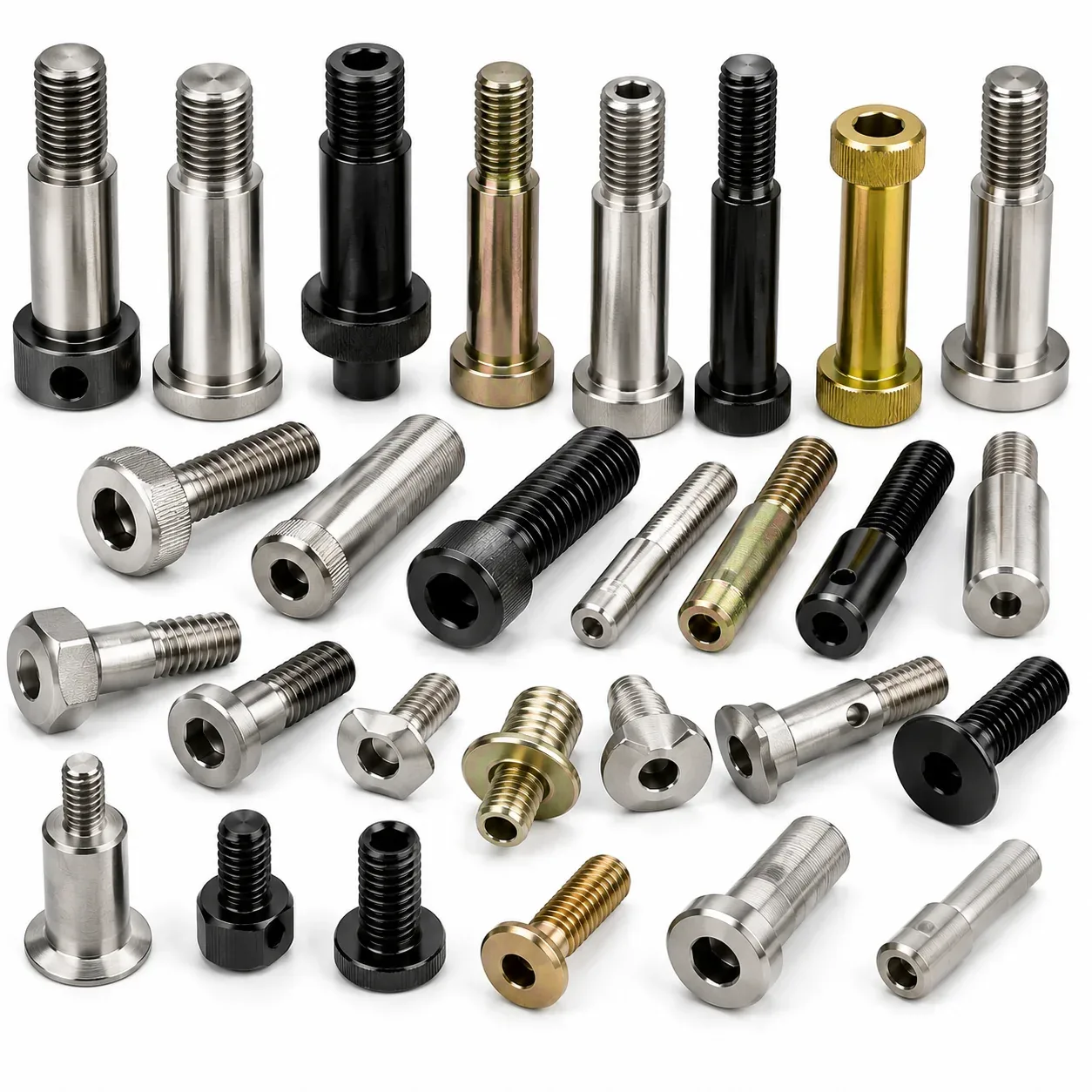
Typical requests read like this: “I need 12 off M16 × 1.5 × 140 in 12.9 with a 22 mm head — nothing in the catalogue goes past 100 mm.” Or: “Can you make M12 bolts in 10.9 with the old 19 mm DIN head? The ISO ones rattle in our fixtures.” A drawing, a sketch or the old bolt is enough. German-speaking engineers use the Festigkeitsklassen-Tabelle, the same chart with the drawing notes in German. Torque values for every class are on the metric bolt torque chart.
Quick Answers
What does 8.8 mean on a bolt?
8.8 is the ISO 898-1 property class: a nominal tensile strength of 800 N/mm² (8 × 100) and a nominal yield strength of 640 N/mm² (8 × 8 × 10), tested as minima of 800 and 640 N/mm² up to M16 and 830 / 660 above. An 8.8 bolt is quenched-and-tempered carbon steel, 250 HV minimum, 12 % minimum elongation — the default class for machine building.
Is a 10.9 bolt stronger than 8.8?
Yes: a class 10.9 bolt has a minimum tensile strength of 1040 N/mm² and a minimum yield of 940 N/mm², against 800 and 640 for class 8.8 — about 47 % more yield strength, which is what sets the usable preload. The price is alloy steel, a class 10 nut, and mandatory baking after electroplating to avoid hydrogen embrittlement.
What is the difference between 10.9 and 12.9?
A class 12.9 bolt has a minimum tensile strength of 1220 N/mm² and a minimum yield of 1100 N/mm², against 1040 and 940 for 10.9; it is harder (385 HV minimum) and less ductile (8 % elongation against 9 %). 12.9 buys about 17 % more yield and brings a real sensitivity to hydrogen embrittlement and stress corrosion — it belongs where space fixes the bolt size, not as a general upgrade.
Is SAE grade 8 the same as 10.9?
Near enough for replacement: an SAE grade 8 bolt has a minimum tensile strength of 150 ksi (1034 MPa) and a minimum yield of 130 ksi (896 MPa), a class 10.9 bolt 1040 and 940 MPa. Grade 5 (120 ksi tensile, 92 ksi yield, 827 / 634 MPa) pairs with class 8.8. The threads are different systems, so “the same” only ever means the same strength class, never an interchangeable bolt.
What class is a stainless steel bolt?
Stainless bolts are classed to EN ISO 3506-1 as A2 or A4 with class 50, 70 or 80: A2-70 means 304-family steel with 700 N/mm² minimum tensile and 450 N/mm² proof stress; A4-80 means 316-family steel with 800 and 600 N/mm². No stainless class reaches the 640 N/mm² yield of an 8.8 carbon-steel bolt.
Which nut for a 10.9 bolt?
A class 10 nut to ISO 898-2, or higher (class 12). The nut class number is the highest bolt class it is proof-loaded to carry: class 8 nuts for 8.8 bolts, class 10 for 10.9, class 12 for 12.9. A class 8 nut on a 10.9 bolt strips its thread before the bolt reaches yield.
What is the shear strength of an 8.8 bolt?
ISO 898-1 gives none; EN 1993-1-8 designs class 8.8 bolts in shear with αv = 0.6 on the ultimate tensile strength, so the nominal shear stress is 0.6 × 800 = 480 N/mm² on the tensile stress area. For 10.9 the factor drops to 0.5, giving 0.5 × 1040 = 520 N/mm² — less of a gain than the tensile figures suggest, which is why shear-loaded joints rarely justify 10.9.
Related charts: metric bolt torque chart (torque by class and size), heavy hex nut dimensions and A563 / A194 2H grades, and custom stainless steel bolts in A2 / A4.
A 12.9 part most workshops have handled: the suspension camber bolt — 1220 / 1100 N/mm², class 12 nut, zinc flake rather than unbaked electro-zinc; kits by OEM number or from the old kit are on camber bolt kits.
Bolt Grade FAQ
The two numbers on the head are the property class to ISO 898-1: the first figure times 100 is the nominal tensile strength, 800 N/mm², and the two figures multiplied and times 10 is the nominal yield strength, 8 × 8 × 10 = 640 N/mm². In the standard's minimum values a class 8.8 bolt up to M16 must reach 800 N/mm² tensile and 640 N/mm² yield, above M16 830 and 660. It is the default class for machine building: quenched-and-tempered carbon steel, hard enough to preload properly, ductile enough at 12 % elongation to bend before it snaps.
A 10.9 bolt has a minimum tensile strength of 1040 N/mm² against 800 for 8.8, and a minimum yield of 940 N/mm² against 640 — roughly 45 % more yield, which is what preload is limited by. That is why an M10 in 10.9 is tightened to 69 N·m where 8.8 takes 47 N·m. 10.9 is made from alloy steel such as 42CrMo4, is harder at 320 HV minimum, and has less elongation (9 % against 12 %). It also brings two duties: electroplated 10.9 must be baked against hydrogen embrittlement, and the nut must be class 10, not the class 8 nut that fits an 8.8.
Take 8.8 unless the calculation says otherwise: it covers general machine building, brackets, housings and flanges. Move to 10.9 when the joint is preloaded to carry alternating load and the bolt size cannot grow — engine, gearbox and press applications. Use 12.9 only where space fixes the bolt size and the load still demands it, and never in a corrosive environment without a coating plan. 4.6 and 4.8 are for lightly loaded, non-preloaded fastening. If the bolt lives in a wet or chemical environment, the class question changes to a material question — see the stainless table.
It is the strongest, at 1220 N/mm² minimum tensile, and it is not automatically the safest. At 385 HV and above, 12.9 is sensitive to hydrogen embrittlement after electroplating and to stress corrosion cracking in wet or chloride environments — a 12.9 bolt can fail at low load weeks after installation where an 8.8 in the same joint would have lived. It also needs a class 12 nut and a tightening torque the joint's clamped parts may not tolerate. Where the joint does not need 12.9, a larger 8.8 or 10.9 is the safer engineering answer.
Stainless bolts do not use the 8.8 system. EN ISO 3506-1 gives them a steel group and a class: A2 (the 304 family) or A4 (the 316 family), with property class 50, 70 or 80 — the class number times 10 is the minimum tensile strength, so A4-80 means 800 N/mm² tensile with 600 N/mm² proof stress. A2-70 / A4-70 (700 / 450 N/mm²) is the normal stock class. There is no stainless equivalent of 10.9: even A4-80 has a lower yield than 8.8's 640 N/mm², so a stainless swap for a carbon-steel 8.8 must be recalculated, not assumed.
EKINSUN is a custom parts manufacturer: bolts, studs and special fasteners to a stated class — 8.8 and 10.9 from 42CrMo4 or C45 with the heat treatment matched to the class, 12.9 from 42CrMo4 quenched and tempered, stainless A2 / A4 from 1.4301 / 1.4404 — with a hardness test report on request, in the length, thread or head form the catalogue does not carry. MOQ 1, quote in 12 hours. For the stocked standard sizes in 8.8 and 10.9 we will tell you to buy from a fastener distributor; a one-off cannot match that price.