This is an old stepped bolt from a mechanical assembly. Look at the two sections above the head: they do not share a centre line. On one side the step is almost flush, on the other it stands proud. It looks like a machining mistake, and it is the whole point of the part. This is an eccentric bolt, also called a cam bolt, and the offset between its sections is what lets the assembly be adjusted.
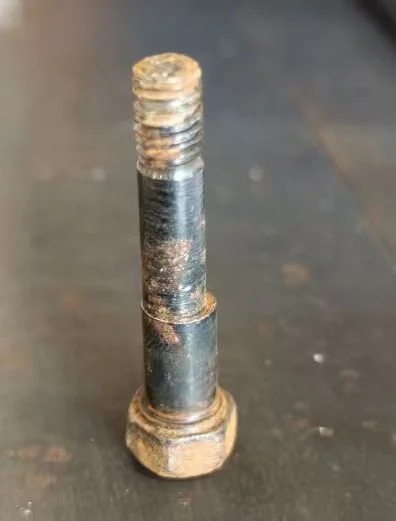
Old parts like this reach us as a photo and a question. Can you make a new one? Should it be turned from one piece, or cut from a standard bolt? Would you change anything about the design? The answers are below, followed by the eccentric bolts we make in series for car suspensions.
| Eccentric bolt | In short |
|---|---|
| What it is | A one-piece bolt with one shank section on a second centre line, offset from the thread by a distance e |
| What it does | Turning it moves the part that section locates by up to 2e, steplessly; the nut locks the setting |
| Offset on an old bolt | Half the dial indicator swing, or half the difference between the tall and the low step |
| How a new one is made | Turned and threaded from bar, heat treated afterwards when it must reach 10.9 or 12.9 |
| Quantity and quote | From 1 piece, quote within 12 hours |
Why the Steps Look Off-Centre
An eccentric bolt has two axes. The thread, and usually the head, run on one. One section of the shank runs on a second axis, set a distance e away. From the side, that offset shows as a step that is tall on one side and low on the other, which is exactly what the old bolt shows: going round the bolt, the step height changes by 2e.
In the assembly the thread sits in a fixed hole or nut and the offset section locates the part being adjusted, or the other way round. Turn the bolt half a turn and the centre of the offset section moves 2e across. Every position in between is a valid setting, so the adjustment is stepless, and tightening the nut locks it. That is why a designer uses one where a fixed hole would need shims or a slotted bracket.
| Offset e | Travel over half a turn (2e) |
|---|---|
| 0.5 mm | 1 mm |
| 1 mm | 2 mm |
| 2 mm | 4 mm |
| 3 mm | 6 mm |
Where Eccentric Bolts Sit in a Machine
Wherever a small, continuous adjustment has to be made once and then held, an eccentric bolt is cheaper than a slide or a screw adjuster. The common places:
| Where | What the offset sets |
|---|---|
| Gear pair on a fixed centre distance | Backlash between the gears |
| Belt or chain drive | Tension, without a slotted motor plate |
| Guide rollers and cam followers | Contact with the rail or track, so play can be taken out |
| Two holes that do not quite line up | Alignment, so the bolt still passes and clamps |
| Clamps on machining fixtures | Clamping force from part of a turn |
| Car suspension arms | Camber and toe; see camber bolt kits |
What to Measure on the Old Bolt
A replacement only works if the offset is copied, not just the diameters. These details turn the old part into a drawing:
| Detail | How to measure it |
|---|---|
| Diameter of each section | Caliper on the least worn part of each step |
| Length of each section and overall | Caliper, from under the head |
| Thread size and pitch | Thread gauge, or the nut it runs in |
| Offset e | Turn the bolt on its thread axis with a dial indicator on the offset section: the swing is 2e. With calipers only, measure the step height on the tall side and the low side; e is half the difference |
| Which section is offset | The one whose step height changes as you go round |
| Where the high side points | Mark it and note which head flat it lines up with, in case the head is used to set the position |
| Material, grade and coating | Marking on the head, a magnet, and the plating or rust as found |
Wear sits where the offset section turns or rubs, so take the offset from unworn faces. A photo with a caliper in frame is often enough to quote; the dimensions are then confirmed on an approval drawing before anything is machined. More on copying from a worn part is on reverse engineering from a sample.
One Piece From Bar, or a Standard Bolt Machined Down?
Both can work. The choice comes down to the offset and the load.
| Route | Works when | Limit |
|---|---|---|
| Standard bolt, one section turned off-centre | One piece, small offset, standard thread and head | Material can only be removed: a section of diameter d offset by e has to fit inside the original shank D, so e is at most (D − d) / 2. A 10.9 or 12.9 bolt is already hardened and cuts slowly |
| One piece from bar | Any offset, a non-standard thread or length, a batch | Needs heat treatment after machining if the bolt has to reach 10.9 or 12.9 |
We make eccentric bolts from bar. The sections are turned and the thread cut on our CNC lathes, the offset section on its own centre line, and a high-strength bolt in an alloy steel such as 42CrMo4 is heat treated to its property class afterwards, for 12.9 at least 1220 N/mm² tensile. That way the offset, the diameters and the thread all come from the drawing rather than from what a catalogue bolt leaves room for. Property classes are set out on the bolt grade chart.
Radius or Chamfer at the Steps?
Both, in different places. The inside corner where a smaller section meets a larger one is where stress collects when the bolt is loaded sideways, and a sharp corner there is the weak spot. A small radius in that corner spreads the load. The outer edge of each step takes a chamfer, so it does not burr or cut the bore it turns in.
On an eccentric step the radius matters most on the tall side, where the step is deepest. The radius has to stay smaller than the chamfer on the part that sits against the step, or that part rides on the radius instead of seating on the face. The abrupt transitions on the old bolt are most likely sharp corners; on a new one we would put a radius there unless the mating part rules it out.
The Eccentric Bolts We Make in Series: Camber and Toe Cam Bolt Kits
The same idea runs through car suspensions. A camber or toe cam bolt carries a cam plate under its head and a second cam keyed to a flat on the shank, and turning the bolt walks the arm along its bracket. We make these kits to OEM numbers or from an old kit, in property class 12.9 with a class 12 nut, from 1 kit.
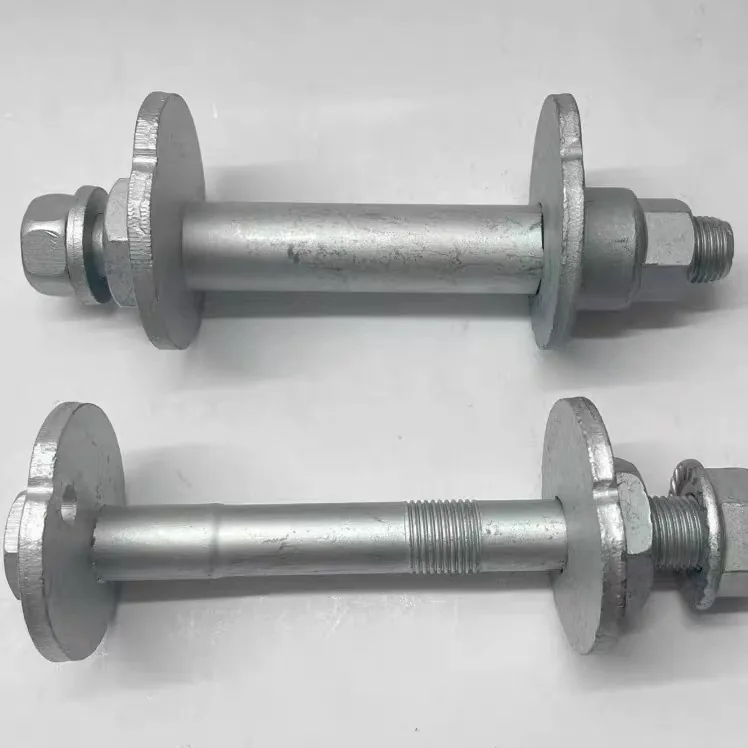
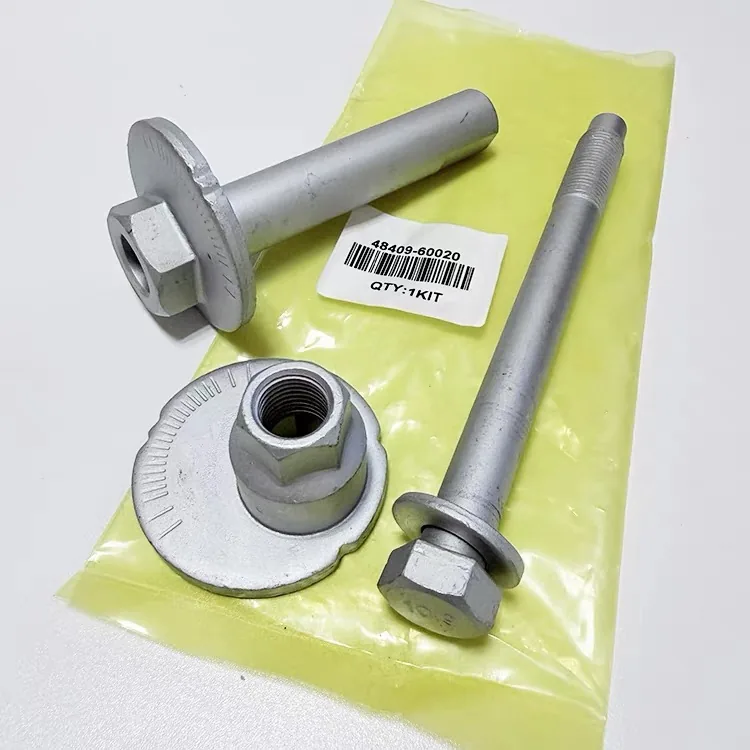
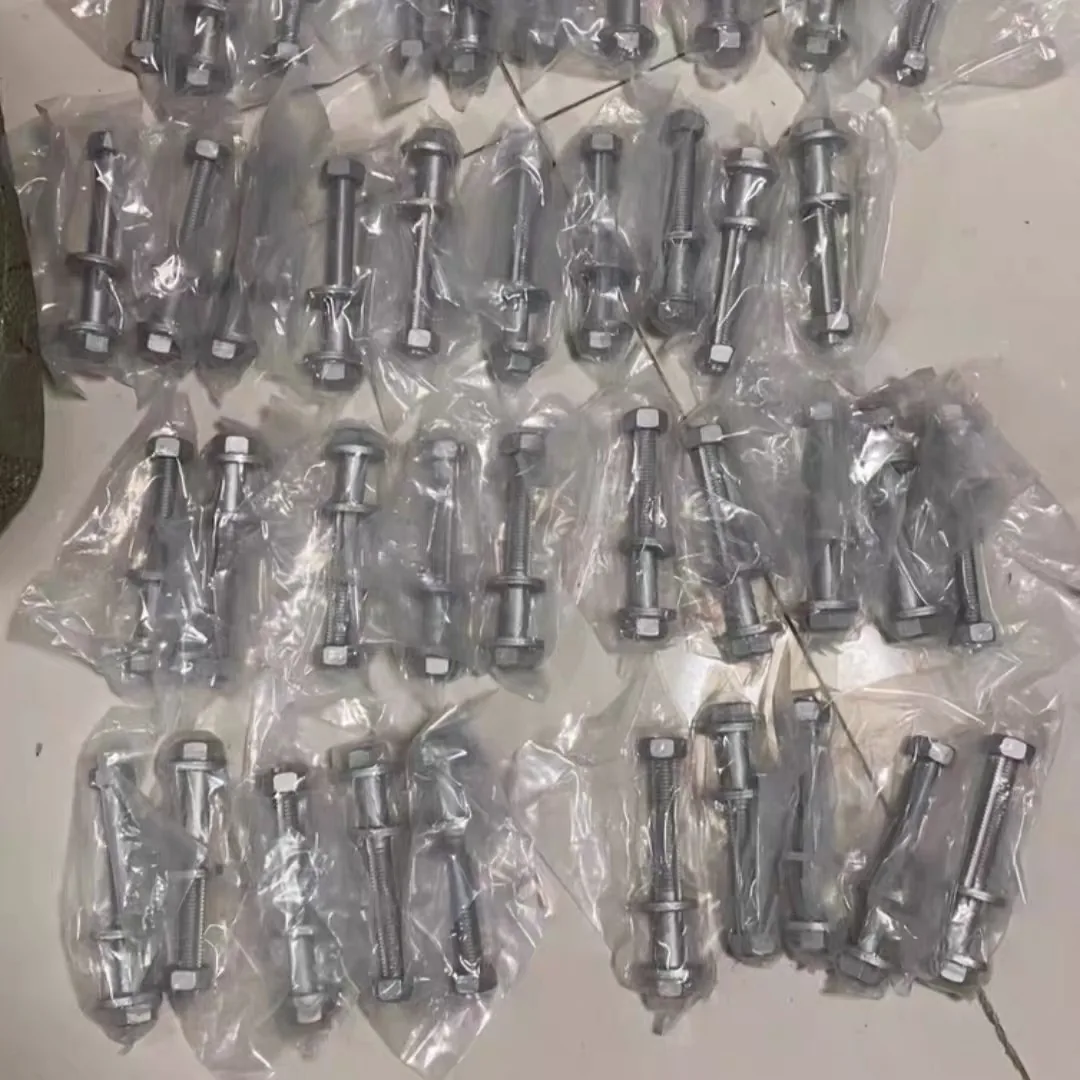
The OEM numbers, how much camber a given cam offset gives, and what to measure on an old kit are on camber bolt kits.
Ordering an Eccentric Bolt
For a maintenance team, one bolt to get a machine running again is a normal order. For a machine builder or a buyer, the same drawing carries into batches, and it is kept, so a reorder is quoted faster. Send a photo of the old bolt with a caliper in frame, or the bolt itself, with the material if you know it, the quantity and the delivery country. Quotes come back within 12 hours, from 1 piece. Other bolts copied from an old part are on replacement bolts from a sample, and the full range on custom fasteners.
Eccentric Bolt Questions
A bolt with one section of its shank on a different centre line from its thread. Turning it moves the part that section locates by up to twice the offset, so an assembly can be adjusted without shims or slotted holes, and the nut locks the setting.
Turn the bolt on its thread axis under a dial indicator touching the offset section: the total swing is twice the offset. With calipers only, measure the step height on the tall side and on the low side; the offset is half the difference.
A standard bolt can be turned off-centre for a single piece with a small offset, but the offset section has to fit inside the original shank. For a larger offset, a non-standard thread or length, or a batch, it is turned from bar and heat treated to its property class.
Yes. Send a photo with a caliper in frame, or the old bolt itself. We measure it, send an approval drawing and quote within 12 hours, from 1 piece.