// Reference · Across Flats & Hex Keys

Wrench Size Chart — Across Flats for Metric and Inch Bolts, Nuts and Socket Heads

An M10 hex bolt takes a 16 mm wrench — 17 mm if it is the older DIN 931 pattern — an M12 takes 18 mm (19 DIN), an M16 24 mm and an M20 30 mm. An M8 socket head cap screw takes a 6 mm hex key, an M10 an 8 mm key. A 1/2 in hex bolt takes a 3/4 in wrench, which is why a 19 mm spanner fits it. The charts below give every size from M1.6 to M64 and #4 to 1-1/2 in, the four sizes where DIN and ISO disagree, and which metric and SAE wrenches you can swap without rounding the head.

Download the chart as PDF ↓

Metric Wrench Size Chart — Hex Bolts and Nuts M1.6 to M64, Hex Keys for Socket Heads

Across flats s is the wrench size: the distance between two opposite flats of the hex head or nut. ISO 4014 (hex bolt, partial thread), ISO 4017 (hex screw, full thread) and ISO 4032 (hex nut) share one series; the DIN column shows the older DIN 931 / 933 / 934 value only where it differed. The last column is the hex key for a socket head cap screw of the same thread to ISO 4762 / DIN 912.

Width across flats (wrench size) and socket head hex key size, metric
ThreadAcross flats s — ISO 4014 / 4017 / 4032DIN 931 / 933 / 934Hex key — ISO 4762 cap screw
M1.63.2 mmsame1.5 mm
M24 mmsame1.5 mm
M2.55 mmsame2 mm
M35.5 mmsame2.5 mm
M47 mmsame3 mm
M58 mmsame4 mm
M610 mmsame5 mm
M813 mmsame6 mm
M1016 mm17 mm8 mm
M1218 mm19 mm10 mm
M1421 mm22 mm12 mm
M1624 mmsame14 mm
M1827 mmsame14 mm
M2030 mmsame17 mm
M2234 mm32 mm17 mm
M2436 mmsame19 mm
M2741 mmsame19 mm
M3046 mmsame22 mm
M3350 mmsame24 mm
M3655 mmsame27 mm
M3960 mmsame
M4265 mmsame
M4570 mmsame
M4875 mmsame
M5280 mmsame
M5685 mmsame
M6090 mmsame
M6495 mmsame

Across corners e (for pocket clearance) = s × 1.1547: an M12 head at 18 mm across flats is 20.78 mm across corners. Heavy hex and flange bolts, low-head cap screws, button and countersunk socket heads all use different sizes from this table — identify the head form first. A standard metric wrench set runs 6, 7, 8, 9, 10, 11, 12, 13, 14, 15, 16, 17, 18, 19, 21, 22, 24, 27, 30, 32, 36 mm; 15, 18 and 21 exist because old DIN sizes and nuts to other standards still circulate.

Inch Wrench Size Chart — Hex Cap Screws, Finished Hex Nuts and Socket Head Hex Keys

Inch hex cap screws (ASME B18.2.1) and finished hex nuts (ASME B18.2.2) share their across-flats: a 1/2 in bolt and a 1/2 in nut both take a 3/4 in wrench. Heavy hex nuts are 1/8 in wider — they have their own chart. Socket head cap screws follow ASME B18.3, and the smaller numbered sizes exist only in that form.

Inch across flats and hex key sizes, with millimetre equivalents
SizeHex head / nut across flats — ASME B18.2.1 / B18.2.2Hex key — ASME B18.3 socket head cap screw
#43/32 in (2.38 mm)
#67/64 in (2.78 mm)
#89/64 in (3.57 mm)
#105/32 in (3.97 mm)
1/47/16 in (11.11 mm)3/16 in (4.76 mm)
5/161/2 in (12.70 mm)1/4 in (6.35 mm)
3/89/16 in (14.29 mm)5/16 in (7.94 mm)
7/165/8 in (15.88 mm)3/8 in (9.53 mm)
1/23/4 in (19.05 mm)3/8 in (9.53 mm)
9/1613/16 in (20.64 mm)
5/815/16 in (23.81 mm)1/2 in (12.70 mm)
3/41-1/8 in (28.58 mm)5/8 in (15.88 mm)
7/81-5/16 in (33.34 mm)3/4 in (19.05 mm)
11-1/2 in (38.10 mm)3/4 in (19.05 mm)
1-1/81-11/16 in (42.86 mm)
1-1/41-7/8 in (47.63 mm)
1-3/82-1/16 in (52.39 mm)
1-1/22-1/4 in (57.15 mm)

A standard SAE wrench set runs 1/4, 5/16, 11/32, 3/8, 7/16, 1/2, 9/16, 5/8, 11/16, 3/4, 13/16, 7/8, 15/16, 1, 1-1/16, 1-1/8, 1-1/4 in. The 11/32 and 15/16 sizes are there for nuts and small hardware, not for hex cap screw heads in this table.

Metric ↔ SAE Wrench Equivalents — Which Swaps Round the Head

Every workshop swaps a 13 mm for a 1/2 in and a 19 mm for a 3/4 in. Whether that is safe is a matter of tenths of a millimetre: within 0.15 mm the two wrenches are the same tool; at 0.3 mm the wrench rides up the flat under torque and rounds the corners; beyond that it does not fit or it destroys the head. The table does the arithmetic once. Swapping the wrench never swaps the thread: the metric vs imperial thread chart lists the 44 metric and UNC / UNF pairs that look alike and do not mate.

Metric wrench sizes against the nearest SAE size, with the gap in mm
MetricNearest SAEGapInterchangeable?
8 mm5/16 in = 7.94 mm0.06 mmYes — within 0.15 mm, use either
10 mm3/8 in = 9.53 mm0.47 mmNo — too loose or does not fit
11 mm7/16 in = 11.11 mm0.11 mmYes — within 0.15 mm, use either
13 mm1/2 in = 12.70 mm0.30 mmNo — too loose or does not fit
14 mm9/16 in = 14.29 mm0.29 mmIn a pinch — fits, but rounds the corners under load
16 mm5/8 in = 15.88 mm0.12 mmYes — within 0.15 mm, use either
17 mm11/16 in = 17.46 mm0.46 mmNo — too loose or does not fit
19 mm3/4 in = 19.05 mm0.05 mmYes — within 0.15 mm, use either
21 mm13/16 in = 20.64 mm0.36 mmNo — too loose or does not fit
22 mm7/8 in = 22.23 mm0.23 mmIn a pinch — fits, but rounds the corners under load
24 mm15/16 in = 23.81 mm0.19 mmIn a pinch — fits, but rounds the corners under load
27 mm1-1/16 in = 26.99 mm0.01 mmYes — within 0.15 mm, use either
30 mm1-3/16 in = 30.16 mm0.16 mmIn a pinch — fits, but rounds the corners under load
32 mm1-1/4 in = 31.75 mm0.25 mmIn a pinch — fits, but rounds the corners under load
36 mm1-7/16 in = 36.51 mm0.51 mmNo — too loose or does not fit

DIN vs ISO — the Four Sizes Where the Wrench Changed

In 1992 the ISO series replaced the DIN series for hex bolts and nuts, and four across-flats moved: M10 from 17 to 16 mm, M12 from 19 to 18 mm, M14 from 22 to 21 mm, and M22 from 32 to 34 mm. M22 went up because ISO tidied the series to roughly 1.5 × d plus a step, and 32 mm sat under that line. If a 16 mm wrench rattles on an M10 head, the bolt is DIN — and the DIN size is now a special part, because the shelf holds ISO. Why that matters on an old machine, and what to do about it, is on the special fasteners page.

Hex bolt and nut across flats that changed from DIN 931 / 933 / 934 to ISO 4014 / 4017 / 4032
ThreadDINISOChangeNut height DIN 934 → ISO 4032
M1017 mm16 mm−1 mm8 → 8.4 mm
M1219 mm18 mm−1 mm10 → 10.8 mm
M1422 mm21 mm−1 mm11 → 12.8 mm
M2232 mm34 mm+2 mm18 → 19.4 mm

Nut heights rose across the whole ISO 4032 series, not only on these four: M16 13 → 14.8 mm, M20 16 → 18 mm, M24 19 → 21.5 mm. Where a stud was cut to the DIN nut, the ISO nut may run out of thread.

Materials for Machined Hex Heads, Nuts and Hex Parts

Materials we machine hex heads, nuts, standoffs and hex adapters from
MaterialUsed forWhat to know before you specify it
C45 / 42CrMo4 steel, class 8.8 / 10.9Bolts and nuts to strength classHead milled to any across-flats; the property class is set by the steel and heat treatment, not by the head.
304 (1.4301) stainlessWashdown, food, architectural hex partsSofter than steel: a wrench 0.3 mm oversize rounds a 304 head faster than an 8.8 head.
316 / 316L (1.4404) stainlessMarine, chemical, medicalGalling on stainless-on-stainless threads — specify an anti-seize or a dissimilar nut material.
Brass CW614N (C360)Electrical and instrument hex partsMachines fast and cleanly; head strength is low, so tighten by the brass torque, not the steel table.
6061-T6 aluminiumHex standoffs, spacers, enclosure hardwareAnodise for wear; an aluminium hex takes a steel wrench badly if the wrench is loose.
7075-T6 aluminiumHigh-strength aluminium hex nuts and adaptersNear mild steel in tensile strength; not weldable, so a damaged hex is remade, not repaired.

Where the Chart Stops — Heads and Nuts to an Across-Flats No Catalogue Lists

EKINSUN LTD is a custom parts manufacturer: hex bolts, large and special nuts and bolts to drawing are machined here with the head or hex your assembly actually needs, one piece up. The chart above is the standard case; the table below is honest about where the shelf is the better buy.

Across-flats and hex keys: what the shelf holds, and what has to be machined
What you needIn the catalogue?What we machine
A standard ISO hex bolt or nut in a standard across-flats, M3–M36Yes — genuinely stockedBuy it from stock. On a standard head no one-off can match that price, and we say so in the quote instead of taking the order.
The old DIN across-flats — 17 mm on M10, 19 on M12, 22 on M14, 32 on M22 — because the machine, the fixture or the sockets were built to itRare, and vanishingHead milled to the DIN width on a bolt of the same class and thread; nuts likewise, to DIN 934 height if the stud length needs it.
A reduced across-flats because the head sits in a pocket the standard hex does not fitNoHead milled to the pocket — typically one or two sizes down — with the bearing face kept, and the tightening torque re-checked for the smaller wrench.
A larger across-flats or a taller head for more tightening torque on a soft jointNoHead sized to the torque, bolt machined from bar so the head is one piece with the shank, no upset forging limit.
A hex socket in a size the standard skips — a 7 mm key in an M8, a 12 mm key in an M16 — to match the tools on siteNoSocket broached or milled to the key you have; cap, low-head or countersunk form to your drawing.
Two spanner flats instead of a hex, or a hex on a part that is not a bolt — an adapter, a standoff, a sensor bodyNoMilled in the same set-up as the turned features, so the flats stay square to the thread — the usual form on hex thread adapters.
A head you cannot identify — worn, painted, imported machineNoSend it. Across-flats, head height, thread and pitch are measured and the bolt reproduced — in the same across-flats or the one your sockets fit.
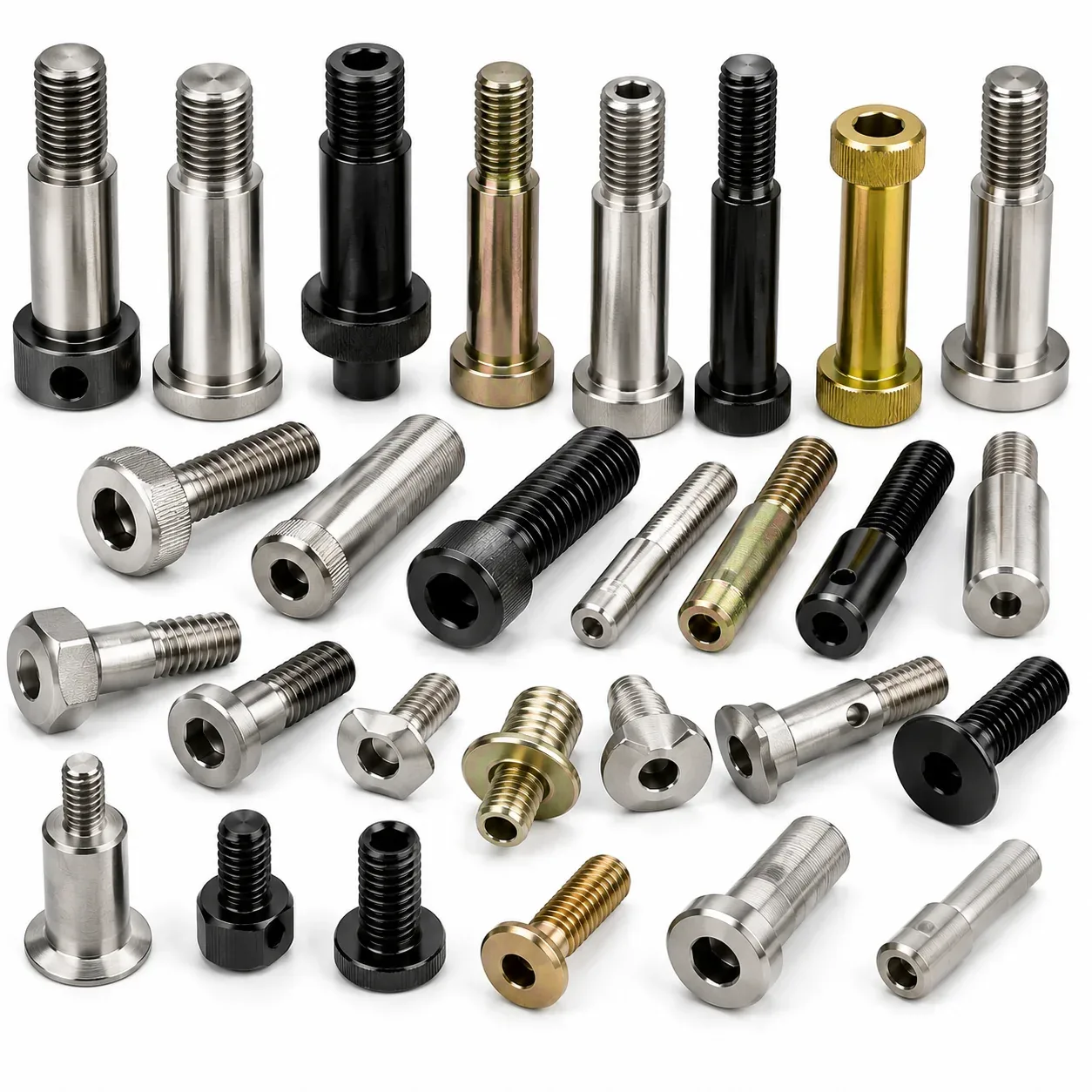
Custom machined hex bolts, studs and nuts with heads milled to non-standard across-flats, made by EKINSUN
Machined bolts and nuts — heads milled to the across-flats the assembly needs, hex or spanner flats in one set-up with the thread

Typical requests read like this: “I need 20 off M12 × 60 in 8.8 with the old 19 mm head — our torque sockets are all 19 and the ISO bolts slip.” Or: “Can you make an M16 nut 13 mm high? The ISO nut runs off the end of the stud.” A sketch with the thread, the across-flats and the head height is enough to quote. German-speaking engineers use the Schlüsselweiten-Tabelle, the same chart with the drawing notes in German.

Quick Answers by Size

What size wrench for an M6 bolt?

An M6 hex bolt or nut to ISO 4014 / 4032 takes a 10 mm wrench; DIN 931 used the same 10 mm. An M6 socket head cap screw takes a 5 mm hex key. Across corners is 11.55 mm, the clearance a pocket needs.

What size wrench for an M8 bolt?

An M8 hex bolt or nut takes a 13 mm wrench in both the ISO and the DIN series; an M8 socket head cap screw takes a 6 mm hex key. A 1/2 in wrench (12.70 mm) fits a 13 mm head in a pinch and rounds it under high torque.

What size wrench for an M10 bolt?

An M10 hex bolt or nut to ISO 4014 / 4032 takes a 16 mm wrench; the older DIN 931 / 934 pattern takes 17 mm. An M10 socket head cap screw takes an 8 mm hex key. If a 16 mm wrench rattles on your M10, the bolt is DIN.

What size wrench for an M12 bolt?

An M12 hex bolt or nut to ISO takes an 18 mm wrench; DIN 931 / 933 / 934 took 19 mm. An M12 socket head cap screw takes a 10 mm hex key. Across corners of the ISO head is 20.78 mm.

What size wrench for an M16 bolt?

An M16 hex bolt or nut takes a 24 mm wrench in both series; an M16 socket head cap screw takes a 14 mm hex key. The ISO 4032 nut is 14.8 mm high against 13 mm for DIN 934, which is where a short stud runs out of thread.

What size wrench for an M20 bolt?

An M20 hex bolt or nut takes a 30 mm wrench in both series; an M20 socket head cap screw takes a 17 mm hex key. A 1-3/16 in wrench (30.16 mm) is the SAE size that fits it.

What size wrench for a 1/2 inch bolt?

A 1/2 in hex cap screw or finished hex nut takes a 3/4 in wrench (19.05 mm) — a 19 mm wrench fits it within 0.05 mm. A 1/2 in heavy hex nut takes 7/8 in, and a 1/2 in socket head cap screw takes a 3/8 in hex key.

Related charts: metric bolt torque chart (the torque each head is tightened to), bolt grade chart (the class marked on the head), large hex nut dimensions M56–M160 and heavy hex nut dimensions 3/8–4 in.

Wrench Size FAQ

A 16 mm wrench for an ISO 4014 / 4017 hex bolt or ISO 4032 nut, which is what every catalogue ships today; a 17 mm wrench for the older DIN 931 / 933 / 934 pattern still found on machines built before the mid-1990s and in some stock. If a 16 mm wrench rattles on your M10, the bolt is DIN. The thread, the torque and the strength class are identical — only the head width differs.

Because 1/2 in is 12.70 mm, only 0.30 mm under 13 mm — close enough that a 1/2 in wrench fits a 13 mm head and a 13 mm wrench fits a 1/2 in head. It goes wrong under high torque: the 0.3 mm of play lets the wrench ride up the flat and round the corners, especially on soft or plated heads. The safe pairs are the ones within 0.15 mm — 8 mm and 5/16 in (7.94), 19 mm and 3/4 in (19.05), 27 mm and 1-1/16 in (26.99). 10 mm and 3/8 in (9.53) is not a pair at all.

A 6 mm hex key for ISO 4762 / DIN 912 socket head cap screws. The full series runs M3 → 2.5 mm, M4 → 3, M5 → 4, M6 → 5, M8 → 6, M10 → 8, M12 → 10, M16 → 14, M20 → 17, M24 → 19. Low-head, countersunk and button-head screws use smaller keys than the cap screw of the same thread — an M8 button head takes a 5 mm key — so identify the head form before you buy the key set.

M10 (17 → 16 mm), M12 (19 → 18 mm), M14 (22 → 21 mm) and M22 (32 → 34 mm). M22 went up because ISO tidied the series to roughly 1.5 times the diameter plus a step, and 32 mm sat under that line. Every other size from M1.6 to M64 kept its across-flats. Nut heights changed at the same time — an ISO 4032 M16 nut is 14.8 mm high against 13 mm for DIN 934 — which matters where a stud is cut short.

Put a caliper across two opposite flats, not across the corners, and read to 0.1 mm. 16.0 is ISO M10; 17.0 is DIN M10 — or a 17 mm head on something else, so check the thread with a pitch gauge too. Corner-to-corner (across corners) is the across-flats × 1.1547 and is only useful for checking clearance in a pocket. For inch bolts measure in decimals and match the mm column of the inch table: 19.05 mm is a 3/4 in wrench size, so the bolt is 1/2 in, not M12.

EKINSUN LTD is a custom parts manufacturer: hex heads and nuts milled to the old DIN across-flats, to a reduced width for a tight pocket, to a larger width for more tightening torque, or to whatever spanner your maintenance crew already carries — in steel class 8.8 or 10.9, A2 / A4 stainless, brass or aluminium, from a drawing, a sketch or the worn part, MOQ 1, quote in 12 hours. For a standard head in a standard size, buy it from stock; no one-off can match that price.

Head Doesn’t Fit the Pocket — or the Spanner?

DIN across-flats on an ISO bolt, a reduced hex for a tight pocket, a hex socket in the key size your crew carries — machined to your drawing or from the worn part. MOQ 1, quote in 12 hours. Start with hex bolts or special fasteners.

Get a Quote →