The 30-Second Answer
Order the alloy the shop's continent stocks and have it named on the quote. 6082-T6 meets every 6061-T6 minimum, so a functional part drawn in 6061 can be made in 6082 without redesign; a part drawn in 6082 and made in 6061-T6 gives up about 6 % tensile strength at the same yield. The three places where the two are not interchangeable are anodised assemblies (different tone), thermal parts (6061 conducts about 6 % more heat) and drawings whose title block ties the alloy to a certificate. Names elsewhere: 6061 is EN AW-6061 / AlMg1SiCu / 3.3211 / A6061; 6082 is EN AW-6082 / AlSi1MgMn / old DIN AlMgSi1 / 3.2315 / AFNOR A-SGM0,7, with no JIS twin — the crosswalk with eight more alloys is on the aluminium alloy equivalents chart.
The Numbers That Matter — 6061-T6 Against 6082-T6
Typical values from the same database for both alloys, with the bar minimums that a certificate has to reach on the third row. The pattern is the whole story: 6082 wins a few percent in tension and shear, 6061 wins a few percent in conductivity, and everything a designer sizes a part on — yield strength, modulus, hardness, fatigue, density — is the same.
| Property | 6061-T6 | 6082-T6 | What it means for the part |
|---|---|---|---|
| Tensile strength, typical T6 | 310 MPa | 330 MPa | 6082 is about 6 % stronger in tension |
| Yield strength, typical T6 | 270 MPa | 270 MPa | identical — the number a designer uses |
| Bar minimums, T6 (ASTM B211 / EN 755-2) | 290 / 240 MPa | 310 / 270 MPa | guaranteed values, what a certificate must reach |
| Elongation at break | 10 % | 9.8 % | same ductility |
| Brinell hardness | 93 HB | 93 HB | same tool wear, same anodising response |
| Shear strength | 210 MPa | 220 MPa | pins and dowels: no practical difference |
| Fatigue strength | 96 MPa | 95 MPa | same cyclic rating |
| Elastic modulus | 69 GPa | 69 GPa | same stiffness — deflection does not change |
| Thermal conductivity | 170 W/m·K | 160 W/m·K | 6061 carries about 6 % more heat: heat sinks and cold plates |
| Thermal expansion | 24 µm/m·K | 23 µm/m·K | no practical difference in a fit |
| Electrical conductivity | 43 % IACS | 42 % IACS | same for busbars and enclosures |
| Density | 2.70 g/cm³ | 2.70 g/cm³ | same weight |
Need a part machined in 6061 or 6082 aluminium? EKINSUN is a custom parts manufacturer: we machine parts in 6061 or 6082 aluminium to your drawing, sketch or sample, from 1 piece, with a material certificate on request and a quote in 12 hours. If the size is standard, ask anyway — it may be in stock, and the unit price drops as the quantity rises. How ordering without CAD works →
Composition — Where the Two Alloys Differ (mass %)
Both are Al-Mg-Si alloys hardened by Mg₂Si. 6061 adds copper and chromium, 6082 adds silicon and manganese; that is the entire chemical difference, and it is why the anodised tone and the conductivity differ while the strength barely does.
| Element | 6061 | 6082 | Role |
|---|---|---|---|
| Si | 0.40–0.8 | 0.7–1.3 | 6082's silicon is what raises its T6 strength |
| Fe | ≤ 0.7 | ≤ 0.50 | both impurity limits |
| Cu | 0.15–0.40 | ≤ 0.10 | 6061's copper: a little more strength, a little less corrosion resistance, no effect on machining |
| Mn | ≤ 0.15 | 0.40–1.0 | 6082's manganese: grain control in extrusion |
| Mg | 0.8–1.2 | 0.6–1.2 | the hardening element in both |
| Cr | 0.04–0.35 | ≤ 0.25 | 6061 only |
| Zn | ≤ 0.25 | ≤ 0.20 | impurity limit |
| Ti | ≤ 0.15 | ≤ 0.10 | grain refiner |
On the Machine — How They Cut
The same. Both are rated good for machining, both are 93 HB in T6, both take the same carbide tooling at the same speeds and feeds, both hold the same tolerances (ISO 2768-m as standard, ISO 2768-f and H7 bores on request) and both reach the same surface finish. Chip form, burr behaviour and thread tapping are indistinguishable on the floor; a shop that runs 6082 all week runs a 6061 drawing without changing a parameter. The one machining difference is in the plate: 6061-T651 is stress-relieved by stretching and stays flat after heavy material removal, which is why flat machined parts above about 50 mm are cut from 6061-T651 plate on both continents, whatever the drawing says about bar.
Anodising, Welding and Corrosion
Anodising. Same process, same coating thickness, same clear and colour response — and a visibly different tone: 6082's extra silicon gives a greyer, slightly darker anodised surface than 6061. The rule is one alloy per visible assembly.
Welding. Both weld with 4043 or 5356 filler and both drop to roughly O-temper strength in the heat-affected zone, so a welded 6xxx frame is designed on about 110–150 MPa, not on T6; there is no difference between the two here.
Corrosion. Both are good in atmosphere and fresh water; 6082's lower copper (≤ 0.10 % against 0.15–0.40 %) gives it a small edge in marine spray, and neither is a 5083 substitute in seawater.
Temperature. Both keep their T6 strength to about 100 °C and lose it above about 170 °C; identical service limits.
Decision Guide by Part
| Part | 6061 or 6082? | Why |
|---|---|---|
| Brackets, housings, machined blocks, spacers, flanges | Either | Make it in the continent's stock alloy and name it on the quote; nothing in the part changes. |
| Heat sinks, cold plates, thermal spreaders | 6061 preferred | 170 against 160 W/m·K; a plate sized on 6061 in a European shop is quoted in 6061 plate (T651) or the 6 % is put in writing. |
| Anodised parts in one visible assembly | One alloy only | Whichever it is, all parts from the same alloy and ideally the same batch; the two tones do not match. |
| Welded frames and fabrications | Either | Both weld with 4043 / 5356 and both lose the T6 strength in the heat-affected zone; design on the O-temper value, not on T6. |
| Parts with a certification requirement in the title block | As drawn | The alloy on the drawing is the alloy on the certificate; a substitution needs the customer's written agreement first. |
| Thick plate, stress-relieved (T651) for flat machined parts | 6061 in Europe too | 6061-T651 plate is the European stock for flat parts; 6082 plate exists but 6061 is what the stockholder has above about 50 mm. |
What We See in Real Orders
The request that arrives most often is a German or French buyer holding a US drawing: “the drawing says 6061-T6, our stockholder only carries AlMgSi1 — can you make it in that?” Yes, and the quote says 6082-T6 (Si 0.7–1.3 %, bar 310 / 270 MPa) so that the certificate matches the part. The reverse arrives from US buyers with European drawings in 6082 for parts to be made in Asia, where 6061 bar is on the shelf: the part is machined in 6061-T6, and the 6 % tensile difference and the anodising note go on the quote before the bar is cut. Parts in either alloy — brackets, heat sinks, spacers, enclosures — follow the same route; a hand sketch with the main dimensions is enough to start.
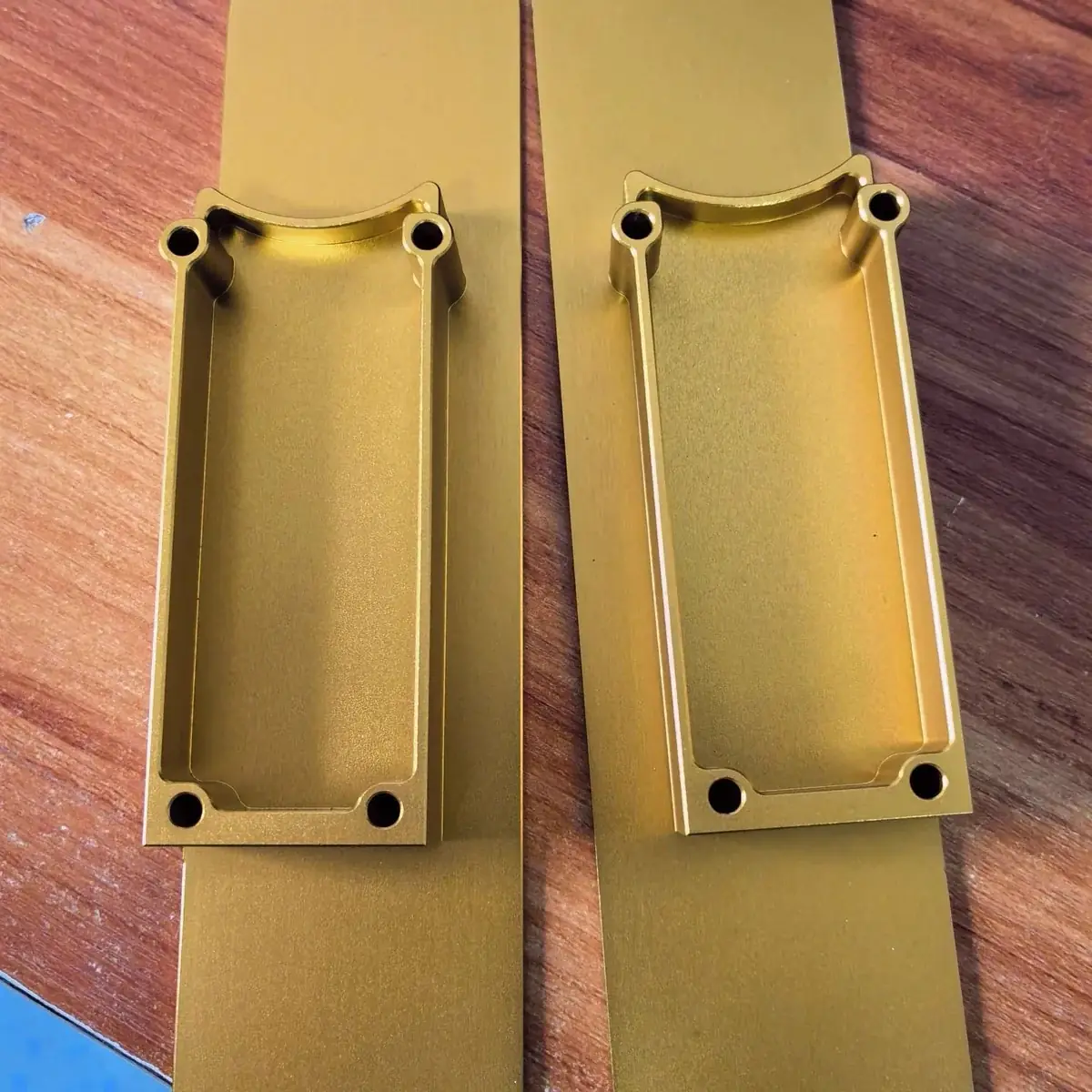
| What you need | In the catalogue? | What we machine |
|---|---|---|
| 6061 or 6082 bar and plate for your own shop | Yes — every stockholder | Buy it from stock: 6082 bar in Europe, 6061 bar in the US and Asia, 6061-T651 plate everywhere. A stockholder cuts to length for less than any machined blank, and we say so in the quote. Standard parts: ask us too — we may have them in stock. |
| A bracket, housing or spacer drawn in 6061-T6 for delivery in Europe, or drawn in 6082-T6 for delivery in the US | No | Machined in the shop's stock alloy with the alloy named on the quote before machining and on the 3.1 certificate after it, or in the drawn alloy when the drawing insists; see custom brackets and the aluminium flange plate batch. |
| A cooling plate or heat sink sized on 6061's conductivity, ordered in Europe | No | Machined from 6061-T651 plate, or from 6082 with the 6 % conductivity difference in writing; see the cooling plate case and custom heat sinks. |
| A set of anodised parts, some drawn in 6061 and some in 6082, for one enclosure | No | Made from one alloy for the whole set and anodised in one batch; the quote says which alloy and why — see the mirror-finish motor clamp. |
Related pages: aluminium alloy equivalents (10 alloys, AA / EN AW / DIN / JIS / GB), 6061 machining, 6061 vs 7075, aluminium machining, and the material grade equivalents hub, where the other families sit — stainless steels (304 / 1.4301, 316L / 1.4404) and brass (CuZn39Pb3 / C360) among them.
6061 vs 6082 FAQ
Slightly, in tension: typical 6082-T6 is 330 MPa against 310 MPa for 6061-T6, and the bar minimums are 310 / 270 MPa against 290 / 240 MPa (tensile / yield). The typical yield strength is the same at 270 MPa and the elastic modulus is the same at 69 GPa, so a part designed in 6061 does not deflect or yield differently when made in 6082. Hardness (93 HB), fatigue (96 vs 95 MPa) and shear (210 vs 220 MPa) are within a few percent of each other.
For a functional machined part, yes, upward: 6082-T6 meets or exceeds every 6061-T6 minimum. Three cases need the buyer's agreement first: a part that is anodised and sits next to 6061 parts in one visible assembly (the tone differs), a heat sink or cold plate sized on 6061's conductivity (6082 carries about 6 % less heat), and any drawing whose title block names the alloy for certification reasons. The quote states the alloy used and the certificate follows; a 6082 part shipped against a 6061 certificate is a substitution nobody approved.
History and standards: 6082 (old DIN AlMgSi1, AFNOR A-SGM0,7, BS H30) was developed in Europe as the structural and machining alloy and is what EN 755 / EN 573 mills produce in bar, while 6061 grew up in the US under ASTM B211 / B221. European stockholders carry 6082 bar in every size and 6061 mainly as plate (often T651, stress-relieved); US and Asian stockholders carry 6061 bar and rarely 6082. Neither is scarce on its own continent, so a drawing that names the wrong one for the shop's location just needs a sentence on the quote.
Same process, different tone. Both are 6xxx alloys with low copper, take clear and coloured anodising evenly and reach the same coating thickness; but 6082's extra silicon gives the anodised surface a slightly greyer, darker cast than 6061's. Parts of one assembly that will be seen together are made from one alloy, and the quote says which.
Neither, to a measurable degree: both are rated good for machining, both cut at the same speeds with the same tooling, both hold the same tolerances and reach the same surface finish, and both are 93 HB in T6. The choice between them is made by the drawing and the stock, not by the machine.
6061: EN AW-6061, AlMg1SiCu, Werkstoff 3.3211, AFNOR A-GSUC, JIS A6061, GB 6061 (legacy LD30). 6082: EN AW-6082, AlSi1MgMn, old DIN AlMgSi1, Werkstoff 3.2315, AFNOR A-SGM0,7, BS H30 / HE30, GB 6082 — and no JIS registration. The full crosswalk of ten wrought alloys is on the aluminium alloy equivalents chart.
EKINSUN LTD is a custom parts manufacturer that machines brackets, housings, cooling plates, heat sinks, spacers, flanges and enclosures in 6061-T6 / T651 and 6082-T6 from one piece, from a drawing written in either name, a sketch or the worn part. The quote states which alloy and temper the part is made in and any difference from the drawing; the EN 10204 3.1 certificate names the alloy actually used. Quote in 12 hours.