The Crosswalk — 14 Stainless Grades Across AISI, EN, JIS, GB and BS
Of the 14 grades, 9 pairs are direct equivalents whose ASTM and EN bands overlap on every element, 4 are nearest equivalents that differ in one band (carbon or molybdenum), and 1 — the US “420” — is a substitute because the other systems split it into three grades. The last column of the ISO 3506 class is there because fastener drawings say A2 or A4 instead of a grade. Chinese names are given new-style (GB/T 20878-2007) with the old GB/T 1220-1992 name in brackets, since a mill certificate can print either.
EKINSUN LTD machines fittings, adapters, shafts, spacers, flanges, sensor bodies and fasteners in every austenitic, martensitic and PH grade in the chart from one piece — from a drawing written in AISI, EN, JIS or GB names, a sketch or the worn part. This page is part of the material grade equivalents series.
| AISI | UNS | EN 10088 name (number) | JIS | GB new (old) | BS | ISO 3506 | Equivalence |
|---|---|---|---|---|---|---|---|
| Austenitic 18-8 (the default stainless) | |||||||
| 304 | S30400 | X5CrNi18-10 (1.4301) | SUS304 | 06Cr19Ni10 (0Cr18Ni9) | 304S31 | A2 | direct: the bands overlap on every element and European mills certify the same bar to both 1. |
| 304L | S30403 | X2CrNi18-9 (also X2CrNi19-11) (1.4307 (also 1.4306)) | SUS304L | 022Cr19Ni10 (00Cr19Ni10 / 00Cr18Ni9) | 304S11 | A2 | direct: 1. |
| 303 | S30300 | X8CrNiS18-9 (1.4305) | SUS303 | Y12Cr18Ni9 (Y1Cr18Ni9) | 303S31 | A1 | direct: the free-machining 18-8: sulphur 0. |
| Austenitic 18-10-2 with molybdenum (marine, chemical, medical) | |||||||
| 316 | S31600 | X5CrNiMo17-12-2 (1.4401) | SUS316 | 06Cr17Ni12Mo2 (0Cr17Ni12Mo2) | 316S31 | A4 | nearest: the molybdenum bands differ: 1. |
| 316L | S31603 | X2CrNiMo17-12-2 (high-Mo: X2CrNiMo18-14-3) (1.4404 (high-Mo: 1.4435)) | SUS316L | 022Cr17Ni12Mo2 (00Cr17Ni14Mo2) | 316S11 | A4 | nearest: same molybdenum split as 316: 1. |
| 316Ti | S31635 | X6CrNiMoTi17-12-2 (1.4571) | — | 06Cr17Ni12Mo2Ti | 320S31 | A5 | nearest: 1. |
| 321 | S32100 | X6CrNiTi18-10 (1.4541) | SUS321 | 06Cr18Ni11Ti (0Cr18Ni11Ti) | 321S31 | A3 | direct: the titanium-stabilised 304 for parts that run at 400-800 °C (exhaust flanges, furnace fittings); identical bands in ASTM and EN 10088. |
| Ferritic and martensitic chromium steels | |||||||
| 430 | S43000 | X6Cr17 (1.4016) | SUS430 | 10Cr17 (1Cr17) | 430S17 | F1 | nearest: the magnetic, non-hardenable 17 % chromium steel of trim and appliance parts; EN caps carbon at 0. |
| 410 | S41000 | X12Cr13 (1.4006) | SUS410 | 12Cr13 (1Cr13) | 410S21 | C1 | direct: the hardenable 13 % chromium steel for valve stems, pump shafts and fasteners; hardened and tempered to about 35-40 HRC in every system. |
| 420 | S42000 | X20Cr13 / X30Cr13 / X46Cr13 (1.4021 / 1.4028 / 1.4034) | SUS420J1 / SUS420J2 | 20Cr13 / 30Cr13 / 40Cr13 (2Cr13 / 3Cr13 / 4Cr13) | 420S29 / 420S37 / 420S45 | C4 (std) | substitute: the US name 420 is one open carbon band ('0. |
| 440C | S44004 | X105CrMo17 (1.4125) | SUS440C | 108Cr17 (11Cr17) | — | — | direct: the bearing and knife-blade stainless, 58-60 HRC after hardening; EN requires molybdenum 0. |
| Precipitation-hardening and duplex | |||||||
| 17-4 PH (630) | S17400 | X5CrNiCuNb16-4 (1.4542) | SUS630 | 05Cr17Ni4Cu4Nb (0Cr17Ni4Cu4Nb) | — | — | direct: the same alloy in every system; what differs is the condition code: US drawings say H900 / H1025 / H1150, EN drawings say P960 / P1070 (the number is the minimum tensile in MPa), and a part is ordered by that condition, not by the name alone. |
| 2205 (duplex) | S31803 / S32205 | X2CrNiMoN22-5-3 (1.4462) | SUS329J3L | 022Cr22Ni5Mo3N / 022Cr23Ni5Mo3N (00Cr22Ni5Mo3N) | 318S13 | D (std) | direct to S31803: 1. |
| 904L | N08904 | X1NiCrMoCu25-20-5 (1.4539) | — | 015Cr21Ni26Mo5Cu2 (00Cr20Ni25Mo4.5Cu) | 904S13 | — | direct: the super-austenitic for sulphuric acid and seawater; EN 1. |
316Ti has no JIS G4303 bar grade and 904L none either; the cells stay blank rather than guessed. 1.4306 (X2CrNi19-11) is listed inside the 304L row: it is the older German 304L with Ni 10.0–12.0 % and still appears on drawings. Bands and names come from the pages listed in the dataset’s source list (MakeItFrom ASTM and EN pages, AZoM, JIS G4303, GB/T 20878, the Chinese Wikipedia comparison table for the old GB names).
Need a part machined in 304, 316L, 303 or its equivalent stainless grade? EKINSUN is a custom parts manufacturer: we machine parts in 304, 316L, 303 or its equivalent stainless grade to your drawing, sketch or sample, from 1 piece, with a material certificate on request and a quote in 12 hours. Standard sizes can often be supplied from stock; the more pieces, the lower the unit price. How ordering without CAD works →
Composition Bands — ASTM and EN Side by Side (mass %)
Each cell shows the US band first (ASTM A276 / A240 / A582) and the EN 10088 band under it. Where the two lines agree the names are the same steel; where they differ — C ≤ 0.08 against ≤ 0.07 % in 304 / 1.4301, Mo 2.00–3.00 against 2.0–2.5 % in 316 / 1.4401 — one grade always satisfies the other and the reverse is not guaranteed on paper, which is exactly the case a certificate has to settle.
| Grade | C | Cr | Ni | Mo | Other |
|---|---|---|---|---|---|
| 304 1.4301 | US ≤ 0.08 EN ≤ 0.07 | US 18.0–20.0 EN 17.5–19.5 | US 8.0–10.5 EN 8.0–10.5 | US — EN — | US Mn ≤ 2.0, Si ≤ 0.75, N ≤ 0.10 EN Mn ≤ 2.0, Si ≤ 1.0, N ≤ 0.10 |
| 304L 1.4307 | US ≤ 0.030 EN ≤ 0.030 | US 18.0–20.0 EN 17.5–19.5 | US 8.0–12.0 EN 8.0–10.5 | US — EN — | US Mn ≤ 2.0, Si ≤ 0.75, N ≤ 0.10 EN Mn ≤ 2.0, Si ≤ 1.0, N ≤ 0.10 (1.4306: Cr 18.0–20.0, Ni 10.0–12.0) |
| 303 1.4305 | US ≤ 0.15 EN ≤ 0.10 | US 17.0–19.0 EN 17.0–19.0 | US 8.0–10.0 EN 8.0–10.0 | US ≤ 0.60 (ASTM A582) EN — | US S ≥ 0.15, P ≤ 0.20, Mn ≤ 2.0 EN S 0.15–0.35, Cu ≤ 1.0, Mn ≤ 2.0 |
| 316 1.4401 | US ≤ 0.08 EN ≤ 0.07 | US 16.0–18.0 EN 16.5–18.5 | US 10.0–14.0 EN 10.0–13.0 | US 2.00–3.00 EN 2.0–2.5 | US Mn ≤ 2.0, Si ≤ 0.75, N ≤ 0.10 EN Mn ≤ 2.0, Si ≤ 1.0, N ≤ 0.10 |
| 316L 1.4404 | US ≤ 0.030 EN ≤ 0.030 | US 16.0–18.0 EN 16.5–18.5 | US 10.0–14.0 EN 10.0–13.0 | US 2.00–3.00 EN 2.0–2.5 | US Mn ≤ 2.0, Si ≤ 0.75, N ≤ 0.10 EN Mn ≤ 2.0, Si ≤ 1.0, N ≤ 0.10 (1.4435: Cr 17.0–19.0, Ni 12.5–15.0, Mo 2.5–3.0, std) |
| 316Ti 1.4571 | US ≤ 0.08 EN ≤ 0.08 | US 16.0–18.0 EN 16.5–18.5 | US 10.0–14.0 EN 10.5–13.5 | US 2.00–3.00 EN 2.0–2.5 | US Ti 5xC-0.70 (std) EN Ti 5xC-0.70, Mn ≤ 2.0, Si ≤ 1.0 |
| 321 1.4541 | US ≤ 0.08 EN ≤ 0.08 | US 17.0–19.0 EN 17.0–19.0 | US 9.0–12.0 EN 9.0–12.0 | US — EN — | US Ti 5xC-0.70 (std) EN Ti 5xC-0.70 (std) |
| 430 1.4016 | US ≤ 0.12 EN ≤ 0.08 | US 16.0–18.0 EN 16.0–18.0 | US ≤ 0.75 EN — | US — EN — | US Mn ≤ 1.0, Si ≤ 1.0 (std) EN Mn ≤ 1.0, Si ≤ 1.0 (std) |
| 410 1.4006 | US 0.08–0.15 EN 0.08–0.15 | US 11.5–13.5 EN 11.5–13.5 | US ≤ 0.75 EN ≤ 0.75 | US — EN — | US Mn ≤ 1.0, Si ≤ 1.0 (std) EN Mn ≤ 1.5, Si ≤ 1.0 (std) |
| 420 1.4021 / 1.4028 / 1.4034 | US ≥ 0.15 EN 0.16–0.25 / 0.26–0.35 / 0.43–0.50 | US 12.0–14.0 EN 12.0–14.0 | US — EN — | US — EN — | US Mn ≤ 1.0, Si ≤ 1.0 (std) EN Mn ≤ 1.5, Si ≤ 1.0 (std) |
| 440C 1.4125 | US 0.95–1.20 EN 0.95–1.20 | US 16.0–18.0 EN 16.0–18.0 | US — EN — | US ≤ 0.75 EN 0.40–0.80 | US Mn ≤ 1.0, Si ≤ 1.0 (std) EN Mn ≤ 1.0, Si ≤ 1.0 (std) |
| 17-4 PH (630) 1.4542 | US ≤ 0.07 EN ≤ 0.07 | US 15.0–17.5 EN 15.0–17.0 | US 3.0–5.0 EN 3.0–5.0 | US — EN ≤ 0.60 (std) | US Cu 3.0–5.0, Nb 0.15–0.45 EN Cu 3.0–5.0, Nb 5xC-0.45 (std) |
| 2205 (duplex) 1.4462 | US ≤ 0.030 EN ≤ 0.030 | US 21.0–23.0 (S32205: 22.0–23.0) EN 21.0–23.0 | US 4.5–6.5 EN 4.5–6.5 | US 2.5–3.5 (S32205: 3.0–3.5) EN 2.5–3.5 | US N 0.08–0.20 (S32205: 0.14–0.20) (std) EN N 0.10–0.22 (std) |
| 904L 1.4539 | US ≤ 0.020 EN ≤ 0.020 | US 19.0–23.0 EN 19.0–21.0 | US 23.0–28.0 EN 24.0–26.0 | US 4.0–5.0 EN 4.0–5.0 | US Cu 1.0–2.0 (std) EN Cu 1.2–2.0 (std) |
The Drawing Says… — What We Make the Part In
This is the column no stockholder chart has. A drawing arrives in one country’s names and the part is machined where a different name is on the bar; the table says, grade by grade, what the part is made in and what — if anything — changes. The rule behind every row: the grade actually used is written on the quote before machining and on the EN 10204 3.1 certificate after it.
| The drawing says | What we make it in — and what changes |
|---|---|
| 304 or SUS304 or 06Cr19Ni10 | made in 1.4301 / 304 dual-certified bar; nothing changes for a machined part. |
| 304L, 1.4306 or 022Cr19Ni10 | made in 1.4307 / 304L; if the drawing insists on 1.4306 we source 1.4306 and say so. |
| 303, SUS303 or Y12Cr18Ni9 | made in 1.4305 / 303; screw-machine parts, fittings and turned pins are quoted in this grade unless the drawing forbids sulphur. |
| 316, SUS316 or 06Cr17Ni12Mo2 | made in 1.4401 / 316 dual-certified bar; if the drawing or the PED / NACE note calls for Mo above 2.5 %, we quote 1.4436 (Mo 2.5–3.0 %) instead and say so. |
| 316L, SUS316L or 022Cr17Ni12Mo2 | made in 1.4404 / 316L dual-certified bar; a drawing note 'Mo ≥ 2.5 %' or '1.4435' switches the order to 1.4435. |
| 1.4571 or 316Ti | made in 1.4571 when the drawing is European and the part is welded or runs hot; for a machined-only part we propose 1.4404 / 316L and put the change on the quote. |
| 321, SUS321 or 06Cr18Ni11Ti | made in 1.4541 / 321; no change. |
| 430, SUS430 or 10Cr17 | made in 1.4016 / 430; no change for a machined part. |
| 410, SUS410 or 12Cr13 | made in 1.4006 / 410; the heat-treatment condition on the drawing (annealed or QT) decides the bar we order, not the name. |
| 420 | we ask for the target hardness and pick 1.4021, 1.4028 or 1.4034 (20Cr13 / 30Cr13 / 40Cr13) to reach it; the grade used is named on the quote and the certificate. |
| 440C, SUS440C or 108Cr17 | made in 1.4125 / 440C, hardened and ground; no change. |
| 17-4 PH H1025 or 1.4542 P960 or 05Cr17Ni4Cu4Nb | made in 1.4542 / 17-4 PH and aged to the stated condition; we convert H-code to P-code on the quote so both sides read the same strength. |
| 2205, 1.4462 or 022Cr22Ni5Mo3N | made in 1.4462 dual-certified to S31803 / S32205 where the drawing asks for it. |
| 904L or 1.4539 | made in 1.4539 / 904L; lead time is set by bar availability, which we confirm before quoting. |
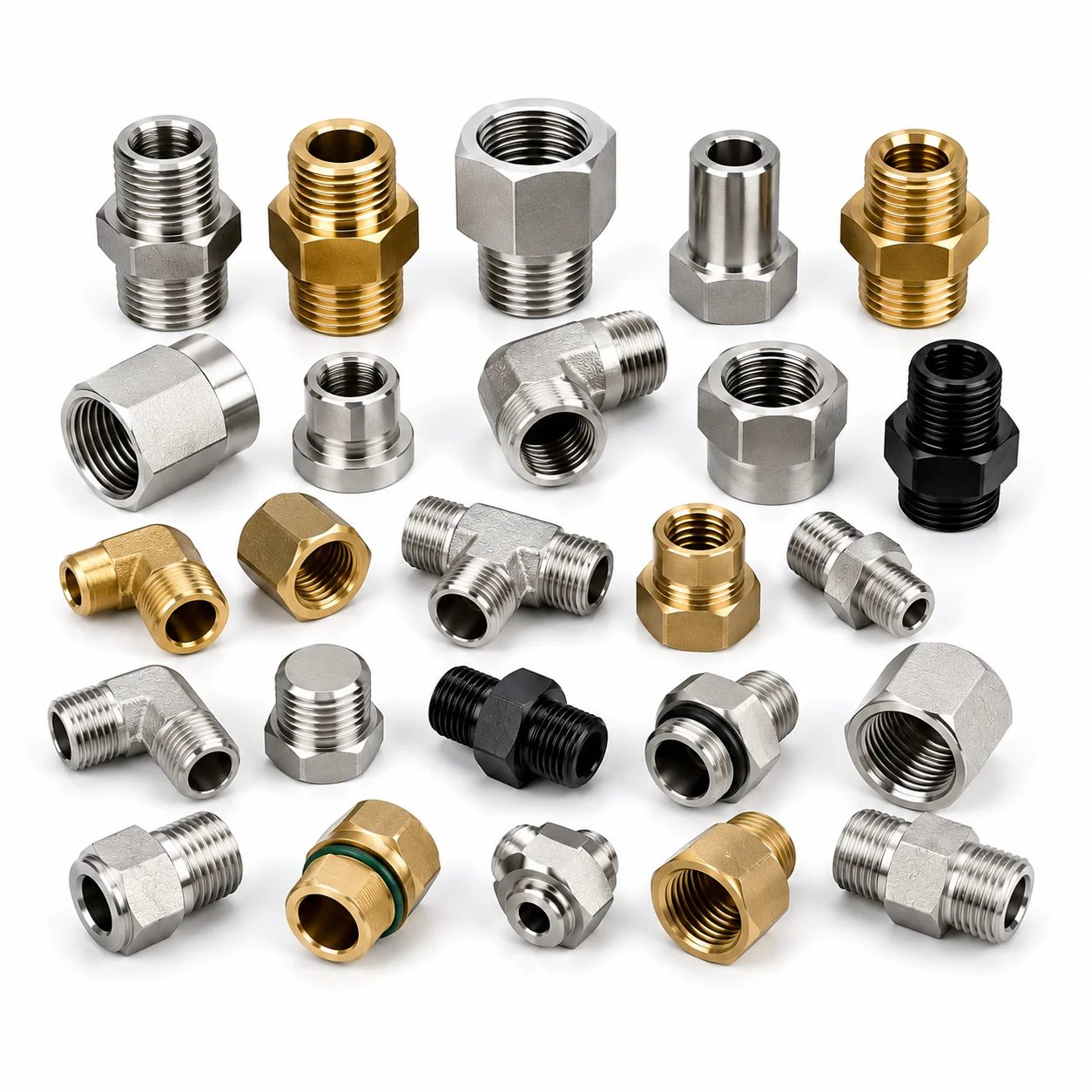
Two requests from the inbox show the two directions. A German buyer: “the drawing says 1.4571, does the part have to be 316Ti?” — for a machined, unwelded part, 1.4404 / 316L gives the same weld-decay resistance through low carbon, machines cleaner and is stocked everywhere, so the quote proposes it and the buyer decides. A US maintenance buyer: “the old part is 316, our new supplier in Europe quotes 1.4401 — same thing?” — yes for the part, with the Mo band 2.0–2.5 % against 2.00–3.00 % named on the certificate. Custom adapters and fittings, shafts, spacers and brackets in these grades follow the same route; a hand sketch with the main dimensions is enough to start.
Four Traps — Where a Name Match Is Not a Material Match
Trap 1 — the molybdenum split. ASTM 316 and 316L allow Mo 2.00–3.00 %; EN 1.4401 and 1.4404 allow 2.0–2.5 %. A specification that says “316L, Mo 2.5 % min” (pharma, offshore, some implant specs) is met by 1.4435 or 1.4436, not by ordinary 1.4404 stock.
Trap 2 — the carbon gap. EN caps 1.4301 and 1.4401 at C ≤ 0.07 %, ASTM caps 304 and 316 at ≤ 0.08 %. European bar always meets the US grade; a US heat at 0.075 % C meets 304 and fails 1.4301 on paper. Harmless for a machined part, decisive for a certificate audit.
Trap 3 — “420” is three grades. The US name is one open carbon band; EN, JIS and GB split it into 1.4021 / 1.4028 / 1.4034 (SUS420J1 / J2; 20Cr13 / 30Cr13 / 40Cr13) with hardness limits of about 45, 50 and 55 HRC. A drawing that says “420, harden” is under-specified until the hardness is on it.
Trap 4 — a class is not a grade. A2-70 and A4-80 are ISO 3506 fastener classes (304-type and 316-type at 700 and 800 MPa). They tell you the strength of a screw, not the grade of a machined part; the drawing needs 1.4301 / 304 or 1.4404 / 316L.
Rules and Condition Codes — What the Names Do Not Tell You
| Fact | Value | Standard / source |
|---|---|---|
| Dual certification | European stockholders sell austenitic bar certified to both the EN 10088-3 grade and the ASTM grade on one certificate (1.4301 / 304, 1.4307 / 304L, 1.4404 / 316L); a part made from that bar satisfies a drawing written in either system. | Stockholder practice (EN 10204 3.1 certificates) |
| ISO 3506 fastener classes are not grades | A2-70 on a screw means austenitic group A2 (a 304-type steel) at property class 70 (700 MPa tensile); A4-80 means a 316-type steel at 800 MPa. The class fixes the strength, not the exact grade, so a machined part cannot be ordered as 'A2' — the drawing needs 1.4301 or 304. | ISO 3506-1 |
| The C 0.07 vs 0.08 % boundary | EN 10088 caps carbon in 1.4301 and 1.4401 at 0.07 %, ASTM caps 304 and 316 at 0.08 %; European bar therefore always satisfies the US grade, while a US heat can fall in the 0.07–0.08 % gap and fail the EN grade on paper. | EN 10088-3; ASTM A276 |
| The molybdenum split in 316 / 316L | ASTM 316 and 316L: Mo 2.00–3.00 %. EN 1.4401 and 1.4404: Mo 2.0–2.5 %. EN 1.4436 and 1.4435: Mo 2.5–3.0 %. A specification that says '316L, Mo 2.5 % min' is met by 1.4435, not by ordinary 1.4404 stock. | ASTM A276; EN 10088-3 |
| Strength minimums, annealed austenitic bar | ASTM A276 304 and 316: tensile 515 MPa, 0.2 % proof 205 MPa, elongation 40 %; 304L and 316L: 485 / 170 / 40. EN 10088-3 quotes the same grades at Rm 500-700 MPa and Rp0.2 190-200 MPa for bar up to 160 mm. | AZoM 304 and 316 datasheets; EN 10088-3 |
| Condition codes for 17-4 PH | US: Condition A (solution annealed), H900 (aged 900 °F / 482 °C, about 44 HRC), H1025 (about 35 HRC), H1150 (about 28 HRC). EN 1.4542: +AT (solution annealed), +P1070 (aged, Rm 1070 MPa min), +P960, +P850. H1025 corresponds to P1070, H1150 to P850/P930. | AZoM 17-4 PH; EN 10088-3 |
| GB naming rule | New-style Chinese names (GB/T 20878-2007, GB/T 1220-2007) lead with carbon x 100: 06Cr19Ni10 = C about 0.06 %, 022Cr17Ni12Mo2 = C about 0.02 %. Old-style names (GB/T 1220-1992) lead with carbon x 10: 0Cr18Ni9, 00Cr17Ni14Mo2. A Chinese mill certificate may print either; both point to the same steel. | GB/T 20878-2007; zh.wikipedia comparison table |
| JIS naming rule | JIS G4303 (bar) names carry the AISI number after SUS: SUS304, SUS316L, SUS303, SUS630 for 17-4 PH, SUS329J3L for 2205; the composition bands follow the ASTM pattern rather than the EN one. | JIS G4303 |
The choice between the two families that carry most machined parts is on 304 vs 316 for machined parts; machining data and typical parts are on the 304, 316 / 316L and 17-4 PH pages; the general tolerances that go with them on the ISO 2768 chart.
Where the Chart Stops — Bar From Stock, Parts From a Drawing
Bar and plate in every austenitic grade above is a stock item at any stockholder, and the chart is how you order the right one in another country; a fitting, shaft, flange or sensor body in that grade to your drawing is not on any shelf. The table is plain about which is which.
| What you need | In the catalogue? | What we machine |
|---|---|---|
| Round bar or plate in 304, 316L, 303 or 1.4404 for your own shop | Yes — every stockholder | Buy it from stock, dual-certified. A stockholder cuts bar to length for less than any machined blank, and we say so in the quote. Standard parts: ask us too — we may have them in stock. |
| A fitting, adapter or sensor body drawn in 316L by a US customer, ordered from Europe or China | No | Machined in 1.4404 / 316L dual-certified bar (Mo 2.0–2.5 %); if the drawing carries a Mo ≥ 2.5 % note it is machined in 1.4435 and the quote says so. See custom adapters and fittings and the 316 two-piece adapter case. |
| Turned pins, spacers and screw-machine parts where the drawing says 303 or Y12Cr18Ni9 | No | Machined in 1.4305 / 303 free-machining bar; the sulphur is what makes the price, so we quote 303 unless the drawing forbids it — see the 303 / 304 / 316 sensor-fitting batch. |
| A shaft or coupling in 17-4 PH H1025, or in 1.4542 P1070, with a keyway | No | Machined in 1.4542 / 17-4 PH, aged to the stated condition (H1025 ≈ P1070), hardness on the certificate; see the 17-4 PH page, the stainless shaft case and the 316 rigid clamp coupling. |
| A blade holder, valve stem or wear part drawn simply as '420, harden' | No | We ask for the target hardness first, then machine in 1.4021, 1.4028 or 1.4034 (20Cr13 / 30Cr13 / 40Cr13) to reach it and name the grade on the certificate. |
| A replacement part where only the worn stainless part exists and the grade is unknown | No | A magnet test, a spectrometer reading on the part and a hardness check separate 304-type, 316-type, 17-4 PH and 4xx parts; then the nearest grade from the chart, measured from the sample — see parts from a sample and obsolete parts. |
Quick Answers
What is 304 in EN?
1.4301 / X5CrNi18-10 (C ≤ 0.07 %, Cr 17.5–19.5 %, Ni 8.0–10.5 %); JIS SUS304; GB 06Cr19Ni10, old name 0Cr18Ni9; BS 304S31. Stocked dual-certified.
What is 316L in EN?
1.4404 / X2CrNiMo17-12-2 (Mo 2.0–2.5 %); for Mo 2.5 % minimum, 1.4435. JIS SUS316L; GB 022Cr17Ni12Mo2, old 00Cr17Ni14Mo2.
What is 303 in EN?
1.4305 / X8CrNiS18-9 (S 0.15–0.35 %, C ≤ 0.10 % against 0.15 % in ASTM); JIS SUS303; GB Y12Cr18Ni9, old Y1Cr18Ni9.
What is 17-4 PH in EN and JIS?
1.4542 / X5CrNiCuNb16-4 in EN, SUS630 in JIS, 05Cr17Ni4Cu4Nb in GB. Condition H1025 ≈ +P1070, H1150 ≈ +P850/P930; the drawing must state one.
What is 2205 in EN?
1.4462 / X2CrNiMoN22-5-3 (Cr 21.0–23.0 %, Ni 4.5–6.5 %, Mo 2.5–3.5 %), covering UNS S31803; S32205 is the tighter sub-band and must be named on the certificate if the drawing says so.
What is 420 in EN?
There is no single answer: 1.4021 (X20Cr13, C 0.16–0.25 %), 1.4028 (X30Cr13, C 0.26–0.35 %) or 1.4034 (X46Cr13, C 0.43–0.50 %), reaching about 45, 50 and 55 HRC. JIS SUS420J1 / J2, GB 20Cr13 / 30Cr13 / 40Cr13.
Is A2 stainless the same as 304?
A2 is the ISO 3506 fastener group that contains 304-type steels; A2-70 fixes the strength (700 MPa), not the grade. For a machined part write 1.4301 / 304.
Other families in the series: aluminium alloys (6061, 6082, 7075), quenched-and-tempered steels (4140 / 42CrMo4, 4340, 40Cr), medium-carbon steels (1045 / C45 / S45C), case-hardening steels (8620, 16MnCr5), free-machining steels (12L14 / 11SMnPb30), plastic trade names (Delrin, Teflon, Ertalyte), copper (C11000, Cu-ETP, T2), brass (C360, CW614N); the index is the material grade equivalents hub.
Stainless Steel Equivalents FAQ
304 is EN 1.4301, name X5CrNi18-10, in EN 10088. The bands overlap on every element: ASTM 304 is C ≤ 0.08 %, Cr 18.0–20.0 %, Ni 8.0–10.5 % (bar to A276 up to 11.0 %), 1.4301 is C ≤ 0.07 %, Cr 17.5–19.5 %, Ni 8.0–10.5 %. European bar is dual-certified 1.4301 / 304, so a machined part in either satisfies a drawing written in the other system. The same steel is JIS SUS304, GB 06Cr19Ni10 (old name 0Cr18Ni9) and BS 304S31.
1.4404 (X2CrNiMo17-12-2) is the European 316L and is stocked dual-certified as 1.4404 / 316L, but the molybdenum bands differ: 1.4404 carries Mo 2.0–2.5 %, ASTM 316L 2.00–3.00 %. Every 1.4404 heat meets 316L; a drawing that demands molybdenum of 2.5 % minimum is met by 1.4435 (X2CrNiMo18-14-3, Mo 2.5–3.0 %), which is also a 316L. In JIS it is SUS316L, in China 022Cr17Ni12Mo2 (old 00Cr17Ni14Mo2).
06Cr19Ni10 is the current Chinese name (GB/T 20878-2007, GB/T 1220-2007) for 304 / 1.4301; the old name 0Cr18Ni9 (GB/T 1220-1992) still appears on mill certificates and means the same steel. The new names lead with carbon × 100 (06 = about 0.06 % C), the old with carbon × 10. 022Cr19Ni10 is 304L / 1.4307, 06Cr17Ni12Mo2 is 316 / 1.4401, 022Cr17Ni12Mo2 is 316L / 1.4404, Y12Cr18Ni9 is 303 / 1.4305.
SUS304 is the JIS G4303 name for 304 stainless bar; JIS keeps the AISI number after the letters SUS, so SUS316L is 316L, SUS303 is 303, SUS630 is 17-4 PH and SUS329J3L is the 2205 duplex. The JIS composition bands follow the ASTM pattern, so a Japanese drawing in SUS304 is made from 1.4301 / 304 dual-certified bar without change.
Only if the drawing allows it. 303 (1.4305, SUS303, Y12Cr18Ni9) is 304 with 0.15–0.35 % sulphur added for chip breaking: it machines faster and holds a better turned finish, but its corrosion resistance is lower, it should not be welded, and the sulphide stringers show after polishing or electropolishing. For turned fittings, pins and spacers the swap is common; for food, medical and marine parts the drawing usually forbids it.
A2-70 and A4-80 are ISO 3506 fastener classes, not grades. A2 is the austenitic 304-type group and A4 the 316-type group; the number is the minimum tensile strength in MPa ÷ 10 (70 = 700 MPa, 80 = 800 MPa), reached by cold working. A machined part cannot be ordered as A2: the drawing needs a grade (1.4301 / 304 or 1.4404 / 316L) and, if strength matters, a condition.
EKINSUN LTD is a custom parts manufacturer that machines fittings, adapters, shafts, spacers, flanges, sensor bodies and fasteners in 304 / 1.4301, 316L / 1.4404, 303 / 1.4305, 17-4 PH / 1.4542, 2205 / 1.4462 and 440C / 1.4125 from one piece, from a drawing written in AISI, EN, JIS or GB names. The quote states which grade the part is made in and any difference from the drawing; the EN 10204 3.1 certificate names the grade actually used. Quote in 12 hours.