The Crosswalk — 30 Case-Hardening Steels Across AISI, EN, DIN, BS, JIS and GB
Of the 30 grades in the crosswalk, 4 pairs are direct equivalents whose composition bands overlap on every element, 21 are nearest equivalents that differ in at least one band, and 5 are substitutes with no counterpart listed in any other system. The European names are those of EN ISO 683-3 (formerly EN 10084): EN 10084:2008 was withdrawn in 2018 and replaced by EN ISO 683-3, whose 2016 edition deleted 14NiCrMo13-4 and 20NiCrMo13-4 and whose 2022 edition added 23MnCrMo5-5-4 and 17NiCrMoS6-4, so 14NiCrMo13-4 survives only in the withdrawn EN 10084:2008. Compositions come from the EN 10084:2008 tables (steelnumber, Ovako), SAE J403 / J404 (eFunda), JIS G4053 (steeljis, kikakurui), GB/T 3077 and BS 970; the GB/T 5216 H-grades and the JIS pairings follow ISO 683-3 Annex B; a blank cell means no source lists a counterpart, and the cell stays blank rather than guessed.
EKINSUN machines gears, pinions, pulleys, sprockets, cams, shafts and pins in 8620 / 20NiCrMo2-2, 16MnCr5, 20MnCr5, SCM420 and 20CrMnTi from one piece, carburised to the drawing’s case depth, hardened and finish-ground — from a drawing, a sketch or the worn part.
| AISI / SAE | UNS | EN ISO 683-3 / EN 10084 name (number) | Old DIN | BS 970 | JIS | GB/T 3077 | Equivalence |
|---|---|---|---|---|---|---|---|
| Ni-Cr-Mo — AISI 86xx / 43xx / 93xx | |||||||
| 8620 (8620H) | G86200 (H86200) | 20NiCrMo2-2 (1.6523) | 21NiCrMo2 (also 20NiCrMo2) | 805M20 (805H20) | SNCM220 (old name SNCM21 / SNCM21H) | 20CrNiMo (GB/T 3077) / 20CrNiMoH (GB/T 5216) | direct equivalent for 20NiCrMo2-2 / 1.6523, 805M20 and SNCM220 |
| 8615 | G86150 | — | — | — | — | — | nearest equivalent (no formal counterpart listed by eFunda) |
| 8617 | G86170 | 20NiCrMo2-2 (cross-referenced) (1.6523) | — | 805M20 (805H20) | SNCM21 / SNCM21H (old JIS names) | — | nearest equivalent (eFunda and AZoM cross-reference 8617 to DIN 1.6523, BS 805M20 and JIS SNCM21, but its carbon 0.15–0.20 sits below the 0.17–0.23 of 20NiCrMo2-2) |
| 8622 | G86220 | (1.6543 (eFunda cross-reference; conflict: Hillfoot maps 1.6543 to its 8620/805M20 product as 21NiCrMo2-2 together with SAE 8617, so the number is used for the 0.17–0.23 C band rather than for 8622 specifically)) | — | 805A20 | — | — | nearest equivalent (differs in C 0.20–0.25, above the 0.17–0.23 of 20NiCrMo2-2) |
| 8822 (8822H) | G88220 (H88220) | (1.6643 (eFunda cross-reference)) | — | 805A20 (eFunda cross-reference; substitute only — BS 970 805A20 is the 0.17–0.23 C / Mo 0.15–0.25 family and does not carry 8822's Mo 0.30–0.40 or Mn 0.75–1.00; eFunda lists the same 805A20 for 8622) | — | — | nearest equivalent (differs in Mo 0.30–0.40 and Mn 0.75–1.00) |
| 4320 | G43200 | — | — | — | SNCM420 (nearest by composition; JIS G4053 SNCM420: C 0.17–0.23, Mn 0.40–0.70, Ni 1.60–2.00, Cr 0.40–0.60, Mo 0.15–0.30; JIS G4052 SNCM420H: C 0.17–0.23, Ni 1.55–2.00, Cr 0.35–0.65) | — | nearest equivalent by composition only (no database lists 4320 against SNCM420 — the eFunda 4320 page carries no cross-references) |
| 9310 (AMS 6260/6265/6267) | — | 14NiCrMo13-4 (composition-based comparison only; no standards database lists the pairing) (1.6657) | — | — | — | — | nearest equivalent by composition only (no standards database lists 9310 against any EN grade — the eFunda 9310 page carries no cross-references) |
| Cr-Mo — AISI 41xx and EN 20MoCr4 | |||||||
| 4118 | G41180 | 18CrMo4 (comparison only, no database lists a 4118 counterpart; 18CrMo4: C 0.15–0.21, Cr 0.90–1.20, Mo 0.15–0.25) (1.7243 (comparison only)) | — | — | — | — | substitute, not equivalent (no database lists a counterpart for 4118 — the eFunda page carries no cross-reference line) |
| — | — | 20MoCr4 (1.7321) | 20MoCr4 | — | — | — | substitute, not equivalent (steelnumber lists only UNE 20MoCr5) |
| Cr — AISI 51xx and EN 17Cr3 | |||||||
| 5115 | G51150 | 16MnCr5 (database-listed counterpart: Hillfoot, The World Material, steelnumber); 17Cr3 is chemically closest (composition comparison only, no database lists it) (1.7131 (16MnCr5) / 1.7016 (17Cr3)) | 16MnCr5 / 17Cr3 | 590M17 (via the 16MnCr5 pairing); 527M17 (via 17Cr3) | — | — | nearest equivalent (16MnCr5 / 1.7131 is the counterpart listed by Hillfoot, The World Material and steelnumber, but it differs in Mn 1.00–1.30 and Cr 0.80–1.10 — The World Material itself notes the 'big difference') |
| 5120 | G51200 | 20MnCr5 (eFunda/steelnumber cross-reference; not identical) (1.7147) | 20MnCr5 | — | SCr420 | 20Cr | nearest equivalent: JIS SCr420 (C 0.18–0.23, Mn 0.60–0.90, Cr 0.90–1.20) and GB 20Cr (C 0.18–0.24, Mn 0.50–0.80, Cr 0.70–1.00) differ only in Cr band |
| 5115 (nearest) | — | 17Cr3 (1.7016) | 17Cr3 | 527M17 | — | 15CrH (GB/T 5216; similar per ISO 683-3 Annex B) | nearest equivalent (BS 527M17 per EN 10084 Annex D and steelnumber) |
| Mn-Cr — EN 10084 16MnCr5 / 20MnCr5 | |||||||
| 5115 (steelnumber cross-reference; not identical) | — | 16MnCr5 (1.7131) | 16MnCr5 (DIN 17210) | 590M17 (EN 10084 Annex D, Hillfoot); 527M17 is the Annex D counterpart of 17Cr3 and only a substitute here | — | 16CrMnH (GB/T 5216; identical per ISO 683-3 Annex B); GB/T 3077 15CrMn (Cr 0.40–0.70) and 20CrMnTi are substitutes only; '16MnCr' (steelnumber) not found in any GB standard page | nearest equivalent (no AISI or JIS counterpart) |
| — | — | 16MnCrS5 (1.7139) | 16MnCrS5 | — | — | — | direct equivalent of 16MnCr5 with controlled sulphur 0.020–0.040 for machinability (P 0.025 max) |
| 5120 (eFunda cross-reference; not identical) | — | 20MnCr5 (1.7147) | 20MnCr5 (DIN 17210) | — | — (SMnC420H quoted by steelnumber is a substitute only: JIS G4052 SMnC420H C 0.16–0.23, Mn 1.15–1.55, Cr 0.35–0.70; ISO 683-3 Annex B and The World Material list no JIS grade for 20MnCr5) | 20CrMnH (GB/T 5216; identical per ISO 683-3 Annex B) / 20CrMn (GB/T 3077); 20CrMnTi is a substitute only (steelnumber listing not confirmed elsewhere) | nearest equivalent (SAE 5120 has Mn 0.70–0.90 and Cr 0.70–0.90, i.e. lower hardenability) |
| Cr-Ni and Cr-Ni-Mo — EN 10084 | |||||||
| — | — | 17CrNi6-6 (EN 10084:2008 successor; composition below is 17CrNi6-6) (1.5918 (old 15CrNi6 = 1.5919)) | 15CrNi6 (1.5919; its own DIN 17210 band differs from the 17CrNi6-6 columns shown — DIN 17210 pairs 15CrNi6 with ISO 683-11 14CrNi6 'with deviations') | — | — | 17Cr2Ni2H (GB/T 5216; identical to 17CrNi6-6 per ISO 683-3 Annex B) | nearest equivalent (steelnumber maps DIN 15CrNi6 to 17CrNi6-6, and the DIN 17210 table pairs 15CrNi6 with ISO 14CrNi6 'with deviations') |
| — | — | 18NiCr5-4 (1.5810) | — | — | — | — | substitute, not equivalent (steelnumber lists only AFNOR 20NC6) |
| — (Ovako lists AISI 4820 as similar; not verified against SAE tables) | — | 18CrNiMo7-6 (1.6587) | 17CrNiMo6 (DIN 17210); 17CrNiMo7 / 18CrNiMo7 are ISO 683-11 names, not DIN | — (820A16 quoted by steelnumber only; EN 10084 Annex D lists no UK grade for 18CrNiMo7-6 and Hillfoot names 655M13/EN36 as the nearest British grade) | — | 18Cr2Ni2MoH (GB/T 5216; identical per ISO 683-3 Annex B); 17Cr2Ni2Mo (GB/T 3077, steelnumber only, not verified) | direct equivalent for DIN 17CrNiMo6 (1.6587), ISO 18CrNiMo7 and GB/T 5216 18Cr2Ni2MoH (ISO 683-3 Annex B flag i) |
| High-Ni — EN 14NiCrMo13-4 | |||||||
| — (9310 compared on composition only; no database lists the pairing) | — | 14NiCrMo13-4 (1.6657) | — | — | — | — | nearest equivalent by composition only (AISI 9310 differs in C 0.08–0.13 and Mo 0.08–0.15, and no database lists the pairing) |
| Plain carbon and free-cutting | |||||||
| 1018 / 1020 | G10180 / G10200 | C16E (1.1148: C 0.12–0.18, Mn 0.60–0.90 — the EN 10084 grade paired with 080M15) nearest for 1018, C15E (Mn 0.30–0.60) second-nearest; C22 (1.0402, not an EN 10084 grade) cross-referenced for 1020 (1.1148 / 1.1141 / 1.0402) | Ck15 / C22 | 080M15 (EN32) nearest for 1018; 070M20 / 040A20 for 1020 (eFunda) | S15C / S20C | 15 (via C15E cross-reference) | nearest equivalent (1018: C 0.15–0.20, Mn 0.60–0.90 sits closest to C16E / 080M15, which EN 10084 Annex D pair together) |
| 1117 / 1118 | G11170 / G11180 | — | — | — | — | — | substitute, not equivalent (no EN 10084 counterpart) |
| — | — | C10E (1.1121) | Ck10 | 045M10 | — | — | nearest equivalent (BS 045M10, AFNOR XC10, GOST 08/10 per steelnumber) |
| 1015 / 1016 (steelnumber); 1018 nearest common | — | C15E (1.1141) | Ck15 / C15 | 080M15 (EN32) nearest — EN 10084 Annex D pairs 080M15 with C16E / 1.1148 (Mn 0.60–0.90 vs 0.30–0.60 of C15E); 040A15 (steelnumber) | S15C | — (steelnumber lists 'C18RR' for China; ISO 683-3 Annex B gives no GB/T 5216 grade for C15E; 'GB 15' not confirmed) | direct equivalent for DIN Ck15 (1.1141) only |
| JIS G4053 | |||||||
| — | — | — | — | — | SCM415 (SCM415H per JIS G4052) | — | nearest equivalent (differs from SCM420 only in C 0.13–0.18) |
| 4120 (The World Material cross-reference); 4118 nearest common grade | — | 18CrMo4 (nearest EN 10084 / ISO 683-3 case-hardening grade: C 0.15–0.21, Mn 0.60–0.90, Cr 0.90–1.20, Mo 0.15–0.25 per steelnumber); 25CrMo4 / 1.7218 quoted by The World Material is an EN 10083-3 Q&T grade, not a case-hardening grade (1.7243 (nearest)) | — | 708M20 (The World Material cross-reference) | SCM420 (SCM420H per JIS G4052: C 0.17–0.23, Mn 0.55–0.95, Cr 0.85–1.25, Mo 0.15–0.30 — confirmed on steeljis name_id=272) | 20CrMo | nearest equivalent (EN 18CrMo4 / 1.7243 differs only in C 0.15–0.21 vs 0.18–0.23 and is paired by ISO 683-3 Annex B with SCM418/SCM418H and GB 20CrMoH) |
| — | — | — | — | — | SNC415 | — | substitute, not equivalent (no AISI/EN/BS/GB grade with Ni 2.0–2.5 and Cr only 0.2–0.5) |
| GB/T 3077 | |||||||
| — (5120 sometimes substituted; not equivalent) | — | 20MnCr5 (nearest; steelnumber lists 20CrMnTi under 20MnCr5 and 16MnCr5) (1.7147 (nearest)) | — | — | — | 20CrMnTi | nearest equivalent (20MnCr5 has Mn 1.10–1.40 and no Ti) |
| — | — | — | — | — | — | 20CrMnMo | nearest equivalent (no AISI/EN counterpart: 20MnCr5 lacks Mo, 20MoCr4 has Cr only 0.30–0.60) |
| BS 970 | |||||||
| 3415 / 3310 (Steel Express and Hillfoot cross-references) | — | 15NiCr13 (EN 10084:2008 Annex D pairs 655M13 with 15NiCr13; 15NiCr13 band C 0.14–0.20, Mn 0.40–0.70, Cr 0.60–0.90, Ni 3.00–3.50) (1.5752 (15NiCr13)) | — | 655M13 (EN36, EN36A/B/C) | — | — | nearest equivalent: EN 10084 15NiCr13 / 1.5752 (C 0.14–0.20, Mn 0.40–0.70, Cr 0.60–0.90, Ni 3.00–3.50 — the pairing given in EN 10084 Annex D) |
| — | — | 15NiCrMo16-5 (Hillfoot cross-reference, nearest; composition not verified on a live page) (1.6723 (Hillfoot cross-reference)) | — | 835M15 (EN39B) | — | — | nearest equivalent per Hillfoot: EN 15NiCrMo16-5 / 1.6723 (its composition was not verified on a live page, so it is not called direct) |
15CrNi6 (1.5919) is no longer in EN 10084:2008; its successor 17CrNi6-6 (1.5918) is shown in that row. 805M20, 527M17, 590M17, 080M15, SNCM220, SCr420, 20Cr, 20CrMo, 20CrNiMo and 15NiCr13 appear inside the rows of their AISI, EN or BS twins rather than as rows of their own. 18CrNiMo7-6 has no BS 970 counterpart in EN 10084 Annex D; the 820A16 quoted by steelnumber is not confirmed and the cell stays blank.
Need a part machined in 16MnCr5, 20MnCr5 or its equivalent case-hardening steel? EKINSUN is a custom parts manufacturer: we machine parts in 16MnCr5, 20MnCr5 or its equivalent case-hardening steel to your drawing, sketch or sample, from 1 piece, with a material certificate on request and a quote in 12 hours. Standard sizes can often be supplied from stock; the more pieces, the lower the unit price. How ordering without CAD works →
Composition Ranges — the Bands Behind Each Name (mass %)
Every grade in the chart has a carbon ceiling of 0.25 % — 42CrMo4 starts at 0.38 % — and the bands below are what a buyer compares element by element before calling two grades equivalent. The standard column names the table each band was copied from: SAE J404 for the AISI alloy grades, SAE J403 for the plain carbon grades, the EN 10084:2008 tables for the European names (now EN ISO 683-3), JIS G4053, GB/T 3077 and BS 970 for the rest. Hardenability follows Mn, Cr, Ni and Mo together, so a grade that matches on carbon alone is not a match.
| Grade | Standard | C | Mn | Si | Cr | Ni | Mo |
|---|---|---|---|---|---|---|---|
| 8620 | SAE J404 | 0.18–0.23 | 0.70–0.90 | 0.15–0.35 | 0.40–0.60 | 0.40–0.70 | 0.15–0.25 |
| 8615 | SAE J404 | 0.13–0.18 | 0.70–0.90 | 0.15–0.35 | 0.40–0.60 | 0.40–0.70 | 0.15–0.25 |
| 8617 | SAE J404 | 0.15–0.20 | 0.70–0.90 | 0.15–0.35 | 0.40–0.60 | 0.40–0.70 | 0.15–0.25 |
| 8622 | SAE J404 | 0.20–0.25 | 0.70–0.90 | 0.15–0.35 | 0.40–0.60 | 0.40–0.70 | 0.15–0.25 |
| 8822 | SAE J404 | 0.20–0.25 | 0.75–1.00 | 0.15–0.35 | 0.40–0.60 | 0.40–0.70 | 0.30–0.40 |
| 4320 | SAE J404 | 0.17–0.22 | 0.45–0.65 | 0.15–0.35 | 0.40–0.60 | 1.65–2.00 | 0.20–0.30 |
| 9310 | SAE J404 | 0.08–0.13 | 0.45–0.65 | 0.15–0.35 | 1.00–1.40 | 3.00–3.50 | 0.08–0.15 |
| 4118 | SAE J404 | 0.18–0.23 | 0.70–0.90 | 0.15–0.35 | 0.40–0.60 | — | 0.08–0.15 |
| 20MoCr4 | EN 10084 | 0.17–0.23 | 0.70–1.00 | ≤0.40 | 0.30–0.60 | — | 0.40–0.50 |
| 5115 | SAE J404 | 0.13–0.18 | 0.70–0.90 | 0.15–0.35 | 0.70–0.90 | — | — |
| 5120 | SAE J404 | 0.17–0.22 | 0.70–0.90 | 0.15–0.35 | 0.70–0.90 | — | — |
| 17Cr3 | EN 10084 | 0.14–0.20 | 0.60–0.90 | ≤0.40 | 0.70–1.00 | — | — |
| 16MnCr5 | EN 10084 | 0.14–0.19 | 1.00–1.30 | ≤0.40 | 0.80–1.10 | — | — |
| 16MnCrS5 | EN 10084 | 0.14–0.19 | 1.00–1.30 | ≤0.40 | 0.80–1.10 | — | — |
| 20MnCr5 | EN 10084 | 0.17–0.22 | 1.10–1.40 | ≤0.40 | 1.00–1.30 | — | — |
| 17CrNi6-6 | EN 10084 | 0.14–0.20 | 0.50–0.90 | ≤0.40 | 1.40–1.70 | 1.40–1.70 | — |
| 18NiCr5-4 | EN 10084 | 0.16–0.21 | 0.60–0.90 | ≤0.40 | 0.90–1.20 | 1.20–1.50 | — |
| 18CrNiMo7-6 | EN 10084 | 0.15–0.21 | 0.50–0.90 | ≤0.40 | 1.50–1.80 | 1.40–1.70 | 0.25–0.35 |
| 14NiCrMo13-4 | EN 10084 | 0.11–0.17 | 0.30–0.60 | ≤0.40 | 0.80–1.10 | 3.00–3.50 | 0.20–0.30 |
| 1018 / 1020 | SAE J403 | 1018: 0.15–0.20; 1020: 0.18–0.23 | 1018: 0.60–0.90; 1020: 0.30–0.60 | — (not specified in SAE J403 table) | — | — | — |
| 1117 / 1118 | SAE J403 | 0.14–0.20 (both) | 1117: 1.00–1.30; 1118: 1.30–1.60 | — | — | — | — |
| C10E | EN 10084 | 0.07–0.13 | 0.30–0.60 | ≤0.40 | — | — | — |
| C15E | EN 10084 | 0.12–0.18 | 0.30–0.60 | ≤0.40 | — | — | — |
| SCM415 | JIS G4053 | 0.13–0.18 | 0.60–0.90 | 0.15–0.35 | 0.90–1.20 | ≤0.25 | 0.15–0.25 |
| SCM420 | JIS G4053 | 0.18–0.23 | 0.60–0.90 | 0.15–0.35 | 0.90–1.20 | ≤0.25 | 0.15–0.25 |
| SNC415 | JIS G4053 | 0.12–0.18 | 0.35–0.65 | 0.15–0.35 | 0.20–0.50 | 2.00–2.50 | — |
| 20CrMnTi | GB/T 3077 | 0.17–0.23 | 0.80–1.10 | 0.17–0.37 | 1.00–1.30 | ≤0.30 | — |
| 20CrMnMo | GB/T 3077 | 0.17–0.23 | 0.90–1.20 | 0.17–0.37 | 1.10–1.40 | — | 0.20–0.30 |
| 655M13 | BS 970 | 0.10–0.16 | 0.35–0.60 | 0.10–0.35 | 0.70–1.00 | 3.00–3.75 | — |
| 835M15 | BS 970 | 0.12–0.18 | 0.25–0.50 | 0.10–0.35 | not sourced | 3.90–4.30 | 0.15–0.30 |
Si for the SAE J403 carbon grades and UNS for 9310 are left blank because the sources do not list them; Si 0.15–0.35 % on the ten SAE J404 alloy rows is the J404 range for standard alloy steels (older eFunda tables print 0.15–0.30 %). Cr for 835M15 reads “not sourced”: West Yorkshire Steel and Hillfoot both call it a nickel-chromium-molybdenum steel, but neither prints a chromium range. The 655M13 columns are the BS 970 655M13 specification (C 0.10–0.16 %, Mn 0.35–0.60 %, Cr 0.70–1.00 %), not the older BS 970:1955 EN36 blanket range of C 0.12–0.18 %, Mn 0.30–0.60 %, Cr 0.60–1.10 % still quoted on stockholder EN36 pages. P and S limits: 0.035 / 0.040 % max for the 86xx grades, 0.025 % max in 9310, 16MnCr5 and 20MnCr5, 0.030 % max in the JIS grades.
What “Equivalent” Means Here — Direct, Nearest, Substitute, and Four Traps
A direct equivalent is a pair that a standards database (steelnumber, eFunda) lists together and whose composition bands overlap on every alloying element, so a part made in either steel hardens to the same case and a comparable core: 8620 and 20NiCrMo2-2 (Cr 0.40–0.60 % against 0.35–0.70 %, Ni 0.40–0.70 % in both) is the model case. A nearest equivalent is the closest grade the other system has, with at least one band clearly off — the row says which element, and that element decides whether the swap is safe in your section size. A substitute is a grade no database pairs with anything: it can stand in for the same duty after a hardenability check, never by name alone.
Trap 1 — 18CrNiMo7-6 has no AISI twin. 18CrNiMo7-6 / 1.6587 carries Cr 1.50–1.80 %, Ni 1.40–1.70 % and Mo 0.25–0.35 %; no SAE grade combines those three bands, and Ovako’s 4820 comparison is unverified.
Trap 2 — 4320 is not 18CrNiMo7-6. 4320 has Cr 0.40–0.60 % against 1.50–1.80 % in 18CrNiMo7-6; its Ni 1.65–2.00 % is similar, its hardenability is not.
Trap 3 — 655M13 (EN36) is not 8620. 655M13 is a 3.00–3.75 % nickel steel (C 0.10–0.16 %, Cr 0.70–1.00 %) without molybdenum; 8620 has Ni 0.40–0.70 % and Mo 0.15–0.25 %. Its EN 10084 Annex D pairing is 15NiCr13 / 1.5752 (C 0.14–0.20 %, Mn 0.40–0.70 %, Cr 0.60–0.90 %, Ni 3.00–3.50 %), a nearest equivalent whose carbon band sits above the 0.10–0.16 % of 655M13; 14NiCrMo13-4 is a different grade that adds Mo 0.20–0.30 % and survives only in the withdrawn EN 10084:2008.
Trap 4 — 42CrMo4 / 4140 are not case-hardening steels. With C 0.38–0.45 % (42CrMo4) and 0.38–0.43 % (4140) they are quenched and tempered or induction hardened; a drawing that pairs 42CrMo4 with a CHD contradicts itself. The through-hardening grades live on the 4140 / 42CrMo4 page.
Which Grade for Which Part — Section Size Decides
A carburised case reaches 58–62 HRC in every grade of the chart; what the grade buys is the depth to which the core under that case hardens, and that depth grows with Mn, Cr, Ni and Mo together — from 5115 (Cr 0.70–0.90 %, nothing else) through 16MnCr5 (Mn 1.00–1.30 %, Cr 0.80–1.10 %) and 8620 (Ni 0.40–0.70 %, Mo 0.15–0.25 %) to 18CrNiMo7-6 (Cr 1.50–1.80 %, Ni 1.40–1.70 %, Mo 0.25–0.35 %). The table pairs the part with the grades that carry it in each naming system.
| Part | Grades (AISI / EN / JIS / GB / BS) | Why these — hardenability |
|---|---|---|
| Small pins, bushes, rollers and cams, lightly stressed | C15E (080M15 nearest), 17Cr3, 5115, C10E | Plain carbon and lean Cr grades harden through the case only in thin sections; 080M15 is the EN 10084 Annex D twin of C16E (Mn 0.60–0.90 %), so it is only nearest to C15E (Mn 0.30–0.60 %); 5115 sits below 16MnCr5 in hardenability because Mn is 0.70–0.90 % instead of 1.00–1.30 %. |
| General gears, pinions, sprockets, pulleys and shafts of small to medium section | 8620 / 20NiCrMo2-2, 16MnCr5, 20MnCr5, SCM420, 20CrMnTi | The workhorse band: 8620 carries Ni 0.40–0.70 % and Mo 0.15–0.25 %, 20MnCr5 relies on Mn 1.10–1.40 % and Cr 1.00–1.30 %, SCM420 on Cr 0.90–1.20 % with Mo 0.15–0.25 %; each reaches the same 58–62 HRC case, the core differs. |
| Large or highly loaded gears, deep cases of 4–6 mm, wind-turbine and pump transmissions | 18CrNiMo7-6, 4320, 20CrMnMo, 8822, 17CrNi6-6 | 18CrNiMo7-6 combines Cr 1.50–1.80 %, Ni 1.40–1.70 % and Mo 0.25–0.35 % for the deepest hardenability of the EN grades; 4320 gets its depth from Ni 1.65–2.00 %, 8822 from Mo 0.30–0.40 %. |
| Aerospace-type gears and pinions with the toughest core | 9310 (AMS 6260), 14NiCrMo13-4, 655M13 (EN36), 835M15 (EN39B) | Ni 3.00–3.50 % in 9310 and 14NiCrMo13-4, 3.00–3.75 % in 655M13, 3.90–4.30 % in 835M15: very deep hardenability, P and S held to 0.025 % in 9310, and a price to match. |
| Screw-machine parts in volume: pins, small shafts, bushes off an automatic lathe | 1117 / 1118, 16MnCrS5 | Sulphur is added on purpose for chip breaking: 0.08–0.13 % in 1117 / 1118, 0.020–0.040 % in 16MnCrS5 (Mn 1.00–1.30 %, identical hardenability to 16MnCr5); toughness is the trade. |
Grades for a new design follow the same logic from the other end: an engineer who specifies 16MnCr5 for a 20 mm pinion and 18CrNiMo7-6 for the 200 mm wheel it drives is buying core depth where the tooth root needs it. Gear geometry itself — module, tooth count, keyway to DIN 6885 — is set on the custom spur gear and gearbox parts pages.
How Case Hardening Is Specified — CHD, Surface and Core Hardness
Case hardening depth is written on a European drawing as CHD to ISO 2639: the depth below the surface at which a Vickers hardness profile on a cross-section falls to 550 HV1, so “CHD 550 1,0–1,5” means that limit lies between 1.0 and 1.5 mm. The rows below carry the numbers a shop and a heat-treater need to agree on before the first part goes into the furnace.
| Fact | Value | Standard / source |
|---|---|---|
| Typical gas/atmosphere carburising temperature range | 880–980 °C in an atmosphere furnace with integrated quench; 880–950 °C is the usual band, above 950 °C counts as high-temperature carburising | Heat-treater practice (Bodycote, Wallwork) |
| How case hardening depth (CHD) is specified on European drawings | CHD = depth below the surface at which a Vickers profile on a cross-section falls to 550 HV1; the call-out CHD 550 1,0–1,5 puts that limit between 1.0 and 1.5 mm | ISO 2639 (Vickers to ISO 6507) |
| US convention: total vs effective case depth | Total case depth = the whole carbon-enriched layer; effective case depth = depth to 50 HRC by microhardness; both are destructive, so a test coupon travels with the batch | US heat-treater practice (Paulo) |
| Typical surface and core hardness after carburising and quenching | Surface 58–62 HRC, core 28–35 HRC, case depth 0.8–2.0 mm for 20CrMnTi (single vendor datasheet); a correct carburise leaves about 0.8 % C at the surface | Vendor datasheet; Bodycote glossary |
| Typical carburised case depths and the time they cost | Cases from under 2 mm up to 4–6 mm; a 6 mm case costs about five days in the furnace; small gears need 0.010–0.015 in, large gears 0.060–0.070 in | Bodycote; Paulo |
| Hardening and tempering after carburising (core properties) | 20MnCr5: harden at 830–870 °C, oil or water quench, temper 150–200 °C; EN36 (655M13): refine 850–880 °C, harden 760–780 °C in oil, temper 150–200 °C | Ovako and Steel Express datasheets |
| Why parts are machined before carburising and finish-ground after | Machining is done soft before carburising; the hardened case is finish-ground, and the drawing must state a grinding allowance on the ground faces | Wallwork; West Yorkshire Steel |
| Distortion sources and how to reduce them | Distortion comes from the quench and from residual stress left by earlier machining; plug quenching limits it and press quenching avoids it on rings and gears | Bodycote glossary |
| Carburising vs carbonitriding vs nitriding | Carbonitriding at 820–900 °C adds 0.5–0.8 % C and 0.2–0.4 % N with a CHD rarely above 0.7 mm; gas nitriding at about 520 °C treats parts already hardened and tempered, with no quench and the lowest distortion | Bodycote process pages |
| Through-hardening steels such as 42CrMo4 / 4140 are not case-hardening steels | 42CrMo4 carries C 0.38–0.45 %, 4140 C 0.38–0.43 %: they are quenched and tempered or induction hardened (53 HRC minimum surface), never carburised; case-hardening steels stay below about 0.3 % C | Ovako 42CrMo4 datasheet; SAE J404 |
| Section-size limit for plain carbon carburising steels | Plain carbon grades (C15E, 1018) harden through the case only in small sections with an oil quench; carbonitriding raises surface hardenability, and 20Cr needs a second quench to refine grain | Bodycote glossary; The World Material |
| Industrial weight of carburising | About one third of all hardening heat treatment is carburising and hardening: transmission gears and shafts, wind-turbine and pump components | Bodycote |
| Surface preparation before carburising | Surfaces must be free of oil, oxides and alkaline residue before the furnace; a low-sulphur, grease-free surface takes carbon evenly | Wallwork; West Yorkshire Steel |
Two consequences for the order. Carburising sits between roughing and finishing, so a drawing for a carburised part needs a grinding allowance on the bore and the running faces and a datum that survives the quench; and CHD is a destructive measurement, so a test coupon of the same grade travels with the batch when the drawing asks for proof. The heat-treatment sequence for machined parts — soft machining, carburise, harden, temper, grind — is laid out on the heat treatment and machining page.
Where the Chart Stops — Bar From Stock, Parts From a Drawing
Bar in 8620, 16MnCr5, 20MnCr5 and SCM420 is a stock item at every steel stockholder, and the chart above is how you order the right one; a gear, pinion, pulley, sprocket, cam, shaft or pin in that grade with a stated CHD is not on any shelf. The table is plain about which is which.
| What you need | In the catalogue? | What we machine |
|---|---|---|
| Round bar in 8620, 16MnCr5, 20MnCr5 or SCM420 for your own shop | Yes — every stockholder | Buy it from stock. A stockholder cuts bar to length for less than any machined blank, and we say so in the quote instead of taking the order. Standard parts: ask us too — we may have them in stock. |
| A replacement gear, pinion, pulley or sprocket made in the drawing's grade with the drawing's CHD | No | Machined soft from the drawing's grade, carburised to the stated CHD, hardened, tempered and finish-ground on the bore and teeth; hardness and case-depth report on request. |
| A part whose drawing says 8620, ordered by a European or Chinese buyer | No | Machined in 20NiCrMo2-2 / 1.6523 or GB 20CrNiMo / 20CrNiMoH, the direct equivalents of 8620 (C 0.18–0.23 %, Cr 0.40–0.60 %, Ni 0.40–0.70 %, Mo 0.15–0.25 %), with the grade actually used named on the certificate. |
| A part where the grade is unknown and only the worn part exists — a cam, a sprocket, a pin | No | Hardness on the surface and in the core, a spark test or a spectrometer check on the part, then the nearest grade from the chart — 16MnCr5 for a Mn-Cr reading, 8620 for a Ni-Cr-Mo one. Shafts in 42CrMo4, spacers in 304 / 1.4301 stainless and housings in 6061 aluminium from the same drawing set go on the same order. |
| A one-piece prototype where carburising a single part is uneconomic | No | For one shaft or one pin, through-hardened 42CrMo4 / 4140 at 28–34 HRC, or induction hardening of the running surface to 53 HRC minimum, often does the job without a carburising run, and we say so in the quote; where the drawing needs the 58–62 HRC case on a soft core we carburise the single part and tell you what that does to the lead time. |
| 20–30 discontinued parts for an old machine, drawing lost, one sample in hand | No | Measured from the sample, drawn, machined in 8620 / 20NiCrMo2-2 or 16MnCr5, case hardened to the depth the old part shows on a cross-section; small runs of 1 to a few dozen in 5 working days plus heat treatment, shipping to Europe or the US 5–7 working days. |
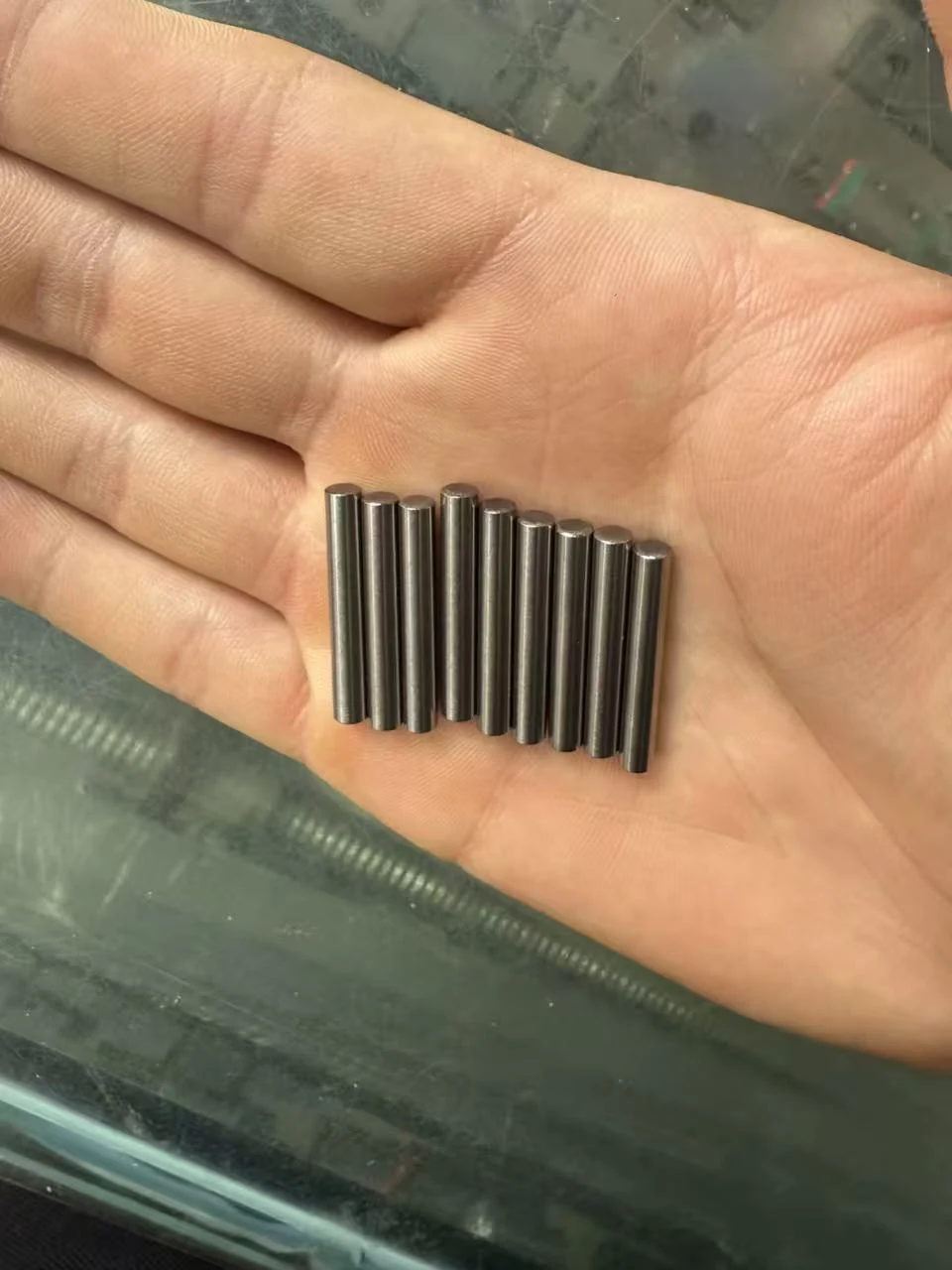
Requests arrive in both directions. From a maintenance buyer: “we are looking at making discontinued parts for our multi-head embroidery machine, the part is most likely AISI 8620 case-hardened, 20–30 pieces.” From a purchaser with a European drawing: “the drawing says 16MnCr5, CHD 0.8, our supplier only stocks 8620 — is that the same?” The first gets the part measured from the sample and made in 8620 / 20NiCrMo2-2 (see embroidery machine parts and parts from a sample); the second gets a straight answer — 8620 hardens deeper than 16MnCr5 through its Ni 0.40–0.70 % and Mo 0.15–0.25 %, so for CHD 0.8 on a small gear it is a safe upward substitute, and the certificate names the grade actually used. Worn bearing seats and races, pulleys and sprockets follow the same route; a hand sketch with the main dimensions is enough to start. The first of those two enquiries is written out as a case study, worn timing pulley from a multi-head embroidery machine: the part was a toothed-belt pulley with its teeth worn down, and the 8620 guess was checked on the hub rather than assumed.
Quick Answers
What is the European equivalent of 8620?
8620 is 20NiCrMo2-2, material number 1.6523, in EN ISO 683-3 (formerly EN 10084), old DIN 21NiCrMo2; the bands overlap on every element (8620: C 0.18–0.23 %, Cr 0.40–0.60 %, Ni 0.40–0.70 %, Mo 0.15–0.25 %; 20NiCrMo2-2: C 0.17–0.23 %, Cr 0.35–0.70 %, Ni 0.40–0.70 %, Mo 0.15–0.25 %). BS 805M20 and JIS SNCM220 are the same steel; GB/T 5216 20CrNiMoH is listed as identical in ISO 683-3 Annex B, and GB/T 3077 20CrNiMo (Mo 0.20–0.30 %, Ni 0.35–0.75 %) is the same steel with slightly shifted band limits.
What is 16MnCr5 in AISI?
16MnCr5 has no exact AISI grade; SAE 5115 is the cross-reference, with Mn 0.70–0.90 % and Cr 0.70–0.90 % against 16MnCr5’s Mn 1.00–1.30 % and Cr 0.80–1.10 %, so 5115 hardens less deeply. 8620 is the usual US substitute above about 25 mm section; 590M17 is the BS twin (EN 10084 Annex D) and GB/T 5216 16CrMnH the identical Chinese grade (ISO 683-3 Annex B).
Is 20MnCr5 the same as 5120?
No: 20MnCr5 (1.7147) carries Mn 1.10–1.40 % and Cr 1.00–1.30 %, SAE 5120 Mn 0.70–0.90 % and Cr 0.70–0.90 %, at the same carbon 0.17–0.22 %. Both carburise to 58–62 HRC; 20MnCr5 keeps a hard core deeper into the section.
What is SCM420 equivalent to?
JIS SCM420 (Cr 0.90–1.20 %, Mo 0.15–0.25 %) is nearest to EN 18CrMo4 / 1.7243 (C 0.15–0.21 %, Cr 0.90–1.20 %, Mo 0.15–0.25 %, paired with SCM418 in ISO 683-3 Annex B) and to GB 20CrMo (Mn 0.40–0.70 %, Cr 0.80–1.10 %); the AISI cross-reference 4118 has only Cr 0.40–0.60 % and Mo 0.08–0.15 %. 8620 is the closer US grade in hardenability.
What is 20CrMnTi equivalent to?
GB 20CrMnTi (C 0.17–0.23 %, Mn 0.80–1.10 %, Cr 1.00–1.30 %, Ti 0.04–0.10 %) is nearest to 20MnCr5 (Mn 1.10–1.40 %, Cr 1.00–1.30 %, no Ti) and is listed by steelnumber under both 20MnCr5 and 16MnCr5. 5120 is sometimes substituted and is not equivalent. Typical treatment: carburise 900–930 °C, re-austenitise 820–850 °C, temper 150–200 °C, case 0.8–2.0 mm, surface 58–62 HRC, core 28–35 HRC.
Is 4140 a case-hardening steel?
No. 4140 has C 0.38–0.43 % and 42CrMo4 0.38–0.45 %; both are quenched-and-tempered or induction-hardened steels, not carburising grades, which stay below about 0.3 % C. A 4140 part gets its surface hardness from induction hardening to 53 HRC minimum, not from a carburised case.
What does CHD 0.8 mean on a drawing?
A case hardening depth of 0.8 mm to ISO 2639: the Vickers profile on a cross-section must stay above 550 HV1 down to 0.8 mm below the surface. The US effective case depth is measured to 50 HRC instead, so the two conventions give different numbers for the same part.
Related charts: bolt grade chart (property classes 4.6–12.9 and the 42CrMo4 / C45 behind them), carbon steel machining, and the full materials list.
Case-Hardening Steel FAQ
AISI 8620 is 20NiCrMo2-2, material number 1.6523, in EN ISO 683-3 (formerly EN 10084); the old DIN name was 21NiCrMo2 (also written 20NiCrMo2). The bands overlap on every element: 8620 has C 0.18–0.23 %, Mn 0.70–0.90 %, Cr 0.40–0.60 %, Ni 0.40–0.70 % and Mo 0.15–0.25 % to SAE J404, and 20NiCrMo2-2 has C 0.17–0.23 %, Mn 0.65–0.95 %, Cr 0.35–0.70 %, Ni 0.40–0.70 % and Mo 0.15–0.25 %. The same steel is BS 805M20 and JIS SNCM220; in China GB/T 5216 20CrNiMoH is listed as identical to 20NiCrMo2-2 in ISO 683-3 Annex B, and GB/T 3077 20CrNiMo (Mo 0.20–0.30 %, Ni 0.35–0.75 %) is the same steel with slightly shifted band limits.
16MnCr5 (1.7131) has no exact AISI twin. SAE 5115 is the usual cross-reference, but 5115 carries Mn 0.70–0.90 % and Cr 0.70–0.90 % against 16MnCr5's Mn 1.00–1.30 % and Cr 0.80–1.10 %, so 5115 hardens less deeply. For a gear or shaft above about 25 mm section 8620 (Ni 0.40–0.70 %, Mo 0.15–0.25 %) is the safer US substitute; for a small pin or bush 5115 does the job. BS 590M17 is the EN 10084 Annex D counterpart and GB/T 5216 16CrMnH is listed as identical in ISO 683-3 Annex B; BS 527M17 (the twin of 17Cr3) and GB 15CrMn (Cr 0.40–0.70 %) are substitutes only.
No — they are nearest equivalents, not the same steel. 20MnCr5 (1.7147) has Mn 1.10–1.40 % and Cr 1.00–1.30 %; SAE 5120 has Mn 0.70–0.90 % and Cr 0.70–0.90 %, so 20MnCr5 hardens clearly deeper at the same C 0.17–0.22 %. A part drawn in 20MnCr5 and made in 5120 keeps its 58–62 HRC case but ends up with a softer core in sections above about 30 mm. JIS SCr420 (Cr 0.90–1.20 %) and GB 20Cr (Cr 0.70–1.00 %) sit between the two; 20MnCr5's own identical Chinese grade is GB/T 5216 20CrMnH, and it has no JIS twin — SMnC420H (Cr 0.35–0.70 %) is a substitute only.
JIS SCM420 (C 0.18–0.23 %, Cr 0.90–1.20 %, Mo 0.15–0.25 %) is nearest to EN 18CrMo4 / 1.7243 (C 0.15–0.21 %, Cr 0.90–1.20 %, Mo 0.15–0.25 %), which differs only in carbon and which ISO 683-3 Annex B pairs with SCM418; GB 20CrMo differs in Mn 0.40–0.70 % and Cr 0.80–1.10 %. The AISI cross-reference is 4118, but 4118 carries Cr 0.40–0.60 % and Mo 0.08–0.15 %, roughly half of SCM420's, so it is a weaker substitute; 8620 matches SCM420's hardenability better through its Ni 0.40–0.70 %.
No. 42CrMo4 has C 0.38–0.45 % and 4140 C 0.38–0.43 %; both are quenched-and-tempered steels that are through-hardened to 28–34 HRC or induction hardened on the surface to 53 HRC minimum. Case-hardening steels stay below about 0.3 % C so the core remains tough after the case is carburised to 0.8 % C and quenched. A drawing that says 42CrMo4 and CHD 0.8 contradicts itself; one of the two is a transcription error and the shop has to ask which.
CHD 0.8 is a case hardening depth of 0.8 mm to ISO 2639: on a polished cross-section the Vickers hardness profile must stay above 550 HV1 down to 0.8 mm below the surface. A range such as CHD 550 0,8–1,2 gives a lower and an upper depth. The US drawing convention is different: effective case depth is the depth to 50 HRC, total case depth is the whole carbon-enriched layer, and a heat-treat quote has to say which one it means.
EKINSUN is a custom parts manufacturer that machines gears, pinions, pulleys, sprockets, cams, shafts and pins in 8620 / 20NiCrMo2-2, 16MnCr5, 20MnCr5, SCM420 and 20CrMnTi from one piece, carburised to the drawing's CHD, hardened to 58–62 HRC on the surface and finish-ground after hardening, from a drawing, a sketch or the worn part. Quote in 12 hours; hardness and case-depth report on request. For plain bar in any of these grades we will tell you to buy from a stockholder.