The Crosswalk — 14 Plastics From Trade Name to ISO Generic to Chinese Name
Of the 14 plastics, 11 are direct: one polymer under several brands, interchangeable for a machined part unless the drawing names a certified grade. The 3 nearest pairs are the ones that catch purchasers — Delrin (POM-H) against the copolymer POM-C that Europe and China stock, PA66 against PA6, cast PA6 G against extruded PA6. Three layers of name are shown for each: the resin brand on the pellet, the stock-shape brand on the rod, and the ISO 1043 generic that both belong to; the Chinese column is what a mainland certificate prints.
EKINSUN LTD machines bushes, gears, racks, wear pads, rollers, manifolds, insulators and housings in every plastic in the chart from one piece — from a drawing in a brand name, a generic name or a Chinese name, a sketch or the worn part. This page is part of the material grade equivalents series.
| Generic | ISO 1043 | Resin trade names (producer) | Stock-shape brands, Europe | Stock-shape brands, US | Chinese name | Rating | Why |
|---|---|---|---|---|---|---|---|
| Acetal (POM) — the default machined plastic | |||||||
| Acetal homopolymer | POM-H | Delrin (DuPont, now Celanese); Tenac (Asahi Kasei) | TECAFORM AD (Ensinger); Ertacetal H (MCAM); Sustarin H (Röchling) | Delrin 150 / 570 rod and plate | 聚甲醛均聚 / 赛钢 (POM-H, 杜邦 Delrin) | nearest to POM-C | 'Delrin' is a brand of the homopolymer, not a generic name: a little stiffer and stronger than the copolymer, with a centre-line porosity in thick rod that the copolymer does not have. |
| Acetal copolymer | POM-C | Hostaform / Celcon (Celanese); Ultraform (BASF); Duracon (Polyplastics); Kepital (Kolon) | TECAFORM AH (Ensinger); Ertacetal C (MCAM); Sustarin C (Röchling) | Acetron GP (MCAM); Celcon rod | 聚甲醛共聚 / POM-C / 赛钢 (国产 POM 板棒多为共聚) | direct | the acetal that European and Chinese stockholders actually hold as rod and plate: better hot-water and chemical resistance than the homopolymer, no centre porosity, slightly lower stiffness. |
| Polyamide (nylon) | |||||||
| Nylon 6 (extruded) | PA6 | Ultramid B (BASF); Akulon (Envalior / DSM); Durethan (Lanxess); Zytel (DuPont, some grades) | TECAMID 6 (Ensinger); Ertalon 6 SA (MCAM); Sustamid 6 (Röchling) | Nylon 6 rod (Nylatron when filled) | 尼龙6 / PA6 / 锦纶6 | direct | one polymer under many resin brands; 'nylon' on a drawing without a number is met by PA6 in Europe and by PA66 in the US, so the number matters more than the brand. |
| Nylon 66 (extruded) | PA66 | Zytel (DuPont / Celanese); Ultramid A (BASF); Vydyne (Ascend); Maranyl (ICI, historic) | TECAMID 66 (Ensinger); Ertalon 66 SA (MCAM); Sustamid 66 (Röchling) | Nylon 66 rod and plate (the US default 'nylon') | 尼龙66 / PA66 / 锦纶66 | nearest to PA6 | stiffer, harder and 50 °C higher melting than PA6, a little more brittle and slightly harder to machine; the US default nylon where Europe defaults to PA6. |
| Cast nylon 6 | PA6 G (PA6-C) | — (cast from caprolactam, not from resin pellets) | TECAST T (Ensinger); Ertalon 6 PLA / Nylatron GSM / MC (MCAM); Sustamid 6 G (Röchling); Oilamid, Lauramid | MC 901 / MC 907 (Mitsubishi); Nycast | 浇铸尼龙 / MC尼龙 / 铸型尼龙 / 含油尼龙 | nearest to PA6 | the same polymer made by casting in the mould, which gives higher crystallinity, lower water uptake and the large sections (plates to 200 mm, rings to 2 m) that extrusion cannot; the gear, sheave and wear-pad nylon. |
| Polyester, fluoropolymers and polyethylene | |||||||
| Polyethylene terephthalate (machining grade) | PET (PET-P) | Arnite (Envalior); Rynite (Celanese / DuPont) | TECAPET (Ensinger); Ertalyte (MCAM); Sustadur PET (Röchling) | Ertalyte / Ertalyte TX | PET板 / 聚酯 / 聚对苯二甲酸乙二醇酯 | direct | the dimensionally stable alternative to acetal for precision parts (lower water uptake, better wear, takes a finer finish); 'Ertalyte' is so common that it is written as if it were the generic name. |
| Polytetrafluoroethylene | PTFE | Teflon (Chemours); Fluon (AGC); Dyneon (3M); Algoflon (Solvay); Polyflon (Daikin) | TECAFLON PTFE (Ensinger); Fluorosint (filled, MCAM); virgin PTFE rod from many converters | Virgin / glass-filled / bronze-filled PTFE rod | 聚四氟乙烯 / 铁氟龙 / 特氟龙 / 塑料王 | direct | 'Teflon' is a Chemours brand that has become the generic word in every language (铁氟龙 in Chinese); the material is the same from every producer, and the drawing's real choice is virgin against filled (glass, bronze, carbon) for creep. |
| Ultra-high-molecular-weight polyethylene | PE-UHMW (UHMWPE) | GUR (Celanese / Ticona) | TECAFINE PE UHMW (Ensinger); TIVAR (MCAM); Polystone M (Röchling) | TIVAR 1000 / UHMW sheet | 超高分子量聚乙烯 / UPE / 超高板 | direct | the same polymer from every sheet producer; 'Tivar' and 'Polystone' are converters' brands, and Dyneema / Spectra are the fibre form, not a machinable stock. |
| High-temperature and transparent plastics | |||||||
| Polyether ether ketone | PEEK | Victrex PEEK (Victrex); KetaSpire (Solvay); Vestakeep (Evonik) | TECAPEEK (Ensinger); Ketron PEEK (MCAM); Sustapeek (Röchling) | Ketron 1000 PEEK rod | 聚醚醚酮 / PEEK棒 | direct | one polymer; the difference between brands is the grade (unfilled 1000, 30 % glass, 30 % carbon, bearing grade) and, for medical or semiconductor parts, the certification behind the name (Ketron CA30, Tecapeek MT). |
| Polycarbonate | PC | Lexan (SABIC); Makrolon (Covestro); Panlite (Teijin) | TECANAT (Ensinger); Sustanat (Röchling); Makrolon / Lexan sheet | Lexan 9034 sheet | 聚碳酸酯 / PC板 / 防弹胶 | direct | the transparent, impact-resistant sheet; Lexan and Makrolon are the same polymer from two producers. |
| Acrylic (poly(methyl methacrylate)) | PMMA | Plexiglas (Röhm, Europe); Plexiglas / Acrylite (Trinseo / Röhm, Americas); Perspex (Perspex International); Lucite; Altuglas | Cast and extruded acrylic sheet (Plexiglas GS / XT) | Acrylite / Lucite cast sheet | 亚克力 / 有机玻璃 / 压克力 | direct | 'Plexiglas' in Europe, 'Perspex' in the UK, '亚克力' in China: one polymer. |
| Polyvinylidene fluoride | PVDF | Kynar (Arkema); Solef / Hylar (Solvay); KF (Kureha) | TECAFLON PVDF (Ensinger); Symalit PVDF (Röchling) | Kynar rod and sheet | 聚偏氟乙烯 / PVDF板 | direct | the machinable fluoropolymer for chemical and semiconductor parts when PTFE is too soft; 'Kynar' is used as the generic in the US, 'Solef' in Europe. |
| Polyetherimide | PEI | Ultem (SABIC) | TECAPEI (Ensinger); Duratron U1000 PEI (MCAM) | Ultem 1000 rod and sheet | 聚醚酰亚胺 / PEI / Ultem | direct | 'Ultem' is the only widely known name and is written as the generic; the amber transparent high-temperature plastic for electrical and sterilisable parts. |
| Polyphenylene sulfide | PPS | Ryton (Solvay); Fortron (Celanese); Torelina (Toray); DURAFIDE (Polyplastics) | TECATRON (Ensinger); Techtron PPS (MCAM); Sustatron (Röchling) | Techtron PPS rod | 聚苯硫醚 / PPS棒 | direct | the chemical-resistant high-temperature plastic between acetal and PEEK in price; one polymer under four resin brands and three stock-shape brands. |
Resin brands and producers are taken from the Wikipedia polymer articles listed in the dataset; stock-shape brands from the Ensinger, MCAM and Röchling catalogues; producer changes (DuPont → Celanese for Delrin and Zytel, DSM → Envalior for Akulon and Arnite, Bayer → Covestro for Makrolon, GE → SABIC for Lexan and Ultem) are given as the current owner. Chinese names are market names as printed on mainland certificates and drawings, not standard designations. Continuous service temperatures marked ‘std’ are producer datasheet values.
Need a part machined in POM, PA, PEEK, PTFE or the trade-name plastic on your drawing? EKINSUN is a custom parts manufacturer: we machine parts in POM, PA, PEEK, PTFE or the trade-name plastic on your drawing to your drawing, sketch or sample, from 1 piece, with a material certificate on request and a quote in 12 hours. Standard sizes can often be supplied from stock; the more pieces, the lower the unit price. How ordering without CAD works →
Density and Temperature — the Two Numbers That Separate the Generics
Brands do not change these numbers; generics do. Density tells a purchaser which plastic a sample is (PTFE sinks at 2.15–2.20 g/cm³, PE-UHMW floats at 0.93–0.94, POM and PET sit at 1.41 and 1.38, nylon at 1.14), and the melting or service temperature is the ladder from PE-UHMW at about 80 °C to PEEK and PTFE at 250–260 °C that decides whether a substitution is safe.
| Generic | Density g/cm³ | Melting / glass transition · continuous use |
|---|---|---|
| POM-H Acetal homopolymer | 1.41–1.42 | melts 175 °C; continuous use about 90-100 °C (std) |
| POM-C Acetal copolymer | 1.41 | melts about 165 °C; continuous use about 100 °C (std) |
| PA6 Nylon 6 (extruded) | 1.13–1.14 | melts 215 °C; continuous use about 80-100 °C (std) |
| PA66 Nylon 66 (extruded) | 1.14 | melts 264 °C; continuous use about 100-110 °C (std) |
| PA6 G (PA6-C) Cast nylon 6 | 1.15–1.16 | melts 220 °C; continuous use about 100-110 °C (std) |
| PET (PET-P) Polyethylene terephthalate (machining grade) | 1.38–1.39 | melts 250-260 °C; continuous use about 100-110 °C (std) |
| PTFE Polytetrafluoroethylene | 2.15–2.20 | melts 327 °C; continuous use up to 260 °C |
| PE-UHMW (UHMWPE) Ultra-high-molecular-weight polyethylene | 0.93–0.94 | melts about 130 °C; continuous use about 80 °C |
| PEEK Polyether ether ketone | 1.30–1.32 | melts 343 °C; continuous use about 250 °C |
| PC Polycarbonate | 1.20 | glass transition 147 °C; heat deflection 128-140 °C |
| PMMA Acrylic (poly(methyl methacrylate)) | 1.18 | glass transition about 105 °C; continuous use about 70-80 °C (std) |
| PVDF Polyvinylidene fluoride | 1.78 | melts 177 °C; continuous use about 140 °C (std) |
| PEI Polyetherimide | 1.27 | glass transition 215-217 °C; continuous use about 170 °C (std) |
| PPS Polyphenylene sulfide | 1.35 | continuous use up to 240 °C (max service per Wikipedia) |
The Drawing Says… — What We Make the Part In
This is the column no stockholder chart has. A drawing arrives in one country’s names and the part is machined where a different name is on the bar; the table says, grade by grade, what the part is made in and what — if anything — changes. The rule behind every row: the grade and delivery condition actually used are written on the quote before machining and on the EN 10204 3.1 certificate after it.
| The drawing says | What we make it in — and what changes |
|---|---|
| Delrin, POM-H or 赛钢 | made in POM-C (TECAFORM AH / Ertacetal C) unless the drawing names the homopolymer grade or the part is a thin, highly loaded gear or snap-fit — then POM-H, and the choice is on the quote. |
| POM, acetal, POM-C, Hostaform, Tecaform AH or 聚甲醛 | made in POM-C; no change. |
| PA6, nylon 6, Ertalon 6 SA or 尼龙6 | made in extruded PA6; drawing says just 'nylon' → PA6 in Europe, PA66 for a US customer, and the quote says which. |
| PA66, nylon 66, Zytel or 尼龙66 | made in extruded PA66; no change. |
| PA6 G, MC nylon, Ertalon 6 PLA or 浇铸尼龙 | made in cast PA6; a large nylon part drawn as 'PA6' is quoted in cast PA6 with the change stated, because extruded PA6 does not exist in that size. |
| Ertalyte, PET-P, Tecapet or PET板 | made in machining-grade PET; no change. |
| Teflon, PTFE or 铁氟龙 | made in virgin PTFE unless a load or wear note calls for a filled grade; the fill is named on the quote. |
| UHMW, Tivar, Polystone M or 超高分子量聚乙烯 | made in PE-UHMW sheet or rod; a drawing with tight tolerances on it gets a note about the material's movement before quoting. |
| PEEK, Victrex, Ketron or 聚醚醚酮 | made in unfilled PEEK unless a temperature or wear note calls for a filled grade; a certified grade is ordered only when the drawing names it. |
| Lexan, Makrolon, PC or 聚碳酸酯 | made in polycarbonate sheet, stress-relieved before machining; no change. |
| Plexiglas, Perspex, acrylic, PMMA or 亚克力 | made in cast acrylic sheet; extruded only when the drawing says so or the part is a flat cover. |
| Kynar, Solef, PVDF or 聚偏氟乙烯 | made in PVDF; no change. |
| Ultem, PEI or 聚醚酰亚胺 | made in unfilled PEI (Ultem 1000 type); glass-filled only when named. |
| Ryton, Fortron, Techtron, PPS or 聚苯硫醚 | made in unfilled PPS rod; glass-filled (40 % GF) only when named. |
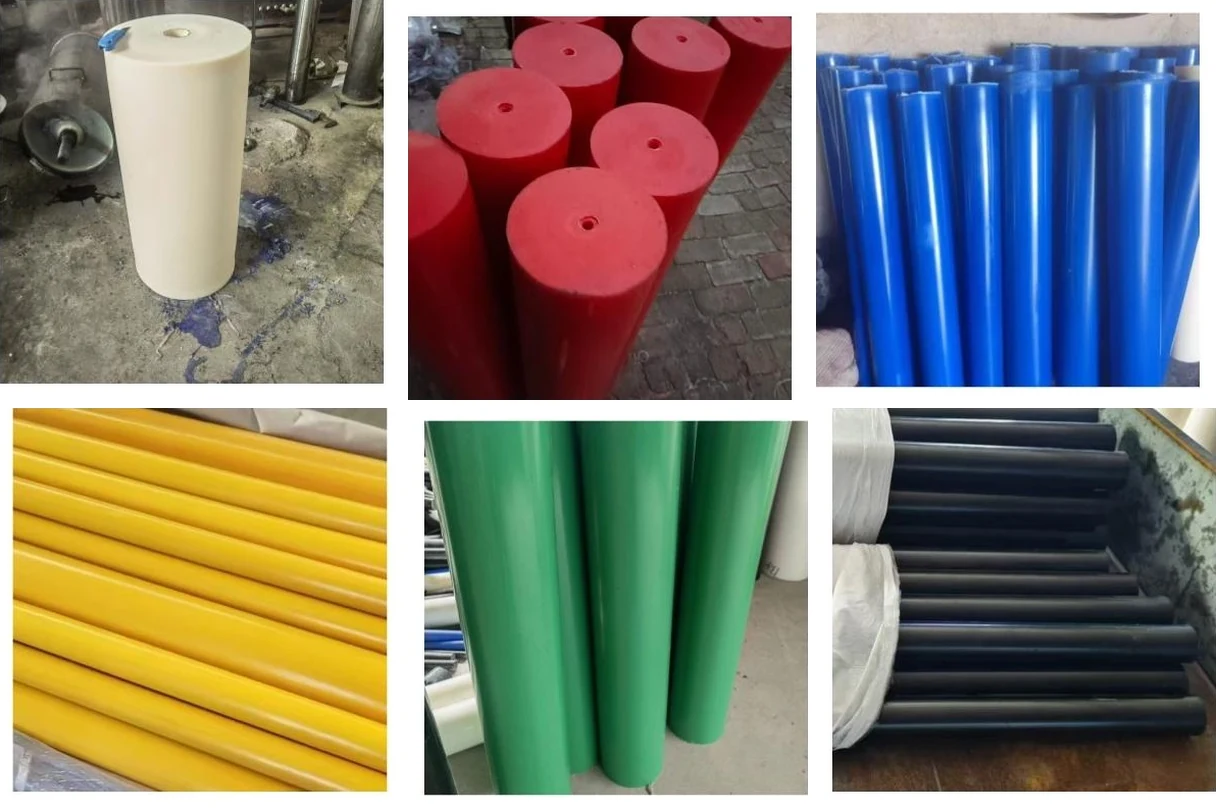
Two requests from the inbox show the two directions. A US buyer: “bushings in Delrin, 40 pieces, drawing attached” — made in POM-C (Tecaform AH), which has no centre porosity at the Ø60 mm on the drawing, and the quote says so before a single bar is cut. A German buyer: “Zahnrad aus PA6 G, Modul 3, 1 Stück” — cast nylon plate, teeth cut to module 3, and the certificate names the cast grade because the drawing named it. Custom plastic gears, bushings, wear pads and machined plastic parts follow the same route; a hand sketch with the main dimensions is enough to start.
Four Traps — Where a Name Match Is Not a Material Match
Trap 1 — Delrin is not ‘the’ acetal. It is the homopolymer; the rod on a European or Chinese shelf is the copolymer. Both are POM at 1.41 g/cm³, both machine the same way; the homopolymer is stiffer and has centre porosity in thick rod, the copolymer survives hot water. Name the one you mean or accept POM-C.
Trap 2 — ‘nylon’ is three materials. PA6 (215 °C), PA66 (264 °C) and cast PA6 G differ in stiffness, water uptake and available size; the US default is 66, the European default is 6, and the gear material is cast. The number belongs on the drawing.
Trap 3 — the brand on the certificate is a stock brand, not a resin brand. A European shop certifies Tecaform or Ertacetal, never Hostaform; a Chinese shop certifies 赛钢 or POM. All three are the same copolymer, and a purchaser who insists on the resin brand on a machined part is asking for a document that does not exist.
Trap 4 — certifications travel with the grade, not the generic. ‘PEEK’ does not mean medical PEEK; ‘POM’ does not mean food-contact POM. Tecapeek MT, Ketron CA30 and Tecaform AH MT carry the certificate; the drawing that needs it has to name it.
Brand, Generic, Certification — the Rules Behind the Names
| Fact | Value | Standard / source |
|---|---|---|
| Brand or generic? | Delrin, Teflon, Ultem, Ertalyte, Tivar, Plexiglas and MC nylon are trade names that are written on drawings as if they were materials. Each maps to one ISO 1043 generic (POM-H, PTFE, PEI, PET, PE-UHMW, PMMA, PA6 G), and a part can be made in any producer's stock of that generic unless the drawing carries a certification or a specific grade number. | ISO 1043-1 |
| Three layers of names | Resin brand (the pellet: Hostaform, Zytel, Victrex) → stock-shape brand (the rod or plate a machine shop buys: Tecaform, Ertalon, Ketron) → generic (POM-C, PA66, PEEK). Certificates from a European shop name the stock-shape brand; Chinese certificates name the generic or the Chinese market name (赛钢, 尼龙, 铁氟龙). | Producer catalogues (Ensinger, MCAM, Röchling) |
| Delrin vs POM-C | Homopolymer (Delrin): higher stiffness and strength, centre-line porosity in rod above about 50 mm, less resistant to hot water and alkalis. Copolymer (Hostaform / Tecaform AH / Ertacetal C): the European and Chinese stock, no porosity, better chemical resistance. Both about 1.41 g/cm³, both machine the same way. | Wikipedia POM; producer datasheets |
| Nylon 6 vs 66 vs cast | PA6 melts at 215 °C, PA66 at 264 °C, cast PA6 G at about 220 °C. PA66 is stiffer and harder; PA6 is tougher and cheaper; cast PA6 G has the lowest water uptake and comes in sections extrusion cannot make. A drawing that says only 'nylon' is under-specified. | Wikipedia Nylon 6 / Nylon 66 |
| Water uptake and the tolerance | Nylon grows about 0.2–0.3 % in dimension between dry-as-machined and saturated; acetal and PET about 0.1 %; PTFE and PE-UHMW nil. A nylon part with a tight fit is machined to a conditioned size or the drawing tolerance is discussed before quoting. | Producer datasheets (std) |
| Temperature ladder | Continuous use, approximate: PE-UHMW 80 °C < PMMA 80 °C < POM 100 °C < PA 100-110 °C < PET 110 °C < PC 120 °C < PVDF 140 °C < PEI 170 °C < PPS 220 °C < PEEK 250 °C < PTFE 260 °C. Price rises in roughly the same order, with PTFE and PEEK at the top. | Wikipedia articles; producer datasheets (std) |
| Certified grades | Food-contact (EU 10/2011, FDA), medical (USP Class VI, ISO 10993) and semiconductor (low-outgassing, ESD) grades carry their certification in the stock-shape brand (Tecapeek MT, Ketron CA30, Tecaform AH MT). A drawing that needs the certificate must name it; the generic alone does not carry it. | Producer catalogues |
Property comparison of the ten plastics we machine most is on the engineering plastics comparison chart; machining data on the Delrin / acetal and nylon pages; medical grades and sterilisation on the medical-grade plastics guide; the plastic parts hub is custom plastic parts.
Where the Chart Stops — Bar From Stock, Parts From a Drawing
Rod, plate and tube in every plastic above is a stock item at a plastics distributor under one of the stock-shape brands; a bush, gear, wear pad, manifold or housing machined from it to your drawing is not on any shelf. The table is plain about which is which.
| What you need | In the catalogue? | What we machine |
|---|---|---|
| Rod, plate or tube in Delrin, Tecaform, Ertalon, Ertalyte, Tivar or PEEK for your own shop | Yes — every plastics distributor | Buy it from stock under whichever stock-shape brand your distributor carries; the generic is the same. A distributor cuts blanks for less than any machined part, and we say so in the quote. Standard parts: ask us too — we may have them in stock. |
| Bushes, rollers, sheaves and wear pads drawn in 'Delrin' or 'nylon' by a US or European maintenance buyer | No | Machined in POM-C or in PA6 / PA66 / cast PA6 G as the size and the customer's market decide, the generic and the stock grade on the quote; see plastic bushings and bearings and rollers and wheels. |
| Gears, racks and sprockets drawn in MC nylon, Ertalon 6 PLA or 浇铸尼龙 | No | Machined from cast PA6 G plate or rod, teeth cut to the module on the drawing; see plastic gears and racks and cast nylon parts. |
| Liners, wear strips and chain guides drawn in Tivar, Polystone M or UHMW | No | Cut and machined from PE-UHMW sheet with the material's movement allowed for; see PE-UHMW machined parts and wear strips and chain guides. |
| A manifold, insulator or seal carrier drawn in PEEK, Victrex, Ketron or Ultem | No | Machined from unfilled PEEK or PEI rod unless the drawing names a filled or certified grade; the stock brand actually used is on the certificate. Medical grades and sterilisation limits are on the medical-grade plastics guide. |
| A transparent cover or window drawn in Lexan, Makrolon, Plexiglas or 亚克力 | No | Machined from stress-relieved polycarbonate or cast acrylic sheet, edges polished where drawn; the two are not swapped without a note, because acrylic shatters where polycarbonate bends. |
Quick Answers
What is Delrin?
DuPont / Celanese brand of acetal homopolymer, POM-H (1.41–1.42 g/cm³, melts 175 °C); European and Chinese stock is usually the copolymer POM-C (Hostaform, Tecaform AH, Ertacetal C, 赛钢).
What is Ertalyte?
Mitsubishi Chemical Advanced Materials' brand of machining-grade PET (polyester), 1.38–1.39 g/cm³; Tecapet and Sustadur PET are the same generic.
What is Tivar?
MCAM's brand of PE-UHMW sheet (0.93–0.94 g/cm³, melts about 130 °C); Polystone M and Tecafine PE UHMW are the same generic, 超高分子量聚乙烯 in Chinese.
What is Zytel?
DuPont / Celanese brand of nylon resin, mostly PA66 (melts 264 °C); Ultramid A and Vydyne are other PA66 resins, Tecamid 66 and Ertalon 66 SA the stock shapes.
What is Victrex or Ketron?
Victrex is the PEEK resin producer's brand; Ketron (MCAM) and Tecapeek (Ensinger) are PEEK rod and plate; 聚醚醚酮 in Chinese. Melts 343 °C, continuous use about 250 °C.
What is Ultem?
SABIC's brand of polyetherimide, PEI (glass transition 215–217 °C); Tecapei and Duratron U1000 are the stock shapes; 聚醚酰亚胺 in Chinese.
What is MC nylon?
Mitsubishi's trade name for cast nylon 6 (PA6 G), used as the generic in Asia; Ertalon 6 PLA, Tecast, Sustamid 6 G and 浇铸尼龙 are the same material.
Other families in the series: stainless steels (304 / 1.4301, 316L / 1.4404), aluminium alloys (6061, 6082, 7075), quenched-and-tempered steels (4140 / 42CrMo4), medium-carbon steels (1045 / C45), free-machining steels (12L14 / 11SMnPb30); the index is the material grade equivalents hub.
Plastic Trade Names FAQ
Delrin is DuPont's (now Celanese's) brand of acetal homopolymer, POM-H. 'Acetal' and 'POM' cover both the homopolymer and the copolymer (POM-C: Hostaform, Celcon, Ultraform as resins; Tecaform AH, Ertacetal C, Sustarin C as rod and plate). The copolymer is what European and Chinese stockholders hold; it has no centre-line porosity and better hot-water resistance, while Delrin is a little stiffer. A drawing that says 'Delrin' without a grade is met by POM-C in practice, and the quote says so; a drawing that says POM-H or Delrin 150 gets the homopolymer.
They are stock-shape brands — the names on the rod and plate a machine shop buys — not polymers. Ertalyte is PET (polyester); Tecaform AH is POM-C and Tecaform AD is POM-H; Ertalon 6 SA is extruded PA6, Ertalon 66 SA is PA66 and Ertalon 6 PLA is cast PA6 G; Tivar is PE-UHMW; Ketron is PEEK; Tecapeek is PEEK; Techtron is PPS; Duratron U1000 is PEI. Ensinger (Teca-), Mitsubishi Chemical Advanced Materials (Erta-, Ketron, Tivar, Duratron) and Röchling (Polystone, Susta-) each brand the same generics.
PA6 melts at 215 °C and is the European default nylon; PA66 melts at 264 °C, is stiffer and harder, and is the US default. Cast nylon (PA6 G, 'MC nylon', 浇铸尼龙) is PA6 polymerised in the mould, which gives lower water uptake and sections that extrusion cannot make — the gear, sheave and wear-pad material. A drawing that says only 'nylon' is under-specified: we make it in PA6 for a European customer and PA66 for a US one, and put the choice on the quote.
Yes. Teflon is Chemours' brand; Fluon (AGC), Dyneon (3M), Algoflon (Solvay) and Polyflon (Daikin) are the same polymer, PTFE, and 铁氟龙 / 特氟龙 / 聚四氟乙烯 are its Chinese names. It melts at 327 °C and works continuously to 260 °C. The real choice on a drawing is virgin PTFE against a glass-, bronze- or carbon-filled grade, which cuts creep and wear at the cost of chemical purity.
Market names: 赛钢 (also 聚甲醛) is POM, usually the copolymer; 尼龙 is nylon (尼龙6 = PA6, 尼龙66 = PA66, 浇铸尼龙 or MC尼龙 = cast PA6 G); 铁氟龙 / 特氟龙 is PTFE; 亚克力 / 有机玻璃 is PMMA (acrylic); 超高分子量聚乙烯 or 超高板 is PE-UHMW; 聚醚醚酮 is PEEK; 聚碳酸酯 is PC. They are generic names, not brands, and a certificate that carries them names the polymer but not the producer.
Yes, unless the drawing carries a certification or a grade number. Lexan and Makrolon, Kynar and Solef, Victrex and Ketron, Plexiglas and Perspex are the same generics from different producers, and a machined part is the same part. The exceptions are certified grades — food-contact, medical (USP Class VI), ESD or low-outgassing — where the certificate belongs to the specific stock-shape brand (Tecapeek MT, Ketron CA30) and the drawing has to name it.
EKINSUN LTD is a custom parts manufacturer that machines bushes, gears, racks, wear pads, rollers, manifolds, insulators and housings in POM-C / POM-H, PA6, PA66, cast PA6 G, PET, PTFE, PE-UHMW, PEEK, PC, PMMA, PVDF, PEI and PPS from one piece, from a drawing written in a brand name, a generic name or a Chinese name, a sketch or the worn part. The quote states the generic and the stock-shape grade the part is made in; the certificate names the stock actually used. Quote in 12 hours.